

Political commentary and public policy. Personal opinions only*
Australia
Joined September 2019
- Tweets113K
- Following9.8K
- Followers15.6K
- Likes182K






Pinned Tweet
RBA INTEREST RATE WATCH NOV 3rd
Inflation remains elevated, employment is weakening and bond yields exceed 5%.
📊 Oct 28: CPI inflation data
🏦 Nov 3: RBA rate decision
Before CPI arrives, what do YOU predict the RBA will do?
62%🔴 RAISE by 0.25%
23%🟠 HOLD rates
3%🟢 CUT by 0.25%
12%⚫ RAISE by 0.50%
373 votes • 5 daysJoanne Kreher did a fantastic job presenting her concerns and questions regarding the proposed Firmus AI data centre development at the recent Murray Bridge Council meeting. I was fortunate enough to be there in person to hear her presentation and I thought she raised some excellent points deserving of serious consideration.
These are significant developments for the Murraylands and it’s important that local residents have the opportunity to ask questions, express concerns and have their voices heard. Good decisions start with informed communities and genuine consultation.

It doesn’t look good for the French 🇫🇷
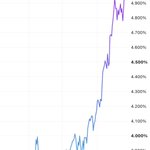
Their 10-year bond yields have just cracked 5% that’s the highest they’ve been since 2002. Sitting at 5.026% today, which is about 110 basis points higher than July. That’s a fair old jump. This is what you get when you’ve got mounting fiscal pressure, political chaos and investors losing confidence all at once. Every percentage point hurts when you’re refinancing a mountain of debt. France’s giving everyone a timely warning; including us here in Australia. Markets will eventually send you the bill for fiscal irresponsibility.


It’s interesting data. Australia’s labour market is now anything but uniform. Today’s regional unemployment figures range from just 2.6% to 6.8%. That’s more than TWO AND A HALF TIMES the unemployment rate depending on where Australians live. Meanwhile, national employment fell by 39,300 in September, unemployment sits at 4.7% and workforce participation is rapidly declining. The RBA meets on 3 November, with inflation figures due out next Wednesday.
Australia’s policymakers face an increasingly difficult balancing act between controlling inflation and protecting employment. The national averages don’t tell the whole story.


As someone with in-house knowledge, let me tell you, the Labor party in South Australia aren’t ignoring it at all.
Quite the opposite in fact.


Thursday 22nd October 2026
🔴 DIESEL NOW TRENDING BACK UP ↑
Expected Price direction: UP
Forecast period: Next 3–4 days
Adelaide TGP: 261.7c/L ↑
Brent: US$108.38
Singapore Gasoil: US$173.275
Christies Beach: 286.4c/L
Murray Bridge: 288.9c/L
GERI: 🟠 ELEVATED GEOPOLITICAL RISK
⛽ CONSIDER FILLING SOON
The model suggests upward pressure on diesel prices is building. Adelaide’s wholesale diesel price has increased for two consecutive trading days, while international oil and diesel benchmarks remain elevated. Retail prices haven’t yet fully reflected that movement at the bowser, at least not yet.
🤖 Made with AI


AUSTRALIA’S ENERGY GRID: HAVE WE GOT OUR PRIORITIES BACKWARDS?
If you deliberately set out to build an electricity system increasingly dependent on weather conditions, I suspect you’d end up with something resembling Australia’s current transition. Look at this morning’s AEMO snapshot:
🇦🇺 South Australia: −$15.46/MWh
🇦🇺 Victoria: −$7.51/MWh
🇦🇺 NSW: $118.73/MWh
🇦🇺 Queensland: $159.27/MWh
🇦🇺 Tasmania: $101.47/MWh
So it’s nearly $175/MWh separating South Australia and Queensland at the same moment this morning. And therein now lies one of Australia’s greatest economic challenges. In our pursuit of foolish net zero priorities, we’re progressively retiring a fleet of conventional power stations capable of providing large quantities of consistent, dispatchable electricity and replacing much of that generation with intermittent wind and solar. Wind and solar can generate remarkably cheap electricity when conditions are favourable but the wind isn’t always blowing, nor is the sun always shining. And Australian industry cannot simply shut down whenever the weather conditions are no longer favourable. The old set up wasn’t perfect, plants break down, require maintenance and have substantial operating costs but conventional generation provided a level of controllable output that wind and solar, by themselves, cannot replicate.
Now we’re having to build an increasingly complex combination of batteries, backup generation, interconnectors and transmission infrastructure just to maintain supply when renewable generation falls away. Somebody has to pay for all of it. The relevant comparison isn’t simply the cost of generating one megawatt-hour of solar electricity against one megawatt-hour of coal electricity, it’s the total cost of delivering reliable electricity, 24 hours a day, 365 days a year. How does Australia expect to rebuild manufacturing, expand mining, attract data centres and develop energy-intensive industries without abundant, dependable and internationally competitive electricity? Energy isn’t just another commodity. It’s the foundation of virtually every productive activity in a modern economy. The countries that can consistently deliver enormous quantities of affordable energy will possess a formidable competitive advantage. They’ll have greater opportunities to manufacture, process minerals, attract investment and improve living standards. Australia has extraordinary energy resources and we should be asking whether our energy policies are making those resources more economically useful or unnecessarily expensive to access. Reliable, affordable electricity is an economic necessity for our country.


⛽ AUSTRALIAN DIESEL PRESSURE INDICATOR
Thursday 22nd October 2026 | Pre-TGP Update
🟠 FILL ANYTIME IN THE NEXT 24 HOURS
Another successful prediction for my Diesel Pressure Indicator this morning.
📍 OTR Shell - Dyson Road, Christies Beach
Diesel: 286.4¢/L
Change: 0.0¢/L
The model forecast little to no movement at the retail bowser, and that’s exactly what we’ve observed.
✅ Retail price prediction: HIT
🇦🇺 THE TAXMAN’S SHARE
From today, I’m adding a permanent fuel taxation breakdown to my daily DPI reports.
At the current retail price of 286.4¢/L:
- Commonwealth fuel excise: 53.70¢/L
- GST: 26.04¢/L
- Total government taxation: 79.74¢/L
That’s 27.8% of the price at the bowser in direct fuel taxation. On a standard 60-litre fill, motorists are paying approximately $47.84 in excise and GST alone. It’s also worth remembering that Commonwealth fuel excise is indexed to inflation twice yearly. When Australians are already struggling with cost-of-living pressures, understanding precisely how much taxation is built into essential purchases matters.
📊 INTERNATIONAL MARKETS
• Brent crude: US$109.48 (+1.02%)
• Singapore gasoil futures: US$173.275 (+0.47%)
• AUD/USD: 0.70284 (+0.35%)
Elevated international diesel prices remain a concern, although the stronger Australian dollar is providing some offset.
🔮 DPI OUTLOOK
🟠 Next 24 hours: FILL ANYTIME - little immediate retail movement expected.
⚠️ Next 3–4 days: Some upside risk remains if international diesel prices stay elevated.
Adelaide’s last confirmed diesel TGP was 260.6¢/L yesterday. We’re awaiting this morning’s new wholesale price. I’ll check back in after the Australian Institute of Petroleum publishes today’s TGP to see whether wholesale conditions are changing. The DPI is about making fuel markets more transparent, tracking predictions against actual prices and helping motorists make informed decisions.
#Diesel #FuelPrices #Australia
🤖 Made with AI


Well this won’t help to quell the protests. France’s 10-year yield is now back above 5%, despite being part of the eurozone and sharing the European Central Bank’s monetary policy. That should be getting the attention of finance ministers everywhere.
Understand that France isn’t necessarily facing an imminent sovereign debt crisis, but its options are rapidly narrowing. The French government needs fiscal restraint at precisely the moment its population is demanding greater financial assistance. That’s an extraordinarily difficult political position to be in. And there is a lesson here amongst all this for Australia: Governments cannot assume financial markets will indefinitely accommodate increasing debt and persistent deficits at affordable interest rates. Eventually there is a breaking point.


It’s now approximately 10 pm and wholesale electricity prices across eastern Australia are sitting between $100 and $140/MWh.
South Australia: $127/MWh.
During the day, we have so much solar generation that wholesale electricity prices often fall below zero, yet tonight, we’re paying more than $120/MWh. Why? It should be obvious by now that generating cheap electricity when the sun shines is only a small part of the equation. We also need reliable electricity when the sun doesn’t shine and the wind doesn’t blow. Storage, transmission, backup generation and network infrastructure all come at a significant cost. The real measure of an electricity system isn’t how cheaply it generates power at midday, it’s how affordably and reliably it delivers electricity 24 hours a day 365 days a year. And that’s the conversation we need to be having.


WHY NOVEMBER 3rd MATTERS SO MUCH. Australia’s inflation rate has climbed to 4%, while our employment figures are showing signs of weakness. The RBA now faces an increasingly difficult balancing act: contain inflation without unnecessarily damaging employment and household finances any further. October 28th’s CPI figures could be decisive. Have you voted in my poll above?


⛽ DIESEL PRICE PRESSURE INDICATOR 21st OCTOBER
🟠 FILL ANYTIME
Adelaide’s wholesale diesel price increased slightly today, but international markets remain mixed.
🇦🇺 Adelaide TGP: 260.6c/L (+0.5c)
🛢️ Brent: US$108.37 (−0.51%)
🚢 Singapore Gasoil: US$173.275 (+0.47%)
💱 AUD/USD: 0.70096
⛽ Local diesel: 286.4c/L
Another successful TGP prediction for my model. Yesterday I forecast Adelaide’s wholesale diesel price at 260.3c/L, within a predicted range of 259.8–260.8c/L.
Today’s actual result: 260.6c/L.
✅ Forecast within range, with a 0.3c/L error. My model has now recorded two successful range predictions from its first three daily forecasts.
Tomorrow’s prediction: 260.8c/L, with an expected range of 260.3–261.5c/L.
The important development remains the divergence between crude oil and refined diesel. Brent is easing, but Singapore gasoil is rising. That suggests continuing pressure on the cost of imported diesel.
My outlook: 🟠 FILL ANYTIME over the next 24 hours, with upside price risks over the following 3–4 days. I’ll check tomorrow’s actual result against today’s forecast.
Market observations and model estimates are distinct. Forecasts are indicative and not guaranteed*(obviously).
🤖 Made with AI


Deuce Bigalow makes a great point here; France has universal healthcare, five weeks’ paid holidays, heavily subsidised education, extensive welfare benefits and a 35-hour working week. It also has public debt exceeding 110% of GDP, government spending approaching 57% of GDP and one of the highest tax burdens in the developed world. None of these benefits are free. Someone pays for them, whether through taxation today or borrowing against tomorrow.
And despite all that spending, public dissatisfaction persists. Perhaps the lesson for Australians is that the government cannot simply spend its way to prosperity or public contentment. I think we better learn quickly.


France has FREE health care, paid parental leave, paid family leave, FREE child care, FREE preschool, 5 weeks paid vacation, a 35 hour work week, generous unemployment and housing benefits, and heavily subsidized higher education.
Everything the left says they want AND THEY'RE STILL PROTESTING AND BURNING SHIT DOWN.
