

World citizen, 🇨🇺 artist, NFT creator. Now NFTs but always painting, drawing, video, photography. I love art, I love freedom!
Joined March 2021
- Tweets21.8K
- Following3.1K
- Followers3.9K
- Likes74.3K





Pinned Tweet
Very happy to announce the opening of my next Solo Show "Poems of Nature" to be held in Miami on April 15 from 6:00 - 9:00 pm, at Pan American Art Project Gallery!
It is a huge painting project, with over 30 works that will be on display until June 3rd.
All of you are welcome!

Homopictur.eth (Marlon Portales) retweeted

#SuiBasecamp 2026 was one of the proudest moments we've had since we launched @suinetwork
now we're entering THE MOST EXCITING CHAPTER in sui's history
Homopictur.eth (Marlon Portales) retweeted

Dear Secretary Bessent @SecScottBessent,
My name is Everett Stern. In 2010 I was a compliance officer at @HSBC. From a back office in New Castle, Delaware, I watched billions of dollars move to drug cartels, sanctioned regimes, and terrorist organizations. The enemies of the United States. I documented it, I escalated it, and when the bank would not act, I took it to the @FBI, the @CIA, and eventually the @SECGov.
The result was a $1.92 billion settlement. At the time, it was one of the largest in American history. It was also about five weeks of the bank’s profit. Not one banker was charged. Not one went to prison.
I paid a different price. I lost my career, my savings, and my place in the industry I had trained for. I was blacklisted. Every door in American finance closed at once. I slept on a camping cot in a 300 square foot apartment because I could not afford a bed, and I waited tables at @PFChangs to eat. I tell you this not for sympathy, but so you understand that I know exactly what it costs to do the right thing in American finance, and exactly how little the system does in return.
I made that sacrifice because I believed it would change something.
Yesterday, your department fined @BankofAmerica $1.2 billion for failing to report more than $5 billion in suspicious transactions, some of it tied by your own findings to Chinese laundering networks, narcotics, and the southwest border, alongside 475 apparent sanctions violations touching Russia, Iran, and global terrorism. The bank admitted it willfully violated the Bank Secrecy Act.
Fourteen years after HSBC. A bank with “America” in its name. And once again, not one individual charged.
Secretary Bessent, I want to say plainly what I believe you already know. The fines are not working.
A fine is paid by shareholders, absorbed by the balance sheet, and forgotten by the next earnings call. Bank of America reported earnings this morning. Nobody who set the alert thresholds, nobody who decided the 2024 cease and desist could wait, nobody who chose the backlog over the law will lose a single thing they value. Their lives are untouched. That is the entire reason the behavior repeats.
This is money laundering. This is blood money. Money that reaches a cartel buys fentanyl that kills Americans. Money that reaches a terrorist organization buys the next attack. This country has fought a war on drugs and a war on terror for decades, at enormous cost in lives and treasure, and all the while we have allowed the financing to flow through institutions we charter and regulate. Cut off the money and we win. We have never seriously tried.
There is also a question of equal justice that I cannot let go.
Before I walked into the FBI building to report HSBC, I stopped in front of the Great Seal on the wall and read the words engraved beneath it: “Justice is the defense of our liberty.” I believed that. I still want to. But every day in this country, people go to prison for crimes that are nothing next to moving money for the people who want Americans dead. A suit, a title, and a corporate badge should not be a shield from the consequences that apply to everyone else. If a street dealer goes to prison for what he sells, the banker who moved the cartel’s money should be standing next to him.
I also want to raise something that is rarely said in these conversations. Why has no one inside Bank of America come forward the way I did? The answer is that everyone in American banking knows what happened to me, and to the whistleblowers who came after. The last person who spoke up is the only policy anyone believes. That is a culture problem, and it starts with leadership, in the banks and in the agencies that regulate them.
This is not a political issue. It has spanned administrations of both parties. It is a national security issue, and I am asking you to treat it as one.
Three things would change the math overnight.
Refer individuals for criminal prosecution. Not the analyst in the queue. The executives who set the thresholds and chose the risk. One banker in handcuffs would do more than every fine in Treasury’s history combined.
End “too big to jail.” An institution cannot be too big to fail and too big to jail at the same time. If it is the first, it must be held to a higher standard, not a lower one.
And if Bank of America will not act as America’s bank, review its charter. A national charter is a privilege granted on behalf of the American people. It should be conditioned on not moving money for the people trying to kill them.
Secretary Bessent, you said yesterday that these actions send a clear message that even the biggest institutions are not above the law. With respect, the institution was never the problem. The people inside it are above the law, and they know it. Until that changes, I will keep writing letters like this one, and the next bank will keep paying the next fine.
I gave up everything I had to stop this. I am asking you to use the power you have to finish it.
Respectfully,
Everett A. Stern
HSBC Whistleblower
Founder and Intelligence Director, Tactical Rabbit
Homopictur.eth (Marlon Portales) retweeted

A great crypto thesis: @Solana will disrupt @Apple, @Samsung, @google and cloud service providers @Microsoft and @amazon
Yes, that’s right. I’m not talking about Ethereum, Polygon, Cardano, Avalanche, Hedera, or any other chain. And no, I’m not talking about the Saga phone. I’m talking about the world of software applications. I think Solana in particular will be the crypto winner in this domain by a wide margin. Let’s talk about why…
The application layer
Imagine you buy a new phone. It doesn’t matter which brand, but imagine that this phone costs you $1000, and it’s better than an iPhone. Way better. It’s loaded up with all the apps you expect, but they are better than the Apple equivalents.
The calendar/to-do apps are all built by third parties, so you can pick which ones you like the most, but they all integrate seamlessly together. They can share your data between them. Want to switch to a new calendar app? Just download it, and you don’t even need to migrate your data to the new app. It’s already there when you open the app.
Now imagine you open your navigation app, and all those calendar events are loaded into it, and it offers a screen that tells you the estimated commute times for each event location. No app integrations necessary.
Not only that, but you can open a random restaurant recommendation app, and an AI model will look at your travel patterns, grocery preferences, and pre-existing eating habits, and automatically recommend 10 new restaurants that you’re going to love. But you’re feeling more adventurous, and you speak to it, saying, “I was actually thinking about trying out Himalayan food, preferably not too expensive” and it produces a nice (probably small) list of options. You say, “schedule a date with my wife for tomorrow at that second one on the list,” and it creates a calendar event, invites your wife (who uses a totally different calendar app), and makes the reservation for you.
Now imagine that all of this happens without any centralized entity collecting your personal data. It’s all encrypted and it all lives on the Solana blockchain. Not only that, but all the apps are super cheap and usually free. The only catch is that you spend about $3/month on SOL that you need in order to use these apps.
How is this possible? Well, the entire point of blockchains is to have a globally shared state that can be accessed by anyone at any time. Imagine if all the Web2 tech companies shared a single database and could integrate all their apps together to give you a seamless user experience across all of them. Solana enables that.
With this type of system, we don’t need those big tech companies collecting “platform rent.” Individual companies lose their network effect when the network is global, permissionless, and open-source. Now the companies building applications will need to focus less on building a huge moat of personal data capture & exclusive “walled gardens” of applications, and will instead focus more on delivering great user experiences. They won’t be able to rest on their laurels because they have all their users locked in. Users can’t be locked in if their data is freely available to competing apps. The friction of switching to a new app becomes nonexistent.
The underlying tech
Let’s talk about the technical reasons that Solana not only meets these requirements, but is also the most likely candidate to dominate this use case.
To do all of these seamless app integrations, you can’t be constantly splitting up that state onto multiple shards and rollup chains. Instead, you really need a single integrated blockchain that holds all the state on-chain. Obviously you can get away with using multiple layers of chains, but that’s way more complicated for developers and potentially the end users. We want simplicity and ease, so a monolithic blockchain is ideal. As much as admire Ethereums history, Ethereum’s model is far less than ideal.


Homopictur.eth (Marlon Portales) retweeted
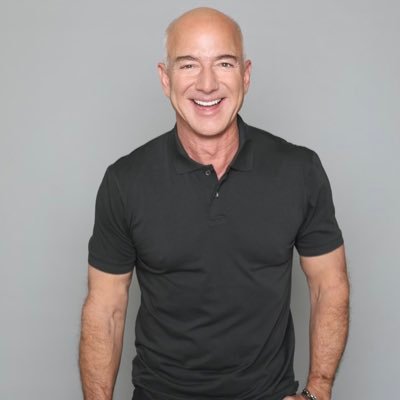
Thank you. The important part is zeroing out taxes on the bottom half. Best way to put money in someone’s pocket is to not take it out in the first place. Bottom half is only 3% of total tax revenue. But it’s very meaningful to that person. Zero it out.

Facts
It's great that Jeff Bezos thinks this way, because too many people who don't make money think that giving money to the government will solve a lot of their problems. They think these government programs are the answer, and it's clearly not. You can look at the federal level or at the state level, and you will see that a lot of government programs are simply waste.
Homopictur.eth (Marlon Portales) retweeted

Everyone is suddenly back to debating who to unfollow because this whole space has turned on itself yet again, so here is my take…
I usually stop following accounts that pump out views when everything is going up and then disappear the moment things turn down, right when the community needs them most.
Most step back because they do not want to be ridiculed. I get it. None of us do. But if you are in this game, it comes with the territory. You have to learn to take the hits...
I have been doing this a long time. I have been more right than wrong over the years, but I have had my fair share of bad takes too. That is the nature of markets. They humble everyone. If you do not like these insights, unfollow. Simple.
What counts is having the courage to stand up, be brave, and be bold when others are fearful. That is how you actually show up for the community when it matters most.
Right now, almost nobody wants to take a view. Everyone has their head buried in the sand and a bullish argument is the last thing anyone wants to hear.
When the market is falling like this it becomes almost impossible to separate signal from noise because every narrative is competing for emotional bandwidth. That is exactly why I am posting this. It is not a call and it is not an opinion. It is fact. Objective, not subjective, is what we need right now.
This market is oversold, but bottoms take time to form (chart 1).
When you look back at past oversold conditions, the path of least resistance has on average been higher following the last five times Bitcoin’s RSI dropped below 30 since this bull market began in Q4 2022 (chart 2).
Important note: If you believe the bull market is finished and we are entering twelve months of pain, these charts are not for you. Move along...


Homopictur.eth (Marlon Portales) retweeted

If judged based on consumer adoption, AI chatbots are the most popular technology ever. If judged based on poll numbers, they are the least popular. How to explain this?
A big part of it is the Doomer Industrial Complex — hundreds of astroturfed organizations that have spread doomer narratives about AI.
Writer Nirit Weiss-Blatt (@DrTechlash) has analyzed this ecosystem and traced its funding to just a few Effective Altruism billionaires. Namely Dustin Moskovitz, Jaan Tallinn, Vitalik Buterin, and Sam Bankman-Fried (yes, the convicted felon).
Collectively they have donated over a billion dollars to the cause of catastrophizing AI. Those repeating the memes should understand the source.
Full article: aipanic.news/p/the-ai-existe…

Homopictur.eth (Marlon Portales) retweeted

Why can't we build a Crypto 100 index like the S&P 500 where every few month the 5 worst performers get dropped and the 5 best performers get added. You stake it and get paid out "dividends" for holding which are fees accumulated from buying.


Homopictur.eth (Marlon Portales) retweeted
As our long-term GMI predictions play out, we’re entering a period that will be both incredibly challenging and unimaginably rewarding – the worst of times and the best of times.
Bitcoin is part of the solution...
We’re still in the early stages of a global race – a scramble by institutions, sovereigns, and individuals – to accumulate as much Bitcoin as possible.
This will be the driving force behind mass crypto adoption, taking the space from a $3 trillion asset class today to $100 trillion over the next seven to ten years.
If we’re right, this will be the single greatest wealth-creation opportunity of our lifetimes.
And in our view, it will be remembered as the greatest macro trade of all time.
This is The Everything Code…

Homopictur.eth (Marlon Portales) retweeted
The Everything Code TL;DR.
The labor force participation rate isn’t going to rise anytime soon – it’s set to keep declining over time. This is a structural problem…
We’ve got aging demographics, falling birth rates, and now the rise of automation.
Humans are already being replaced by AI and robots at a staggering pace, and that shift is only just beginning. This is deflationary.
It also reinforces the need for ongoing stimulus to keep the system afloat.
Fewer workers. More tech. Same debts…

Homopictur.eth (Marlon Portales) retweeted

have you studied this chart intensely?
do you understand it?

Homopictur.eth (Marlon Portales) retweeted

Sui is going full lifestyle chain 🌊
We’ve partnered with @xPortalApp + @xMoney_com to bring you:
💳 A virtual Sui Mastercard, with Tap to Pay via Apple Wallet and Google Pay
👝 A custom Sui wallet experience inside xPortal
⚡ Card issuance, fiat ramps, and compliance powered by xMoney
🖼️ Built-in NFTs, staking, and dApps
Spend, flex, and vibe.

Homopictur.eth (Marlon Portales) retweeted
Thanks to @xMoney_com, Sui users will get even more financial infrastructure — like fiat rails and B2B tooling — enabling seamless spending and real-world utility.
→ Card + payment infra, fully EU compliant
→ Accept crypto payments at 20K+ merchants
→ Access fiat on- and off-ramps and EU-compliant payment APIs
→ Spend SUI via a virtual Mastercard (powered by xPortal)
Real-world finance meets Web3 — that’s the Sui x xMoney play.

Homopictur.eth (Marlon Portales) retweeted
Until Crypto goes back to innovating and providing REAL value I feel like I'm wasting my time trying to convince others to see how greedy and delusional this space has become.
Money is being extracted at an accelerated rate from loyal crypto believers to outsiders who could care less.
It started with the VCs, then the exchanges, ETFs, then the celebs, then influencers, and now it's down to people taking from each other.
PumpFun found a way to drain hundreds of millions from the space while diluting what was an already oversaturated market.
Large centralized exchanges became the gate keepers listing whatever tokens made them the most money. A pay to play model that punished good projects and rewarded slimy ones.
Rugs have become acceptable. CTOs an excuse for a dev to rug twice. Utility no longer having utility.
Delusion is now required to feel normalcy and if you dare speak out against any of this you become the villian.
The solution? Wait patiently for things to break so that the space is ready to go back to the way it was.
Decentralization, quality over quantity, projects owned by those using them, NFTs being used for utility and not just art, memes back to being fun and not diluted, and healthy competition on who can innovate faster. Building products that get adoption levels higher and see integration into the lives of everyday people.
We need Crypto 2.0
Homopictur.eth (Marlon Portales) retweeted
The Consequences of Liberation Day
Following up on my post below from earlier this week, now that we see yesterday's tariff announcements, it appears to me that the first order consequences of them will be significantly stagflationary in the U.S. and significantly deflationary/recessionary in sanctioned countries. As for the second order consequences, we will see other countries' responses, significant policy changes in all countries to try to negate these undesired effects with policy tools at their disposal (most importantly via their monetary and fiscal policies). I also think negotiations and changes in what the U.S. policies will end up being will come as second order consequences. For example, we have seen reciprocal tariffs by China (which if enacted and followed by other countries will have huge effects), and, as I mentioned in my earlier article, I can imagine negotiations taking place over a China-U.S. deal to strengthen China’s RMB relative to the USD in exchange for some trade relief. If that were to happen, it would be more deflationary and depressing for China, which in turn would need to lead to an easier monetary and/or fiscal policy in China. You get the picture. We have in store many big surprises and changes ahead.
To reiterate what is clear in any case and should be kept in mind is that…
…1) the production, trade, and capital imbalances (most importantly the debts) must come down one way or another, because they are dangerously unsustainable for monetary, economic, and geopolitical reasons (so the current monetary, economic, and geopolitical orders must change in big ways)…
…2) they will likely come with abrupt, unconventional changes (like those I describe in my new book How Countries Go Broke: The Big Cycle) and…
…3) the longer term monetary, political, and geopolitical effects will depend mostly on the trust in the quality of the debt and capital markets as a safe store-hold of wealth, countries' productivity levels, and the political systems that make countries attractive places to live, work, and invest.
Speaking of balance, I hope that your portfolio is balanced in the ways that I won’t digress deeply into here but have described previously in my books (i.e., across asset classes and geographies in an uncorrelated way and informed by which assets do well in different inflationary and growth environments). Expect the ride ahead to produce some very big tests and shakeouts that will be great tests of investors’ skills as the critically important monetary, domestic political, and international geopolitical orders are breaking down. Frankly, I look forward to this challenge as it is during such challenging times in the game that the opportunities make a big difference and distinguish oneself are the greatest.
The views expressed in this article are mine and not necessarily Bridgewater’s.


Homopictur.eth (Marlon Portales) retweeted

America's Biggest Mistake?
A portion of every American's paycheck is deposited into the Social Security trust fund (OASI), which is then invested to create returns that aim to support long-term retirement payments.
Since 1941, OASI has ONLY invested in US treasuries, averaging an annual return of just 4.8%. Meanwhile the S&P500 has been compounding returns at 10.5% per year.
If instead of buying treasuries, OASI bought the S&P500 index starting in 1971 (the year the US went off the gold standard), it would have a $15.1T balance today and Americans would all share ownership of ~1/3 of America's best companies, likely supporting increased retirement benefits, lowering taxes, and reducing Federal debt levels while being the world's largest sovereign wealth fund.
Instead, OASI has a $2.7T balance today and is projected to go bankrupt in 2032, as retirement benefits swell while annual returns on US treasuries held by OASI have shrunk to <3% per year recently.
Many economic inequities in America can be traced back to this structural mistake. By not investing OASI in equities, only privileged Americans with private pensions, 401(k)s, IRAs, and other investment retirement accounts have benefited from the marvel of American capitalism, leaving behind the tens of millions of Americans who had no choice but to rely on Social Security and were left reliant on low-yielding US treasuries.
It is not too late to change. Social Security can still pivot to an equity-driven investment model, driving future balance sheet growth, providing investment capital to American businesses, reducing the dependence on Federal taxes and money-printing, and giving all Americans ownership in America's best businesses.
Rather than create a new sovereign wealth fund, while ignoring the imminent failure of Social Security, legislators can restructure Social Security. By adding ~$500B directly to OASI, investing the entire balance in the S&P 500, and assuming future annual returns of ~10.5%, OASI will grow while also meeting all future retirement obligations, rather than shrink away into insolvency.
The longer we wait to fix Social Security, the more expensive it will become... shifting to an equity-driven investment model now could ensure its long-term viability, address economic inequities across the US, create the world's largest sovereign wealth fund, and give every American ownership and participation in the rewards of American capitalism.