The Habitable Worlds Observatory is a next-generation telescope and currently starting to take shape, and aims to search for signs of life on habitable worlds.
- Tweets13
- Following45
- Followers134
- Likes35


ALT Didier Queloz and Michel Mayor




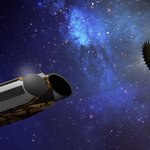
ALT This artist’s concept shows the ESA (European Space Agency) Euclid mission in space. It has a large, rectangular solar panel that serves as a sunshield to protect the cylindrical telescope from the Sun's radiation. The background shows part of the dusty Mlky Way. Credits: ESA, CC BY-SA 3.0 IGO

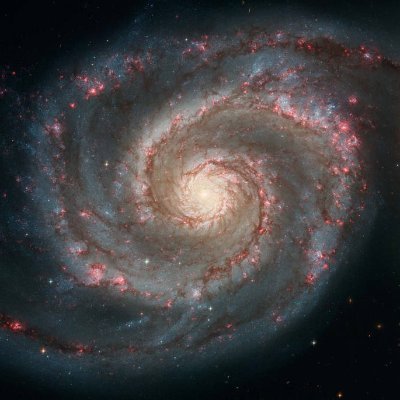


ALT This observation from the Hubble Space Telescope showcases Arp 86, a peculiar pair of interacting galaxies which lies roughly 220 million light-years from Earth in the constellation Pegasus. Arp 86 is composed of the two galaxies NGC 7752 and NGC 7753 — NGC 7753 is the large spiral galaxy dominating this image, and NGC 7752 is its smaller companion. The diminutive companion galaxy almost appears to be attached to NGC 7753, and it is this peculiarity that has earned the designation “Arp 86” — signifying that the galaxy pair appears in the Atlas of Peculiar Galaxies compiled by the astronomer Halton Arp in 1966. The gravitational squabble between the two galaxies is doomed to end catastrophically for NGC 7752. It will eventually either be flung out into intergalactic space or be entirely engulfed by its far larger neighbor. Credit: ESA/Hubble and NASA, Dark Energy Survey, J. Dalcanton


ALT An illustration shows a brownish, rocky exoplanet just right of center. Bright clouds can be seen at the right of the planet, indicating that they could be present on the side of the planet not facing the unseen star. Newly discovered Earth-size planet TOI 700 e orbits within the habitable zone of its star in this illustration. Its Earth-size sibling, TOI 700 d, can be seen in the distance in dark, star-filled space. Credit: NASA/JPL-Caltech/Robert Hurt