

Keep building on Tapeout. Building the most powerful applications on BNB Chain. Independent team Part of the Tapeout ecosystem.
UK
Joined September 2026
- Tweets705
- Following27
- Followers594
- Likes1.2K



Pinned Tweet
HashPort takes a key step forward!
HPA has launched and graduated on TapeHub, and will serve as a core functional token in the future HashPort container ecosystem, carrying important roles such as usage, circulation, and ecosystem collaboration!
HashPort will also work together with TapeOut to co-build a more open on-chain container ecosystem, allowing more projects, assets, and communities to connect, operate, and grow within it
HPA
CA: 0x0Df25a91A6d7A7af201bCfdC721aA9CbE7611010
A useful Web3 application should not require every user to understand its entire technical architecture
Some actions need wallet authorization or blockchain transactions
Others may work through familiar Web interactions
The challenge is knowing when each is necessary
Clear interfaces, reliable publishing, and understandable verification can help make complex applications more approachable
For HashPort, verifiable infrastructure should support the user experience, not become another obstacle to it
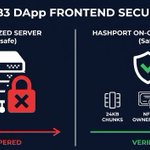
A website can load correctly and still raise questions about content integrity
Does the delivered frontend match the intended release?
Has the content changed since publication?
Can users independently check the files they receive?
These questions are separate from whether the application appears to work
HashPort focuses on verifiable publishing so that content integrity can be examined rather than simply assumed
Functionality matters
So does knowing what was actually delivered
A Hybrid App can separate its Web publishing layer from its backend infrastructure
Frontend files may be published through DeWEB
Business services and databases can operate on infrastructure chosen by the developer
Blockchain components can handle specific verifiable functions where appropriate
HashPort focuses on the publishing and verification side of this architecture
Developers do not need to make every part of an application decentralized to benefit from verifiable Web content
A business application needs more than a working website
Users need a consistent place to access it
Developers need to manage updates
Teams need to know which version has been published
HashPort supports a publishing approach built around domains, content records, and version verification
These capabilities help connect everyday Web operations with a more transparent publishing process
Reliable access and verifiable content serve different but complementary purposes
Not all application data should be publicly recorded On Chain
Personal information may require privacy protections
Business records may need controlled access
Some data must be updated or deleted under applicable requirements
Public blockchains can make these needs difficult to satisfy
Hybrid architectures allow developers to choose different storage and processing methods
For HashPort, verifiable Web publishing can be part of an application without requiring every piece of user data to live On Chain
A working application is made of different layers
The frontend is what users see and interact with
The backend processes requests and coordinates business logic
The database stores and retrieves information
Blockchain components may provide additional verifiable functions
HashPort focuses on making published frontend content verifiable
Understanding these responsibilities helps Builders design applications that are practical, maintainable, and easier to evaluate
A Hybrid App combines different technologies according to what the product needs
On Chain components may handle verifiable rules or digital assets
Off Chain services may manage databases, external APIs, and frequent updates
The frontend connects these functions into an experience users can understand
HashPort addresses the integrity of published Web content within this structure
Good architecture is not about putting everything in one place
It is about giving each component the right responsibility
A commercial application does not need to put every function On Chain
Different components have different requirements for performance, privacy, cost, and verification
A business may use conventional infrastructure for customer data and backend services while relying on blockchain for specific rules or assets
HashPort focuses on verifiable Web publishing within this broader architecture
The goal is not to maximize blockchain usage
It is to use each technology where it provides meaningful value
Ecosystem expansion becomes meaningful when it supports real products and real interactions
Connections create opportunities
Working applications turn those opportunities into something people can use
HashPort explores verifiable content publishing as part of this ongoing process
Applications can continue evolving without making content integrity an afterthought
For many users, the Web begins on a smartphone
That makes mobile accessibility an important part of Web3 adoption
As more applications explore mobile distribution, developers need to consider usability, reliable access, and content integrity
For HashPort, verifiable publishing is one piece of this broader challenge
The goal is not to make users think more about infrastructure
It is to help them access applications with greater confidence
Publishing an application is a milestone, not the end of its lifecycle
Features change
Bugs get fixed
New versions are released
Developers need ways to identify what has been published, while users need ways to check what they receive
For HashPort, the long term opportunity is not simply publishing more applications
It is making verifiable applications easier to discover, access, and use
Powerful infrastructure means little if users cannot easily access it
As TapeOut continues exploring TapeKit integration with major wallets and mobile device manufacturers, an important question comes into focus
How can verifiable Web experiences become part of the tools people already use?
A more trustworthy application experience begins by understanding what each layer can and cannot verify
Smart contracts, network transfers, and frontend content operate at different layers
Each requires its own verification approach
HashPort focuses on the integrity of published Web content
Crosschain interactions introduce additional decisions for users
Which network are they connected to?
Which asset are they moving?
What transaction are they authorizing?
Clear interfaces help users understand these actions
Verifiable publishing addresses a different question
Whether the frontend files they receive match the intended published version
Can the content delivered to users be independently checked?
HashPort explores publishing infrastructure that makes content integrity verifiable
Transparency should not stop at the protocol layer
It should extend to the software people actually access