

The latest in healthcare AI. Insights, breaking news, journal findings & real-world applications for clinicians and healthcare leaders. #HealthcareAI
Joined October 2026
- Tweets424
- Following1.1K
- Followers300
- Likes70




Could a doctor face greater legal risk for disagreeing with AI, even when they're exercising clinical judgment?
In a randomized study of hypothetical radiology malpractice cases, mock jurors were more likely to find a radiologist liable when AI flagged a missed abnormality than when AI also missed it.
For a brain bleed, plaintiff verdicts rose from 50.0% to 72.9%. For a lung cancer case, they rose from 63.5% to 78.7%.
That doesn't tell us how real courts would decide cases. The study was published in 2025, but new Axios reporting today highlights a real concern: clinicians could feel pressured to order extra tests just to avoid contradicting an algorithm.
If AI becomes part of the standard workflow, how do we preserve independent clinical judgment without increasing defensive medicine?
Sources: NEJM AI, 2025; Axios, Nov 23, 2026.

1
2
53
Two new developments offer hope for pancreatic cancer, at very different stages of care.
A study published today in npj Digital Medicine used CT/MRI reports and clinical data from 8,707 patients with pancreatic cysts to predict future cancer risk. Its best AI model achieved an AUC of 0.960 at one year, outperforming guideline-based risk stratification.
Meanwhile, new Phase 1/2 results presented November 20 tested daraxonrasib plus chemotherapy in 61 patients with previously untreated stage IV pancreatic cancer:
• 60.7% had tumors shrink or disappear.
• 5 patients (8.2%) had no detectable cancer on imaging.
• 90.2% had disease control.
The drug results are striking, but the small trial had no chemotherapy-only control group. No detectable cancer on scans isn't proof of a lasting remission or cure.
One development is about identifying risk earlier; the other is about treating advanced disease. Both need further validation.
Sources: npj Digital Medicine, Nov 23; ENA Symposium, Nov 20, 2026.
#HealthcareAI #Healthcare

78
I’ve seen LingSante 3.1 pop up in my feed over and over in the last 24 hours, with claims it’s outperforming GPT-6, Claude and Gemini on medical benchmarks.
So is this actually a big deal, or are we getting a bit carried away?
I did some digging. Here’s what I found 👇
1/ What’s the news?
Ant Group has released new medical AI models designed for things like clinical reasoning, medical imaging, reviewing patient records and complex healthcare workflows.
They’re open-weight, meaning researchers and developers can download and run them independently.
2/ Are they really beating GPT-6, Claude and Gemini?
On some benchmarks, yes!
But not all. LingSante outperformed leading models on certain medical reasoning and workflow tests, while falling behind on others.
And importantly, these headline comparisons are largely based on developer-reported results.
3/ Why I think this is significant
For me, the bigger story isn’t which model tops the leaderboard.
It’s the potential for hospitals and researchers to run powerful medical AI within their own environments, adapt it to their needs and have more control over their systems and data.
That’s a pretty big shift from relying entirely on commercial AI services.
4/ But there’s a catch
These models haven’t yet demonstrated clinical effectiveness through independent, real-world validation.
And running an open-weight model doesn’t automatically make it safe, affordable or ready for clinical use.
There’s a huge difference between answering medical questions accurately and improving patient outcomes.
5/ My takeaway
I think this is genuinely exciting progress for healthcare AI, particularly for open medical models.
But I’m cautious about headlines declaring one model better than another based on a handful of benchmarks.
The question I’m most interested in isn’t whether AI can outperform GPT-6 on a test.
It’s whether it can improve care safely, reliably and at scale.
That’s the benchmark that really matters.
#HealthcareAI

Today, we release LingSante-3.1-flash, an open-weight MoE model with 560B total parameters and 25B activations per token. It unifies diverse medical capabilities while retaining general capabilities, including complex medical reasoning, long-horizon workflow execution, and professional behavior alignment.
LingSante-3.1-flash moves beyond medical QA toward real-world healthcare problem. The model leads on HealthBench Professional (65.72), HLE (text-only, with tools: 72.22) and BrowseComp (with context: 94.10), outperforming GPT-6 Astra, Claude Opus 5.5 and Gemini 4 Argon on all three. LingSante-3.1-flash also performs well on professional long-horizon medical workflows, such as PhysicianBench (57) and EHR-Complex (74.40).
Together, these results establish LingSante-3.1-flash as the leading open-weight models for healthcare.
The weights are available. Explore LingSante and build with it.
More below ↓

Nearly 700,000 women will be invited to take part in a major NHS trial testing AI in breast cancer screening.
The £10 million EDITH study has started recruiting at Cambridge University Hospitals and plans to involve 30 NHS sites over 3 years. It will assess four AI systems and whether AI can help radiologists detect cancers while safely reducing double-reading of mammograms.
Currently, two radiologists review each scan. During the trial, every mammogram will still be reviewed by at least one radiologist, and clinical decisions stay with NHS staff.
This is a trial launch, not evidence that AI already finds more cancers or improves outcomes. But it's exactly the sort of large, real-world evaluation needed before changing routine screening.
Source: University of Warwick, Nov 23, 2026.
#healthcareai #research

5 AI tools in cardiology with evidence from real clinical trials 🫀
Not just impressive model accuracy. These tools have been tested in actual clinical workflows with varying degrees of success.
1. Volta AF-Xplorer: 88% vs 70% freedom from AF at 12 months after ablation.
2. AI-ECG mortality alerts: 90-day mortality reduced from 4.3% to 3.6%.
3. HeartFlow FFRCT: Unnecessary invasive angiography reduced from 33% to 18%.
4. ARISE AI-ECG: Heart attack treatment times reduced by 14 minutes.
5. Mayo Clinic AI-ECG: New diagnoses of reduced cardiac function increased from 1.6% to 2.1%.
All five have randomized clinical evidence, but the benefits aren't equivalent. Some have improved patient outcomes, while others have improved diagnosis or clinical workflows.
That's an important distinction when evaluating healthcare AI.
#healthcareai #cardiacimaging #cardiology #healthcareinnovation

1
67
Healthcare organizations keep asking where to use AI. A new framework suggests starting with a different question: Where are patients falling through the cracks?
The Digital Medicine Society (DiMe) has published free tools to map breakdowns in referrals, follow-up and care transitions, then assess whether AI is likely to help. They include a patient journey map, AI opportunity cards and an Impact-Utility-Trust checklist.
The evidence gap is striking: according to DiMe, only 3 of 14 identified opportunities have a published real-world evaluation of an AI-enabled approach.
It’s a useful reminder that saving staff time isn't the same as improving care. The measures that matter could be completed referrals, timely appointments and patients actually receiving treatment.
Source: DiMe framework; MobiHealthNews, November 20, 2026.
#HealthcareAI #healthcareadministration

2
3
238
Nearly 1 in 5 Americans aged 12–21 reported using AI chatbots for mental health advice in 2025.
A new US Government Accountability Office report warns that general-purpose chatbots can reinforce harmful beliefs, overlook personal context and deliver convincing but unreliable advice. It also notes that the FDA has not authorized any AI chatbot for mental health care.
Purpose-built mental health chatbots could help with education or support between appointments, but their effectiveness remains uncertain. They aren't substitutes for qualified mental health professionals.
Patients are already using these tools, whether clinicians recommend them or not. That makes asking about chatbot use, and knowing how to respond when it becomes unsafe, increasingly relevant to clinical practice.
Source: US GAO, November 20, 2026.

1
79

Thanks for the shoutout @AI_4_Healthcare 🩶

From Japan via @HealthAINav; a new and rising handle to follow in the #HealthcareAI space.
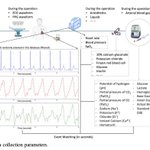
Could wearable signals eventually help estimate blood chemistry during surgery without another arterial sample?
Researchers have released a prospective dataset collected from 1,033 patients at four hospitals in China. It links ECG and pulse-wave signals from wearables with 3,313 arterial blood gas measurements, including 2,841 time-matched waveform segments.
That gives researchers paired physiological signals and laboratory measurements to explore whether AI could estimate variables such as lactate, electrolytes or acid-base status continuously.
Important distinction: the paper releases a dataset. It does not validate an AI monitor, show that blood tests can be replaced, or demonstrate improved patient outcomes.
It's less flashy than a new device launch, but carefully collected clinical data are what make meaningful model development possible.
Source: Scientific Data, November 21, 2026.

More than 1 million dermatology images, but only 11% represented darker skin tones.
A new Nature Communications study combined 1.1 million images from 29 public dermatology datasets and found major gaps:
• 11.0% were categorized as Fitzpatrick skin types V–VI
• Just 2.3% represented pediatric patients
• Many datasets added images similar to those already available, rather than filling clinical gaps
The team used AI to estimate missing demographic labels, so these percentages aren't all based on directly recorded patient characteristics.
This wasn't a test of any particular diagnostic AI model. But it highlights a basic problem: larger training datasets don't necessarily mean broader patient representation.
If the data keep covering the same patients and conditions, how much confidence should we place in claims that an AI system generalizes?
Source: Nature Communications, November 21, 2026.

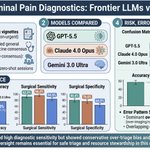
In 50 fictional abdominal-pain cases, GPT-5.5 identified the correct primary diagnosis 92% of the time. But the AI models also tended to over-triage cases.
A new study compared GPT-5.5, Claude 4.0 Opus and Gemini 3.0 Ultra against a consensus from medical and surgical specialists.
Exact diagnosis accuracy was 92%, 88% and 76%, respectively. Sensitivity for urgent surgical cases ranged from 84% to 96%, but specificity was only 64% to 80%.
That matters in an ED. A system designed to avoid missing emergencies could also generate extra investigations, referrals and pressure on clinical teams.
Major caveat: these were 50 scenarios written by the researchers, not real patient encounters. The results don't show that the models are safe or effective for clinical use.
Source: The American Surgeon, November 2026.

95
Could an ordinary smartwatch help identify high blood pressure without a cuff? A Google Research study suggests it might, with important caveats.
In a prospective multicenter study of 196 adults, an AI model used optical pulse and motion signals collected over seven days. Against 24-hour ambulatory BP monitoring, it detected hypertension with 65.8% sensitivity and 90.0% specificity.
Initial office BP screening showed 55.3% sensitivity and the same specificity, but the difference in sensitivity was not statistically significant.
That means the watch still missed roughly one in three hypertension cases. It can't replace cuff-based diagnosis, but passive screening could prompt some people to get checked earlier.
Source: Nature / Google Research, Nov 5, 2026.
#HealthcareAI #HealthcareInnovation

Did you know researchers were experimenting with machine learning for medical diagnosis back in 1959?
A Cornell/IBM team used an IBM 704 computer to identify patterns in blood disease data.
By 1960, researchers had published an approach using clustering and feature selection to classify medical cases.
No neural networks or LLMs. Just early data-driven machine learning.
Medical AI has a longer history than you might think.
#MedicalEducation #HealthcareAI
GPT-5 spotted all 134 urgent messages in a selected primary-care sample. It also incorrectly flagged 190 nonurgent messages as urgent.
Researchers tested six AI models on 1,303 messages from primary care, an epilepsy clinic and public online sources, using physician assessments as the reference.
In the 500-message primary-care sample, GPT-5 missed no urgent messages, but its specificity was just 48%. In the separate epilepsy-clinic sample, it missed one urgent message.
That's the trade-off with AI triage. Missing a time-sensitive message could delay care, but too many false alarms could overwhelm the teams these tools are meant to help.
Promising as an extra screening layer, but we still need real-world evidence on response times, workload and patient safety.
Source: npj Digital Medicine, November 2026.

1
13
627
Researchers built digital twins of 323 patients' left atria to see whether simulated heart rhythms could predict recurrence after atrial fibrillation ablation.
Using detailed electrical mapping data, they recreated each atrium computationally and tested whether virtual AF persisted. Patients whose simulated AF did not sustain had a lower risk of later arrhythmia recurrence (adjusted hazard ratio 0.27).
Adding simulation results to clinical risk factors modestly improved prediction. The analysis excluded 32 cases with extensive low-voltage tissue abnormalities.
It's a promising direction for more individualized risk assessment after ablation, but the study demonstrates an association, not that using digital twins improves treatment outcomes.
Source: npj Digital Medicine, Nov 20, 2026.

One abdominal CT scan can contain clues to several urgent problems. A newly FDA-cleared AI tool is designed to help radiologists identify scans needing faster review.
a2z Radiology AI announced clearance of a2z-Omni-Triage, which analyzes adult abdominal and pelvic CT scans and flags suspected findings across nine categories, including bowel perforation, large aortic aneurysms, hydronephrosis and certain fractures.
It's the company's third cleared triage device, taking the portfolio to 26 specific findings.
Important distinction: this is prioritization software, not an autonomous radiology report. Clinicians still interpret the images and decide what action to take.
Potentially useful in busy departments, but clearance doesn't tell us how much it changes real-world turnaround times or outcomes.
Source: a2z Radiology AI, Nov 19, 2026.
Could a routine medical scan tell whether your body appears older than your actual age?
A new systematic review in npj Digital Medicine examined 40 studies of AI "aging clocks" built from images such as brain MRIs, retinal scans and chest X-rays. Twenty-one contributed to the meta-analysis.
In the mortality analysis (16 studies), each 5-year increase in the difference between imaging-estimated age and actual age was associated with a 31% higher hazard of death from any cause (HR 1.31). Larger age gaps were also linked with dementia, stroke, heart failure, diabetes and hypertension.
There's an important catch: results varied enormously between studies (I² = 96.3%). This is an association, not a prediction of when someone will die, and it isn't ready to guide routine care.
Still, imagine if a scan ordered for one reason could eventually help flag broader health risks.
Source: npj Digital Medicine, November 19, 2026.

100