

Human Intracranial Cognitive Neuroscience & Neurology Lab, PI Randolph Helfrich, @dfg_public Emmy Noether Group @uni_tue, @uktuebingen, @TueNeuroCampus
Tübingen
Joined January 2022
- Tweets151
- Following702
- Followers1.1K
- Likes277
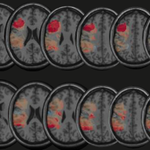
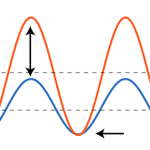
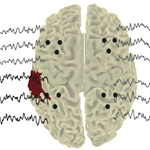
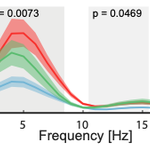
HelfrichLab retweeted

Anatomy sets things up, but it’s not the whole story. A low-D communication subspace from PFC to motor cortex reconfigures with context, routing signals so the same movements can be driven by different rules without rewiring the network.
nature.com/articles/s41593-0…
#neuroscience

HelfrichLab retweeted

𝗪𝗵𝗮𝘁 𝗶𝘀 𝗻𝗼𝗶𝘀𝗲 𝗶𝗻 𝘁𝗵𝗲 𝗯𝗿𝗮𝗶𝗻?
Almost always we average responses thus equating response variability with noise.
Well, we shouldn't because variability is also signal, not noise to be entirely discarded.
doi.org/10.1016/j.neuron.202…

HelfrichLab retweeted

Our new paper is out in @NatureNeuro
How do large-scale brain networks route information about where/what to attend at fast timescales?
High-frequency bursts facilitate fast communication for human spatial attention
nature.com/articles/s41593-0…
Using intracranial EEG recordings and spiking neural network modeling we demonstrate that transient bursts of high-frequency activity (HFAbs) in the human brain facilitate attentional performance and support fast, large-scale information routing.
We show:
- HFAbs are synchronized brain-wide.
- HFAbs are strongly coupled to slower brain rhythms but transiently decouple during active processing, such as cue and target periods.
- Network-level synchronization patterns of HFAbs reveal functional subnetworks for cue and target processing.
- HFAbs in cue subnetworks predict behavioral accuracy following cue onset, and precede target subnetworks following target onset when cues are informative for target detection.
- Using spiking neural network models, we show that HFAbs reflect state transitions in population activity, and a four-network model demonstrates attention-mediated fast HFAb communications enhances probability of target detection.
We demonstrate that transient bursts of high-frequency activity (HFAbs) in the human brain facilitate attentional performance and support fast, large-scale information routing. Using intracranial EEG recordings and spiking neural network modeling we show:
We demonstrate that transient bursts of high-frequency activity (HFAbs) in the human brain facilitate attentional performance and support fast, large-scale information routing. Using intracranial EEG recordings and spiking neural network modeling we show:

HelfrichLab retweeted

#eNeuro: Kopf and colleagues directly tested whether MEG background activity reflects hyperexcitability in a patient cohort suffering from generalized epilepsy. Their results demonstrate that background activity does not constitute random noise, but reflects excitability dynamics, which define the current brain state. @HelfrichLab @TueNeuroCampus @HIHTuebingen
eneuro.org/lookup/DOI/10.152…

HelfrichLab retweeted
A tradeoff between efficiency and robustness in the hippocampal-neocortical memory network during human and rodent sleep
doi.org/10.1016/j.pneurobio.…
#neuroscience
HelfrichLab retweeted

Check by a 5yr journey of the lab in mice & humans, just up on bioRxiv! Post-ictal symptoms can be life-threatening, & basic mechanisms are mostly unclear. 1/2 biorxiv.org/content/10.1101/…

HelfrichLab retweeted

Back in 2022, @roxana_zeraati & I organized a Cosyne workshop on neural timescales, and after working on it for the last 2 years together, it's now a review paper!
arxiv.org/abs/2409.02684
w/ @SelfOrgAnna & @jakhmack
(2nd blogpost to turn into a real review paper this year lol)

HelfrichLab retweeted

Also at #SleepEurope24 #ESRS ?
Come visit our symposium and learn about aperiodic neural activity in sleep!
With Yevgenia Rosenblum, Philippe Peigneux, Michele Colombo and Csenge Horvath!

HelfrichLab retweeted
🚨🚨🚨New preprint
Attentional Information Routing in The Human Brain
We investigated large-scale cortical communications at fast timescales through high frequency activity bursts.
(1/6):
biorxiv.org/content/10.1101/…
HelfrichLab retweeted
My #AI4Neuro magnum opus:
Discovery of spiking network model parameters constrained by neural recordings, using simulation-based inference & generative “AI”.
(aka the answer to “how the f did you end up in Tübingen?”)
Here's what we have in store:
biorxiv.org/content/10.1101/…
HelfrichLab retweeted

Coming to #SFN24?
Interested in direct-brain recordings in humans?
Join us (@Zjmay1 and I) in one month for the biannual nanosymposium on human intracranial research into complex cognitive processes! @SfNtweets
10/5/2024
1:00-4:00 pm
Program: abstractsonline.com/pp8/#!/2…

HelfrichLab retweeted

Nearly all the chapters in the brand new Oxford Handbook of Human Memory can be found here:
memory.psych.upenn.edu/Oxfor…
HelfrichLab retweeted

📢 The Centre for Integrative Neuroscience of @uni_tue is pleased to announce
2024 Tübingen Systems Neuroscience Symposium #SNS2024
Join us for plenary lectures, poster sessions and social events
on 26-27 September 2024, more info and registration 👇
meg.medizin.uni-tuebingen.de…

HelfrichLab retweeted

Come work with me in Nancy, France 🧠🥖🍷
Two-Year Postdoc Position on the Role of Temporal Integration in Visual Attention Using Human Intracerebral Recordings | EURAXESS euraxess.ec.europa.eu/jobs/2…
please share!

HelfrichLab retweeted

Literature highlight of the week: Weber et investigate the differential contributions of Oscillatory and ramping dynamics to the encoding and transfer of different cognitive variables in a cue-guided motor task in humans.
nature.com/articles/s41467-0…

HelfrichLab retweeted

Check out SleepEEGpy: our newly developed open-source python-based all-in-one package for preprocessing, analysis, and visualization of sleep EEG data, building upon MNE-Python, YASA, and SpecParam (FOOOF). Please RT & share 🙏
biorxiv.org/content/10.1101/…
HelfrichLab retweeted

So excited to have my first PhD paper published in @CurrentBiology! @HelfrichLab

New paper led by @IsabelRaposo16 on altered rhythmic attentional sampling in frontoparietal lesion patients is now published in @CurrentBiology and available here sciencedirect.com/science/ar… Tweetprint below.
HelfrichLab retweeted

Here it is! Almost 1000 pages with all you would want to know about intracranial EEG #iEEG as a research tool. Congratulations to Nikolai Axmacher for putting this together.

HelfrichLab retweeted

Dear Esteemed researchers,
An event to dive deep into the fascinating and intricate thalamus.
Please join 🙂 Thalamus Anatomy and Connectomics Conference (October 30 – 31 in Tübingen, Germany)
tuebingen.mpg.de/thalamus
Like, Share, Retweet 😍 Thanks.
@ThalamicS @TueNeuroCampus

HelfrichLab retweeted

When we rest, we remember—EEG recordings show that nonoscillatory brain activity during #REMsleep reconfigures neural activity, consolidating our memories overnight and enhancing long-term #memory. scim.ag/3TC
