

Author of F*ck Health Insurance Companies (Before They F*ck You). Exposing insurance industry BS, fighting denials, and helping pissed-off consumers fight back.
United States
Joined October 2026
- Tweets352
- Following121
- Followers39
- Likes55


Pinned Tweet
What the actual f*ck are we paying health insurance companies for?
Seriously.
We pay outrageous premiums. We swallow enormous deductibles. We get hammered with copays, coinsurance, and out-of-pocket expenses.
And when we actually need medical care?
Suddenly, we’re negotiating with a multibillion-dollar corporation over whether we’re entitled to use the coverage we’ve been paying for.
WHAT. THE. F*CK.
I’ve spent decades working in the health insurance and employee benefits industry. I know the rules. I know the financial incentives. I know how the system operates.
And I’m absolutely disgusted by what American consumers are being forced to tolerate.
We’re paying more, getting less, and being buried under an avalanche of restrictions, denials, confusing bills, and bureaucratic bullsh*t.
People are exhausted. They’re angry. And they have every right to be.
Because when someone is sick, scared, or facing financial ruin, the last thing they should have to worry about is whether their insurance company can find a reason not to pay.
People have had enough. I know I have. That’s why I wrote this book.
“F*ck Health Insurance Companies! (Before They F*ck You)”
And no, it’s not just a book full of profanity and righteous indignation.
It’s about fighting back.
Understanding your coverage. Exposing the traps. Knowing your rights. Challenging denials. And refusing to be intimidated by a company whose decisions can have devastating consequences for your health and finances.
Because here’s what insurance companies understand all too well:
Most people don’t know the rules. Many don’t know they can appeal. And plenty are too overwhelmed to fight.
That needs to change.
I’m not asking anyone to be polite about a system that’s been anything but polite to them.
I’m asking people to get informed, get angry, and start standing up for themselves.
The insurance companies have had their way for far too f*cking long.
a.co/d/0jdAASbJ

1
74
Bernie Sanders (@SenSanders) wants Medicare for All. And while I agree with his diagnosis of America’s healthcare crisis, I’m not convinced he’s written the right prescription.
His latest proposal would lower Medicare eligibility to 55 in the first year, then 45, then 35, before covering everyone in year four. It would also expand benefits to include dental, vision, and hearing care.
Sounds great. But here’s where we need to ask some uncomfortable questions.
First, who’s paying for it?
Eliminating private insurance premiums doesn’t eliminate healthcare costs. It changes how we collect and distribute the money. That might produce substantial savings, particularly in administrative expenses, but it doesn’t automatically make healthcare affordable.
What happens to payroll taxes? What happens to provider reimbursement? And what happens when hospitals already struggling financially are expected to operate under an entirely different payment structure?
Second, insurance coverage isn’t the same thing as access to healthcare.
You can give every American an insurance card tomorrow. That doesn’t magically create more primary care physicians, specialists, nurses, hospital beds, or appointment availability.
Without addressing provider shortages, reimbursement incentives, and healthcare infrastructure, we risk replacing financial barriers with access barriers.
Third, Medicare itself isn’t exactly a shining example of simplicity.
Traditional Medicare has significant coverage gaps, complicated rules, and an administrative apparatus that can be every bit as maddening as private insurance.
And Medicare Advantage? That’s already a taxpayer-funded playground for private insurers, complete with prior authorizations, denials, and plenty of opportunities to put profits ahead of patients.
Expanding Medicare without fundamentally reforming how healthcare is administered risks scaling up some of the very problems we’re trying to eliminate.
Fourth, what happens to the actual cost of medical care?
Hospital consolidation. Pharmaceutical pricing. Physician practice acquisitions. PBMs. Facility fees. Wildly inconsistent negotiated rates.
These are major drivers of dysfunction, and simply changing who pays the bills doesn’t automatically fix them.
To be fair, Sanders is absolutely right about something important: Our current system is a f*cking disgrace.
We spend extraordinary amounts of money on healthcare while millions of Americans struggle to afford coverage, obtain necessary treatment, or understand what they’re being charged.
And the private insurance industry has done an exceptional job of demonstrating why Americans are furious.
But I don’t want healthcare reform that merely replaces one massive bureaucracy with another.
I want transparent pricing. Meaningful accountability. Aggressive action against abusive billing practices. Real competition where it can work. Negotiated drug prices. Simplified administration. And a healthcare system where medical necessity is determined by clinical evidence, not corporate financial incentives.
Universal coverage is a worthy goal. Medicare for All is one possible means of achieving it, not the only one.
The question isn’t whether America needs fundamental healthcare reform. It desperately does.
The question is whether Sanders’ proposal actually fixes what’s broken, or simply changes who’s in charge of the mess.
Because Americans don’t need another healthcare financing experiment dressed up as a miracle cure.
They need affordable healthcare that actually works.
And that’s something worth fighting like hell for.
#MedicareForAll #HealthcareReform #HealthInsurance
AP News: apnews.com/article/bernie-sa…

1
46
ACA benchmark health insurance premiums:
2026: UP 26%.
2027: UP another 13%.
That’s roughly 42% in two years.
Apparently, the cure for unaffordable health insurance is to make it even more f*cking unaffordable.
And they wonder why people go uninsured.
#HealthInsurance #OpenEnrollment
kff.org/affordable-care-act/…

According to the latest Peterson-KFF @KFF report, overall consumer healthcare prices have doubled.
Medical prices? Up 133%.
Hospital prices? Up a staggering 314%.
Apparently, hospitals looked at inflation and said, “Hold my f*cking beer.”
And Americans are expected to just keep paying.
This analysis exposes just how badly healthcare costs have spiraled out of control.
#HealthcareCosts #HealthInsurance #MedicalInflation
healthsystemtracker.org/brie…

Your health insurance premium could be going through the f*cking roof in 2027.
And here’s the part that should REALLY piss you off:
Paying more doesn’t necessarily mean getting better coverage.
Higher deductibles. Bigger copays. Narrower networks. More out-of-pocket exposure.
Open enrollment isn’t just about picking a plan. It’s about protecting yourself from a VERY expensive mistake.
Don’t just compare premiums. Check the deductible, out-of-pocket maximum, prescription coverage, provider network, and exclusions.
The cheapest plan can become the most expensive mistake of your year.
Read the fine print now, or risk paying for it later.
#HealthInsurance #OpenEnrollment #HealthcareCosts
31
The American Hospital Association wants Congress to crack down on insurance companies. Good. It’s about time!
Insurers absolutely deserve scrutiny for denying medically necessary care, delaying treatment, and putting profits ahead of patients.
But here’s where it gets interesting.
The AHA also wants Congress to reject expanded site-neutral Medicare payments, which could mean paying hospitals more for certain services simply because of where they’re performed.
So yes, let’s hold insurance companies accountable.
But hospitals don’t get a free pass on pricing, billing practices, or transparency, either.
Patients don’t give a f*ck which side wins the lobbying battle. They want affordable healthcare without getting financially destroyed.
Accountability isn’t a one-way street.
#HealthInsurance #HealthcareReform #PatientRights
aha.org/news/headline/2026-1…

$18.5 MILLION in fines. And the year’s not even over.
But here’s the really f*cked-up part: For insurance companies raking in billions, fines like these can amount to little more than a cost of doing business.
Deny care. Delay treatment. Fight over payments. Pay the fine. Repeat.
Until the penalties hurt more than the profits, what the f*ck is going to change?

.@DylanRatigan just asked a question that ought to scare the sh*t out of the health insurance industry:
“Is the healthcare budget meant to fund insurance companies, or to make Americans healthy?”
YES!
Because somewhere along the way, we confused financing healthcare with actually delivering it.
We built a system that measures success in premiums collected, claims processed, medical loss ratios, and shareholder returns, while Americans drown in medical debt, fight for necessary treatment, and pay through the nose for the privilege.
Dylan’s proposal is beautifully simple: AUDIT THE DAMN SYSTEM.
Follow the money. Measure the outcomes. Identify who benefits. Stop rewarding failure.
Here’s where I’d take it a step further:
Don’t stop at auditing government healthcare spending. Follow the public dollars into the private insurance companies, pharmacy benefit managers, hospital systems, and corporate intermediaries that feed off them.
Find out how much money actually improves someone’s health and how much gets swallowed by the machinery we’ve built around healthcare.
If a program costs more but produces worse outcomes, why the f*ck are we still paying for it?
And if an insurance company’s financial success depends on restricting access to care, perhaps we should stop pretending its incentives are aligned with the people it’s supposed to serve.
This shouldn’t be a Republican issue or a Democratic issue. It should be an AMERICAN issue!
Dylan is absolutely right: Show us where the money goes. Show us what it buys. Show us who benefits.
Then show us who has been getting rich while the rest of us get sick.
Excellent piece, Dylan. Worth everyone’s time.
dylanratigan.substack.com/p/…
Here’s a radical idea: Let workers control their own healthcare dollars.
Employer health insurance costs are rising twice as fast as wages.
Cato (@CatoInstitute @CatoHealth) has proposed Universal Health Accounts that would put more control in workers’ hands, reduce tax advantages favoring higher earners, and give people greater freedom to choose their coverage.
Is it the answer? Maybe so, maybe not. But it’s a conversation worth having.
Because the current system traps millions of Americans in employer-controlled insurance arrangements while swallowing money that could otherwise go into their paychecks.
Your money. Your health. Your choice.
It’s time to challenge the f*cked up status quo.
cato.org/blog/introducing-un…
#HealthInsurance #HealthcareReform

1
59
YOUR DOCTOR ORDERS THE CARE. YOUR INSURANCE COMPANY ORDERS THE DELAY.
And it’s about damn time we put an end to that bullsh*t.
Here’s a number that should piss you off:
67% of appealed Medicare Advantage prior authorization denials were overturned.
That’s right. Even people on government-funded healthcare face denials. Medicare Advantage is administered by private insurers, and nearly seven out of ten appealed denials were reversed.
How many patients never appealed? How many suffered or got sicker while they were waiting and fighting?
The Center for American Progress proposes taking prior authorization decisions away from insurers and giving them to independent clinical reviewers.
Worth considering. But replacing insurance-company bureaucracy government bureaucracy (or adding another layer of bureaucracy) isn’t a cure-all.
We need transparency, accountability, and real consequences when wrongful denials harm patients.
This shouldn’t be a partisan victory. And it isn’t about public versus private insurance. It’s about putting patients ahead of profits AND bureaucracy.
Read the proposal:
americanprogress.org/article…
#PriorAuthorization #HealthInsurance #PatientRights #InsuranceDenials

1
37
HERE’S A NUMBER THAT SHOULD MAKE YOU ANGRY: 2%.
According to @KFF, new Medicaid transparency rules require standardized comparisons with Medicare, but the selected services represent just 2% of noninstitutional fee-for-service spending.
We’re calling THAT transparency?
If taxpayers fund healthcare, they deserve to know what providers are paid. And patients deserve to know whether those payments support access to care.
TRANSPARENCY WITHOUT MEANINGFUL ACCOUNTABILITY ISN’T ENOUGH.
kff.org/medicaid/medicaid-pa…
#Medicaid #HealthcareTransparency

9
Dr. Ashish Jha (@ashishkjha) gets a LOT right about our broken healthcare system: outrageous prices, prior authorization BS, administrative waste, and insurance that fails to protect patients.
But here’s where we part ways: Can you really fix a system that rewards denying and delaying care?
Reform is overdue. Accountability is nonnegotiable. Let’s fix the f*cking system.
amomentinhealth.substack.com…
#HealthcareReform #HealthInsurance
13
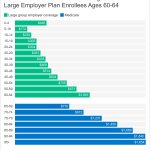
TAKE A GOOD LOOK AT THIS CHART.
Americans ages 60–64 with employer-sponsored insurance generate an average of $1,061 per month in healthcare spending. Meanwhile, Medicare beneficiaries ages 65–69 average just $770 per month.
That’s nearly 28% LESS, despite being an older population!
How is that possible?
One big reason: Medicare generally pays healthcare providers substantially LESS than private insurers for the same services.
And here’s where things get really f*cked up…
In some cases, patients can actually pay LESS for medical services by paying CASH than by using their health insurance!
Think about that!
Insurance companies supposedly wield enormous negotiating power. They represent MILLIONS of patients. They have entire departments dedicated to negotiating prices.
Yet an individual patient can sometimes walk into a healthcare facility, leave their insurance card in their wallet, and get a BETTER DEAL.
What the hell are these insurance companies actually negotiating??
To be clear, this chart compares different populations, not the same patients before and after Medicare eligibility. It doesn’t prove that lower reimbursement rates explain the entire difference.
But it highlights a much bigger problem. American healthcare prices are wildly inconsistent, often opaque, and frequently disconnected from what patients would reasonably expect to pay.
We don’t need more bureaucracy.
We need TRANSPARENT prices, REAL competition, and an end to the F*CKING GAMES that make American healthcare so outrageously expensive.
WE DESERVE BETTER!
#HealthInsurance #PriceTransparency #OpenEnrollment

19
🚨 DON’T blindly renew your ACA plan for 2027.
Your premium, subsidy, doctors and prescription coverage may change.
Compare plans. Read the details. Know what you’re buying.
Don’t let an insurance company surprise you.
#HealthInsurance #ACA #OpenEnrollment
kff.org/affordable-care-act/…
15
Congress passed the No Surprises Act to protect patients from outrageous bills.
Now its arbitration system has reportedly added $22.4 BILLION in medical costs.
Only in American healthcare could consumer protection create another multibillion-dollar mess.
#healthinsurance #HealthcareReform
#NoSurprisesAct
wtwco.com/en-us/insights/202…

1
7
Employers are getting crushed by healthcare costs.
Employees are paying more.
Doctors are drowning in paperwork.
Patients are fighting for care.
Who the hell is this system working for?
#HealthInsurance
axios.com/2026/11/16/employe…

5
A small business owner gets sued for $27,000 over an employee’s emergency helicopter ride.
Why? A payment war involving an air ambulance company and an insurer.
The No Surprises Act was supposed to protect Americans from outrageous medical bills. Now the fighting is spilling over onto employers, threatening to drive healthcare costs even HIGHER.
Insurers dispute payments. Providers demand more. Lawyers cash in.
And who ultimately pays for this whole f*cked up mess?
WORKERS AND THEIR FAMILIES.
statnews.com/2026/11/11/no-s…
#HealthInsurance #NoSurprisesAct #HealthcareCosts #MaxJustice #HealthcareReform #Healthcare

14
$34,162 A YEAR. FOR HEALTHCARE.
That’s the average annual cost of family healthcare in Massachusetts, including insurance premiums and out-of-pocket expenses.
Nearly $2,850 EVERY MONTH.
And here’s the real kicker: Almost 90% of Massachusetts residents with family medical debt incurred it WHILE INSURED.
We’re paying a fortune for financial protection that too often FAILS to protect us.
THIS SYSTEM IS F*CKED UP.
masshpc.gov/sites/default/fi…
#HealthInsurance #HealthcareCosts #PatientsOverProfits #MaxJustice #healthcare #ACA #OpenEnrollment
26
Impersonators allegedly stole millions from two health systems by posing as CEOs.
Healthcare organizations are already under enormous financial pressure. Now fraudsters are exploiting that pressure to steal money that should be going toward patient care.
Every dollar diverted by fraud is a dollar unavailable for treating patients. And patients are the ones who ultimately suffer.
Nearly $7.8 MILLION allegedly stolen from two health systems. Criminals used technology to impersonate CEOs and attorneys, tricking employees into wiring money to fraudulent accounts.
The same technology that promises to transform healthcare is also creating terrifying new opportunities for fraud.
Healthcare organizations need stronger safeguards. Patients need to know their money and information are f*cking protected.
beckershospitalreview.com/le…

Only 5% of Americans are comfortable letting AI make insurance claim decisions on its own. Yet insurers are increasingly turning to algorithms to decide what care gets paid for.
Remember when @ProPublica exposed a major carrier’s automated system for rejecting claims in which they denied more than 300,000 claims in two months, averaging just 1.2 SECONDS per claim?
1.2 seconds.
That’s not meaningful medical review. That’s an assembly line for denials.
And we’re supposed to trust AI with MORE of these decisions?
AI should help patients get BETTER care, not help insurers deny it FASTER.
#MaxJustice #HealthInsurance #AIDenials #PriorAuthorization #PatientRights #HealthcareReform #ArtificialIntelligence #InsuranceDenials #PatientsOverProfits

15