

Independent reporting for American agriculture, natural resources, and rural business.
Colorado, USA
Joined January 2026
- Tweets2.3K
- Following581
- Followers448
- Likes7K





Pinned Tweet
High Country Observations works where agriculture, natural resources, regulation, technology, and rural business meet.
We provide consulting and field technology for the people and businesses working on the ground, while independently reporting on the systems shaping American land, water, food, wildlife, energy, and rural communities.
Our purpose is simple: understand how these systems actually work, help people navigate them, and bring practical solutions to the places where policy meets the real world.
1
4
280
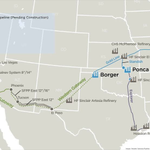
Federal officials have begun reviewing a proposed 887-mile fuel pipeline from Texas to Arizona.
The Western Gateway project would transport gasoline and diesel across the Southwest, potentially expanding the region's fuel supply options.
Public comments open November 17. No construction has been approved.
A proposed 887-mile petroleum pipeline could change how gasoline and diesel reach communities across the American Southwest.
On November 16, the Bureau of Land Management announced that it is beginning an environmental impact statement for the Western Gateway Pipeline.
The project would connect existing fuel infrastructure through two new pipeline segments.
The first would be a 20-inch pipeline running from Borger to El Paso, Texas.
The second would be a 24-inch pipeline extending from El Paso to Buckeye, Arizona.
Together, the segments would connect with existing pipeline networks to move refined petroleum products from the Mid-Continent and Gulf Coast regions toward Western markets.
The proposal would cross federally managed lands in New Mexico and Arizona, requiring BLM review.
The economic argument centers on fuel transportation.
Much of the Southwest depends on a combination of refineries, pipelines, rail and trucking to supply gasoline, diesel and aviation fuel.
Additional pipeline capacity could provide another transportation option, potentially improving supply flexibility when existing infrastructure experiences disruptions.
For ranchers, farmers, trucking companies and rural communities, diesel availability and transportation costs influence everything from fieldwork to freight rates.
But additional infrastructure does not automatically guarantee lower fuel prices.
Any savings would depend on pipeline tariffs, refinery supply, regional demand, competition and how distributors price their products.
The project also raises land-use questions.
Pipeline construction can temporarily disturb grazing land, vegetation and access routes. Permanent rights-of-way may impose restrictions on certain uses, while construction and maintenance can create employment and business opportunities.
The environmental review will examine potential impacts and alternatives before federal officials decide whether to authorize the proposed route across public lands.
The BLM plans to publish its formal notice on November 17, opening a 30-day public scoping period.
Comments are due December 17, with virtual public meetings scheduled for December 1 and 2.
The project remains a proposal. Construction has not been approved, and its ultimate cost, completion date and effect on fuel prices remain uncertain.


28
Colorado's BLM is considering opening another 118 miles of mountain bike trails to electric bikes.
A second option would open 187 miles.
The proposal covers trails around the Colorado River Valley, including the Rifle and Eagle areas. Public comments are open through December 14.
1
2
100
A proposal in western Colorado could substantially expand where electric mountain bikes are allowed on federal public lands.
On November 13, the Bureau of Land Management opened public comment on a draft environmental assessment covering Class 1 e-bike access within its Colorado River Valley Field Office.
The agency manages more than 220 miles of designated single-track mountain bike trails in the area.
Currently, approximately 18 miles at the Grand Hogback Trail System north of Rifle are open to Class 1 e-bikes.
BLM's proposed action would open another 118 miles of existing trails, including routes in designated recreation areas and near the Hardscrabble-East Eagle Special Recreation Management Area.
A second alternative would open 187 additional miles.
The agency is also considering leaving existing access rules unchanged.
Class 1 e-bikes provide motor assistance only while the rider is pedaling, and that assistance stops at 20 mph. The proposal does not extend to throttle-powered or higher-speed electric bikes.
Supporters argue that pedal-assist technology allows older riders, people with different physical abilities and others to access trails they might otherwise struggle to enjoy.
Opponents have raised concerns about crowding, conflicts between trail users, wildlife disturbance and additional pressure on sensitive areas.
Those questions are particularly relevant on narrow single-track routes shared by cyclists, hikers and other recreationists.
BLM says comments received during an earlier review helped shape the alternatives now under consideration.
The agency is asking for feedback about specific trails, conditions and potential management measures, including signage and directional routes.
The proposal does not authorize new trail construction. It concerns access to trails that already exist.
No changes will take effect until BLM completes its environmental review and issues a final decision.
Public comments close December 14, 2026.
For people who regularly ride, hike or hunt near these trail systems, the comment period provides an opportunity to identify where expanded access could work and where conflicts may need additional attention.


1
1
21
FDA has closed its investigation into an E. coli outbreak linked to Sierra Nevada Graziers raw milk cheese.
The final count includes 18 illnesses across 10 states, nine hospitalizations and three cases of kidney failure.
The outbreak is over, but recalled cheese may still be in refrigerators.
1
31
Federal health officials have closed their investigation into a multistate E. coli outbreak linked to raw milk cheese produced in Northern California.
On November 13, FDA announced that the outbreak involving Sierra Nevada Graziers grass-fed raw milk cheeses had ended.
Investigators identified 18 illnesses across 10 states, including California, Colorado, Nevada, New Mexico, Oregon and Utah.
Nine people were hospitalized, and three developed hemolytic uremic syndrome, a serious complication that can cause kidney failure.
No deaths were reported.
Illnesses began between July 7 and September 20, 2026.
Investigators interviewed 15 affected people or their caregivers. All 15 reported eating Sierra Nevada Graziers raw milk cheese before becoming ill.
Laboratory testing provided additional evidence.
California health officials recovered E. coli from an opened package of Graziers raw medium cheddar cheese in a patient's home. Genetic testing matched the bacteria to the outbreak strain.
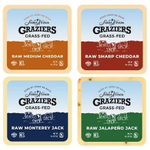
Sierra Nevada Cheese Company initiated a nationwide recall in September covering its Graziers raw milk Monterey Jack, Jalapeño Jack, Medium Cheddar and Sharp Cheddar varieties.
The recall includes retail packages and larger food-service products.
Investigators did not identify a single production lot or date code, so the recall covers all affected Graziers raw milk cheese products in distribution.
Although CDC has declared the outbreak over, consumers should not assume that cheese purchased earlier is safe.
Some recalled products may remain in refrigerators or freezers because cheese has a relatively long shelf life.
FDA advises consumers to discard the affected products or return them to the place of purchase for a refund.
Surfaces and containers that contacted the cheese should also be cleaned and sanitized.
The closure of the outbreak investigation means officials are no longer tracking an ongoing cluster of illnesses. It does not cancel the recall or establish that every recalled package has been removed from consumers' homes.


1
19
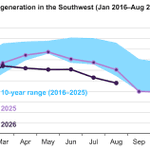
Hydropower generation in the Southwest hit a record summer low in 2026.
Federal data show production fell 19% from last year and 28% below the 10-year average.
Low water at Lake Powell and Lake Mead is now affecting more than water supplies. It's reducing electricity production across the region.
1
46
The Colorado River's long-running water shortage is increasingly showing up in the Southwest's electricity supply.
On November 13, the U.S. Energy Information Administration reported that regional hydropower generation reached a record summer low in 2026.
From April through August, hydroelectric production was 19% lower than during the same period last year and 28% below the 10-year average.
The primary problem is declining reservoir elevations.
At Glen Canyon Dam, Lake Powell must remain above approximately 3,490 feet to generate electricity. By the end of September, its elevation had fallen to 3,518 feet, just 28 feet above that threshold.
Lake Mead, which supplies Hoover Dam, ended September at approximately 1,038 feet, compared with a minimum power pool of 950 feet.
Lower reservoir elevations reduce the hydraulic pressure available to drive turbines, limiting electricity production even before a dam reaches its minimum operating level.
Federal water managers have already taken steps to protect Lake Powell's ability to generate power.
Those measures include releasing additional water from Flaming Gorge Reservoir and reducing releases from Lake Powell.
But holding more water upstream can also affect Lake Mead and Hoover Dam downstream.
The EIA expects Southwest hydropower generation to total approximately 6.13 billion kilowatt-hours in 2026, down 9% from 2025.
Hydropower is projected to supply only about 4% of the region's electricity this year, compared with 8% in 2011.
Utilities must obtain electricity from other sources when hydropower production declines. Depending on available generation and contract arrangements, that can increase costs, although the effect on individual customer bills varies.
Recent autumn storms have improved storage conditions in parts of the Colorado River Basin, but they do not erase the effects of prolonged drought.
For Western water and power managers, the challenge is increasingly interconnected between protecting reservoir storage while maintaining dependable electricity generation and downstream water deliveries.


42
Another antlerless elk hunt period begins Monday at Wyoming's National Elk Refuge near Jackson.
The November 16–19 hunt is limited to hunters selected through the state's access system.
These controlled hunts help manage elk numbers on a refuge that also provides critical winter habitat.
1
1
155
Wyoming's National Elk Refuge begins another scheduled antlerless elk hunting period Monday, November 16.
The hunt runs through November 19 and is part of a carefully managed series of hunting opportunities on the refuge near Jackson.
Unlike general public-land hunting, access to the refuge is controlled through a separate application and permission system.
Hunters must hold the appropriate Wyoming elk license and meet the requirements for the specific hunt period.
The National Elk Refuge provides winter habitat for thousands of elk migrating from the surrounding Greater Yellowstone ecosystem.
The animals depend on seasonal movement between summer ranges and lower-elevation wintering areas.
That movement becomes increasingly important as snow accumulates in the surrounding mountains.
Managing the herd involves several competing objectives.
Wildlife officials must consider elk population numbers, winter habitat conditions, disease concerns, hunting opportunities and conflicts with neighboring agricultural operations.
Controlled hunting can help regulate herd numbers while providing opportunities for hunters to harvest meat.
But hunting on the refuge is not intended to function like unrestricted access to a national forest.
Specific dates, areas, permit requirements and hunting conditions apply.
The November 16–19 period is designated for antlerless elk.
Additional hunt periods are scheduled later in November and early December, including youth hunting opportunities over Thanksgiving weekend.
Hunters interested in upcoming periods should check Wyoming Game and Fish's official National Elk Refuge Hunter Management Area information.
The application process and available permits vary by hunt period.
For Western wildlife managers, the refuge illustrates a broader challenge which includes maintaining migratory elk herds in landscapes where winter habitat, private property, roads and human development increasingly overlap.
The immediate opportunity is limited to hunters already selected for the November 16–19 period. Future applicants should review the next available drawing dates rather than assuming they can arrive and hunt.


15
The Senate has unanimously passed legislation to improve U.S. weather forecasting.
The bill targets aging radar systems, wildfire and flood warnings, and longer-range drought forecasts.
For Western farmers, ranchers and rural communities, better advance warning could improve decisions about water, livestock and safety.
1
20
Congress is considering a substantial update to the federal weather forecasting system, with potential consequences for agriculture, water management and emergency preparedness across the West.
On November 10, the U.S. Senate unanimously passed the Weather Research and Forecasting Innovation Reauthorization Act of 2026.
The legislation would reauthorize and update several National Oceanic and Atmospheric Administration programs responsible for weather research, forecasting and public warnings.
One major objective is modernizing the nation's aging weather radar network and addressing gaps in radar coverage.
Those gaps can be especially problematic in mountainous and sparsely populated areas where storms develop quickly and weather observations are limited.
The bill also directs attention toward improving forecasts for drought, wildfires, flooding, landslides and atmospheric rivers.
For Western agriculture, longer-range forecasts are particularly important.
Farmers make planting, irrigation and marketing decisions months before harvest. Ranchers must plan forage supplies, livestock movement and winter feeding around uncertain weather conditions.
Water managers depend on forecasts of precipitation, snowpack and runoff to operate reservoirs and anticipate shortages.
More reliable forecasts several weeks or months ahead could help those decisions, although improved research does not guarantee accurate predictions of every event.
The legislation also includes measures to modernize NOAA Weather Radio and improve how emergency warnings reach the public.
That is particularly relevant to rural communities where cellular coverage can be unreliable.
The Senate vote was unanimous, reflecting bipartisan support for improvements to forecasting and warning infrastructure.
But the bill has not become law.
The House of Representatives must approve the legislation, and the president must sign it before the proposed changes take effect.
Even then, implementation would depend on agency planning, appropriations and the development of new forecasting technology.
The immediate development is Senate passage. The next milestone is consideration by the House before the current Congress adjourns.


15
USDA is cutting its export forecast for hard red winter wheat by 10 million bushels while raising white wheat exports by the same amount.
That's a split between the Plains and Pacific Northwest wheat markets.
Total U.S. wheat exports remain projected at 750 million bushels.
1
32
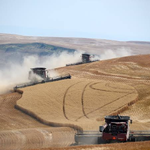
USDA's latest wheat outlook shows a growing difference between export demand for wheat produced across the Great Plains and the Pacific Northwest.
In its November 13 report, USDA reduced projected hard red winter wheat exports for the 2026–27 marketing year by 10 million bushels, bringing the forecast to 165 million.
At the same time, the agency increased its white wheat export forecast by 10 million bushels to 235 million.
Total U.S. wheat exports remain projected at 750 million bushels.
The changes reflect differences in export sales and shipment activity among wheat classes.
Hard red winter wheat is produced extensively across Kansas, Colorado, Oklahoma and other Plains states. Its relatively high protein content makes it important for bread flour.
White wheat, produced heavily in Washington, Oregon and Idaho, serves different markets, including noodles, pastries and other products.
Although both crops are wheat, they do not always compete for the same customers.
USDA's revisions suggest that white wheat is attracting stronger export demand relative to previous expectations, while hard red winter wheat shipments are lagging.
The report also lowered the projected season-average U.S. wheat farm price by 10 cents to $6.20 per bushel.
For growers, export forecasts influence market expectations but do not determine the price received at an individual elevator.
Local basis, protein levels, transportation expenses and available buyers all affect cash bids.
The Pacific Northwest's access to export terminals along the Columbia River also creates different transportation economics from those facing inland Plains producers.
USDA reports that total U.S. wheat exports during June through September were 33% below the same period last year.
That broader weakness remains a concern even as the outlook improves for white wheat.
These are marketing-year forecasts, not final shipment totals. Actual export demand over the coming months will determine whether USDA's revised estimates hold.


38
USDA is hiring 228 workers for its new screwworm defense facility in South Texas.
The plant is expected to produce up to 300 million sterile flies weekly at full capacity, helping suppress a parasite that threatens cattle, horses and wildlife.
Construction is scheduled for completion in April 2027.
The federal government is moving closer to establishing domestic production of sterile flies used to combat New World screwworm.
USDA announced November 10 that it is recruiting 228 employees for a new production facility in Edinburg, Texas.
An in-person hiring event will take place November 17–19 in McAllen.
The facility is scheduled for construction completion in April 2027, with production expected to begin later that year.
USDA initially expects the plant to produce approximately 100 million sterile flies per week, eventually increasing to 300 million at full capacity.
New World screwworm is a parasitic fly whose larvae feed on living tissue in warm-blooded animals.
Infestations can cause severe injuries and death in cattle, horses, wildlife and other animals.
Unlike ordinary blowflies that feed on dead tissue, screwworm larvae infest living animals, making the pest particularly dangerous to livestock operations.
The primary control method involves raising large numbers of flies, sterilizing them through irradiation and releasing them into areas where wild screwworm populations are present.
Female screwworm flies typically mate only once. When they mate with sterile males, their eggs fail to hatch, gradually reducing reproduction in the wild population.
USDA currently supports production facilities in Panama and Mexico.
The Texas plant would add domestic production capacity and reduce reliance on transporting sterile insects from facilities farther south.
The agency is also operating dispersal infrastructure along the border, including facilities capable of releasing flies into targeted areas.
For Western ranchers, the project represents an investment in preventing an animal-health threat rather than responding after widespread livestock losses.
The new plant is not yet operational, and its projected production capacity has not been achieved.
The immediate milestone is hiring the workforce needed to operate the facility, followed by construction completion and the start of production in 2027.


35
A federal investigation into the deaths of four Colorado wildland firefighters found serious communication and coordination failures.
The report describes unreliable radios, gaps in aerial supervision and crews operating without a clear picture of an approaching wildfire.
The findings raise urgent questions about firefighter safety.
1
4
66
A federal investigation has identified a series of operational failures surrounding the deaths of four wildland firefighters in western Colorado.
The Department of the Interior released its findings November 12, examining the June 27 incident involving firefighters assigned to the Knowles and Gore fires near the Colorado–Utah border.
Emily Barker, Nick Hutcherson and Sydney Watson died after a larger wildfire overtook their position. Nathan Matthews later died from his injuries. A fifth firefighter survived.
The investigation found that the Snyder Fire advanced approximately 7.5 miles across difficult terrain in less than three hours.
Extreme winds, dry vegetation and complex canyon geography contributed to fire behavior that exceeded local expectations.
But the investigation identified problems beyond the weather.
Radio systems were unreliable, dispatch operations were strained, and communication between aircraft and firefighters on the ground was incomplete.
An aircraft responsible for supervising aerial firefighting operations left to refuel. Severe winds prevented its replacement from taking off, creating a gap in aerial oversight.
The firefighters and their helicopter crew did not fully understand that the larger fire was no longer being continuously monitored from the air.
Confusion over radio frequencies also caused important communications to reach personnel assigned to a different incident.
When the crew attempted to evacuate, smoke and dangerous flying conditions prevented their helicopter from landing.
The firefighters deployed emergency shelters as the flames overtook their position.
Investigators concluded that no single failure explains the tragedy. The outcome resulted from interacting problems involving weather, communication, staffing, coordination and situational awareness.
The report identifies opportunities to improve real-time fire tracking, radio reliability, dispatch coordination and aerial supervision.
Those recommendations now raise questions for federal fire agencies, including which changes will be implemented before the next fire season, and how will their effectiveness be measured?
The findings deserve careful attention because wildland crews across the West regularly operate in remote terrain where reliable communications and timely evacuation can determine whether firefighters return home.


49
Texas cotton production is projected to fall more than 21% from last year.
USDA now expects 4.14 million bales, with yields dropping from 629 to 507 pounds per acre.
Kansas and Oklahoma are also reporting weak yield forecasts as Southern Plains growers finish a difficult season.
1
29
Cotton growers across the Southern Plains are facing another disappointing production outlook as the 2026 harvest progresses.
USDA's November Crop Production report forecasts Texas cotton production at 4.143 million bales, down from 5.265 million in 2025.
That represents a decline of approximately 21%.
The state's average yield is projected at 507 pounds per harvested acre, compared with 629 pounds last year and 537 pounds in USDA's October forecast.
Texas remains the nation's largest cotton-producing state, making its production changes particularly important to the national market.
The difficulties extend into neighboring Plains states.
Kansas cotton yields are forecast at 499 pounds per acre, while Oklahoma is projected to average just 300 pounds.
Nationally, USDA expects approximately 13.175 million bales of cotton, down 2% from October and 5% from last year.
Cotton production depends heavily on conditions during flowering and boll development. Heat, inadequate soil moisture and other weather stresses can reduce the number and weight of harvestable bolls.
For growers, the economic consequences go beyond the number of bales harvested.
Cotton requires substantial investment in seed, fertilizer, crop protection, machinery and harvesting. Many of those expenses are incurred before the final yield becomes clear.
Lower production means fewer pounds over which to spread those costs.
A smaller national crop does not automatically guarantee higher prices, either.
USDA's November supply-and-demand report lowered its projected season-average upland cotton price by one cent to 76 cents per pound, reflecting broader market conditions.
The report also reduced projected domestic mill use and ending stocks.
For Texas Panhandle and Southern Plains farmers, individual outcomes will depend on harvested yields, irrigation costs, crop insurance, local marketing arrangements and cotton quality.
The November numbers remain forecasts, not final production totals. USDA will continue updating its estimates as additional harvest information becomes available.


43