

Soli Deo Gloria • On This Day • Christian History🌷𝙳𝙼 𝚏𝚘𝚛 𝚜𝚞𝚋𝚖𝚒𝚜𝚜𝚒𝚘𝚗𝚜
Waterville, ME
Joined January 2015
- Tweets8.2K
- Following1.9K
- Followers15.3K
- Likes11.4K




Pinned Tweet
“The Lord bless you and keep you; The Lord make His face shine upon you, And be gracious to you; The Lord lift up His countenance upon you, And give you peace.”
Numbers 6:24-26
#OTD October 26, 899:
(Probable date)
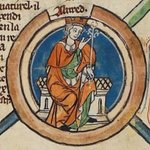
Death of Alfred the Great, king of Wessex, England. His defeat of the Danes ensured Christianity’s survival in England. He is also known for his ecclesiastical reforms and his efforts to revive learning in his country.

#OTD October 25, 431:
The Council of Ephesus replaced Nestorius, patriarch of Constantinople, with Maximianus. Nestorius had been anathematized for holding that two separate persons indwelt the incarnate Christ.

#OTD October 23, 1239:
The main cathedral at Wells in England was consecrated. Building had begun around 1186. The most striking interior feature is the inverted arches, added in the 14th century to strengthen the piers of the central tower.


#OTD October 22, 1903:
Death of Susannah Spurgeon, wife of English Baptist preacher Charles Haddon Spurgeon. Their marriage had lasted thirty-six years, until Charles’s death in 1892. She founded the Book Fund to supply free books to poor pastors and continued that work after his death.

#OTD October 21, 1555:
Five days earlier, bishops Nicholas Ridley and Hugh Latimer had been burned at Oxford. Their deaths only strengthened Protestant resolve, and Queen Mary answered with a wider campaign of persecution. Before her reign ended, nearly 300 men, women, and children were burned for their faith, including Archbishop Thomas Cranmer the following March. John Foxe later recorded their stories in the Book of Martyrs.

#OTD October 21, 1532:
German reformer Martin Luther said, “For some years now I have read through the Bible twice every year. If you picture the Bible to be a mighty tree and every word a little branch, I have shaken every one of these branches because I wanted to know what it was and what it meant.”
Table Talk, Luther’s Works 54:165.

#OTD October 20, 1949:
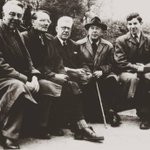
The last of the Inklings’ regular Thursday meetings was held this evening in C. S. Lewis’s rooms at Magdalen College, Oxford. The group, which had also met on Tuesday mornings at the Eagle and Child, included J. R. R. Tolkien, Owen Barfield, Charles Williams, and Lewis’s brother Warren. They read works in progress and argued theology and literature. Tolkien later credited Lewis’s encouragement with helping him finish The Lord of the Rings. Warren Lewis’s diary records that no one came the following week, and the meetings ended.

#OTD October 19, 1856:
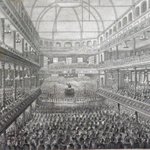
A Sunday evening service led by Charles Haddon Spurgeon turns tragic when someone shouts “Fire!” in London’s enormous Surrey Gardens Music Hall.
The crowd is estimated at 14,000 in a hall designed for 10,000, with thousands more outside. There was no fire, but the stampede left seven people dead and twenty-eight more hospitalized.
The episode plunged Spurgeon into weeks of depression. As he wrote:
“I refused to be comforted; tears were my meat by day, and dreams my terror by night. I felt as I had never felt before. My thoughts were all a case of knives, cutting my heart in pieces, until a kind of stupor of grief ministered a mournful medicine to me. Broke in pieces all asunder, my thoughts, which had been to me a cup of delights, were like pieces of broken glass, the piercing and cutting miseries of my pilgrimage.”
In 1861, Spurgeon opened the Metropolitan Tabernacle south of the Thames, which held 6,000. He often referred to the Surrey Gardens disaster, saying he had been hardened in “a burning furnace.”

#OTD October 18, 1867:
The United States purchased Alaska from Russia for $7.2 million (about two cents per acre). Ten years later, amid moral decline under military rule, an army private pleaded for a missionary “who may reclaim a mighty flock from the error of their ways.” Presbyterian Sheldon Jackson answered the call. For decades he raised funds, built schools and churches, and advocated for better laws, helping bring the Gospel and education to the new territory.


#OTD October 18, 1685:
Louis XIV revoked the 1598 Edict of Nantes, which had permitted French Protestants limited religious tolerance. The Huguenot exodus which followed drained France's industrial economy, and possibly hastened the French Revolution.

#OTD October 17, 107:
Ignatius of Antioch was fed to the beasts in Rome.
“Nearness to the sword is nearness to God; to be among the wild beasts is to be in the arms of God; only let it be in the name of Jesus Christ. I endure all things that I may suffer together with him, since he who became perfect man strengthens me.”

#OTD October 15, 1582:
The Gregorian calendar took effect in Spain, Portugal, and the Papal States after the ten days from October 5 to October 14 were skipped. Pope Gregory XIII had ordered the change in the bull Inter Gravissimas earlier that year, on the advice of the astronomer Christopher Clavius, to correct the ten-day drift of the Julian calendar from the spring equinox. Protestant nations adopted the new calendar gradually over the following centuries.

#OTD October 15, 1647:
The Larger Westminster Catechism was completed by the Westminster Assembly. It teaches the system of doctrine set out in the Westminster Confession. It was presented to Parliament a week later, on October 22.

#OTD October 14, 1932:
Gladys Aylward left Liverpool for China after mission boards had rejected her. She worked for years as a missionary in Shanxi, caring for the poor and orphans, and during the Japanese invasion led more than one hundred children over the mountains to safety. Her life was later dramatized in the film The Inn of the Sixth Happiness.

#OTD October 13, 1605:
Theodore Beza, Calvin’s successor as leader of the Reformation in Geneva, died. He left many useful writings, among them a life of Calvin, a French Psalter, an accessible statement of faith, and a highly regarded French translation of the New Testament.

#OTD October 12, 1518:
Martin Luther and Cardinal Cajetan met in Augsburg over the following three days to discuss Luther’s 95 Theses, posted one year earlier. Cajetan told Luther he must recant unconditionally. Luther’s final word to Cajetan was, “As long as these Scripture passages stand, I cannot do otherwise, for I know that one must obey God rather than men.”

#OTD October 11, 1531:
Swiss reformer Ulrich Zwingli died in the Second Battle of Kappel. He had gone with the Zurich army as chaplain against the Catholic cantons. After the battle his body was quartered and burned. His death left Zurich and the Swiss Reformation under the leadership of Heinrich Bullinger.

#OTD October 10, 1954:
Presbyterian apologist Francis Schaeffer wrote in a letter:
'Doctrinal rightness and rightness of ecclesiastical position are important, but only as a starting point to go on into a living relationship -- and not as ends in themselves.’

#OTD October 7, 1857:
Charles H. Spurgeon preached to his largest congregation, 23,654 people, at the Crystal Palace in London. Queen Victoria had called a national day of humiliation after the 1857 uprising in India, and Spurgeon took Micah 6:9 as his text: “Hear ye the rod, and who hath appointed it.”


#OTD October 6, 1536:
English reformer William Tyndale, who translated and published the first mechanically-printed New Testament in the English language (against the law at the time) is strangled to death. His body is then burned at the stake at Vilvoorde Castle (not far from Brussels).
