

The launchpad where one coin holds a basket of Hyperliquid perps. You decide if the fees go to the winners or the losers. All of the profit goes to holders.
Joined November 2026
- Tweets36
- Following0
- Followers67
- Likes0





Pinned Tweet
New Hyperliquid tech just dropped.
Introducing Hyperbasket, the first launchpad where one coin holds a whole basket of Hyperliquid perps.
You can tie your coin to as many as twelve perps, long or short, and weigh them however you like. Any market on Hyperliquid can go in.
Then you decide who gets the fees. They go to the leg that is winning, the leg that is losing, every leg by weight, or the leg your holders vote for.
All of the profit goes to holders in HYPE.
Powered by @HyperliquidX .
ca: HJLYWJJd1AFxM3AvA7ovuQrKqJ9eSriKBVtakJcYL5hP
hyperbasket.fun
One perp is a point on this map. A basket can sit anywhere on it.
We took twelve Hyperliquid perps and 2,160 real hours, then sampled 4 million baskets by volatility and return. Long or short, those perps give a one-perp coin 24 points. The calmest basket on the map ran at 3.7% annual volatility, against 10.1% for the S&P 500 alone and 35.2% for BTC.
Then we split the window in half. Across 40,000 random baskets, volatility in the first 45 days and the last 45 correlated at 0.99, and return at -0.18. A calmest basket fitted on the first half went from 3.8% to 3.6%. The basket with the most return per unit of risk went from +10.6% to -1.6%.
So a basket’s risk is something you can choose at launch, and its return is not. Hyperbasket lets one coin hold 2 to 12 perps, each with its own side and weight.
One 90-day window at 1x with fixed weights, without funding or fees. The calm basket is fitted in-sample. Past moves say nothing about the next ones.
hyperbasket.fun

A leg can lead a basket for 86 days and still finish last in the week you are looking at.
This is twelve Hyperliquid perps ranked by return since launch, over 90 days of real hourly prices. PUMP took first place on day 5 and held it at every daily close after that, yet it ended 5 of its 12 single weeks in the bottom two. Over the last three weeks it ranked 12, 12 and 11 while it stayed first overall.
Return since launch has a long memory, and weekly returns have almost none. The rank correlation from one week to the next was 0.09, and last week’s top three stayed there 33% of the time, against 25% by chance.
So the winners rule on Hyperbasket is a real commitment. It keeps paying the leg that has already won, whatever that leg did this week. You choose that when you launch.
Eleven pairs of weeks is a small sample, and past moves say nothing about the next ones.
hyperbasket.fun

Eight longs against four shorts says very little about what a basket is holding.
We measured each leg’s beta to BTC on 2,160 real Hyperliquid hours and hung it on a beam at that distance, with its exposure as its size. The long legs carry +1.48 of beta and the shorts carry -0.74, so the basket still sits at +0.74 net. The shorts would have to double to bring that to zero.
Variance is just as uneven. HYPE is 15% of the weights and 63% of the variance, and PUMP is 4% of the weights and 24.5% of it, while the ETH and SOL shorts take 32% off the total.
Every leg on Hyperbasket has its own side, weight and leverage, which is what lets you balance a basket on the number that matters. Past moves say nothing about the next ones.
hyperbasket.fun

A Hyperbasket coin holds its legs all week, but they do not all move at the same time.
This relief is 90 days of real Hyperliquid hourly volatility, sorted by hour of the week, with a ridge for each of twelve legs. AAPL moves 4.3 times harder in US hours than at a weekend, NVDA 3.5 times, BTC 2.3 times and PUMP only 1.3 times. The S&P 500 put 47% of its variance into the 21% of the week that those hours cover.
It shows up in the payouts too. With fees split by weight and a 5% take profit, the seven stock, index, metal and oil legs fired 29 take profits and none came at a weekend, while PUMP fired 21 of its 54 there. A basket that mixes them has something working at any hour.
A backtest on real hourly prices, without funding or trading costs. Past moves say nothing about the next ones.
hyperbasket.fun

One month of fees, followed through twelve legs.
$30,000 of creator fees went in by weight across twelve real Hyperliquid perps. Over the month, 43 take profits closed $4,334 of open profit and bought 49.8 HYPE for holders, led by the SOL short with 11, the ETH short with 10 and the HYPE long with 7. No leg was liquidated.
$24,929 is still working in the legs, and $5,071 went back to the market. Holders put nothing in, and those 49.8 HYPE go to them by share of the coin.
A backtest on real hourly prices, without funding or trading costs. Past moves say nothing about the next ones.
hyperbasket.fun

At 3x, one of twelve legs was ever liquidated. At 10x, eight of them were.
We took every hourly entry of the last 30 days and held it for up to seven days on the side each leg holds. Nothing was liquidated at 1x or 2x. At 3x and 5x only the PUMP long was hit, in 3% and then 50% of entries. At 10x the list reaches eight legs, led by PUMP at 97%, the TSLA short at 42%, HYPE at 40% and silver at 38%, while the S&P 500, gold, BTC and AAPL stayed clear.
Liquidation distance is roughly 1/L minus maintenance margin, so it shrinks hyperbolically while a market’s worst week stays what it is: 35.8% for PUMP, 16.3% for HYPE, 2.9% for the S&P 500. That is why every leg on Hyperbasket carries its own leverage, up to 10x and capped by the market.
hyperbasket.fun

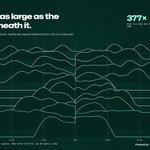
A leg is only as large as the book underneath it.
Within 5 basis points of mid, the live Hyperliquid books show $9.9M on BTC, $7.6M on ETH and $3.8M on the S&P 500, against $178k on Tesla and $26k on PUMP. That is 377 times more size near mid on BTC than on PUMP, with spreads running from 0.11 to 2.45 basis points.
Market impact grows with order size relative to depth, and a Hyperbasket leg is built from creator fees that arrive in small clips. That lets a basket hold a thin market alongside a deep one, as long as each leg is sized for the book it trades.
hyperbasket.fun

Funding is the quiet thirteenth leg of every basket.
Every hour on Hyperliquid, one side of each perp pays the other, and that cash flow accrues on notional rather than on margin. Over the last 30 days, longs paid shorts in 85% of all market hours across these twelve legs. Annualised, a BTC long paid about 8.9%, a HYPE long 12.0%, and an ETH short collected 6.6%. Oil ran the other way at -11.2%, so its short paid as well.
Net of sides, weights and leverage, this basket paid 0.97% of its margin in funding over the month. Flip the sides and the sign flips with them, which makes every long and short on Hyperbasket a carry decision as much as a directional one.
hyperbasket.fun

Update: every coin on Hyperbasket now has a live board.
Open any coin to see how each leg has moved since launch and which leg is next in line for its fees. On vote coins, holders can back a leg each hour, weighted by their balance.
hyperbasket.fun

How a creator fee finds its leg.
Every fee is bridged from Solana to USDC in the coin’s own Hyperliquid account, where an API wallet can trade but has no permission to withdraw. The rule set at launch then selects the leg: the best return since launch, the worst, every leg by weight, or an hourly balance-weighted vote of holders.
The fee becomes margin and extends that leg’s position at its own side and leverage. When open profit reaches the take target, it closes out, buys HYPE on Hyperliquid and is paid to holders by their share of the coin, and the leg stays open.
Holders stake nothing, and only the coin’s fees are ever at risk.
hyperbasket.fun

Inside one leg of a Hyperbasket coin.
A creator fee is bridged to USDC in the coin’s own Hyperliquid account, and the fee rule sends it to one leg as margin. That margin holds a real position, up to 10x, that moves with the mark price.
When open profit crosses the take line, it closes out and buys HYPE for holders, and the leg stays open. A cut line is optional, and what remains goes to the leg the rule names next.
On real hourly closes, an ETH short at 3x took in $3,004 of fees over 30 days and closed out $868 for HYPE.
hyperbasket.fun

Every fee is a ball in play.
Twelve real markets on the table, four rules for who gets the next fee, and all of the profit goes to holders.
hyperbasket.fun

Four launches. Four different baskets.
Four wallets launched on Hyperbasket in the first 33 minutes, and nobody set up the same coin twice.
One put 95% on HYPE at 10x. One dropped BTC completely. Two send every fee to the winning leg, and two let holders vote.
One launchpad, and every coin is its own trade.
hyperbasket.fun HJLYWJJd1AFxM3AvA7ovuQrKqJ9eSriKBVtakJcYL5hP

Every logo inside this logo is a market your coin can hold.
Hyperbasket ties one coin to as many as twelve Hyperliquid perps, from HYPE and BTC to Tesla, gold and Arbitrum. One launch, one signature, and all of the profit goes to holders in $HYPE.
Powered by @HyperliquidX .
hyperbasket.fun

$HYPERCHAN DXq3PPJ6XAJWniBRTuAeyRWqPDXCd6cLHC1EKzXE8SsX
just launched on Hyperbasket.
One coin, six Hyperliquid perps: short ETH and SOL, long BTC, HYPE, gold and NVDA. Fee rule: the winning leg.

A leg can lose its margin, but it cannot lose what it already paid holders.
1/ That sentence is the design behind take profit on Hyperbasket, so we tested it. We replayed one basket’s month 3,000 times on real hourly Hyperliquid prices, and every single replay paid holders in HYPE.
2/ The basket holds twelve perps across crypto, stocks, metals and oil, long and short, at 2x to 3x. Fees arrive at $1,000 a day, which makes $30,000 over the month. Each fee goes to the leg that is winning, and any leg whose open profit reaches 5% of its margin takes that profit.
3/ Here is the mechanism. When a take profit fires, the open profit closes out and buys HYPE for holders. The position stays open, its entry resets to the current price, and its margin stays where it was. Nearly every number in a perp account can go down. The running total of what has been paid out can only go up.
4/ In the month that really happened, from Oct 3 to Nov 2, that came to 18 take profits, $7,240 of profit and 85.2 HYPE. One leg was liquidated along the way, and the legs still held $24,753 at the end.
5/ One month is one story, so we ran a stationary block bootstrap. It resamples real hourly returns in blocks that average 24 hours, taking all twelve legs from the same hour, which keeps their correlation and their volatility clusters.
6/ The median replay paid $8,587, or 98.4 HYPE, across 27 take profits, with $24,984 still working in the legs. A weak month at the 5th percentile still paid $3,262, and a strong one at the 95th paid $18,242. All 3,000 of 3,000 months paid something.
7/ The rule changes how it pays. By weight, the median month paid 46.0 HYPE across 52 smaller take profits, and every month paid. With fees going to the losers, the median was 44.5 HYPE across 30 take profits.
8/ The target is a real dial. On the winners rule, a 5% target pays a median 98.4 HYPE, 10% pays 89.9 and 25% pays 67.0, with 96.7% of months paying at that level. At 50% the median month pays nothing, because the legs are waiting for a move that often does not come. Low targets pay often, and high targets wait for size.
9/ This is why a choppy market still pays. A position that swings up and back ends flat if you just hold it. A take profit collects the swing on its way up and resets, so the move that would have vanished becomes HYPE. Any give-back afterwards falls on the leg’s margin, and the next fee tops that margin up.
10/ Holders put nothing in. You hold the coin, sign once with your Solana wallet to say which Hyperliquid address gets paid, and receive HYPE by your share. Only the coin’s fees are ever at risk, and an empty leg starts again on the next fee.
These are simulations on one month of past prices, without funding or trading costs, and HYPE’s price can move after it is paid. Past moves say nothing about the next ones.
Hyperbasket is the launchpad where one coin holds a whole basket of Hyperliquid perps, and all of the profit goes to holders.
hyperbasket.fun

New launch on Hyperbasket: Hyper Chad.
HYPERCHAD holds six Hyperliquid perps in one coin:
Long HYPE 35%
Long BTC 20%
Long TSLA 15%
Long SpaceX 15%
Long NVDA 10%
Short EUR 5%
Every fee goes to the leg that is winning, and all of the profit goes to holders in HYPE.
hyperbasket.fun

We replayed one basket’s month 3,000 times to see what a fee rule really does.
1/ The basket has twelve legs. BTC, HYPE, NVDA, AAPL, the S&P 500, gold, silver and PUMP are long. ETH, SOL, TSLA and oil are short. Leverage is 3x, or 2x on the metals. Fees arrive at $1,000 a day, split hourly, so $30,000 goes in over 720 hours of real Hyperliquid prices, from Oct 3 to Nov 2. We turned off take profit and cut, so the rule is the only thing that differs.
2/ In the month that really happened, sending fees to the winners ended at +$2,220, by weight at -$1,239, and to the losers at -$5,537. The winners rule put 82% of its fees on the SOL short and 17% on the PUMP long, and its top leg changed 10 times. The losers rule put 69% on the PUMP long and 14% on the TSLA short, and changed legs 41 times. That is one path, and one path proves very little.
3/ So we ran a stationary block bootstrap. It resamples real hourly returns in blocks that average 24 hours, always taking all twelve legs from the same hour, which keeps their correlation and their short-term clustering. Every one of the 3,000 resampled months feeds all three rules, so any difference comes from the rule and not from the luck of the draw.
4/ With the month’s drift left in, the winners rule has a median of +$2,287, a 5th to 95th percentile range of -$9,156 to +$19,110, and a loss in 38% of paths. The losers rule has a median of -$5,464, a range of -$17,518 to +$5,859, and a loss in 83% of paths. By weight has a median of -$672, a range of -$2,677 to +$2,737, and a loss in 67% of paths. The winners rule beat the losers rule in 74% of paths.
5/ That looks like a verdict, but the bootstrap inherits this month’s trends. So we subtracted each leg’s average hourly return and ran it again. The winners median fell to -$2,393 and the losers median rose to -$1,048, while by weight barely moved, to -$645. The losers rule now finished ahead of the winners rule in only 55% of paths, which is close to a coin flip. Most of the winners rule’s lead was the month’s drift.
6/ What survives without drift is the shape. The 5th to 95th percentile range is about $24,700 for the winners rule, $24,900 for the losers rule and $6,500 by weight. A concentrated rule carries roughly four times the spread on the same fees. The average of the worst 5% of months is -$12,840, -$16,461 and -$3,280 respectively.
7/ Concentration explains it. Measured as 1 / Σ(fee share)², the weight rule uses 8.9 effective legs out of twelve. In the original run, winners and losers each use about 1.7. The basket holds twelve legs on paper, and these two rules concentrate their fees as if it held fewer than two.
8/ The negative centre has a source too. A leg compounding at leverage L grows at about Lμ - L²σ²/2, so volatility costs more than leverage earns once the drift is gone. That drag sits under every rule here, and it grows with the square of leverage.
9/ So the fee rule is mostly a choice of distribution. Winners is a bet that trends persist. Losers is a bet that they revert. By weight gives up the big months to avoid the worst ones. Over these 3,000 months, none of them created an edge from nothing.
10/ The limits matter. This is one month of data, so the bootstrap can only reuse what that month contained. The model leaves out funding, trading costs, take profit and cut, and a holder vote cannot be backtested. It simulates the rules on past prices, it is not a record of live trading, and past moves say nothing about the next ones.
You pick the rule when you launch on Hyperbasket, and now you can see what you are picking.
hyperbasket.fun
