








Pinned Tweet
Today's statement from the IEA Governing Board on energy markets and security ⬇️
iea.li/47nbKVq

We just released a new free dataset with highlights from our World Energy Balances.
Designed for policy makers & energy experts, it offers insights into how energy flows have evolved over the decades, with insights covering 60+ countries & regions 👉 iea.li/3VWHFJX

Lithium-ion batteries are central to the automotive industry, power grids, data centres, drones for defence, robotics and more.
Our new commentary traces their rise as a defining technology of the 21st century & key lessons learned in the process 👉 buff.ly/znXPcc3

Efficiency gains are cutting the power needed per AI task at a record pace.
But usage is surging, & more energy-intensive applications like AI agents are on the rise – with some tasks using hundreds or thousands of times more energy than simple queries → iea.li/3Qf9zxV

International Energy Agency retweeted

Delighted to meet with Germany’s Minister of Economic Affairs & Energy Katherina Reiche
We discussed the latest developments in the Hormuz crisis, and I thanked her for 🇩🇪’s co-hosting with @IEA of the 2027 Clean Energy Ministerial & Mission Innovation Ministerial in Paris

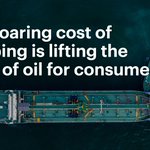
The price of oil is only part of what determines the cost to supply the world with fuel.
With tanker rates at historic highs amid disruptions in the Middle East, rising shipping costs are adding further pressure to global oil markets.
Read more 👉 iea.li/4BfDtoR

International Energy Agency retweeted
Comprehensive meeting with Chancellor Friedrich Merz of Germany (@bundeskanzler) in Berlin
We discussed recent developments in the Middle East crisis and the implications for global & European energy security & affordability – as well as @IEA’s work to support market stability

Global seaborne gasoil & diesel exports have contracted sharply since the Middle East crisis began
Reduced refinery output lowered exports to an average 4.7 million barrels a day over the first nine months of 2026 – 10% below the same period last year 👉 iea.li/3WqQxYj

Biogas & biomethane could play an important role in boosting energy security, while creating economic opportunities for rural communities & industries
Our new interactive map lets users explore where sustainable biogas potential exists globally 👉 iea.li/4wz1wwg

Diversifying rare earths markets is key to ensuring the resilience of global supply chains.
New projects are emerging worldwide, but planned refining & magnet manufacturing capacity outside of China remains well below that for mining 👉 iea.li/3T3Lr2z

Disruptions to small volumes of critical minerals can have outsized consequences for industries worth trillions of dollars.
Our new commentary looks at the case for treating the costs of diversification as an insurance policy against supply risks 👉 iea.li/3VhyfbH

Surging EV exports from China are shielding manufacturers from declining domestic car sales.
While China's total car sales fell by more than 20% in the first half of 2026 versus a year earlier, electric car exports increased by more than 120% 👉 iea.li/4x9QXPW

The energy sector in Latin America & the Caribbean is booming – with over 750 thousand jobs added since 2019
But sustaining this momentum will depend on building a workforce with the right skills
Our new commentary with @OLACDEORG explores what’s needed: iea.li/4rTJFi5

Lithium-ion battery deployment has surged rapidly in recent years, driven by the expansion of EVs & stationary storage.
But production has become increasingly geographically concentrated, underscoring the need for more diversified & secure supply chains: buff.ly/rN5PxxS

AI is becoming dramatically more energy efficient. At the same time, electricity demand from data centres is set to surge. How can both be true?
Watch as IEA experts unpack this question – and discuss what AI means for the energy system more broadly 👉 iea.li/4bvR3Jn
International Energy Agency retweeted
Pleasure to speak at the #FTEnergy Transition Summit in London
In a fireside chat with Energy Editor @MalcolmMoore, I discussed how the Hormuz crisis is leading governments to rethink energy priorities and to seek to diversify partners, trade routes, fuels & technologies
@ftlive

The conflict in the Middle East has triggered major disruptions in global oil & gas markets.
Our new database offers a snapshot of government actions being implemented to save energy & support consumers in response to the unfolding energy crisis 👉 iea.li/4son5gd

Heat pump deployment can help strengthen energy security & resilience by reducing countries’ reliance on fuel imports for heating.
In 2025, heat pump installations avoided around 53 bcm of natural gas use for heating across Europe, Japan & China.
More 👉 iea.li/3TUE7Hr

Our latest Everything Energy podcast episode is out
Listen as @IEA’s Rebecca Schulz & Nadim Abillama discuss the latest situation in the Strait of Hormuz and across the Middle East
Spotify → iea.li/4ksdtys
Apple → iea.li/4epjqJt

Governments in Southeast Asia acted quickly to shield consumers from impacts of the current energy crisis
Short-term measures include greater working from home & public transit use, energy subsidies & price caps, and fuel switching: iea.li/4g6grJ1

Infrastructure investments are laying the groundwork for scaling up clean cooking supply chains in Africa. Spending has helped expand:
✅ LPG storage capacity
✅ Electricity networks
✅ Bioethanol & pellet production
✅ Cookstove manufacturing
More ➡️ iea.li/4hmhhSz
