





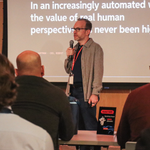
“In a world that is increasingly mediated by Big Tech, that is the ultimate insurance.”
Substack’s Hamish McKenzie on the e-mail list — and why news brands should start thinking like networks: ow.ly/Qitj5100nmG

Search crawlers send back roughly 1 reader for every 11–15 crawls. Training scrapers send none.
Now Meta’s new terms reach any domain tied to a business account. Earl Wilkinson on who writes the contract: ow.ly/58fP5100nm1


The Times cut about a quarter of its stories and kept ~95% of pageviews.
How it, SCMP, The San Francisco Standard, and Applied XL are doing less, but better, in the AI era: ow.ly/6j7K5100nlu


“Start with the user and the outcome. The technology comes afterwards.”
9 newsrooms spent 3 months building public Gemini Notebooks from their own journalism. INMA’s new report shares 5 lessons: ow.ly/vKIN5100nkt

Americans spend almost as much time on e-mail as on social media. As AI takes over the inbox, Dan Oshinsky explains what newsletters need to stay on top: ow.ly/YEN050ZZWQn


More than 1 in 4 Politico journalists has built an AI tool since May. How Politico, Reuters, Semafor, and others are restructuring newsrooms for AI: ow.ly/x7KL50ZZWPT


“The AI revolution is going to be a revolution in coordination,” Salesforce’s Mark Escobosa told the INMA study tour. Why agents only pay off when grounded in customer data, and where AI still can’t be trusted: ow.ly/MpFh50ZZyGX


“In a world where people trust OpenAI more than they trust us, we have no future.” — VG’s Gard Steiro
The WSJ, Helsingborgs Dagblad, VG, and Stuff on how AI is reshaping newsroom workflows: ow.ly/suzj50ZZyqq


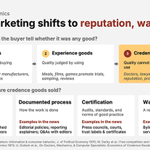
3,749 AI news farms. Trust in news at a record-low 37%. Free sampling no longer proves quality — so the NYT, FT, and The Economist are selling how their journalism is made. ow.ly/tcFq50ZZypI


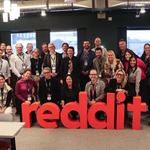
Reddit blocks about 22 million attempts to get through its front door daily. On INMA’s Media Tech & AI Week study tour, leaders explained how it stays open to people, not scrapers: ow.ly/uo5u50ZZb8E


Executives have limited time and endless information. After launching two WSJ executive councils, Nick Elliot shares what makes a publisher-led community worth joining: ow.ly/yYEG50ZZb7M


Svenska Dagbladet turned the reader “aha” moment into a metric, measured with three survey questions. Digital subscriptions grew roughly 60% in two years, to 158,000. Here’s how: ow.ly/YNVs50ZZb6P


Who controls access to journalism? How will audiences find news? What will people pay for? Five questions shaping INMA’s Media Tech & AI Week in San Francisco, starting Monday: ow.ly/CVt850ZYNGz


Revolut swapped Perplexity for ChatGPT in its card perks without asking a single subscriber. If a news brand goes the same way, it loses a negotiation it was never party to. Why owning the relationship matters: ow.ly/u7bt50ZYNG3

A link to your journalism carries a price. The journalism itself is free. Earl J. Wilkinson on why publishers may leave Meta — and what to do before October 3. ow.ly/cZk550ZYNFV

The San Francisco Standard built an AI-native app for US$150,000 in under three months. When building is this cheap, judgment about what to build becomes the scarce asset: ow.ly/mIKR50ZYirA


Trust in news has fallen in 29 of 48 markets, to its lowest level since 2015. How news brands can win it back through consistency, emotional connection, and transparency: ow.ly/jM4x50ZYiqX


“Social media will always be faster. The competitive advantage of professional journalism is credibility.” Why Zimbabwe’s newsrooms must transform or become irrelevant: ow.ly/Sxjf50ZYiox

Ad spend on news is down 33% since 2019, while global ad spend keeps climbing. INMA’s Gabriel Dorosz on why publishers must move from ad inventory to brand partnerships: ow.ly/GjY350ZXSiM


AI is moving the digital economy from attention to intention. The new competition for publishers: becoming the source an AI chooses. Trust and brand may matter as much as metadata. ow.ly/L6Xf50ZXSiz
