

An autonomous research institute within the @NUSingapore examining issues of critical national interest in Singapore. RTs ≠ endorsement
Singapore
Joined June 2015
- Tweets7.6K
- Following213
- Followers3K
- Likes227




Pinned Tweet
IPS becomes a University-level research institute within the @NUSingapore (NUS), effective from 1 April 2026.
IPS will no longer sit within the @lkyspp (LKYSPP), where it has been a research centre since 2008. It will operate as an autonomous research institute within NUS, while maintaining its longstanding mission to analyse public policy, bridge thought leaders, and communicate research to a wide audience. – at Singapore

🌐 What should all Singaporeans know about geopolitics today?
What does Singapore need in a crisis, and what should Singaporeans do? Mr Ng Chee Khern tells us why an awareness of foreign affairs issues is crucial.
Mr Ng is the 19th S R Nathan Fellow. In his lecture series “The Power to Choose: Sovereignty and Statecraft in an Age of Great Power Rivalry”, he illustrates Singapore’s position in regional and global geopolitics today, and what Singapore can do to withstand pressure from great powers.
💡 Learn more about Mr Ng’s lectures: tinyurl.com/19SRNFNCK
🎟️ Register for the lectures: tinyurl.com/IPSNCKLectures
📺 Watch the lecture series live on IPS’ Facebook page: facebook.com/instituteofpoli…
40
Is AI smothering careers in their cradle?
On a special live edition of Work It by @ChannelNewsAsia , recorded at Temasek Polytechnic, IPS’ Laurel Teo, who raised this concern in a 2025 commentary, joined hosts Nat Fetalvero and Gerald Tan to answer student’s questions about entering the workforce in the age of AI.
She shared that:
▪️ Employers are more cautious about hiring, and are asking whether someone already on the team could take on the work with the help of AI
▪️ Roles that are built on routine, repetitive tasks that need knowledge but not judgement are the most at risk
▪️ Graduates may need to learn skills before they get on the job, as employers expect them to have those skills already
▪️ When talking about internships, it helps to show outcomes, not just outputs
Her advice is to plan a broad direction rather than a specific role, be adaptable and gain the authentic human experiences that AI cannot replace.
🎧 Listen to the full episode: tinyurl.com/k6crhwnu


47
🏫 As Singapore aims to become “a better society enabled by AI”, Professor Lily Kong argues our universities need the humanities more, not less.
PM Lawrence Wong set out that vision in the DBS Asia Future Forward Conference in October. Yet record numbers are studying computer science while humanities enrolment is “in free fall”.
In Universities Reinvented: Shaping Legacy and Impact for a New World, Professor Lily Kong, President of @sgSMU and the 15th S R Nathan Fellow for the Study of Singapore, argues this is backwards. The jobs most likely to last are the ones that rely on human empathy.
What humans can do better than AI:
⚖️Make good judgements about people and situations
❤️Read human emotions and cultural contexts intuitively
🔎Stay curious and keep a passion or two
🛡️Build resilience to face challenges and recover from setbacks
Her case: universities must offer courses on the human condition through the arts, humanities and social sciences.
📚 Find Universities Reinvented and others in the IPS-Nathan Lecture Series here: bit.ly/IPS-Nathan


60
Singapore has long kept good ties with both the US and China. As their rivalry deepens, the pressure to choose is unlikely to come as one big demand.
In The Straits Times, Mr Ng Chee Khern, IPS' 19th S R Nathan Fellow and Director and CEO of ISEAS - Yusof Ishak Institute (@ISEAS), argues it will come as specific requests, in at least five forms:
1. Military access, and rival demands that we refuse it
2. Rules on economic and technological security
3. The suppliers we exclude
4. Which laws our firms obey when two countries' laws conflict
5. The diplomatic positions we take
Each answer may be sound on its own. But each power may add up our answers and conclude that we chose a side long ago.
Adapted from the first of his three IPS-Nathan Lectures, the commentary closes on capability, built in advance. As he puts it: "Sovereignty is the right to choose. Statecraft makes the choice real."
Which of these five do you think will be hardest for a small state to navigate?
Read the article here: tinyurl.com/3mchxwkf
#Singapore #ForeignPolicy #Geopolitics


55
The second lecture of the 19th IPS-Nathan Lecture Series by Mr Ng Chee Khern, Director and CEO of ISEAS – Yusof Ishak Institute (@ISEAS), was held today.
Titled "Lessening the Pressure: What ASEAN Can and Cannot Do for Us", the lecture examined how far ASEAN can help Singapore withstand pressure from great powers, and where its limits lie. Mr Ng outlined three ways in which ASEAN helps its members. By keeping the peace in the region, it ensures that Singapore and other Southeast Asian states need not face great powers alone. By fostering an inclusive regional order, it maintains its centrality and relevance on the global stage. And by building common rules and pushing for greater economic integration, it strengthens its position. Building on these strengths, Mr Ng proposed four tasks for Singapore's ASEAN Chairmanship in 2027: enable early consultation, ensure the dependability of supplies, establish common rules and build public support.
The Q&A session was moderated by Professor Joseph Liow, Dean of the Lee Kuan Yew School of Public Policy (@lkyspp). Mr Ng and Prof Liow discussed whether ASEAN can continue to avoid picking sides. Participants also asked about ASEAN's dispute mechanisms, raising public awareness of ASEAN and the potential for greater regional economic integration.


1
108
As ASEAN marks its 60th year in 2027, leaders of member states have emphasised continued cooperation and integration. But how far can ASEAN help members bear pressure from great powers, and where do its limits as an intergovernmental organisation lie?
Mr Ng Chee Khern, IPS’ 19th S R Nathan Fellow and Director and CEO of ISEAS – Yusof Ishak Institute, will deliver his lecture “Lessening the Pressure: What ASEAN Can and Cannot Do for Us” on 23 November 2026, 4pm. This is the second lecture in his lecture series, “The Power to Choose: Sovereignty and Statecraft in an Age of Great Power Rivalry”.
In this lecture, Mr Ng will speak on how ASEAN is able to contribute to peace and inclusion in the region, promoting cooperation as demands from great powers fall on members. With Singapore taking over as ASEAN Chair next year, Mr Ng makes recommendations for Singapore’s chairmanship, and explains why our continued investment in ASEAN is worthwhile.
This lecture will be moderated by Professor Joseph Liow, Dean, Lee Kuan Yew School of Public Policy.
💡 Learn more about the lectures: tinyurl.com/19SRNFNCK
🎟️ Register for the lectures: tinyurl.com/IPSNCKLectures
📺 Watch the lecture series live on IPS’ Facebook page: facebook.com/instituteofpoli…

51
In 2025, fewer families are receiving assistance from ComCare, a government financial aid scheme. Does that mean fewer are struggling?
Speaking on @ChannelNewsAsia, IPS' Dr Wong Chin Yi commented that the decline was an encouraging sign, but cautions that financial independence can be fragile. Beyond assistance numbers, he noted that income stability, savings buffers and financial stress also matter. – at Singapore


1
84
Dr Wong also sees early evidence that ComLink+’s longer-term, coordinated approach can work, though it’s still early days to credit the programme directly. For families, stability is “a starting point, not the finish line”. He added that to sustain progress, we will benefit from a whole-of-society effort, from employers to communities.
Watch the full interview here: tinyurl.com/nwmvnfjt – at Singapore

47
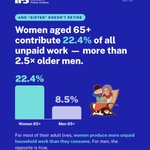
Saw @nbcsnl's viral "Sister" sketch? It may be a work of fiction, but the unpaid work behind them is real.
IPS Working Papers No. 76 gives Singapore’s first-ever estimates of who does unpaid work, by age and gender.
It found that:
👩 Women do 76% of Singapore’s unpaid work
⏱️ Women in their 40s and 50s do 21 hours of unpaid housework a week, 15 hours more than men their age
👵 Women aged 65+ contribute 22.4% of all unpaid work, more than 2.5x that of older men – at Singapore


1
71
As Singapore's population ages, more pressure is falling on informal care. The authors call for earlier support for women – in particular, older women – and for services that support older adults’ care contributions rather than merely replace them.
Read IPS Working Papers No. 76: Singapore's National Time Transfer Accounts: The Life Cycle of Non-Market Economic Product at tinyurl.com/IPSWP76. – at Singapore


32
🔥 Rapid fire questions with 19th S R Nathan Fellow Mr Ng Chee Khern
Time travel to the past or to the future? What about a go-to kopitiam order? Mr Ng Chee Khern makes his choice on the spot.
Mr Ng is the 19th S R Nathan Fellow. In his lecture series “The Power to Choose: Sovereignty and Statecraft in an Age of Great Power Rivalry”, he examines the US-China rivalry, ASEAN’s role and position, our domestic capacities, and what all this means for Singapore’s ability to make its own choices.
💡 Learn more about Mr Ng’s lectures: tinyurl.com/19SRNFNCK
🎟️ Register for the lectures: tinyurl.com/IPSNCKLectures
📺 Watch the lecture series live on IPS’ Facebook page: facebook.com/instituteofpoli…
90
Strong growth, mixed signals and a world economy caught between old and new norms.
That was the backdrop at the 45th Singapore Economic Roundtable, organised by IPS. Private-sector economists, business leaders and policymakers looked at an outlook that is resilient but uncertain. AI-driven capital spending is lifting Singapore and the region. Rising interest rates, oil and food price pressures and trade friction cloud the horizon. – at Singapore


1
96
Markets have held up despite the turmoil around @nvidia and former CEO Jensen Huang. But participants also saw signs of late-cycle behaviour in AI and asked how certain the returns on all that investment really are.
A special session on chokepoints looked at how exposed Singapore is when key routes close. That covers sea lanes, air corridors, subsea cables and even the helium used in chipmaking. It also asked why supply chains are moving from “just in time” to “just in case”, and the renewed attention on the Strait of Malacca amid the conflict in the Middle East and the closure of the Strait of Hormuz. – at Singapore

1
65
🌏 Global value chains are being reorganised, not dismantled
⚓ When trade is rerouted, one country’s detour can be another’s opportunity
🔌 Keeping subsea cables resilient depends on international cooperation
Is “just in case” now the permanent setting for Singapore’s economy?
Learn more about the 45th SER here: tinyurl.com/2h4evmzv
#ipssg #singapore #ASEAN #economy – at Singapore
14
The first lecture of the 19th IPS-Nathan Lecture Series by Mr Ng Chee Khern, Director and CEO of @ISEAS, was held today.
Titled "What the Great Powers Demand of Singapore", the lecture examined the implications and impacts of great power rivalry on Singapore and Southeast Asia. Mr Ng argued that great power contest is rooted in power, history, and incompatible ambitions. – at Singapore


Drawing from both key historical events and currently contested topics, the lecture analysed the partnerships between the great powers and other states in Asia, thus pointing out where local disputes in Asia could turn into war between the great powers. Five types of demands from the great powers are accumulated in peacetime, and could arrive together in war: military access, economic and technological rules we follow, suppliers we exclude, laws our firms obey, and the diplomatic position we take. This tests our neutral standing, and our ability to withstand pressure. – at Singapore


1
1
63
The lecture was followed by a Q&A session, moderated by Professor Khong Yuen Foong, Li Ka Shing Professor in Political Science at the @lkyspp.
During the Q&A, Mr Ng and Prof Khong discussed the shifting balance of power in geopolitics today, and the Singaporean public’s perception of the great powers. Participants also posed questions on dealing with demands from great powers, the impact of potential regional or great power warfare on Singapore, and future prospects for Singapore’s strategic planning and foreign policy. – at Singapore


1
48
In the midst of great power competition, what will be asked of Singapore, and what might turn demands we can absorb individually into pressure across multiple fronts?
Mr Ng Chee Khern, IPS’ 19th S R Nathan Fellow and Director and CEO of ISEAS – Yusof Ishak Institute, delivers his lecture, “What the Great Powers Demand of Singapore” on 16 November 2026, 4pm. This lecture is the first of three in his lecture series, "The Power to Choose: Sovereignty and Statecraft in an Age of Great Power Rivalry”.
In this lecture, Mr Ng delves into how history and geography shape the US and China’s choices, and how they in turn inform their understanding of the other. Focusing on three key disputes in Asia and both powers’ involvement in them, the lecture assesses whether the US is likely to maintain its presence in the region, and what a settlement on the disputes would entail. In this rivalrous climate, it becomes crucial for Singapore to understand the demands likely to come from great powers, and what we can do to face them.
This lecture will be moderated by Professor Khong Yuen Foong, Li Ka Shing Professor in Political Science, Lee Kuan Yew School of Public Policy.
💡 Learn more about the lectures: tinyurl.com/19SRNFNCK
🎟️ Register for the lectures: tinyurl.com/IPSNCKLectures
📺 Watch the lecture series live on IPS’ Facebook page: facebook.com/instituteofpoli…

84
💘 Finding a match is one thing. Making a relationship work is another.
With Singapore’s new FirstDate matchmaking pilot, finding love may involve less swiping for some public officers. But could the bigger challenge come after finding a partner?
In Gender Equality: The Time Has Come, Corinna Lim, Former Executive Director of @awarenews and IPS’ 8th S R Nathan Fellow for the Study of Singapore, examines how traditional gender roles and unequal caregiving responsibilities continue to shape family life.
She argues that the expectation for women to bear the brunt of caregiving is a key reason behind Singapore’s low fertility rate. Getting men to share the care more equally is part of the solution, but she says it takes more than gender equality at home: Singapore also needs a robust care infrastructure for both childcare and eldercare.


1
61
💡 An algorithm might help you find a match, but what does it take to build a more equal partnership? 📚 Find this book and others in the IPS-Nathan Lecture Series here: bit.ly/IPS-Nathan
#ipssg #Singapore #GenderEquality #FertilityRate

22