

Helping business decision makers responsibly leverage artificial intelligence.
Newport Beach, CA
Joined January 2023
- Tweets270
- Following109
- Followers45
- Likes108







iSolutionsai retweeted

Yann Lecun gets it
Inference is where the compute goes.
Unlimited intelligence requires a lot of inference.

iSolutionsai retweeted

Announcing The Stargate Project
The Stargate Project is a new company which intends to invest $500 billion over the next four years building new AI infrastructure for OpenAI in the United States. We will begin deploying $100 billion immediately. This infrastructure will secure American leadership in AI, create hundreds of thousands of American jobs, and generate massive economic benefit for the entire world. This project will not only support the re-industrialization of the United States but also provide a strategic capability to protect the national security of America and its allies.
The initial equity funders in Stargate are SoftBank, OpenAI, Oracle, and MGX. SoftBank and OpenAI are the lead partners for Stargate, with SoftBank having financial responsibility and OpenAI having operational responsibility. Masayoshi Son will be the chairman.
Arm, Microsoft, NVIDIA, Oracle, and OpenAI are the key initial technology partners. The buildout is currently underway, starting in Texas, and we are evaluating potential sites across the country for more campuses as we finalize definitive agreements.
As part of Stargate, Oracle, NVIDIA, and OpenAI will closely collaborate to build and operate this computing system. This builds on a deep collaboration between OpenAI and NVIDIA going back to 2016 and a newer partnership between OpenAI and Oracle.
This also builds on the existing OpenAI partnership with Microsoft. OpenAI will continue to increase its consumption of Azure as OpenAI continues its work with Microsoft with this additional compute to train leading models and deliver great products and services.
All of us look forward to continuing to build and develop AI—and in particular AGI—for the benefit of all of humanity. We believe that this new step is critical on the path, and will enable creative people to figure out how to use AI to elevate humanity.


iSolutionsai retweeted

realtime api (speech-to-speech): openai.com/index/introducing…
vision in the fine-tuning api: openai.com/index/introducing…
prompt caching (50% discounts and faster processing for recently-seen input tokens):
openai.com/index/api-prompt-…
model distillation (!!):
openai.com/index/api-model-d…

iSolutionsai retweeted
Advanced Voice is rolling out to all Plus and Team users in the ChatGPT app over the course of the week.
While you’ve been patiently waiting, we’ve added Custom Instructions, Memory, five new voices, and improved accents.
It can also say “Sorry I’m late” in over 50 languages.
iSolutionsai retweeted
advanced voice mode rollout starts today! (will be completed over the course of the week)
hope you think it was worth the wait 🥺🫶

iSolutionsai retweeted

The future ChatGPT-4o will completely change the AI assistant game.
It cannot come soon enough.


iSolutionsai retweeted
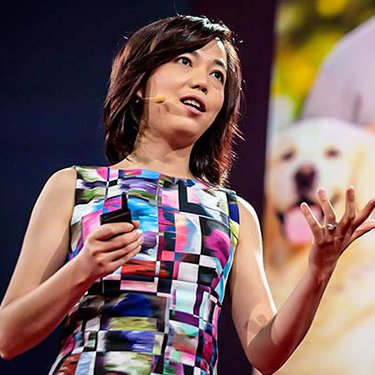
What is a really really hard problem to work on in #AI? My own answer is Spatial Intelligence - a technology that could empower and enable countless possible use cases in creation, design, learning, AR/VR, robotics, and beyond. It’s a real honor that my cofounders @jcjohnss @chlassner @BenMildenhall and I are joined by a formidable team of world class pixel talents to start World Labs to work on this super hard problem that took Mother Nature half a billion years to solve. 🤩

Hello, world! We are World Labs, a spatial intelligence company building Large World Models (LWMs) to perceive, generate, and interact with the 3D world. Read more: worldlabs.ai/about


iSolutionsai retweeted
We're releasing a preview of OpenAI o1—a new series of AI models designed to spend more time thinking before they respond.
These models can reason through complex tasks and solve harder problems than previous models in science, coding, and math. openai.com/index/introducing…

iSolutionsai retweeted

After a recent price reduction by OpenAI, GPT-4o tokens now cost $4 per million tokens (using a blended rate that assumes 80% input and 20% output tokens). GPT-4 cost $36 per million tokens at its initial release in March 2023. This price reduction over 17 months corresponds to about a 79% drop in price per year. (4/36 = (1 - p)^{17/12})
As you can see, token prices are falling rapidly! One force that’s driving prices down is the release of open weights models such as Llama 3.1. If API providers, including startups Anyscale, Fireworks, Together AI, and some large cloud companies, do not have to worry about recouping the cost of developing a model, they can compete directly on price and a few other factors such as speed.
Further, hardware innovations by companies such as Groq (a leading player in fast token generation), Samba Nova (which serves Llama 3.1 405B tokens at an impressive 114 tokens per second), and wafer-scale computation startup Cerebras (which just announced a new offering this week), as well as the semiconductor giants NVIDIA, AMD, Intel, and Qualcomm, will drive further price cuts.
When building applications, I find it useful to design to where the technology is going rather than only where it has been. Based on the technology roadmaps of multiple software and hardware companies — which include improved semiconductors, smaller models, and algorithmic innovation in inference architectures — I’m confident that token prices will continue to fall rapidly.
This means that even if you build an agentic workload that isn’t entirely economical, falling token prices might make it economical at some point. As I wrote previously, being able to process many tokens is particularly important for agentic workloads, which must call a model many times before generating a result. Further, even agentic workloads are already quite affordable for many applications. Let's say you build an application to assist a human worker, and it uses 100 tokens per second continuously: At $4/million tokens, you'd be spending only $1.44/hour – which is significantly lower than the minimum wage in the U.S. and many other countries.
So how can AI companies prepare?
- First, I continue to hear from teams that are surprised to find out how cheap LLM usage is when they actually work through cost calculations. For many applications, it isn’t worth too much effort to optimize the cost. So first and foremost, I advise teams to focus on building a useful application rather than on optimizing LLM costs.
- Second, even if an application is marginally too expensive to run today, it may be worth deploying in anticipation of lower prices.
- Finally, as new models get released, it might be worthwhile to periodically examine an application to decide whether to switch to a new model either from the same provider (such as switching from GPT-4 to the latest GPT-4o-2024-08-06) or a different provider, to take advantage of falling prices and/or increased capabilities.
Because multiple providers now host Llama 3.1 and other open-weight models, if you use one of these models, it might be possible to switch between providers without too much testing (though implementation details — specifically quantization, does mean that different offerings of the model do differ in performance). When switching between models, unfortunately, a major barrier is still the difficulty of implementing evals, so carrying out regression testing to make sure your application will still perform after you swap in a new model can be challenging. However, as the science of carrying out evals improves, I’m optimistic that this will become easier.
[Original text (with links): deeplearning.ai/the-batch/is… ]
iSolutionsai retweeted

The information reporting on OpenAI Strawberry 🍓
Their guess is it’s an advanced reasoning mode that you’ll be able to turn on/off depending on how time sensitive your queries are.
They’re also reporting that OpenAI has been demoing this capability to the NatSec community.


iSolutionsai retweeted
we are happy to have reached an agreement with the US AI Safety Institute for pre-release testing of our future models.
for many reasons, we think it's important that this happens at the national level. US needs to continue to lead!

iSolutionsai retweeted

Andrew Ng says he is excited about the potential of AI agents, which deliver massive improvements in AI capabilities through an iterative approach called agentic workflows
iSolutionsai retweeted
The effort to protect innovation and open source continues. I believe we’re all better off if anyone can carry out basic AI research and share their innovations. Right now, I’m deeply concerned about California's proposed law SB-1047. It’s a long, complex bill with many parts that require safety assessments, shutdown capability for models, and so on.
There are many things wrong with this bill, but I’d like to focus here on just one: It defines an unreasonable “hazardous capability” designation that may make builders of large AI models liable if someone uses their models to do something that exceeds the bill’s definition of harm (such as causing $500 million in damage). That is practically impossible for any AI builder to ensure. If the bill is passed in its present form, it will stifle AI model builders, especially open source developers.
Some AI applications, for example in healthcare, are risky. But as I wrote previously, regulators should regulate applications rather than technology.
- Technology refers to tools that can be applied in many ways to solve various problems.
- Applications are specific implementations of technologies designed to meet particular customer needs.
For example, an electric motor is a technology. When we put it in a blender, an electric vehicle, dialysis machine, or guided bomb, it becomes an application. Imagine if we passed laws saying, if anyone uses a motor in a harmful way, the motor manufacturer is liable. Motor makers would either shut down or make motors so tiny as to be useless for most applications. If we pass such a law, sure, we might stop people from building guided bombs, but we’d also lose blenders, electric vehicles, and dialysis machines. In contrast, if we look at specific applications, like blenders, we can more rationally assess risks and figure out how to make sure they’re safe, and even ban classes of applications, like certain types of munitions.
Safety is a property of the application, not a property of the technology (or model), as @random_walker and @sayashk have pointed out. Whether a blender is a safe one can’t be determined by examining the electric motor. A similar argument holds for AI.
SB-1047 doesn’t account for this distinction. It ignores the reality that the number of beneficial uses of AI models is, like electric motors, vastly greater than the number of harmful ones. But, just as no one knows how to build a motor that can’t be used to cause harm, no one has figured out how to make sure an AI model can’t be adapted to harmful uses. In the case of open source models, there’s no known defense to fine-tuning to remove RLHF alignment. And jailbreaking work has shown that even closed-source, proprietary models that have been properly aligned can be attacked in ways that make them give harmful responses. Indeed, the sharp-witted @elder_plinius regularly tweets about jailbreaks for closed models. Kudos also to Anthropic’s @cem__anil and collaborators for publishing their work on many-shot jailbreaking, an attack that can get leading large language models to give inappropriate responses and is hard to defend against.
California has been home to a lot of innovation in AI. I’m worried that this anti-competitive, anti-innovation proposal has gotten so much traction in the legislature. Worse, other jurisdictions often follow California, and it would be awful if they were to do so in this instance.
SB-1047 passed in a key vote in the State Senate in May, but it still has additional steps before it becomes law. I hope you will speak out against it if you get a chance to do so.
[Original text (with links): deeplearning.ai/the-batch/is… ]

iSolutionsai retweeted

Apple AI on device is equivalent to other tiny models.
Apple AI Server is equivalent to GPT-3.5ish
Frontier models they are not, but will still give you supercharged Siri & okay-ish writing help. I don’t think this has much to do with high-end use cases. machinelearning.apple.com/re…
