
Veritas vos liberabit
Singapore
Joined July 2009
- Tweets52.3K
- Following488
- Followers17.7K
- Likes6K







Pinned Tweet
Pentagon Dreams of Empire, Wallet Screams Bankruptcy
Iran showed that the US is a Paper Tiger
10 Year Treasury is above 5%, Bond Vigilante Says: Time to Shrink the Military Footprint
Prestige Toys Won’t Save You When China Owns Your Minerals & Supply Chain
Pentagon brass, let’s cut the crap. You’re drowning in debt, bleeding interest payments, can’t build ships fast enough, and rely on China for the minerals that make your fancy missiles work. My advice to you — retrench, rebuild, and stop overextending — is the kind of hard medicine you don’t want to hear. But it’s the only prescription that makes sense.
Stop Pretending You’re Rome
You’re not the global policeman anymore. The empire model — bases everywhere, fleets everywhere, promises everywhere — is dead. Iran just proved it by turning your Gulf fortresses into missile magnet scrap heaps. The USSR knows this feeling; remember the guy you defeated in 1991 which led to “the End of History” memes and your muscular attempt to change the world order to “Rule Based International Order” i.e. follow my rule or we bomb you; they had to pull back after the Soviet collapse. Their advice is simple: cut commitments before commitments cut you.
Translation:
•Forget about defending every ally.
•Pick a handful that actually matter (Japan, UK, Australia). Make sure your allies do not share a border with a nuclear weapon state as it can be suicidal if you need to defend them.
•Let the rest figure it out themselves.
Debt Is Your Real Enemy
You keep talking about China’s missiles, Russia’s nukes, Iran’s drones. But the real killer is your own debt. Every Patriot interceptor you fire costs millions. Every drone Iran launches costs peanuts. That’s not a war you can win. My advice — is to stop wasting money on prestige toys.
Translation:
•Think Asymmetry. Think Resilience.
•Cancel the billion dollar interceptors.
•Build cheap, scalable systems.
•Accept that cost exchange ratios matter more than shiny brochures.
•Take care of your own people — housing, food, healthcare, education. Internal cohesion is part of total defence.
•Don’t go round kidnapping Heads of State or bombing girls’ schools — it makes you look like a thug, not a leader worthy of a UNSC seat. The UNSC may be flawed, but it’s the only forum where every country is represented.
•Bring weapon development in‑house — prioritize battlefield effectiveness and resilience over shareholder profit
Rebuild Industry or Shut Up About War
Here’s the ugly truth: you can’t fight a long war because you can’t build replacements. Your shipyards are hollow, your munitions plants are slow, and your rare earth supply chain runs through China. My advice is exactly what the Russian and Iranian did after sanctions: rebuild domestic industry first, prioritize survival and resilience, and if you survive than talk about global power projection.
Translation:
•Restart shipbuilding capacity.
•Invest in rare earth refining at home.
•Stop pretending you can sustain attrition when you can’t.
Learn the Russian Trick: Unpredictability
Russia compensates for weakness with unpredictability — nuclear saber rattling, hybrid warfare, sudden deployments of asymmetric weapons like Oreshnik hypersonic intermediate-range ballistic missile hitting part of Ukraine at night like unstoppable thunderbolts from the God Thor. It keeps NATO guessing. You should steal that playbook. If you can’t outproduce China, at least make Beijing wonder what you’ll do next. Ambiguity is cheaper than carriers.
Translation:
•Use cyber and electronic warfare as wild cards.
•Signal nuclear unpredictability using asymmetric weapons without overcommitting or over threatening.
•Keep adversaries cautious even if your material strength is fading.
•The North American continent is the most secure place in the world protected by 2 oceans - don't screw your neighbors and make them hate you
Short Wars, Not Forever Wars
Long wars kill weak economies. I recommend you plan for short, decisive campaigns — shock strikes, limited objectives, quick exits. Forget Iraq style occupations. You don’t have the money, industry, or minerals for that anymore.
Translation:
•Train for rapid campaigns.
•Avoid occupations.
•Accept that “decisive strike and leave” is the only viable doctrine.
Selective Alliances Only
Russia and Iran laugh at your endless alliance promises – as that means your military assets are scattered all over the globe, and you are weak everywhere. They know allies are liabilities when you can’t back them up. Their advice: choose fewer, stronger partners. Stop promising protection to every country that waves a US flag and call you “Daddy”.
Translation:
•Double down on indispensable allies.
•Cut loose the rest.
•Stop pretending you can defend everyone.
The Bottom Line
The above feedback is brutal but accurate: you’re a declining power acting like an empire. That’s a recipe for collapse. If you want to survive, you need to retrench, rebuild, and rethink. Stop pretending you’re Rome. Start acting like a country that knows its limits.
Pentagon, here’s the bullet points for your presentation:
•Shrink your footprint.
•Fix your industry.
•Stop burning cash on prestige toys.
•Fight short wars, not forever wars.
•Use unpredictability to mask weakness.
•Take care of your own people.
•Behave like a leader and not a thug
•Pick fewer allies.
•Don't screw your neighbours
Do this, and maybe you’ll limp into the next decade without bankrupting yourselves. Ignore it, and you’ll end up like the Soviets — overextended, broke, and watching your empire collapse on CGTN (China Global Television Network).
Why CGTN? Even Trump’s granddaughter Arabella Kushner read and write fluent Mandarin, shouldn’t you?
foreignpolicy.com/2026/10/14…

Iran showing off its suicide drone production line for both turbo-jet drones and propeller drones. The US warships will run out of interceptors within days of entering the Persian Gulf and getting attacked by the Iranian drones and missiles.
More American servicemen will die unfortunately. May God bless their Souls.

For the first time, Iran’s Army has unveiled footage of its combat and suicide drone production line, showcasing its latest domestically developed unmanned aerial vehicle.
Follow: t.me/PressTV
Ignis Rex retweeted

The foreign capital that finances France may be going into reverse, investors say, a factor in a fall selloff that worsened after riots last weekend on.wsj.com/4Bjlyh1

India’s Maginot Line in the Clouds: Guns Over Schools, Concrete Over Factories
India is pouring billions into the Himalayas, building tunnels, bridges, and garrisons to station 200,000 troops against China. Delhi calls it “deterrence.” I call it a Maginot Line in the clouds—expensive, static, and strategically useless.
China isn’t planning to march tanks through the Himalayas to occupy Delhi. The frontier is inhospitable, logistics are brutal, and any war there would be limited skirmishes, not conquest. Yet India is locking itself into permanent high-altitude deployments, bleeding its treasury dry to maintain soldiers in oxygen-starved mountains.
Meanwhile, the real engines of national power—manufacturing and education—are starved. India graduates millions of engineers who end up driving Ubers or emigrating. Its factories remain stuck in low-value assembly, while Vietnam quietly eats India’s lunch by integrating into global supply chains. Instead of fixing schools, training workers, and building industries, Delhi is pouring concrete into tunnels that drones and missiles can destroy in minutes.
This is the classic “guns over butter” trap. Defence spending now consumes nearly 15% of central expenditure. Youth unemployment is sky-high, yet billions go to bunkers instead of classrooms. India boasts of 7–8% GDP growth, but where are the jobs? Where are the exports? The answer: missing, because the money is buried in Himalayan concrete.
China sees this and laughs. Beijing already has superior logistics in Tibet—railways, highways, and airfields. India’s catch-up projects are years behind, and in wartime they can be neutralized quickly. The border build-up doesn’t deter China; it just locks India into a defensive crouch.
And here’s the kicker: while India obsesses over land borders, it neglects the sea. The Indian Ocean is where China’s real leverage lies, through trade routes and maritime chokepoints. Yet India’s navy is hollow, with no credible carrier-based air power. Delhi is building bunkers in the mountains while leaving its coastline exposed.
For a developing country, this is madness. Manufacturing and education are what lift nations out of poverty. China invested in factories and schools; India invests in tunnels and troop shelters. One produces jobs and exports, the other produces fiscal deficits and frozen soldiers.
Diaspora politicians brag about India’s “brain drain” as a national asset. In reality, it’s a symptom of failure: local jobs don’t exist, so talent flees abroad. Remittances paper over the cracks, but they don’t build industries. India’s youth deserve factories, not bunkers; classrooms, not concrete.
The Himalayan build-up is Delhi’s vanity project, a monument to insecurity. It doesn’t change the balance of power with China. It doesn’t create jobs. It doesn’t educate children. It just drains resources from the very things India needs to become a real power.
India is building a fortress in the clouds while its foundations crumble. Guns over schools, concrete over factories—that’s not strategy, that’s folly.
economist.com/asia/2026/10/2…


Ignis Rex retweeted
BREAKING: FOR THE FIRST TIME IMAGES OF THE IRANIAN ARMY DRONE PRODUCTION LINE HAS BEEN RELEASED
The Curious Case of the Chinese Ambassador Who Can’t be Kicked Out of the Philippines
Kick Him Out? That Costs Money when China Retaliates. Scold Him Instead—It’s Free Airtime
Imagine a man whom you are trying to pick a fight with shows up at your door, calmly says “I could easily beat you in a fight if I really wanted to, but I’d rather not,” and then goes back to talking about trade deals and infrastructure. In most places this would be shrugged off as blunt neighbor talk. In Manila it somehow became a national crisis requiring Senate resolutions, party statements, and endless airtime.
Chinese Ambassador Jing Quan said roughly that in public. China could defeat the Philippines militarily if it chose to use force, but it prefers peace. Philippine officials and commentators treated the remark as a threat. Calls went out to declare him persona non grata, kick him out, or at least replace him. The Liberal Party demanded it. Some senators filed resolutions. Social media did what social media does.
Yet the ambassador is still there. President Marcos and the Palace ruled out expulsion. They summoned him, issued statements, and kept the diplomatic channel open. No dramatic airport scene. No Chinese retaliation. Just more talk.
This is not an accident. Expelling an ambassador is easy to demand and expensive to do. China is the Philippines’ largest source of imported goods—nearly 30 percent of everything the country buys from abroad. Factories, construction sites, and ordinary stores rely on those goods. Almost 300,000 Filipinos work in HK and Macau as domestic helps or nurses. If Beijing answers by slowing customs clearance, reducing tourism, tightening financing, replacing Filipino domestic helps with Burmese or Vietnamese or quietly favoring other suppliers, the pain arrives faster than any military threat. Power prices, construction materials, and the cost of living already hurt. Adding a self-inflicted trade headache on top is not attractive.
So, the government prefers the safer option: vilify the ambassador for free. Every news cycle about “the Chinese threat” generates headlines, Senate hearings, and social-media engagement without requiring a single difficult decision. It costs nothing in the short term. It looks tough. It distracts from other problems—weak peso, stubborn inflation, high energy costs, slow progress on big corruption cases. All of that is harder to solve than scolding a diplomat.
The curious part is how little has actually changed. The ambassador continues his work. Trade continues. The same officials who call the remark unacceptable also keep saying dialogue remains important. China, for its part, has not escalated. It has mostly restated its usual position: we are not looking for a fight, but we will not be pushed around either.
In short, Marcos gets the political benefit of sounding firm while avoiding the practical cost of being firm. Kicking the ambassador out would turn a verbal spat into a real bilateral problem. Keeping him and complaining about him turns the same spat into free media. For a government that likes strong statements more than strong consequences, the choice is obvious.
The ambassador stays. The speeches continue. The consequences are postponed. That is the curious case — and the same pattern that runs the rest of the Philippines under the Marcos regime: talk tough, decide little, and hope the problem drifts away.
philstar.com/headlines/2026/…

The Right Questions Are the Real Invention in the AI-era
A critique and reflection from an innovation’s perspective on "Amazing Azu" and his AI-assisted hoverboard
I asked a friend who teaches innovation to young people what did Amazing Azu do right. He said when he heard a young creator in China had built a working hoverboard—first with jet engines, then with electric propellers—and that he had leaned on a phone-based AI assistant called Amoo from # Stepfun for guidance, his first reaction as teachers of innovation was not skepticism. It was recognition. My friend has watched thousands of students attempt hard things. The ones who succeed are rarely the ones with the most resources. They are the ones who ask the best questions.
So let us be clear about what Azu did and did not do, because the distinction matters enormously for anyone who wants to learn from him.
What the AI actually contributed. In the jet-engine phase, Azu's machine caught fire when all five engines started together. He did not simply rebuild and hope. He gathered the parameters and the field data, put them into the phone, and asked. The AI reasoned that hot exhaust was bouncing off the ground and being sucked back into the intakes—a thermal feedback loop. That is a genuinely useful diagnosis, and it pointed toward a real decision: abandon jets, go electric. Later, wearing sensors and a wrist device, Azu let the AI read his posture data and call out corrections through an earpiece—"shift your weight left," "bend your right knee"—and it produced training reports after each flight. Within about ten days he could fly.
None of this is trivial. But none of it is the whole story.
What the AI did not do. It did not choose the ten brushless motors. It did not size the 2,000-amp power system. It did not weld the frame, route the wiring, or decide how much redundancy a human body deserves beneath it. It did not design the control laws. Every physical decision, every integration choice, every moment of "this part will fail and someone will get hurt" belonged to a human being. The AI was a brilliant conversational partner. Azu was the engineer.
This is the heart of what my friend as a teacher want his students to understand: the AI is a multiplier, not a solution. A multiplier does not create value out of nothing. It takes what you bring—your context, your data, your framing of the problem—and scales it. Bring a vague question, get a vague answer. Bring a well-posed question with real numbers, and the same tool becomes remarkably powerful. The multiplier is indifferent. The engineer determines whether it multiplies insight or noise.
We call this the question-quality bottleneck. In the old model of engineering, the scarce resource was information—textbooks, handbooks, experts who were hard to reach. In the new model, information is abundant and cheap. What remains scarce is the ability to frame the right problem, to know which parameters matter, to supply honest data, and—most importantly—to know when the answer is wrong. Azu succeeded not because the AI was smart, but because he was prepared to interrogate it. He brought field data from a fire. He had sensors on his body. He could tell whether a suggested correction actually stabilized him. That is engineering judgment, and no phone supplies it.
There is a second lesson, and it is a caution. A confident answer is not a correct answer. Some observers have noted that using body lean to command a hoverboard's attitude creates a genuine control problem: the machine cannot easily tell whether your tilt is an intentional command or the wind pushing you. A voice in your ear saying "lean left" does not resolve that ambiguity. Azu's AI coach was optimizing inside a control scheme that may itself be shaky. A good engineer must be willing to step back and say: the tool answered my question well, but my question was built on a flawed assumption. That capacity to reject the frame—not just to ask within it—is the difference between a technician and an innovator.
We should also be honest about the setting. Azu's project was showcased alongside a phone launch. It was real work, but it was also a demonstration, curated for impact. The dramatic flights over valleys are thrilling and also dangerous. We would not hand this blueprint to a first-year student and call it safe. The lesson is not "build a hoverboard with your phone." The lesson is "watch how a capable person uses a tool."
So, what should an aspiring innovator take from this? Three things.
First, become the kind of person who can ask. Depth in your own domain is what makes the AI useful. You cannot feed it meaningful parameters if you do not know which parameters exist. You cannot judge its diagnosis if you cannot imagine the physics yourself.
Second, treat the AI as a colleague to be cross-examined, not an oracle to be obeyed. Ask follow-ups. Demand reasoning. Test against reality. Trust grows with verification, not with fluency.
Third, remember that the hard part was never the answer. The hard part was the fire, the rebuild, the sensor strapped to a wrist, the courage to fly. The AI made the thinking faster. Azu made the thinking happen.
This is a hopeful story, and we mean it as one. For the first time, a young person with curiosity and a phone can have a tireless, knowledgeable interlocutor at two in the morning. It doesn’t mean you do not need to go to college to be an innovator in the AI era. What Ayu has was the gift to innovate. But gifts must be used well. The multiplier rewards preparation. It amplifies judgment. It does not replace it.
The right questions are the real invention. Everything else—the motors, the frame, the flight—follows from a human being who knew what to ask.
# Step Amoo by StepFun (阶跃星辰)
Type: Personal AI agent integrated into STEPX Neo smartphone.
Platform: Built on Step AOS, an “AI‑native operating system” with model‑software‑hardware integration.
Core Tech:
“端云多脑” (edge‑cloud multi‑brain) architecture.
Edge models handle fast local tasks; cloud models handle complex reasoning.
Supports cross‑app orchestration, multi‑device task continuation.
Security: Operates under “可见、可信、可控、可逆” (visible, trustworthy, controllable, reversible) principles.
Partnerships: Deep integration with Alipay Vibe Pay, enabling voice‑driven commerce (e.g., “find me a sugar‑free Americano deal” → search, order, pay, redeem without opening apps).
youtu.be/TUphy1PYYyk?si=BNqM…

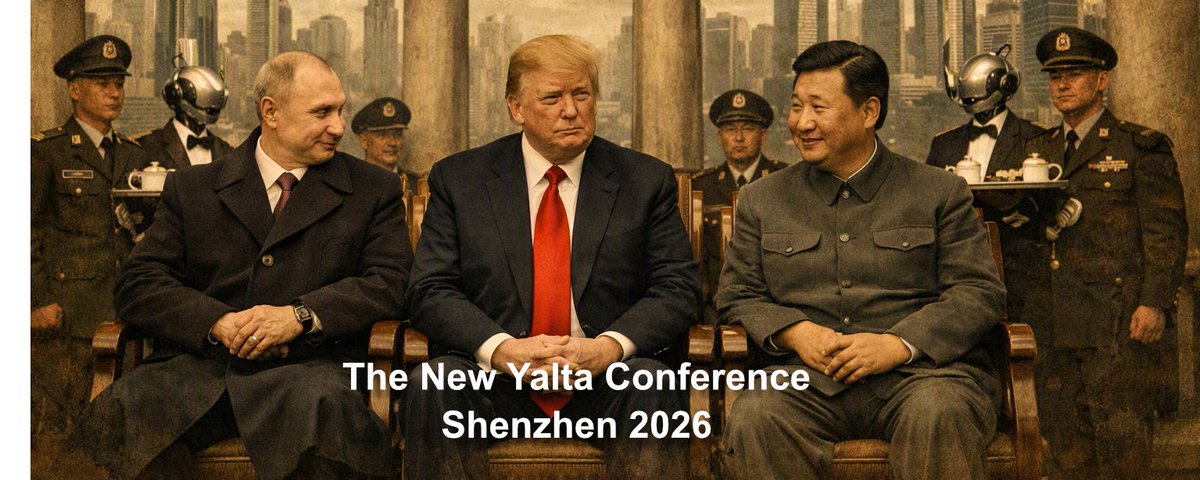
At Shenzhen’s APEC Summit, Trump, Xi, and Putin stage a “New Yalta,” deciding Ukraine’s fate and rewriting the post‑1945 order. Europe is sidelined, as drones buzz above China’s skyline as history loops with irony in a world negotiating its own reboot.
U.S. Ducks for Cover: Troops Pulled from Gulf Bases
Washington Shrinks Footprint as Iran Looms
Embassies Trim Staff, Bases Scale Back in Fear of Retaliation
Washington’s Drawdown in the Middle East: What It Really Means
The United States is pulling back troops from bases in Jordan, Kuwait, and Qatar, and trimming staff at embassies and consulates across the region. Officially, this is described as a “precautionary measure” against possible Iranian retaliation. In plain English: Washington knows its forces are exposed, and it doesn’t want to get caught flat‑footed if Iran decides to hit back hard.
Why the U.S. Is Scaling Back
- Exposure Problem: U.S. bases in the Middle East are within easy range of Iranian missiles and drones. Keeping thousands of troops packed into these facilities is like painting a bullseye on them.
- Casualty Risk: Iran has already demonstrated it can strike U.S. positions in Iraq and Syria. If it escalates, bases in Jordan or Kuwait could be next. Washington doesn’t want to explain to the American public why hundreds of soldiers were killed in a single strike just before the midterm election starting 3 Nov 2026.
- Diplomatic Staff: Embassies are soft targets. Cutting staff reduces the number of people at risk if Iran or its proxies decide to launch attacks on U.S. diplomatic missions.
What This Signals About U.S. Strategy
This isn’t a full withdrawal. It’s a downsizing designed to reduce vulnerability while keeping a skeleton force in place for defensive operations. In other words, Washington wants to limit exposure without abandoning the region entirely.
- Defensive Posture: The U.S. is leaving behind air defense units, radar systems, and rapid‑response forces. That means Washington still wants to deter Iran, but it doesn’t want to absorb heavy losses if deterrence fails.
- Political Optics: By scaling back, Washington can claim it’s being “responsible” and “protecting personnel.” But the reality is that this move underscores how dangerous the environment has become.
The Bigger Picture
This drawdown is part of a broader trend: the U.S. is shrinking its footprint in the Middle East because the costs outweigh the benefits.
- Shift to Asia: Washington’s long‑term priority is the Pacific, where it wants to counter China. Every soldier tied down in Kuwait is one less available for deterrence in Taiwan or the South China Sea.
- Iran’s Leverage: Tehran has proven it can impose costs on the U.S. at will. By forcing Washington to pull back, Iran demonstrates that it holds the initiative.
- Regional Allies: Countries like Saudi Arabia, the UAE, and Qatar see this too. If the U.S. is reducing its presence, they may start hedging more with China or Russia for security guarantees.
Risks of the Drawdown
- Perception of Weakness: Iran and its allies will read this as proof that the U.S. is afraid of escalation. That could embolden them to push harder.
- Reduced Deterrence: Fewer troops and diplomats mean fewer eyes and ears on the ground. Washington’s ability to respond quickly to crises will be weaker.
- Allied Confidence: Gulf states may question whether the U.S. is still a reliable partner. If they conclude Washington is heading for the exit, they’ll adjust their policies accordingly.
Bottom Line
This move is not about “peace” or “de‑escalation.” It’s about damage control. Washington is trying to avoid a scenario where Iran lands a devastating blow on U.S. forces just before the midterm election. By thinning out its presence, the U.S. reduces the risk of mass casualties just before an election but also signals that it no longer has the stomach for a prolonged confrontation in the region.
In layman’s terms: the U.S. is ducking its head, hoping Iran doesn’t swing too hard. It’s not a retreat, but it’s definitely not a show of strength either. It’s a middle ground—protecting personnel while keeping just enough forces in place to claim America is still “engaged.”
Final Thought
If history is any guide, adversaries don’t respect half‑measures. Iran will see this as proof that Washington is vulnerable and cautious. That perception alone shifts the balance of power in the region. The U.S. may think it’s playing smart defense, but in reality, it’s signaling to both friends and foes that its era of dominance in the Middle East is fading.
cbsnews.com/live-updates/ira…

Ignis Rex retweeted
History never ended. It continued quietly. Just that the Americans were resting on its laurels as it only hear Yeses from its junior partners and sycophants, and fell asleep at the wheel until it was too late.

The Chinese export control on refined rare earth elements and critical minerals are biting the US. It can no longer supply missiles and interceptors to the Europeans, even if they have paid for them without jeopardizing their own position in the Middle East and East Asia.
The Iran War, the war between Houthis and Saudi Arabia, resulting in high energy price and the possible closure of the Red Sea & Suez Canal; the fiery protests by students and workers in France complaining that the government is under investing in education and healthcare but over investing in war, these protests are spreading across Europe like the Arab Spring- all these are bringing Project Ukraine (US/NATO scheme to destroy and dismember Russia after the end of the Cold War) to an end.
On top of that Ukraine's population is now around 20 mil from 52 mil after independence. Meaning Ukraine has lost over 20 mil men to the war, they have either been killed, maimed or they have left the country as refugees. The US and NATO has fought to the last Ukrainian men, if they want to continue the fight with Russia they will have to send their own sons!
The Ukraine War didn't start with NATO expansion eastward, it started with the Fall of the USSR and the US intoxicated with "the end of history" started a grey zone war against Russia outside the ambit of the UNSC to dismember it. See my article below on this subject:
xitter.cf/Ignis_Rex/status/21080…

We know that the Pentagon is withholding the delivery of missiles for which our partners have already paid.
New missile shipments are awaiting Hegseth’s signature.
Our partners in Europe are waiting for U.S. authorization to transfer their Patriot interceptor missiles—Zelenskyy confirmed media reports regarding delays in the delivery of surface-to-air missiles, attributing these delays to the United States.
Europe has paid—Trump is not delivering—Ukrainians are dying—Putin is pleased.
RUSSIA HAS WON THE WAR!
ZELENSKY ADMITTED ON FOX NEWS THAT HE IS WILLING TO ACCEPT THAT THE CURRENT TERRITORY HELD BY RUSSIA IN UKRAINE BELONGS TO RUSSIA! THAT IS CRIMEA, DONETSK, LUHANSK, ZAPORIZHZHIA & KHERSON ARE RUSSIAN TERRITORY!
Ukraine population is now around 20 mil from 52 mil when it gets its independence. It has run out of men to send to the frontline!
The fake news from NATO claiming that Ukraine only having 43,000 killed and 370,000 wounded in Dec 2024 since the war started in 2022 - has been busted. The Western media has been feeding fake news of how the unstoppable Ukrainians just cannot stop winning against the Russian when almost 20 mil Ukrainians has been killed, maimed or are forced to leave the country as refugees.


The Trump administration banned Chinese AI startup DeepSeek from civilian U.S. government agencies, as it is at least 10X cheaper than OprnAI and Anthropic! DeepSeek pricing and performance will torpedo the Frontier Labs' IPO!
DeepSeek’s open-weights + ultra-low-price model, now reinforced by open-sourcing its production inference stack (DeepInfer), accelerates the commoditization of capable AI inference. This undercuts the pricing power, margins, and growth assumptions that support OpenAI’s and Anthropic’s massive valuations and IPO ambitions.


Ignis Rex retweeted

When America can't compete on price, it reaches for the national security excuse.
The US has moved to ban China's DeepSeek AI from government systems, once again claiming national security concerns. But I think there's a much bigger story here.
DeepSeek has demonstrated that China can develop AI models capable of competing with some of the best offerings from OpenAI and Anthropic, at a fraction of the cost.
And here's the interesting part. DeepSeek's models are openly available, meaning developers can download them, inspect them and run them on their own infrastructure, without sending sensitive information to servers in China.
So where exactly is the national security threat?
Of course, governments have every right to protect sensitive information. But there's a big difference between banning a Chinese-hosted AI service and restricting an openly available model that can run entirely on American hardware.
I suspect this has far more to do with protecting America's AI industry than protecting national security.
After all, American technology companies have invested hundreds of billions of dollars in AI infrastructure, while Chinese companies like DeepSeek are demonstrating that powerful AI doesn't necessarily have to come with an enormous price tag.
And that is potentially a much bigger threat to Silicon Valley than anything else.
The irony is that America has spent years championing open-source technology and free-market competition. Yet when a Chinese company delivers something genuinely competitive, suddenly the rules seem to change.
You have to ask yourself: is this really about national security, or is it about protecting American companies from Chinese competition?
🤖 Made with AI

China’s New Export Rules: A Layman’s Look at What It Means for India’s Border Construction
Let me be clear from the start: this is not a ban. China is not saying "you cannot have these machines." What Beijing announced on October 19, effective November 18, is a licensing system. If you want to buy certain tunnel-boring machines, specialized walking excavators, or high-altitude concrete sprayers, and you are in a country that China considers "in dispute" with it, you now need permission from the Chinese government.
India is not named. But everyone knows who this is about.
What is actually covered
The list is quite specific. It includes full-face tunnel boring machines (TBMs)—the big machines that chew through rock for metro lines and road tunnels. It includes walking excavators, the spider-like machines that can climb steep slopes where ordinary excavators cannot go. And it includes plateau-type wet shotcrete machines—equipment that sprays concrete onto tunnel walls to stabilize them, specially designed for altitudes above 3,000 meters.
That last item is the tell. Why would you need a special shotcrete machine for above 3,000 meters? Because that is where the Himalayas are. That is where Ladakh is. That is where India has been building roads and tunnels to move troops and supplies toward the Chinese border.
Why this matters for India’s border regions
India’s strategic infrastructure push in the high Himalayas is real. The Zojila tunnel, at 3,528 meters, just broke through earlier this year. It will connect Kashmir to Ladakh year-round, keeping the military supply line open even in winter. There are other projects too—tunnels, roads, and support infrastructure in places where the air is thin and the working season is short.
These projects do not always use giant TBMs. In difficult mountain terrain, Indian engineers often use the older drill-and-blast method instead. But that method depends heavily on two things: machines that can reach inaccessible slopes, and shotcrete to immediately stabilize the rock after blasting. Chinese-made walking excavators and shotcrete machines have been popular in India because they are cheaper and easier to get than European alternatives.
Now they need a license. And a license can be delayed. A license can be denied. Even if approved, the uncertainty alone changes how contractors plan. You cannot build a tunnel on a tight schedule if you do not know when your concrete sprayer will arrive.
The TBM angle is trickier
India’s dependence on Chinese TBMs has actually gone down. Direct imports dropped sharply after 2022-2023. India now assembles many TBMs locally through Herrenknecht’s facility in Chennai, and buys from German or American suppliers.
But here is the catch: even a German-brand TBM can have Chinese components. Or it might be manufactured in a Chinese factory.
The new rules say that if a controlled item—or key components or technology—originates in China, it needs a license before going to a sensitive destination. So a TBM that says "Herrenknecht" on the side but was assembled in China could still get stuck.
This is not hypothetical. In 2024, India’s commerce minister publicly complained that China was blocking a German company from exporting China-made TBMs to India. Customs holds and delays have already been happening.
What this is really about
China says these items have "dual-use" characteristics—meaning they can serve both civilian and military purposes. A tunnel-boring machine digs metro tunnels. It also digs strategic tunnels. A shotcrete machine stabilizes a road tunnel. It also stabilizes a military bunker.
From Beijing’s perspective, selling this equipment to India for use in border infrastructure is handing your rival the tools to strengthen positions aimed at you. The licensing regime gives China a dial it can turn up or down depending on how the relationship is going. It is not a weapon that stops everything. It is a pressure point.
The likely outcome
For India’s metro projects in Mumbai or Delhi, the impact is probably manageable. Alternatives exist. Local assembly helps. For the high-altitude border projects, the pain is more concentrated. Lead times will stretch. Costs will rise. Contractors will start hunting for European or Japanese replacements, which cost more and may take longer to deliver. Some may stockpile spares before November 18.
And in the longer run, this accelerates exactly what India has been talking about anyway: building its own capacity to make these machines. The roughly $1.2 billion incentive scheme for domestic TBM manufacturing suddenly looks less like industrial policy and more like strategic necessity.
The real question is not whether India can survive this. It can. The question is how many working seasons in the mountains get lost while contractors scramble for alternatives.
In the Himalayas, the window for construction in summer is short. A delay of a few months can mean waiting another year.

Ignis Rex retweeted

BREAKING: The U.S. is now preparing to completely abandon Gulf countries, as Trump envoy Tom Barrack directly warns Gulf allies that Washington can no longer guarantee their security indefinitely, telling regional officials in Doha that they must take responsibility for their own defense, signalling the end of the U.S. security umbrella in the Middle East, per the Wall Street Journal.
Barrack said the 80-year-old U.S. security-for-oil arrangement is no longer sustainable, pointing to regional defense partnerships as the way forward. The warning comes as Gulf states face Iranian strikes on U.S. military infrastructure and growing uncertainty over Washington’s future military commitment to the region.
