

Trading journal that tracks WHY you trade, not just what you traded. For traders who know their strategy works but can't execute it. Beta open.
Joined January 2026
- Tweets39
- Following32
- Followers11
- Likes74




I tracked every mistake I've made.
The damage:
Forced Trade: -$1,995
Entered On Chop: -$1,041
FOMO: -$536
Hesitation: -$310
No Clear Setup: -$212
Total psychology tax: -$4,094
I thought my biggest problem was FOMO.
It was forcing trades. By almost 4x.
You can't fix what you can't measure.

Prop firm evaluation stages:
Day 1-3: "This is going well"
Day 4-7: "Just need to stay consistent"
Day 8-10: One bad trade
Day 11-12: Trying to recover
Day 13: Reset
The strategy wasn't the problem.
3
36
The post-market routine that keeps me accountable and actually improving. 5 minutes a day. Here's what it looks like: 🧵
1
50


This week on indices:
→ Knew exactly where price was going
→ Watched it go there
→ Took zero trades
No setup on LTF. So I sat on my hands.
Hardest part of trading isn't finding direction.
It's waiting for YOUR setup to show up.
1
60
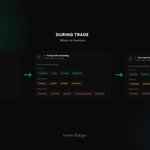
Your pre-trade emotions predict your outcome more than your strategy.
Anxiety → early exits
FOMO → chasing entries
Confidence → proper execution
Most traders only journal after the trade.
That's like diagnosing the disease after you're already dead.
3
59