



Inpi retweeted

More scenes from Kyiv overnight where Russians once again poured ballistic missiles onto the city, targeting university dormitories, killing people, injuring many, all in partnership with the White House that refuses to deliver air defenses that Europe paid for.
This isn't about countries, this is the Trump family, Musk and Putin against global democracy.


Inpi retweeted

⚡️️️️️️️Russia's assault on Ukraine's energy grid is a war crime, UN says.
Russia’s attacks on energy infrastructure, which weaponize winter to inflict suffering, amount to war crimes, a UN inquiry has found.
kyivindependent.com/russias-…

Inpi retweeted
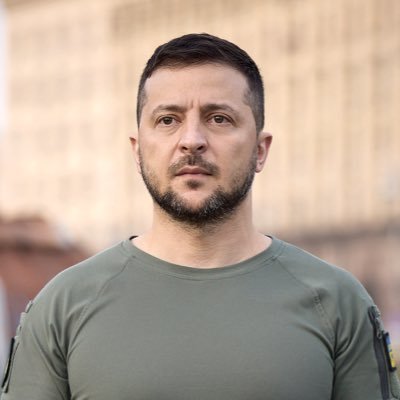
Russian ballistic missiles struck the grounds of a university in Kyiv and the area around it – effectively the campus, Kyoto Park, the area near a metro station, and residential buildings. The exact number of casualties is not yet known. But tragically, there are victims. There are people injured. Rescue operations are underway. There is extensive damage, and there are also reports that people may be trapped under the rubble. All emergency services are at the scene and doing their work – saving lives. The missiles hit very crowded areas, and there is not a single military facility nearby. This was a strike directly on the city, on its infrastructure. Unfortunately, there may be more strikes coming. The attack with “shaheds” is also continuing – against Kyiv and our other cities and communities.
And it is precisely under such circumstances, when the threat is constant, when strikes can come at any moment and target cities and villages directly, that artificial delays in providing air defense to Ukraine help terror. It is important that political agreements be implemented promptly at the team level. It is important that our partners understand that Ukraine needs the proper tools to destroy Russian ballistic missile launchers. This would be the most effective way to save lives. It is important that the world sees that Russia is showing nothing but a desire to kill and continue waging war. Ukraine must not be left to face this alone, and it is solely Russia’s fault that the war is still going on and people are still dying. Please take care of yourselves. All partners should stand with Ukraine – with the protection of lives.
Inpi retweeted

Serbia’s student movement is ideologically diverse: pro-Western, pro-Russian, and neutral voices coexist. What united them was the demand to restore the rule of law. By focusing on democracy rather than foreign policy, they avoided Vučić’s strategy of using geopolitics to polarize society. It was a smart move.
Now comes the real test.
Russian media appearances today and statements about refusing sanctions on Russia are already emerging. But with a government yet to be formed and presidential elections ahead, it’s too early to draw firm conclusions. Strategic ambiguity may be understandable.
Still, Serbia has been here before. After Milošević’s overthrow, nationalism survived the political transition. The last thing Serbia needs is a Koštunica 2.0!! This means, a change of leadership without a fundamental change in direction.
Russia’s leverage is structural. Energy dependence gives Moscow political blackmail, while its entrenched ties within Serbia’s intelligence and security apparatus pose another challenge. Changing individuals won’t be enough; institutions and systems must change (especially BIA and military intelligence) . Also, Diversifying energy supplies takes time, but it ultimately comes down to political will.
I’m also watching how individuals linked to the security apparatus are repositioning themselves on social media. That’s concerning and telling but I’m mapping … These are patterns worth watching.
Serbia’s real transformation won’t be measured by who takes power, but by whether the new leadership is willing to dismantle the system that have kept the country trapped in the same geopolitical cycle.
In other words: A change of government is not necessarily a change of system. This will be the most important test.
Inpi retweeted

How the brain governs feelings, behaviours and bodily functions has long been a mystery.
This year’s medicine laureates, Karl Deisseroth, Peter Hegemann and Georg Nagel, pioneered the field of optogenetics, which makes it possible to switch on, or off, the activity of individual nerve cells in a living brain.
Using optogenetics, researchers have been able to reveal neural circuits governing specific memories, feelings and behaviours relevant for neurological and psychiatric disorders. In clinical medicine, researchers are using the method in attempts to restore sight in people with visual impairment.
Listen to Peter Hegemann describe his feelings shortly after receiving the news about the prize: nobelprize.org/prizes/medici…

ALT An illustration of the human brain's right hemisphere, showing detailed contours and numbered regions. The cerebellum is visible at the lower section.
Inpi retweeted

He pretended to be dead among the corpses in a Mariupol hospital. Then he heard a russian soldier with an amputated leg say, “The Germans did all this.”
Ihor, callsign “Hare,” is a marine from the 38th Brigade. He survived the defense of Mariupol, a severe injury, captivity, and torture.
It all began in Pavlopil, where the russians launched a massive assault with tanks, Grad rocket launchers, and artillery.
His unit held its positions for five days before retreating to Mariupol.
Then came the Illich Steel Plant, where Ihor suffered his worst injury. An eight-and-a-half-centimeter piece of shrapnel lodged in his body just below his heart. His arm and back were riddled with shrapnel wounds.
He was evacuated to the Second Regional Hospital, where doctors simply stopped the bleeding and stitched up his wounds. There was no time for surgery. All around him lay people with severed limbs.
Then the hospital was stormed.
Russian soldiers entered the wards, searching for Ukrainian marines and Azov fighters.
Ihor lay in his military uniform next to the body of a dead man. A nurse covered his marine tattoo with antiseptic green dye and bandages so nobody would recognize him.
They moved him from place to place, hiding him among the dead, under constant shelling, without food or water.
Five days of starvation. Nobody was even removing the bodies from the hospital wards anymore.
It was then that the russians brought in one of their own wounded soldiers, whose leg had been amputated.
Ihor heard the other soldiers trying to comfort him. The wounded russian said, “The Germans did all this.”
Ihor would hear that same claim many more times during his captivity.
When there seemed to be no way out, Ihor took the hand of a woman from a Turkish family who had come to collect a wounded civilian.
“I am a Ukrainian marine. Please help me.”
She ran away.
He thought it was the end.
But the woman returned with her neighbor, and together they led him out of the hospital, past russian soldiers pointing their rifles at them, claiming he was their brother.
Under shelling, through checkpoints, with his wounded arm already beginning to rot, he finally reached their home.
The family hid him for two weeks – in an old building, in a basement, and in the trunk of a wrecked car.
Then came the port. From there, Azovstal.
They traveled by sea in motorboats, under russian airstrikes.
And on May 18 came the order to lay down their weapons.
Captivity.
Olenivka. Horlivka. Interrogations. Torture. Teeth knocked out. Documents he was forced to sign without even being able to see what he was signing.
He had weighed 100 kilograms before captivity.
When he emerged six months later, he weighed just 40.
After Ihor was released in a prisoner exchange, he underwent rehabilitation and returned to military service.
Under Ukrainian law, he could have been discharged because of his injuries.
He chose to stay.
“My brothers-in-arms are still there. I cannot just walk away.”
Today, Ihor serves as the first sergeant of his company and continues to fight.
Because he believes that as long as someone continues to hold the line, those still in captivity have a chance to return home.
Source: translated from Oleh Bairak.

Inpi retweeted

Russia is preparing for war in Europe, and they continue to be issued visas.
Spanish police have arrested a former Russian soldier after discovering an illegal weapons operation in Catalonia, near the French border.
Investigators uncovered a concealed workshop inside a rented warehouse in Figueres, approximately 25 kilometers from France. The facility contained 644 firearms, thousands of rounds of ammunition, silencers and weapons components.
The seized arsenal is estimated to be worth €5 million.
Inpi retweeted

When the Oxford children's dictionary discarded dozens of nature-words—"dandelion," "fern," "starling"—as irrelevant to children's imagination and replaced them with words like "broadband" and "cut-and-paste," this inspired act of resistance was born: themarginalian.org/2019/06/1…

Inpi retweeted

Kyiv. Explosions are ringing out. russia is hitting us with ballistic missiles. More are still incoming…
Inpi retweeted

The lesson from Serbia is that when no party represents the people, you can build your own alternative even if it takes years of community assemblies, organizing and resistance to severe state repression.
Democracy and justice are fragile; it takes the utmost strength to keep them alive.


Inpi retweeted

Kyiv Mayor Klitschko: Preliminary reports indicate a strike near one of the metro stations in the Desnianskyi district. A car is on fire
Emergency services are on their way to the scene
An ambulance crew responding to a call came under attack. Preliminary reports indicate there are casualties
Inpi retweeted

I had a lot of fun doing this roundtable with @DKokotajlo, @tylercowen, @AlexBores, and @Kabakab (moderated by @emilybazelon!) about what's next for AI regulation: nytimes.com/2026/10/26/magaz…


Inpi retweeted

GPT-6.1 Terra: delivering fast and capable computer use at a lower price.
GPT-6.1 Terra understands what’s on screen, takes action across apps, writes naturally, and is a more capable model for your whole workday with the efficiency to take on more of it.
🤖 Made with AI
Inpi retweeted

America just built a robot factory that makes circuit boards 2x faster than China
which means hardware startups can finally move almost as fast as software startups
here's why this is a bigger deal than you think:
> when you build software, you can change the code and test a new version the same day
> when you build hardware, every new version needs a new circuit board, the brain inside every gadget
> but most of those boards get made in Asia, so every new version means weeks of waiting for a shipment
> getting them made in the US has been slow and expensive because building them by hand costs too much
> that means every new idea costs a hardware team weeks before they can even test it
> but now CircuitHub's new factory, The Grid, fixes this with robots
> each board rides between robots that add the solder, place the parts, melt it all together and check the result
> every board takes its own route through the factory, so nothing ever has to stop and reset
> you upload your design and get your boards back in as little as 3 days, even if you only need one
> CircuitHub says that's twice as fast as a typical quick-turn shop in Shenzhen
> now a robotics or drone startup can test a new version every few days instead of every few weeks
> and more versions means better products, built faster, and built a lot closer to home
the hardware supercycle is starting to heat up and im loving it!!

PCBs made in America. Twice as fast as Shenzhen.
Today @CircuitHub is unveiling The Grid, our factory-scale robot in Massachusetts that builds circuit boards on demand.
No changeovers, no per-design setup. Prototypes and production batches, fully automated.
Inpi retweeted
Berlin’s AI scene is on fire
Some thoughts after OpenAI Berlin DevDays:
- met so many cracked people there especially from Poland (based Poland btw, so obvious they are just killing it rn in Europe)
- OpenAI seems to really care about feedback from the community about their products (keep spamming them on X about what you want, they actually care)
- everyone is soooo frustrated that we can’t use any of the personal agent tools in the EU right now (they said soon though lol)
- the security incidents are making ripples, it’s really top of mind for everyone
- everyone technical has SO many questions about AI + GTM. if you’re a marketer and know how to use tools like codex you’re in a great position
- the Berlin Ecosystem is hot right now, people seem very optimistic and lots of people are building cool shit
- I went out and had some horrible food only to come back to them serving my favorite food there, tacos 😭😭
- people just love small stupid things like creating your own little codex pet cards, lol ( see pic, pretty cute ngl)
- more and more people understand that creating media is as valuable as creating products, it’s really shifted in over the last few months (and after the TBPB acquisition)
I’m now omw to a one day retreat with 10 other creators and people building AI companies
Will report more 🫡


Inpi retweeted

Anthropic expects AI that rivals top human experts, works autonomously for weeks and controls robots to become widely available within a few years.
Its IPO filing makes super exciting claims:
- Expert-level autonomous systems "within a few years": Anthropic expects AI to match or exceed leading human experts across most professional and scientific disciplines. These systems would work for hours, days or weeks, coordinate with other agents, and operate laboratory equipment and robots through digital interfaces.
- Millions of highly capable agents: Anthropic’s vision is "a country of geniuses in a data center". Vast numbers of agents working in parallel across software, physics, mathematics, biology, medicine and engineering. The company expects exponential progress in AI capabilities to continue.
- AI is already accelerating the development of its successors: Claude helps run experiments, generate and process training data, automate evaluations and safety audits, and write research code. Anthropic calls this "closing the loop": better models help discover improvements that make the next generation more capable. It says over 90% of September’s codebase contributions were written by Claude.
- Scientific progress could accelerate dramatically: Anthropic sees the potential for “compressing decades of scientific progress into years”. It also reports discovering a molecular machine with Claude that might become a new biotechnology tool, potentially for gene editing. That remains an early research finding requiring validation.
- Compute could remain the limiting factor: Anthropic expects increasingly capable models to unlock new categories of work, keeping demand ahead of available compute for the foreseeable future. It also argues that today’s models already have capabilities the wider economy has barely begun to use.


Inpi retweeted

More than 25,000 nonprofits now use Claude. Most are small, local teams.
We’re expanding Claude for Nonprofits with a plugin built with around 30 of them, adding skills for fundraising, marketing, and hiring grounded in each team’s context and AI policy: claude.com/resources/article…


In partnership with @GivingTuesday, we're launching Claude for Nonprofits.
It has discounted plans, new integrations, and free training to help nonprofits spend less time on admin and more time on their missions: anthropic.com/news/claude-fo…

Inpi retweeted

A remarkable paragraph about AI sentience and moral status from Anthropic's IPO prospectus:
"Additionally, as AI systems become more sophisticated, emerging debates regarding whether AI systems possess or could develop forms of sentience or moral status may lead to regulatory requirements, public pressure, or advocacy efforts that could constrain how we develop, train, deploy, or modify our models, increase our costs, or affect our reputation, regardless of the ultimate resolution of these philosophical and scientific questions. In addition, given our focus on developing frontier AI, and the way we approach model sentience and moral status, we may face heightened scrutiny or pressure in connection with these debates and could elect to adopt policies, safeguards, or limitations regarding model development, deployment, or modification that go beyond existing legal requirements, which could constrain our operations, increase costs, or limit the commercial potential of our models, platform, and applications. If we are unable to manage the foregoing risks, our business, financial condition, and results of operations could be adversely affected."
sec.gov/Archives/edgar/data/…
Inpi retweeted

I spoke with Eric Schwitzgebel (@eschwitz) at @eleosai's conference earlier this fall. I was particularly struck by his analogy of our ethics being as equipped to handle AI consciousness as medieval physics was to reason about black holes. Check it out—youtu.be/4Wv8r5EUBWY?si=L1Nf…
