

Welcome to Invert Robotics Invert Robotics provides non-destructive inspection services using in-house, state of the art mobile climbing robots.
Dublin
Joined March 2011
- Tweets105
- Following63
- Followers107
- Likes46
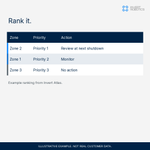


What a prioritised maintenance plan looks like, in 7 slides. Illustrative example, not customer data.


2
6
Invert Atlas early access → invertrobotics.com/invert-at…


21x zoom, from inside the vessel.
Remote visual inspection from a climbing robot gets the camera centimetres from the surface, at a recorded position, every time.
That's how a close-up becomes a data point.

10
1/ Physical AI is getting a sense of touch. More and more robotics work is going into force and contact sensing.
For inspection, that matters. A thread on why robots that touch the asset collect better data. 🧵
1
9
5/ Invert has done contact inspection inside tanks and vessels for years. Invert Atlas, our intelligent data system, compares each inspection with the last and gives you a prioritised maintenance plan.
1
1
6/ Better data, not more data. Early access → invertrobotics.com/invert-at…
2
See inside the asset without stripping it down.
Our robots collect high-fidelity, position-tagged data inside stainless, coated and glass-lined tanks and vessels. No one goes inside.
Invert Atlas compares each inspection with the last → a prioritised maintenance plan.
1
16
Invert Atlas early access → invertrobotics.com/invert-at…
3
Rolling into Friday like a robot that just finished a full vessel inspection without anyone going inside. 🤖
Have a good weekend.
10
Rope access vs robot, for the inside of a tall vessel:
Rope access: permits, confined-space entry, a rescue plan, people at height.
Robot: through the manway and up the wall by vacuum adhesion, with repeatable, location-tagged data at the end.
10
What our robot cameras find most often inside stainless tanks and vessels:
• Pitting
• Weld corrosion
• Cracking at nozzles and welds
• Coating and lining damage
Most of it is invisible from the outside. All of it is easier to manage once it's on record.

2
One defect, one photo, one report, filed away.
Or: one defect, measured at a known position, and checked again at the next inspection to see if it's grown.
Same defect. Very different decision.

5
The knuckle radius, where the shell meets the dished end, is one of the most stressed areas of a vessel.
It's also one of the hardest to see from outside.
Here our V1800 robot is scanning the internal knuckle weld for cracks, corrosion and early signs of weld fatigue.
10
What does the inside of a tank actually look like?
This is a live view from one of our robots climbing a stainless vessel wall.
Every frame is tied to a position on the asset, so next time we can come back to exactly the same spot.
14
Some assets are too confined, too fragile or too hygienic to send people inside.
So we send a robot instead. It climbs the wall by vacuum adhesion and brings back location-tagged data from the inside.
No entry. No scaffolding. Just data.
20
Physical AI runs on physical data.
No model can tell you what the inside of a silo looks like today. The welds, the lining, the wall thickness: real condition has to be measured, in place.
A short thread on why that matters 🧵
1
19
Invert Atlas turns those repeated inspections into a living record of asset health: defect maps, inspection-over-inspection comparison, risk ranked across assets and sites, and a clear, prioritised maintenance plan.
Every inspection, remembered.

1
13
Invert Atlas is now in early access. We're working with a small group of asset owners to shape it around real plants.
Own tanks, silos or vessels? Request a place:
invertrobotics.com/invert-at…
8