

Developer, exploring AI agents, and sharing what I learn
Joined January 2026
- Tweets9.3K
- Following1.3K
- Followers2.8K
- Likes9.6K





Pinned Tweet
Imagine paying $200/month for an AI coding agent and still having to worry about how much you use it.
That's the problem I want to solve.
I'm building my own alternative to Claude Code and Codex.
AI compute is not free.
But I'm experimenting with smarter ways to use it
Can unlimited coding agent be economically viable?
I'm going to find out.
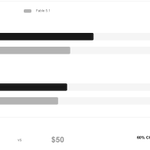
Can giving an AI model MORE time to think actually make it perform WORSE?
It's a question worth testing.
Higher reasoning effort gives GPT-6.1 Sol more room to work through difficult problems.
But that doesn't mean every additional reasoning token improves the answer.
Models can still make incorrect assumptions, pursue unproductive approaches, or introduce unnecessary complexity.
And a solution that passes all tests at Medium doesn't automatically become better because Ultra spent longer generating it.
More compute is an opportunity to reason better.
Not a guarantee.

I'm building an AI coding agent with unlimited usage that could ultimately use 9 different AI models.
And no, the plan isn't to use all 9 for every task.
Here's my current shortlist:
• Claude Opus 5.5
• Claude Sonnet 5.5
• Claude Haiku 5.5
• GPT-6.1 Sol
• GPT-6 Luna
• DeepSeek V4 Pro
• DeepSeek V4.1 Flash
• GLM-5.3
• Kimi K3
The idea is to give different models different responsibilities.
A router decides which model handles a task based on complexity, capability, cost, and previous performance.
Hard problems get stronger models. Simpler work gets cheaper ones.
The goal isn't to build the smartest coding agent.
It's to build one that's powerful enough to use all day without constantly worrying about limits.
Still figuring out the architecture. I'll share the experiments as I go.
AI might have accidentally created the most reading-intensive generation in history.
Think about it.
Every day, millions of people read thousands of words generated by ChatGPT, Claude, Gemini, and other AI tools.
Now let's do some quick math:
The average novel contains roughly 80,000 words.
If you read just 2,000 words of AI responses daily, that's:
60,000 words per month.
730,000 words per year.
The equivalent of 9 full-length novels every year.
And that's just 2,000 words a day.
People who haven't finished a physical book in years might now be reading the equivalent of dozens of books annually.
AI didn't just change how we write.
It has changed how much we read too.
The question is whether we're actually learning more, or just consuming more words.


Just crossed 2,700 followers! 🎉
Genuinely grateful to everyone who's followed, engaged, and supported me so far. Thank you! ❤️
I'm here to connect with developers, AI enthusiasts, builders, and anyone passionate about tech.
If that's you, let's connect and grow together! 🤝
Next stop: 3K 🚀
Claude Opus 5.5 is 60% cheaper than Fable 5.1.
And generally better at coding.
If a cheaper model writes better code, makes fewer mistakes, and completes tasks faster, what exactly are you paying the premium for?

"don't give your API keys to AI"
Immediately you click "Trust this folder" in your coding agent, it gets:
- read access
- write access
- terminal access
- git access
- network access
- outside folder access
it can literally read your .env file so why do people make a big deal about giving your API key to a coding agent? am I missing something?
If your agents wants to start a villain arc, it's not using a .env.example that's going to stop it.
I'm curious,
Why doesn't Claude Code or Codex have multi-model orchestration?
Cause I definitely wouldn't mind designing the system architecture with Opus 5.5 and then switching mid-execution to build a simple API integration with Haiku 5.5.
I think it'll definitely save usage allowance
I'm tired of paying for AI coding agents and still worrying about usage limits.
So I've decided to build my own.
The goal is simple:
An AI coding agent that can compete with Claude Code and Codex, without the frustrating usage caps.
I don't know if I can pull it off.
But that's not going to stop me from trying
Dear X algorithm,
Please introduce me to people who:
• Build AI agents
• Ship SaaS products
• Share what they're learning
• Are building something from scratch
I don't care if you have 50 followers or 50,000.
Say hi and let's connect👋


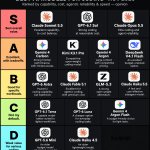
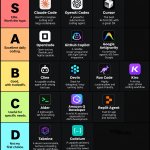
The most powerful AI model isn't necessarily the best model for coding.
I ranked top 16 AI models from S to D tier.
Not just by intelligence, but by what actually matters to developers:
• Coding capability
• API cost
• Agentic reliability
• Speed
• Context handling


I want more people on my timeline who are building something BIG.
Not just talking about AI.
Actually shipping products, writing code, and turning ideas into reality.
If you're into:
• AI Agents
• SaaS
• Startups
• Building in Public
Let's connect 🤝
What're you building?
In 2022, GPT-3 Davinci cost $20 per million tokens.
By 2024, GPT-4o mini cost just $0.15 per million input tokens.
We're barely a few years into the generative AI boom.
What happens when running an AI model becomes as cheap as making a database query?
