

Managing Editor, Financial Nigeria A moderate, but an unapologetic analyst.
Joined June 2009
- Tweets6.9K
- Following1.8K
- Followers3.9K
- Likes26.7K





“Nigerians are an exceptionally proud people. To borrow from the country’s Gen Z slang, our individual and collective pride is truly ‘unreal’. This reflects a deep self-respect. During moments of national triumph, this pride bursts forth vividly, as it did when Nwankwo Kanu scored the ‘golden goal’ that secured Nigeria’s comeback victory against Brazil in the semi-final of the football event at the 1996 Atlanta Olympics. The ‘Dream Team’, as the under-23 national squad was affectionately called, went on to defeat Argentina in the final to claim the gold medal. This historic achievement occurred just a day after Chioma Ajunwa, competing in the women’s long jump, secured Nigeria’s first-ever Olympic gold medal.
“Despite the serious economic and political challenges Nigerians face, they continue to wear their pride as a badge of honour. Their personal successes in business, literature, and the arts—not to mention their growing global influence in technology—enhance the country’s reputation. With its large population and vibrant cultural scene, Nigeria is well-positioned to project soft power internationally and become a key hub for global cultural tourism. Although it remains the dominant economic force in West Africa, it has, for now, stepped back from its position as the continent’s top economy.
“The roots of Nigerian pride run deep, predating the formal history of the modern state. As one of the nation’s three main ethnic groups, the Yoruba take great pride in their ancestral lineage, which traces back to the legendary King Oduduwa (800–1000 AD), the first ruler of a unified Ile-Ife, the spiritual heart of the Yoruba nation. Through military conquests led by the Oyo Empire, the Yoruba expanded their influence across the southwest and beyond, leaving a legacy of advanced statecraft long before the arrival of colonists on the West African coast.
“Today, the ethnolinguistic identity of the Yoruba extends beyond Nigeria’s borders into the Republic of Benin and Togo, as well as across the global diaspora, a legacy of centuries of migration and the transatlantic slave trade. The Yoruba take great pride in their unique physical characteristics, celebrated sartorial style, and flavoursome traditional cuisine, which they savour as a symbol of cultural distinction.
“The Igbo are a prominent ethnic group in Nigeria. Historically, they are recognised for their strong sense of individualism and a republican approach to self-governance. Igbo culture often emphasises hard work and family support, extending beyond the nuclear family to encompass a broader network of relatives. The concept of family and kinship is deeply valued within Igbo society. My close friend since our university days, thirty-four years ago, Sunday Daniels, would leave you puzzled when speaking of his half-siblings, for there is nothing ‘half’ about the relationship. He grew up with this expansive ethos in a polygamous setting, where kinship is measured by the strength of the bond rather than the distinctions of birth or maternal lineage.
“Collectively, the Igbo embody resilience. Despite British colonial repression, which aimed to punish their decades of resistance, and the devastating human and financial toll of the thirty-month Civil War, they remain among the most prosperous peoples in Nigeria today. Despite their ongoing political marginalisation within the state structure, the Igbo have learnt to transcend prejudice by channelling their energies into business and industry. They have mastered the pragmatic art of thriving where the state has failed.
“The Nigerian Fulani’s self-identity is rooted in a legacy of conquest, commercial skill, and their historical role as promoters of Islam. The nomadic lifestyle of their ancestors fostered a sense of complete independence, allowing them to manage large herds with little fear of weakness. In modern Nigeria, this ancestral pride has grown into a strong desire for political and economic dominance.”
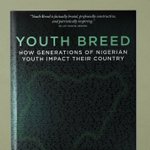
(Jide Akintunde, Youth Breed: How Generations of Nigerian Youth Impact Their Country, p. 58-59.)
As Nigeria continues to pour vast capital into infrastructure, growing evidence suggests that its project culture has shifted fundamentally away from long-term civic transformation towards mere political visibility, writes @JSAkintunde.
financialnigeria.com/what-ni…

Jide Akintunde retweeted

As vandalism continues to threaten Nigeria's electricity infrastructure, @TCN_NIGERIA is strengthening its response through security partnerships, community engagement, public awareness campaigns and rapid network restoration efforts.
financialnigeria.com/tcn-s-m…

Jide Akintunde retweeted
The proposed Lagos Street Begging Bill raises a fundamental policy question: “Should the law punish those driven to beg by poverty and vulnerability, or address the social conditions that make begging a means of survival?” writes @funmiodude.
financialnigeria.com/lagos-s…

The attempted rally by ManCity in the second half provides a blueprint for playing against PSG: overwhelm them physically.
Last weekend, the call for ManCity to be punished for cheating reached a crescendo because of their win against Liverpool. It was like City were already running away with the EPL this season. But I wasn't moved. Their philosophy has changed with Maresca replacing Pep. City have lost their winning edge: Pep.
What Cheap Grace Produces
To benefit from Comrade Adams Oshiomhole’s gracious forgiveness, you don’t need to show penance, repentance, or remorse. In 2019, when he was the APC’s national chairman, he famously established this doctrine of instant political absolution for those defecting to the ruling party.
However, the systemic risk of gratuitous grace has been unfolding. A prominent beneficiary recently threatened the opposition with "fire".
Only the judgement of history can correct these grave misdeeds. Fortunately, some of Senator Oshiomhole’s rhetorical hits are well-documented for posterity.
But the man’s public life extends beyond his oratorical shortcomings.
To be fair to him and to illustrate the broader pattern in which many prominent Nigerians evolve from admirable beginnings to less inspiring figures, rather than to deodorise his record, you will also read Oshiomhole’s public introduction in my book, Youth Breed: How Generations of Nigerian Youth Impact Their Country, as a fiery advocate for alleviating the suffering of the masses.
It was fascinating to watch Yale professor Samuel Moyn's interview on Al Jazeera earlier this evening, in which he discussed his new book, Gerontocracy in America.
This exact phenomenon, the rule of the elderly, is the subject of Chapter 10 of my book, Youth Breed: How Generations of Nigerian Youth Impact Their Country.
In Nigeria, structural dysfunctions like political godfatherism and turn-by-turn power rotation share the blame. But the youth also bear responsibility for a system that fundamentally works against them. Nigeria’s gerontocracy is sustained because the youth, the demographic and voting majority, refuse to unleash their electoral power through massive election turnouts.
The plight of our nation’s youth is grim. I drew attention to this in Youth Breed with a provocative chapter title, "Not Too Old to Mislead," and its epigraph: “When the past refuses to relinquish the helm, the future is the first to go overboard.”
Nigerian youth need to wake up. They cannot continue to "catch a cruise" while their future is being mortgaged. To take control of their future, they must embrace the core pillars I outline in the book: Dignity, Discipline, and Dutifulness.
Jide Akintunde retweeted
The danger of unsafe food is sometimes underestimated because food contamination is often associated primarily with immediate illnesses such as diarrhoea, vomiting, or other acute reactions linked to food poisoning, notes @OjebodeMojisola.
financialnigeria.com/safe-fo…

To young people out there: if you were raised with good values, cherish them. Don’t envy Seyi Tinubu; instead, pray for him. Pray for our nation.
Too often, we hear that young people are losing touch with our history, particularly the periods when principled, visionary leadership inspired hope for Nigeria’s greatness.
My book, Youth Breed: How Generations of Nigerian Youth Impact Their Country, reconnects young people with the legacy of leadership, service, and national aspiration.
Written with courage, trust, and empathy, Youth Breed brings Nigeria’s rich story to life and shows how generations of young people have shaped the nation’s reality from the pre-independence to the post-independence eras.
The movement is already growing. Public-spirited individuals are underwriting free copies for students, helping to inspire a new generation of informed and engaged citizens. Further updates on this initiative will follow in the coming weeks.
Get your copy today:
- Order directly at youthbreed.com/
- Available nationwide in leading Nigerian bookshops
- Available globally on Amazon in ebook, paperback, and hardback formats
Read it. Share it. Discuss it. Let’s remind our young people that they have always been a powerful force in shaping Nigeria’s future.
@UtomiPat @SamAmadi @jimidisu @OurFavOnlineDoc @ruffydfire

Which of President Bola Tinubu, Atiku Abubakar, or Peter Obi has the best stance on the fuel subsidy for now?
To answer this, we must first consider the harsh economic reality. Returning to a petrol subsidy regime will be very difficult for three major reasons:
First, Nigeria’s public finances have come under greater strain in recent years. The outstanding public debt has increased by N79.41 trillion, from N87.38 trillion in June 2023 to N166.79 trillion in June 2026. This now has debt service consuming up to 67% of actual budget revenue. Given this reality, funding an elaborate subsidy will be quite challenging.
Second, like many developing countries, we have high public debt obligations that necessitate further borrowing. To access concessionary credit from institutions such as the World Bank, or to maintain an investment-grade credit rating to borrow at moderate cost in international capital markets, the government must accept reforms that, by nature, promote austerity.
Third, the underlying corruption of the subsidy machinery was never actually solved. Instead, the machinery simply shifted to how the "savings" from the subsidy removal have been managed. If the subsidy returns, the network of corrupt beneficiaries will simply mutate again.
Given that the current administration has now reintroduced market interventions through NNPCL "discount" and price ceilings, we are effectively back to dealing with the petrol subsidy.
Here is how the three front-runner presidential candidates stack up:
Atiku Abubakar: His plan leans heavily on populism. It is not grounded in hard data, and his platform offers no real hope of a government that will wage a strong fight against deep-seated corruption.
President Tinubu: His administration has further clouded transparency in the system. Its new fuel "discount", offered through the state-owned NNPCL, is uncosted. While other countries have introduced measurable, transparent relief, such as tax cuts, without disrupting the market framework, the discount and price modulation announced yesterday entail constant interference with the market mechanism.
Peter Obi: His approach is tentative and cautious. He would prefer to dismantle the systemic corruption associated with the subsidy programme before considering its return. This data-driven, studious approach reflects the strict fiscal and financial discipline he is known for in both his public and private life.
The Verdict
Among the three leading presidential candidates, Peter Obi offers the most practical, astute, and credible approach to navigating the fuel subsidy dilemma. He prioritises structural reform over cheap political points.
The 2023 political consensus on removing the petrol subsidy has virtually collapsed. Before it finally did yesterday, I noted in my October 2026 editorial that the question facing Nigerians in 2027 is not who can promise immediate relief from hardship. Read the article to see what really matters.
financialnigeria.com/the-pet…

When Atiku said he would restore the fuel subsidy if elected president, the government ignored him. But the moment Peter Obi said he would reverse the removal of the subsidy, the government panicked, did a U-turn, and smuggled the subsidy back in a trench coat and sunglasses.
Legal experts can debate the constitutionality of INEC’s absolute monopoly on processing election results. To everyday citizens, the current stance defies logic.
Party agents legally watch and record the tabulation of results at individual polling units. If these agents can share results with one another and their parties, there is zero logical reason why those same figures verified by INEC officials at the polling stations cannot be aggregated on independent platforms for public transparency.
The legal framework for our elections continues to suppress transparency instead of fostering it. The recent warning by INEC Chairman Prof. Joash Amupitan against independent collation shows how INEC creates a second layer of accommodation for lack of transparency and raises serious red flags. Why confuse independent collation (adding up public data) with official declaration of results?
In the US, independent platforms have used sophisticated data gathering to project winners of its elections since 1848. Yet, heading into our next general election, in the third decade of the 21st century, INEC is demanding total isolation of data to it.
Worse still, INEC is not acting like an institution humbled by its past technological and logistical failures. Instead of perfecting existing infrastructure like the BVAS and IReV portals, the Chairman announced a pivot to an AI division for result verification. Introducing unvetted algorithms into a sensitive process feels like another reckless experiment that accommodates rigging. The public is rightly concerned.
With INEC, Nigerian elections remain extraordinarily expensive, yet the credibility of the results is continuously cheapened by design.
There are two ways to create national disillusionment with education and national advancement: (1) inadequate investment in education and (2) having the president appoint a professor as INEC chairman.
Given how often France hosts President Tinubu, it’s only fair for Nigeria to offer some technical assistance in return. As France grapples with acute fiscal distress, President Tinubu should be kind enough to share his bold reform blueprint with President Macron, in the true spirit of bilateral reciprocity.
Why not? Consider the staggering weight of the French fiscal burdens: the 2026 budget deficit is spiralling to 5.4% of GDP (the EU recommends 3%); public debt is projected to reach a record 119.3%; and 10-year government bond yields have risen above 5% for the first time in more than two decades.
It's time for Abuja to dispatch a fiscal task force to Paris. Clearly, France needs a lesson in aggressive revenue generation, which must not be subjected to any institutional oversight.