

I’m a cameraman that focuses on the future of work. This future kinda sucks. Let’s make it a better one. https://teapawt.org/t.co/lSrg4dDPch https://teapawt.org/t.co/N24lifSBAt
Maryland, USA
Joined December 2025
- Tweets359
- Following104
- Followers97
- Likes253


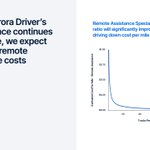
Does "99% readiness" mean anything on a 100 mile route? Regulating the tech industry to ensure it's 100% ready before using the motoring public as crash test dummies would be a great idea...
"Acceptably safe" isn't good enough. But apparently, Kodiak is fine with that standard.

99%. That’s where our Autonomy Readiness Measure stands today. The final safety case is coming together, we’re on track to launch driverless operations in December, and the team is every bit as excited as you’d imagine. Our Autonomy Readiness Measure is at 99%, but we are 100% ready to make history.
#AIfortheLongHaul


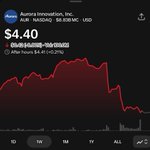
This page must have a lot invested in Aurora. Again, check the stock price.

Seeing is believing. $AUR
Aurora just released footage of its truck production line at Roush. Real trucks, real assembly, and a manufacturing ramp taking shape.
The 200-truck milestone slipping six weeks is disappointing, but it looks more like a speed bump than a broken thesis.
The market may be overreacting. Execution from here will tell the story.
Looks like their investors are getting impatient... Best of luck in trying to stop the bleeding.


Self-driving trucks are a "huge win economically" for shipping companies, says Aurora's Chris Urmson.
The CEO of the driverless trucking firm explains how the startup plans to expand its to 20 big rigs a week by early December bloom.bg/4kldeaj
I wouldn't be surprised if the same thing happens to the trades within the next decade.

“Learn to code.”
Possibly the most spectacularly ironic career advice of the millennial generation.
Manufacturing jobs disappearing? Learn to code.
Retail jobs disappearing? Learn to code.
Journalism collapsing? Learn to code.
Can't afford a house? Upskill. Learn to code.
Then, after millions of people invested years learning to code?
“Actually, the AI can code now.”


Keep in mind that an MOU, or memorandum of understanding, is less legally binding than an IOU...
We haven't heard much about Hirschbach since Richard Stocking got fired. What's the status on that MOU? And where are those new generation Peterbuilts?
$AUR

Months after its first Aurora contract, @ChargerFr8 intends to purchase up to 500 Aurora Driver-powered trucks, with anticipated deliveries planned for 2027 and 2028. read More: ir.aurora.tech/news-events/p…

The thing I appreciate about @FreightWaves is they're more transparent than most other entertainment/broadcast "news" outlets regarding their biases and conflicts of interest.
That was real great timing with that Highway logo on the ticker tape btw... Lol
Reminds me of an old joke:
"Politicians should wear sponsor jackets like NASCAR drivers, then we know who owns them." - Robin Williams
So, what sized jacket do you wear, @FreightAlley?
#fakenews #advertising


That's a great point on how this tech doesn't just kill jobs directly, it also prevents other would be opportunities from materializing. But one specific aspect I haven't seen much discussion about yet is the effect that AV's asset utilization rate increases will have on truck manufacturing jobs.
In short, if any company can more than double the effectiveness of their fleet if they fully automate it with the same number of autonomous trucks... That also means that the US will need less than half the number of trucks built to get the same amount of freight moved.
And don't forget, every 1,000 autonomous trucks will likely create less than 190 jobs while simultaneously being able to do the work of around 2,500 truckers, based on the Chamber of Progress's Report in 2024. Those rates imply that we'll get 1 new job for every 13 truckers that get displaced. That same report conveniently forgot to factor in the job loss estimates from AI and robotics in manufacturing...
Generally speaking, the entire point of automating any job is to end up with net reduction in overall labor costs. Funny how these types of points never get mentioned by AVIA, AV truck developers, and organizations like the ATA.
The omission is the most powerful form of lie.
#autonomoustrucking #automation #jobloss

AUTONOMOUS TRUCKING COUNTS THE JOBS IT SUPPORTS. WHO COUNTS THE JOBS THAT NEVER GET CREATED?
The Autonomous Vehicle Industry Association’s recap of Autonomy Summit 26 highlights career opportunities in vehicle assembly, maintenance, engineering, and fleet operations. It also cites a Steer analysis estimating that autonomous trucking supports 17,000 jobs and $3.3 billion in economic output.
Those numbers deserve examination. So does the other side of the employment equation.
The analysis was commissioned by Aurora, an autonomous trucking company. That does not make its findings wrong. It does mean readers should understand who funded the research—and what the headline figures actually establish. Jobs supported by an emerging industry are not, by themselves, proof of a net employment gain. (ir.aurora.tech)
From where I sit, after 36 years behind the wheel, the workforce discussion needs to go further.
How many permanent jobs will these fleets require at scale? Where will those jobs be located? What will they pay compared with the work being replaced? Who pays for retraining, and how does a worker support a family during that transition?
For dispatchers, brokers, recruiters, safety personnel, and operations managers, there is another question: how will your own position change as transportation companies reorganize around automation?
We should investigate those effects carefully. We should also measure something a layoff announcement cannot capture: FUTURE HIRING THAT NEVER HAPPENS.
If a company grows its freight volume while needing fewer additional people, opportunities can shrink without a single existing employee receiving a pink slip. The next generation encounters fewer openings. A small operator may face a harder path into business. An experienced worker may find fewer options when it is time to change employers.
That possibility deserves a place beside the promises of new technical careers.
I believe businesses should be free to innovate and compete. Workers deserve enough transparency to make informed decisions about their own futures. A claim that no college degree is required still needs a job count, a location, a wage, and a realistic path into the position.
AVIA’s recap ends by calling on Congress to establish a national framework for deployment. Before workforce benefits become a selling point for that policy, lawmakers should ask for the complete employment picture.
COUNT THE NEW JOBS. COUNT THE DISPLACEMENT. ACCOUNT FOR THE OPPORTUNITIES THAT MAY NEVER EXIST.
What evidence would convince you that the workforce benefits reach the people whose work makes today’s transportation system possible?
Will Cook
A Driver’s Perspective
#AutonomousTrucking #FutureOfWork #ADriversPerspective

The @WSJ couldn't write a more bullshit headline if they tried...
You can tell an article is propaganda based on what doesn't get said and who doesn't get the opportunity to speak on the issue. Unfortunately, thats nearly every corporate media article I've seen on the topic
“FINALLY, A POLITE TRUCKER. IT’S A DRIVERLESS 18-WHEELER.”
I Call Bull Sh*t on the insult behind that headline.
Jeff Farrah shared it approvingly while promoting autonomous trucks. From where I sit, it dismisses generations of professional drivers who moved this country’s freight, stopped to help strangers, and took pride in doing a difficult job safely.
After 36 years behind the wheel, I remember a stronger culture of courtesy, professionalism, and drivers helping drivers. We had problems 15 years ago, too. But the trash, urine bottles, reckless behavior, and lack of respect we see today deserve serious attention. Professional drivers have been speaking up about it for years.
WHO WAS LISTENING?
Before anyone uses declining standards to sell driverless trucks, let’s examine the decisions made by carriers, recruiters, training schools, licensing agencies, and policymakers. Who hired drivers before they were ready? Who failed to verify qualifications? Who treated experience as an expense instead of an asset?
Every driver should be legally authorized, properly trained, able to meet English-language requirements, and held to the same safety standards. Every company putting that driver on the road should answer for its decisions.
The executives and lobbyists celebrating automation should face that scrutiny, too. They do not get a free pass to portray working drivers as the problem while leaving management’s responsibility out of the conversation.
And when Mr. Farrah says the future is bright, I want to know: BRIGHT FOR WHOM?
For the driver making a living? The small carrier building a business? The dispatcher supporting a family? What opportunity will their children and grandchildren have in the industry being built?
Professional drivers earned respect long before a computer could steer a truck. We deserve answers about our future—and accountability for how this industry reached this point.
Will Cook
#ADriversPerspective

Scarcity is supposed to increase value...
I'd say its long overdue that the market finally starts recognizing that value by treating professional drivers as a skilled trade. Any organization that's whining about a labor shortage is also admitting to being cheap AF.
Maybe it isn't "no one wants to work anymore." Maybe it's "no one wants to work for what you're willing to pay" anymore...


Anticipating the social and political reactions to this tech should a part of the discussion here. There are wait lists to the high paying line haul jobs that @aurora_inno is targeting for automation. It's hard to call those jobs and lanes "undesirable."
The people who are not going to benefit this tech, which is most of us, are going to have something to say about it one way or another.
The last place I'd ever want to be is on the receiving end of that...
Being a good citizen of the road means anticipating what's ahead, making space for others, and navigating safely alongside fellow road users.
That's how Aurora driverless trucks operate every day.
@WSJ got a firsthand look at Aurora’s operations in Texas to see how driverless trucks are helping make roads safer and supply chains stronger. on.wsj.com/4eGieCI
If Aurora reposted this, that means it's an advertisement. Not journalism.

Self-driving cars are on the brink of becoming commonplace. Next up are the highway’s biggest, loudest and most intimidating vehicles: driverless trucks. on.wsj.com/4i917KX

Everyone's a camgirl in a surveillance state!

GET OFF YOUR PHONE WHILE DRIVING! 📱
Being distracted while on the road is DANGEROUS and @NHTSAgov is doing what it can to prevent senseless deaths- investing in new technology like cameras that can spot a driver talking on their cell when behind the wheel 🚗
Watch this report👇 @29NewsWVIR
The standard is "good enough." Not perfect. The first steam engines were so innefficient, leaked, and sucked so much they could only be placed in front of coal mines, because it was too expensive to ship the amounts of coal required to place them any further away than that. But that problem didn't last long and the problems you're highlighting now won't either.
The answer to the second question is the economic incentives. There's not enough ROI to target niche labor markets in roles like hazmat cleanup and coal mining. Developing LLMs or physical AI systems is extremely difficult and requires insane levels of high capital investments. Given that, what would you rather automate? 10,000 coal mining and hazmat jobs or 20 million white collar jobs, when the entire economic model of this tech depends on stealing wages?
Industrial automation chases the money. Wherever the highest wages to maximize the ROI can be found is exactly where you're going to be deployed.
For autonomous trucking, that's on the highest density freight lanes in the US and they'll be placing woefully under regulated technology around the most people they possibly can to make their investors happy. So, keep an eye on cross border freight, reefer team drivers, line haul, and intermodal, especially where they can drop and hook. For now anyway... Those limitations won't last long either.
That's where the money is and the nerds sure as hell will be going after the most expensive freight they can get their soft little hands on. Buckle up, next year is shaping up to be a total shitshow.

James Year retweeted

$AUR | Volvo reaffirms Q1 2027 for driverless trucks in Texas, powered by the Aurora Driver
Volvo Autonomous Solutions (V.A.S.) is holding its timeline: in Q1 2027 its trucks begin operating in Texas with nobody in the cab, no safety driver and no observer. The platform is the Volvo VNL Autonomous, with the Aurora Driver integrated during factory assembly at Volvo's New River Valley plant in Virginia, and V.A.S. runs the operation itself. According to Aurora, Volvo has already completed several Aurora Driver-powered units on its pilot line ahead of the launch.
V.A.S. already hauls commercial freight in Texas with safety drivers for customers including DSV and AVI-SPL. The plan targets more than 300 autonomous trucks in operation by the end of 2027, with industrial scaling from 2028. That fleet target covers V.A.S. as a whole: Volvo also works with Waabi, whose first customer operation, hauling for Warp between Dallas and Houston, began in October.
autoweek.com/news/a74110211/…
Take anything these companies say with a grain of salt. There's no independent oversight to verify any of their claims.
Plus, if there was a serious safety issue or incident would Waabi volunteer that information if they didn't have to?
The answer to that is no...
#autonomoustrucking
Waabi has announced a commercial freight partnership with Warrior Logistics, a Texas-based carrier that is now running Waabi Driver-powered autonomous trucks between Dallas and Houston. Warrior says the autonomous trucks have delivered 100% on-time performance and zero safety incidents since operations began — and the carrier is already planning to expand the program to more lanes.
vist.ly/5ngup

FFS... I've been asking drivers about this issue for going on 5 years now and trying like hell to get work published for nearly as long, so drivers would know what's coming. Media reporting on tech induced labor market impacts is absolute garbage. Over ten million views later, that MPU video I did proved that drivers care and are worried about the future of work. We all are. Freightwaves claim that they don't is laughable.
Even after I was awarded a $20,000 grant through the Alexia Foundation in 2023, those same editors who voted to give me 20k instead of around 300 other applicants from all over the world... ALL of those editors, from the largest and most well known national publications you can think of, later back-pedaled and made some excuse about this topic like "lacking interest."
They screwed up at the time and didn't realize that a working class perspective on AI's impacts on the labor market in trucking was off limits... I'll guarantee you that it this problem hasn't changed. It just happened again and I got that same bullshit excuse last week.
The exact reason why truckers aren't reporting economic anxieties about autonomous trucks is because the media outlets WILL NOT report on it in any meaningful way that's relevant to drivers. Only the tech bro and corporate friendly perspective is what is "interesting" to them.
But then, you have total and complete BS like this coming out of @FreightWaves, that at best is negligent and tone deaf reporting. Or is outright propaganda, at worst. Given what I just saw here, it looks like the latter.
So, the playbook here is to downplay the whole thing, while OEMs and your advertisers start firing up the assembly lines to mass produce driverless trucks at scale next year... Is that right, @FreightAlley?
Don't forget, less truckers and consolidated freight markets is going to hurt your own bottom line.
#autonomoustrucks #propaganda
Are commercial truck drivers afraid of losing their jobs to autonomous vehicles?
On What The Truck?!?, Jane Jazrawy, CEO of CarriersEdge, reveals that driver surveys show almost zero anxiety about AI trucks replacing them. Drivers are far more focused on immediate, day-to-day issues like carrier stability, pay, and local route conditions.
Read up on virtuous cycles. Autonomous trucks are pretty much a narcotic in economics and like a drug, inventions like this create their own demand. But the rest of us get to experience a viscous cycle, which is far, far less enjoyable. It only takes one company to prove viability and then the dominoes start to fall.
The societal changes that the steam engine resulted in caused an absolute shitshow during the 19th and 18th centuries. This won't be any different except the "fun" parts will develop at a much faster rate than what we'll be able to adapt to or prevent...