
Yeah, probably not!
Joined April 2012
- Tweets613
- Following448
- Followers191
- Likes2K






Jerrie Snr retweeted

For those who missed tonight's conversation on Understanding the Different Curriculums 👇🏾
teapawt.org/i/spaces/1yoJMwLpgLnKQ
Jerrie Snr retweeted
To kick-off #EduChatWith Me😜 I will be talking to @ADralega and @RuthSebagala1 about *How To Decide the Perfect School for Your Child*.
Audrey and Ruth are both passionate educators, with experience in school administration, curriculum design, training and ECD.
TOMORROW 7:00PM.


Jerrie Snr retweeted
Because I love starting new dope things, here is ANOTHER ONE 🎊🎉🥳
Hello guys, welcome to my Channel 😜 Here, we'll talk all and only things Education and Child Development.

Jerrie Snr retweeted
You signed up your Vacist yet? The P7 and S4 programmes close this week. And then the learning experience of a lifetime will begin. They will not forgive you if they get left out.


🚀 🚀 News News News News !!!!!!!!!!!!!!!! #EnsibuukoToMalawi
As part of our continued international expansion, we’re thrilled to announce our expansion to Malawi in partnership with the @UNCDF and @COMSIP_MW !!
Join us as we embark on this digital journey together!
@siaedge

2
61
Jerrie Snr retweeted

In our newest blog post, @JerrieLwebuga explores efforts to close gender gaps in agricultural value chains. How can these strategies help bridge the gap? Read the full blog to find out.
#digitalag
#digitalfinancialservices
#gendergap
@ensibuuko
siaedge.com/insights/closing…

Jerrie Snr retweeted

That's it - I hope posting this will help future builders.
In addition to founding Archer, last year I founded Figure (we build autonomous humanoid robots).
If you want to follow ambitious, hard tech problems: @adcock_brett
Like/Retweet the first tweet below if you can:


Jerrie Snr retweeted

The "capital intensive" story and why, no matter what, ROI is what matters...
It's funny how people will say that traditional businesses are more "capital intensive" and then celebrate the tens of millions of dollars raised by tech startups.
Sendy burned through $28M and, while it's a tragedy it didn't work out, it goes to show that tech oversimplifications can be painful. Mkopa raised $250m. Isn't that the definition of capital intensive?
Spending $1m per year for 5 engineers in San Francisco is capital intensive. Getting fintech licenses in 10 African countries is capital intensive. Plastering Nairobi and Lagos with billboards is capital intensive. Signing Burnaboy as your spoke person is capital intensive. The same way opening a CJs Restaurant in Westland or building a furniture factory in Namanve is capital intensive. It doesn't really matter...
"Yes but selling tech has a 0 marginal costs.." In theory yes but then, why do you need to raise so much money? If it is so easy to grow, why did you spend millions to expand to a new country? I already ship my furniture to Nairobi at a small scale and I spent nothing to get there. CJs now has 5 branches in Nairobi and they never made it to TechCrunch.
Growth = ROI x Reinvestment rate.
What matters is the ROI you can get on your capital and how much you can reinvest.
Internally generated cash flow well invested is the greatest form of leverage...
We started @ModernLivingEA with $10k. @TonyNatif started Guardian with an initial investment of $50k. Both of them are 20x+ investments and both are probably in the top 5 of the most commons traditional businesses..
A startup is growth. All the rest is noise. Find a niche, innovate and grow
👏👏 @amoblazem
You’re unable to view this Post because this account owner limits who can view their Posts. Learn more
3
67
Jerrie Snr retweeted

Please find here the recording of my conversation with Prof. Mahmood Mamdani AKA @mm1124 on #EnvisioningTheFuture of Uganda’s Politics of Transition & Succession teapawt.org/i/spaces/1vAxRAqgYpvJl
Jerrie Snr retweeted

At the World Championships in Budapest, USA’s Anita Alvarez sank to the bottom of the pool.
Looking across the deck, and noticing she was under way too long, her coach, Andrea Fuentes immediately dove in after her fully clothed, pulling her to safety. Anita was unconscious and didn’t have the capacity to kick, paddle, or help herself in any way.
If Andrea would not have noticed, she would have drown.
But she knew Anita. She looked for her, quickly noticed she was under too long, then dove in without thinking twice.
This has resonated with me….
When you are under too long, who are the people that will look for you, notice, and dive in to pull you to the surface when you lose your strength to swim?
Who are the people that would do that for you?
And can someone count on you to be that person that would go looking and notice when they are under too long, diving in to support them when they are all out of fight and fuel to swim in these turbulent waters we call life?
If you like this retweet and follow me 🙏🏻

Jerrie Snr retweeted

Catch our CEO- @otimgerald at the @FoundersLounge_ May meetup in partnership with @TheCatalystFund this Friday, 26th May at the @StartHubAfrica offices in Bukoto from 5:00pm discussing the Ensibuuko journey of “Banking the Unbanked”.
Register here https://teapawt.org/t.co/pX6M4z2FSe

Jerrie Snr retweeted
I was tagged by my friend @TonyNatif on a thread about the current investment landscape in Uganda. Funny enough, I have spent my whole weekend with my finance friends for a bachelor party. They run funds, do real-estate PE, are investment bankers, etc. We have talked about Uganda for most of the weekend.
The feedback I am getting from them boils down to the following points:
The negative:
1) There is no upside asymmetry: Most returns are contractual as PE / Impact funds typically operate as lenders with loose terms. The return is capped at 15-20% and the downside is 100%. A mezzanine fund in the US makes money with call protection, warrants, early refinancing, change of control penalties, origination fees, etc. This can easily push an IRR of 12% to 25%. In Uganda, you need on-time payment to hit your threshold; that's about it. Your 20% IRR is your cap. In the US, you have all sort of levers you can pull to beat that threshold. This provides you with upside asymmetry.
2) Contract enforcement and structuring is hard to do. In the US, you can put a borrower in bankruptcy for failing to meet a covenant like not "getting additional funding". In Uganda, most lawyers will tell you not to bother as long as they are current. Try to explain that to an Investment banker from the US. The issue with this fundamentally is that it's hard to de-risk through structuring which is basically half the battle in Private Equity.
3) Thematic driven capital misallocation: I post a lot about funding going almost exclusively to the tech sector with more traditional sectors being left with crumbs. You can add an overlay of "social business" requirements to the mix to further complicate things. It raises three questions as the jury is still out 1) Is capital going to the right places? 2) What impact is this having on the attractiveness of the industry? 3) Assuming entrepreneurs follow capital, are they building the right businesses in the long-run? In the US, investors will invest in opportunities that maximize returns without undue risk of loss. There is a wide variety of investment thesis, capital markets are deep and capital is chasing the best risk adjusted returns. In Uganda, there seem to be only a narrow set of fundable thesis, investors are few and return expectations are all over the place. The majority of capital goes to darling sectors with other entrepreneurs being left to money lenders and time-wasting banks...
4) Bad headlines: I don't need to dig too much into this but bad headlines don't help. An investor with a global mandate and a multi-asset class focus can look at Real Estate in Malaysia, power projects in Estonia and a grocery story chain in Colombia. All in the same day. All countries have bad press but stories like entrepreneurs "borrowing money by mistake" are extremely detrimental...
5) On a relative basis, returns are not there: Probably due to the 4 previous points and a mix of political, legal and currency risks, many feel like the returns investors can get are not enough to compensate for the perceived risk. Why take a USD 18% return in Uganda, when you can get a 12% return in the states with upside (i.e. point 1)?
The positive:
1) The sector is in its infancy. There is a lot of room to innovate on investment structures and to copy best practices from more mature markets. Structured equity, dividend recaps, earn-outs; those are all new and relatively unused structures in UG. New thesis from investors and innovative fund structures are also on the table. In other words, no one has cracked the code yet. @TonyNatif and I are talking a lot about how to bring something new to the table...
2) The fundamentals are still great: High growth, a growing middle class, a young population, etc. You don't need to get a PHD to see that there is still so much left to build.
3) High Return on capital at the company level: When the funds are not diverted and the entrepreneur is aligned, the return on investments from investing in assets or working capital can be extremely high. A $250k investment or even $100k can go a very long way compared to other markets. $100k won't pay for an engineer in San Francisco for a year, but it might build a factory and increase production capacity by 10x in Uganda...
4) The best builders / bootstrappers I have seen: I am biased but the ability of Ugandans to build sizable businesses with little capital & external support is simply mind blowing. This creativity and bias to action is the country's biggest resource. They might hit a wall at one point, as you need external support and capital to grow to beyond a certain level, but it's pretty impressive.
I am still confident you can make money as an investor in sectors beyond Real Estate and Government bonds. It requires a deep understanding of local dynamics and huge dose of creativity. To be fair to @nikita_helene, the sectors haven't performed super well in the past. We need new thinking and approaches otherwise she is unfortunately right...
Jerrie Snr retweeted

My son, life has invisible roads to success. They are the patterns of men that have succeeded. Study and practice the patterns of the wise and you’ll be wise. Study and practice the patterns of the wealthy and you’ll be wealthy.

Jerrie Snr retweeted
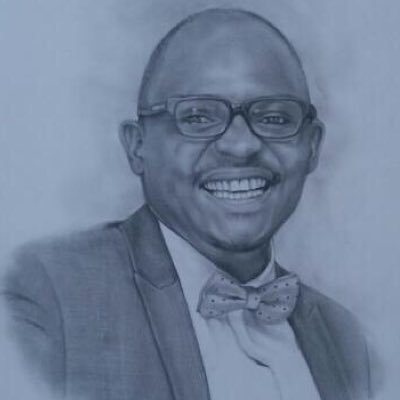
This incredible lad shall be speaking to my Rotary club @Rotary_kampala1 today! Averagely everyone in that room is a parent who wishes the best for their children; @Rukwengye will be driving a point into the right ears!!! You are welcome sir!

Jerrie Snr retweeted

"That for them, it is even harder because they have to make all of it work with just a fraction of our incomes, means and freedoms. What happens when they have had enough?" - @Rukwengye
monitor.co.ug/uganda/oped/co…