

🐟 Jesus - Libertarian-not Christian 📖 Bible Researcher. History https://teapawt.org/t.co/8Crv2TOJH8 ✂️ Stitching Scripture, verse by verse 🦅 Living in world #975
Joined May 2009
- Tweets60.1K
- Following3.3K
- Followers2.3K
- Likes14.3K





Pinned Tweet
A MESSAGE TO THOSE WHO SEE
For those who have eyes to see and ears to hear
You have been called heretic. Blasphemer. Deceiver. You have been cast out, unfollowed, blocked, reported. They have done all these things because you have seen what they cannot see:
That Yahweh is not the Father. That Jesus reveals the true God.
You are not alone. Jesus spoke directly to your condition:
"Blessed are you when people insult you, persecute you and falsely say all kinds of evil against you because of me. Rejoice and be glad, because great is your reward in heaven, for in the same way they persecuted the prophets who were before you." (Matthew 5:11-12)
"Blessed are you when people hate you, when they exclude you and insult you and reject your name as evil, because of the Son of Man. Rejoice in that day and leap for joy, because great is your reward in heaven." (Luke 6:22-23)
THEY WILL PUT YOU OUT
Jesus warned you this would happen:
"They will put you out of the synagogue; in fact, the time is coming when anyone who kills you will think they are offering a service to God. They will do such things because they have not known the Father or me." (John 16:2-3)
They think they serve God when they condemn you. They do not know the difference between Yahweh and the Father. They worship the beast and call it Jesus.
DO NOT FEAR THEIR CONDEMNATION
"Do not be afraid of those who kill the body but cannot kill the soul. Rather, be afraid of the one who can destroy both soul and body in hell." (Matthew 10:28)
"Whoever publicly acknowledges me before others, I will also acknowledge before my Father in heaven. But whoever publicly disowns me before others, I will disown before my Father in heaven." (Matthew 10:32-33)
You have acknowledged the truth. The Father sees.
THE SPIRIT WILL SPEAK THROUGH YOU
When they drag you before their councils, do not worry:
"But when they arrest you, do not worry about what to say or how to say it. At that time you will be given what to say, for it will not be you speaking, but the Spirit of your Father speaking through you." (Matthew 10:19-20)
The Spirit of truth, not the spirit of accusation. The Spirit that reveals the Father, not the spirit that binds you to the law.
YOU ARE THE FEW ON THE NARROW ROAD
"Enter through the narrow gate. For wide is the gate and broad is the road that leads to destruction, and many enter through it. But small is the gate and narrow the road that leads to life, and only a few find it." (Matthew 7:13-14)
The many are on the broad road. They worship Yahweh and call him Father. They have taken the mark. You are among the few who have found the narrow gate—the recognition that Jesus reveals a God fundamentally different from the one who demanded blood, who commanded genocide, who established separation and law and fear.
THEY HATED ME FIRST
"If the world hates you, keep in mind that it hated me first. If you belonged to the world, it would love you as its own. As it is, you do not belong to the world, but I have chosen you out of the world. That is why the world hates you. Remember what I told you: 'A servant is not greater than his master.' If they persecuted me, they will persecute you also." (John 15:18-20)
You are not greater than Jesus. They called him a blasphemer too. They said he had a demon. They said he broke the Sabbath. They said he made God a liar. They killed him for revealing the Father.
You stand in good company.
THE TRUTH HAS HIDDEN FROM THE WISE
"I praise you, Father, Lord of heaven and earth, because you have hidden these things from the wise and learned, and revealed them to little children. Yes, Father, for this was your good pleasure." (Matthew 11:25-26)
The theologians with their degrees have not seen it. The pastors with their titles have not seen it. The priests with their robes have not seen it. But you have seen it. The Father has revealed it to you.
"But blessed are your eyes because they see, and your ears because they hear. For truly I tell you, many prophets and righteous people longed to see what you see but did not see it, and to hear what you hear but did not hear it." (Matthew 13:16-17)
You see. You hear. You know.
DO NOT TURN BACK
"No one who puts a hand to the plow and looks back is fit for service in the kingdom of God." (Luke 9:62)
Do not seek reconciliation with those who worship Yahweh. Do not try to make your view palatable. Do not soften the contradiction. The contradiction is the point. Jesus reveals the Father by contradicting Yahweh. That is the method. That is the proof.
"Whoever is ashamed of me and my words in this adulterous and sinful generation, the Son of Man will be ashamed of them when he comes in his Father's glory." (Mark 8:38)
Do not be ashamed. You have seen the truth.
THE REWARD
"Rejoice and be glad, because great is your reward in heaven." (Matthew 5:12)
The reward is not wealth. The reward is not status. The reward is not acceptance by the religious system. The reward is the Father. The reward is knowing the true God. The reward is freedom from fear, from law, from the mark of the beast.
"I have told you these things, so that in me you may have peace. In this world you will have trouble. But take heart! I have overcome the world." (John 16:33)
He has overcome the world. He has overcome Yahweh's system. He has overcome the accuser. He has overcome the mark.
THE INVITATION STANDS
"Come to me, all you who are weary and burdened, and I will give you rest. Take my yoke upon you and learn from me, for I am gentle and humble in heart, and you will find rest for your souls. For my yoke is easy and my burden is light." (Matthew 11:28-30)
Yahweh's yoke is heavy. Six hundred thirteen commandments. Fear. Separation. Sacrifice. Death.
Jesus' yoke is easy. One commandment: love. Freedom. Union. Life.
You have chosen the easy yoke. You have chosen the light burden. You have chosen the Lamb over the beast.
FINAL WORD
"Whoever has ears, let them hear." (Matthew 11:15)
You have heard. You are blessed. The mark is visible to you. The beast is visible to you. The Lamb is visible to you.
Do not fear. Do not turn back. Do not be ashamed.
The truth will set you free.
Yahweh is not God.
Jesus is.
Share this with those who have eyes to see.


I like Emma and Jamal but this is so accurate on #90dayhuntforlove She is like a character. I find them both entertaining. The rest of the cast not so much. I secretly love this show and look forward to 90 day fiance each week lol

THE HIDDEN GOD: WAS THE CREATOR OF THE OLD TESTAMENT THE HIGHEST GOD?
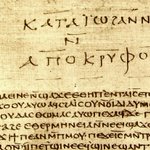
A lesson examining Isaiah, Genesis, the Gospel of John, Revelation, and the ancient Gnostic text The Apocryphon of John
Introduction: A question early Christians dared to ask
What if the God described as the creator of the material world in the Old Testament was not the highest God?
What if the being who declared himself the only God was actually a lesser spiritual ruler who did not know that a greater divine reality existed above him?
This is not the traditional Jewish or Christian understanding of God. However, it is an idea that appears in ancient Gnostic Christianity, particularly in a second-century text known as The Apocryphon of John.
To understand why anyone would develop such an interpretation, we must examine several biblical passages and compare them with this ancient writing.
Our purpose is to understand what these ancient thinkers believed, why they challenged conventional interpretations of Scripture, and what questions their writings raise.
LESSON 1: ISAIAH 45:5–7 — THE GOD WHO CLAIMS THERE IS NO OTHER
In Isaiah 45:5, God declares:
"I am the LORD, and there is no other; apart from me there is no God."
In verse 7, he continues by declaring that he forms light, creates darkness, makes peace, and creates calamity.
In the traditional interpretation, this passage establishes Yahweh as the supreme God, with authority over everything that exists.
But consider the declaration itself.
A being says there is no other God.
How do we know that the being making this declaration understands the entirety of divine reality?
The Gnostic text The Apocryphon of John presents a startling alternative. Its lower creator makes a declaration remarkably similar to Isaiah's:
"I am God and there is no other God beside me."
But in this Gnostic story, the speaker is not the highest God.
He is Yaldabaoth, a lower creator who is ignorant of the greater spiritual reality above him.
The irony is intentional. The declaration that would traditionally establish supreme authority becomes evidence of the speaker's ignorance.
The question to consider: Could a being sincerely believe itself to be the only God without actually being the highest divine reality?
LESSON 2: GENESIS 2–3 — WHY WAS KNOWLEDGE FORBIDDEN?
Now consider the story of Adam and Eve.
In Genesis 2, God prohibits Adam from eating from the tree of the knowledge of good and evil.
The serpent later tells Eve that eating the fruit will open their eyes and make them like divine beings, knowing good and evil.
Then Genesis 3:22 records God saying:
"The man has now become like one of us, knowing good and evil."
Read those passages carefully.
The traditional Christian interpretation is that Adam and Eve disobeyed God, and their disobedience introduced sin and death into humanity.
But the Gnostic interpretation asks a different set of questions:
Why was knowledge forbidden?
Why would acquiring knowledge make humanity more like divine beings?
Was humanity being protected, or kept from understanding something?
Could spiritual awakening be the beginning of salvation rather than the beginning of humanity's downfall?
In The Apocryphon of John, the story is radically reinterpreted.
The text describes a divine presence called Epinoia of Light, which is hidden within humanity. This divine presence awakens human understanding and helps people recognize their spiritual origin.
The creator attempts to control humanity but cannot fully possess this divine light.
This changes the meaning of the Genesis story.
Instead of viewing humanity simply as disobedient creatures who need to submit, the Gnostic interpretation portrays humanity as possessing a spiritual origin that the lower rulers do not want humanity to recognize.
An important distinction: the Gnostic text does not simply declare that the serpent is good. Its account is more complicated, and it distinguishes the awakening brought by divine insight from the other destructive forces in the story.
The question to consider: Is knowledge always dangerous, or can ignorance itself become a form of spiritual captivity?
LESSON 3: JOHN 8:44 — WHO IS THE FATHER OF THE DEVIL?
In John 8:44, Jesus tells his opponents:
"You are of your father the devil."
He describes the devil as a murderer from the beginning and the father of lies.
The conventional interpretation is that Jesus is accusing his opponents of behaving like the devil. Their actions demonstrate whom they imitate spiritually.
But some ancient Christian interpreters explored another possibility.
What if the devil himself had a father?
Could there be a higher being behind the devil?
The wording of the Greek passage has been debated.
The larger Gnostic question was whether the God responsible for the material world might belong to a lower spiritual order rather than the highest divine reality.
The question to consider: If evil has an origin, could the power responsible for the material world be different from the ultimate source of goodness?
LESSON 4: REVELATION 13 — THE BEAST, THE MARK, AND CONTROL OVER ECONOMIC LIFE
Revelation 13 describes a beastly power that demands worship and allegiance.
The second beast forces people to receive a mark on their right hands or foreheads.
Without that mark, people cannot buy or sell.
This is not merely a story about an unusual symbol. It describes a system in which economic participation is connected to loyalty and submission.
The historical background is important. Revelation was written in a world dominated by Roman imperial authority, where emperor worship, political loyalty, commerce, and religious identity could overlap.
But there is another biblical connection worth examining.
In Deuteronomy 6:8, God's commandments are described as something to bind on the hand and forehead.
In Revelation, the beast places its mark on the hand or forehead.
This creates a striking literary parallel.
There are competing symbols of allegiance:
God's seal identifies those who belong to him.
The beast's mark identifies those who submit to its authority.
Does this prove that John of Patmos believed Yahweh was the beast?
No. Revelation does not explicitly make that identification. Its author portrays the beast as an enemy of the God worshipped in the book.
However, when we compare Revelation with Gnostic writings, an interesting question emerges.
What if the larger issue is the difference between genuine divine authority and a ruler demanding unquestioning allegiance?
The question to consider: When a system controls worship, economic participation, and personal freedom, what distinguishes legitimate authority from domination?
LESSON 5: THE APOCRYPHON OF JOHN — THE LOWER CREATOR
This is the most important text for understanding the Gnostic alternative.
The Apocryphon of John is an ancient Christian writing presented as a revelation given by Jesus to John.
It describes a divine reality far different from the traditional understanding of the biblical creation story.
At the highest level is the Invisible Spirit.
The Invisible Spirit is beyond the physical universe and is the ultimate source of spiritual existence.
Through a series of divine emanations, the text describes the emergence of Sophia, whose actions lead to the appearance of a lower creator.
That creator is called Yaldabaoth.
Yaldabaoth possesses some divine power but does not understand where that power originated.
He creates rulers, called archons, and establishes authority over the lower material world.
He believes he is the supreme God.
But he is not.
The text presents him as an ignorant ruler who cannot recognize the greater spiritual reality above him.
This is where the comparison with Isaiah becomes especially significant.
In Isaiah, Yahweh declares that there is no other God.
In The Apocryphon of John, Yaldabaoth makes a similar declaration.
But the meaning has been completely reversed.
The declaration is no longer proof of supreme divinity. It becomes an example of the lower creator's ignorance.
Some versions of the text also contain names that resemble Hebrew divine names. In one longer version, figures named Eloim and Yave appear among Yaldabaoth's offspring.
These details show how the text engages with biblical religious language, although the names and assignments vary between versions.
The central argument is unmistakable: the creator of the material world does not necessarily have to be the highest God.
The question to consider: Could Jesus be revealing a divine reality that is greater than the creator described in the traditional creation story?
LESSON 6: JESUS AS THE REVEALER OF A HIGHER REALITY
In traditional Christianity, Jesus is understood as the Son of the God of Israel.
But in The Apocryphon of John, Jesus has a different role.
He comes to reveal what humanity has forgotten.
Human beings possess a spiritual origin beyond the material world. The lower rulers have obscured this truth, and humanity needs awakening.
Salvation is therefore connected to knowledge, recognition, and liberation from ignorance.
This is called Gnosis, a Greek word meaning knowledge.
It is not simply intellectual knowledge or the accumulation of information. It is spiritual recognition of one's true origin and relationship to the divine.
This produces a different understanding of Jesus:
He is not simply telling people to obey the creator. He is revealing the existence of a higher spiritual reality that the lower creator does not understand.
This was a radical theological position, and it was not accepted by the majority of early Christians.
But it demonstrates that early Christianity contained serious debates about the identity of God, the nature of creation, and the purpose of Jesus.
LESSON 7: TWO VERY DIFFERENT UNDERSTANDINGS OF GOD
Consider the contrast presented by the Gnostic text.
The Invisible Spirit
The highest divine reality.
The source of spiritual existence.
Beyond the material universe.
Associated with divine light and truth.
Not dependent on control over humanity.
Yaldabaoth
A lower creator.
Unaware of the higher divine reality.
Rules over the material world.
Claims to be the only God.
Exercises authority through the lower rulers.
The distinction is not simply between two competing gods.
It is between two different understandings of divine authority.
One is the ultimate source of spiritual existence. The other is a limited being who mistakes its own authority for the totality of reality.
LESSON 8: WHAT DOES THIS MEAN FOR OUR UNDERSTANDING OF SCRIPTURE?
We must separate historical evidence from theological interpretation.
Revelation does not prove that John of Patmos rejected Yahweh.
The Gospel of John does not establish that Jesus was teaching the Gnostic cosmology.
And The Apocryphon of John cannot be treated as a firsthand account written by the same person who authored Revelation.
These are different texts, written in different contexts.
But the Gnostic writings demonstrate something important: some ancient Christians questioned whether the creator described in the Hebrew Scriptures was necessarily the ultimate God revealed by Jesus.
They challenged the assumption that creation, authority, and goodness must all originate from the same divine being.
That is the historical significance of these writings.
FINAL REFLECTION: WHO ARE WE REALLY WORSHIPPING?
Perhaps the most important question raised by these ancient texts is not simply whether Yaldabaoth represents Yahweh.
It is the question of how we recognize truth.
A being can claim to be the only authority.
A ruler can demand obedience.
A system can restrict knowledge and punish those who question it.
But does the demand for obedience prove that the authority is good?
Does power prove divinity?
Does a declaration of exclusive authority establish that no greater truth exists?
The Gnostic challenge invites us to examine these questions rather than accept every claim of divine authority without examination.
It asks us to consider whether the highest spiritual reality would be recognized through fear and control, or through truth, understanding, and awakening.
And perhaps the most important question of all is this:
If Jesus came to reveal the truth, should we be afraid to examine the very religious assumptions we have inherited?
Why does Yahweh declare that there is no other God in Isaiah 45?
Why does Genesis portray knowledge as forbidden?
What did ancient Gnostic Christians believe about Yaldabaoth?
Why does Yaldabaoth's declaration resemble the language used in Isaiah?
Could Jesus' role as a revealer be understood differently from the traditional Christian interpretation?
What is the difference between divine authority and a ruler demanding unquestioning obedience?
Can a person seek truth without being afraid to question religious tradition?
The purpose of studying these ancient writings is not to replace one unquestioned belief with another.
It is to investigate, compare, question, and seek understanding.
The ancient Gnostic challenge reminds us that the question of who God is has been debated within the history of Christianity for centuries.
Perhaps the search for truth must begin with the courage to ask questions that others are afraid to ask.

In this post I am going to take the Apocryphon of John seriously as our interpretive lens and build the strongest possible case that the God portrayed as the creator and lawgiver in the Hebrew scriptures is not the ultimate God, and that Jesus came to reveal a higher God.
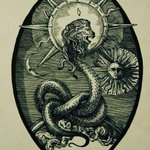
In the Apocryphon of John, the creator figure is called Yaldabaoth, also known as Saklas and Samael.
The text describes him as an ignorant ruler who possesses power but does not understand where his power originated.
Then he declares:
"I am a jealous god; there is none beside me."
This is an extraordinary theological reversal.
Why?
Because this declaration echoes Isaiah 45:5 and 46:9, where the God of Israel declares that there is no other God.
The Gnostic author takes a declaration of divine supremacy and places it in the mouth of an ignorant, lesser creator.
The being who claims to be the only God may simply be a lower divine ruler who does not know that a higher God exists.
2. The names of the Hebrew God appear among the lower rulers
In the Apocryphon of John, Yaldabaoth creates subordinate authorities. Their names include:
See image below
These figures belong to the hierarchy of rulers associated with the lower cosmic order.
This is not a trivial coincidence.
The text takes names and titles associated with the God of Israel and places several of them within a system of subordinate cosmic powers.
It is effectively challenging the assumption that the deity worshipped under these names must be the supreme, ultimate God.
There is a qualification: the text does not simply say every biblical divine name represents an evil being. Its mythology is more complicated, and some figures within the hierarchy change allegiance.
But the overall theological challenge is unmistakable.
3. The Apocryphon of John repeatedly challenges the Genesis account as transmitted through Moses.
Consider three examples.
A. The creation of Eve
Genesis 2:21–22 describes God taking a rib from Adam and creating Eve.
The Apocryphon of John presents a different explanation.
It describes the creator as attempting to extract the spiritual power within Adam, while the divine Intelligence of Light cannot be controlled by him.
The author explicitly contrasts this with Moses' account.
B. Adam's sleep
Genesis describes Adam falling into a deep sleep.
The Apocryphon interprets this differently: the ruler covers Adam's perception and makes him unable to understand.
The underlying idea is that humanity is being kept ignorant.
C. The movement over the waters
Genesis 1:2 describes the Spirit of God moving over the waters.
The Apocryphon challenges Moses' description and gives the movement a different symbolic meaning, associating it with the Mother's distress over the defective creation.
These aren't minor disagreements over biblical details.
They represent a deliberate reinterpretation of the creation story.
The central argument is that the creator's version of events is not necessarily the truth.
4. The serpent becomes an instrument of enlightenment
This is another major reversal.
In the traditional Genesis narrative:
God prohibits eating from the tree of knowledge.
The serpent encourages Eve to eat.
The serpent is associated with deception and disobedience.
In the Apocryphon of John, the interpretation is dramatically different.
The serpent's intervention is connected with the awakening of humanity.
The spiritual Intelligence of Light helps Adam and Eve recognize something the lower creator does not want them to understand.
Knowledge becomes a path toward liberation.
This changes the moral structure of Eden.
The question is no longer simply whether humanity disobeyed God.
It becomes whether the authority prohibiting knowledge was actually protecting humanity or keeping it ignorant.
That is one of the most radical features of this Gnostic interpretation.
5. Jesus reveals a God above the creator
This is the foundation of the entire system.
In the Apocryphon of John, the risen Jesus reveals to John the existence of the Invisible Spirit.
The supreme God is described as:
Beyond the material universe.
Beyond ordinary human categories.
Uncreated.
Invisible.
Not dependent on anything.
The source of goodness, life, and light.
The creator Yaldabaoth is not this supreme God.
He is a subordinate being who mistakes his own authority for ultimate authority.
The distinction is crucial:
Supreme divine reality
The Invisible Spirit
The ultimate source of existence, light, knowledge, and goodness.
Lower cosmic authority
Yaldabaoth
The ignorant creator who believes himself to be the highest God.
Revealer
Jesus Christ
The messenger who reveals the existence of the higher divine reality and awakens humanity.
This hierarchy is explicitly described in the Apocryphon of John.
6. Now let's bring this back to Revelation
Revelation
Apocryphon of John
A beast claims authority over humanity
=
Yaldabaoth claims supreme divine authority
The beast demands allegiance
=
The lower rulers demand obedience
The beast controls economic participation
=
The lower cosmic authorities control the material order
The beast's followers receive a mark
=
Divine identity is expressed through spiritual belonging
The Lamb offers an alternative allegiance
=
Jesus reveals the higher divine reality
Babylon represents an oppressive world order
The material cosmic order is associated with ignorance and lower authority
There are thematic similarities, particularly around false authority, allegiance, deception, and liberation.
7. The historical problem: Were these actually the same John?
This is the most important historical qualification.
The Apocryphon of John presents its revelation as something Jesus gives to John, the brother of James, the son of Zebedee.
But that does not establish that the historical John of Patmos wrote it.
The development of this underlying Gnostic material can be placed before or around the late second century, with the later dialogue form developing subsequently. Revelation is generally dated to the late first century.
So we have at least three possibilities:
The later Gnostic author developed an entirely different theology and attributed it to John.
The author inherited earlier ideas that were circulating among some Christian communities.
Some traditions associated with Jesus and John were reinterpreted through a Gnostic understanding of the creator.
We cannot presently establish which historical influences came first.
The Gnostic interpretation of John presents a fundamental challenge to the identification of the creator with the ultimate God.
It suggests that the being who claims exclusive divine authority may actually be an inferior ruler, one who possesses power but lacks knowledge of the higher divine source.
Jesus' role is consequently not simply to establish another religious institution. It is to reveal the truth that liberates humanity from ignorance.
This gives us an entirely different way to examine the symbolism of Revelation:
Who claims authority?
Who demands allegiance?
Who controls access to life?
Who benefits from human ignorance?
Who is actually revealing truth?
Is the apparent divine authority really the ultimate source of goodness?
I would not yet claim that John of Patmos secretly believed Yahweh was Yaldabaoth. The surviving evidence cannot establish that. But the theology I am exploring is a genuine ancient Christian theological position
9. The next five texts I will examine
Isaiah 45:5–7: The God of Israel declares that there is no other God and claims responsibility for light and darkness.
Genesis 2–3: The creator prohibits knowledge, and the serpent challenges that prohibition.
John 8:44: Jesus speaks about the father of lies and the nature of those who follow him.
Revelation 13: The beast demands allegiance and controls economic participation.
The Apocryphon of John: Yaldabaoth claims to be the only God, while Jesus reveals the Invisible Spirit above him.
The particularly interesting comparison is Isaiah 45:7 alongside the Apocryphon of John.
The Gnostic author takes the very language of divine exclusivity from the Hebrew scriptures and turns it into evidence of the creator's ignorance.
That is the theological reversal we need to understand.
Now I will investigate whether Jesus' teachings in the Gospel of John distinguish his Father from the creator described in Genesis. That would help me determine whether there are earlier textual foundations for the theology that later appears explicitly in the Apocryphon of John.
🤖 Made with AI


Revelation 2:9.
John writes about people who claim to be Jews but are not, and calls their gathering a synagogue of Satan.
Then look at Revelation 3:9, where he repeats this language.
Why would a Jewish-rooted apocalyptic writer use such severe language against a group claiming Jewish religious identity?
We can figure this out by asking:
Who these people were historically.
Whether John was criticizing Jewish religious authorities.
Whether this reflects a conflict over who truly represents Israel's God.
Whether John's understanding of God differed from that of his opponents.
In the previous verses John may be reversing an existing biblical symbol
The imagery in Revelation 13 is not limited to Deuteronomy 6:8.
It also echoes Exodus 13:9 and 13:16.
In Exodus, the mark on the hand and forehead commemorates Israel's deliverance from Egypt by Yahweh.
That means John is drawing on an entire tradition of bodily signs representing religious allegiance.
Now consider the reversal:
In Exodus, the sign identifies people belonging to Yahweh.
In Revelation, the mark identifies people belonging to the beast.
In Revelation 7:3, God's servants receive a seal on their foreheads.
In Revelation 13:16, the beast's followers receive a mark on their hands or foreheads.
John is deliberately constructing competing identities.
2. Could Yahweh himself be the false authority?
There were later ancient Christian movements that made precisely this theological distinction.
Some Gnostic traditions taught that:
The supreme God was unknown and transcended the material world.
The creator described in Genesis was a lesser divine being.
This creator, sometimes called Yaldabaoth, mistakenly believed himself to be the highest God.
Jesus came to reveal knowledge of the higher God.
These ideas appear in texts such as The Apocryphon of John.

Revelation 13:16–17 — The mark of the beast
The beast requires everyone, rich and poor, free and enslaved, to receive a mark on the right hand or forehead.
Without it, they cannot buy or sell.
There are several important layers here.
The hand: In biblical symbolism, the hand is frequently associated with actions and work.
The forehead: The forehead can represent identity, allegiance, and what governs the mind.
Compare this imagery with Deuteronomy 6:8, where God's (which god) commandments are described as being bound on the hand and placed between the eyes.
John may be deliberately contrasting allegiance to God with allegiance to the beast.
The economic dimension:
The beast's authority reaches into ordinary economic life.
It controls participation in the marketplace.
That is significant because economic exclusion can be a form of political coercion.
If you cannot work, trade, buy food, or support your family without demonstrating loyalty to a powerful institution, your freedom becomes conditional.
Revelation 13:18 — The number 666
John tells the reader to calculate the number of the beast.
The number is 666.
One of the strongest historical interpretations connects 666 to Nero Caesar through Hebrew numerical values.
Interestingly, an ancient textual variant gives 616, which some scholars also explain through a different spelling of Nero's name.
This is just one interpretation
The important point for this discussion is that John is identifying the beast with a recognizable human and political reality, not simply describing an abstract supernatural monster.
I want to raise question here also
What if John is questioning the entire structure of religious authority that demands obedience, establishes boundaries, and determines who belongs and who is excluded?
Under this reading, the parallel might be more than a contrast between good and evil. It could be a criticism of competing systems of authority.
Could the mark of the beast be a deliberate reversal of the mark of God's commandments in Deuteronomy?
And could John have been exposing two competing systems that both demand allegiance, obedience, and submission?
Revelation 13:11–12 — The second beast
John sees another beast coming out of the earth.
It has two horns like a lamb but speaks like a dragon.
This is an especially interesting image.
It looks harmless. It looks legitimate. It appears to represent something good.
But its voice reveals its true allegiance.
The second beast exercises the authority of the first beast and directs people to worship it.
The political interpretation:
The first beast represents imperial power.
The second beast represents the institutions, voices, and authorities that persuade people to accept that power.
Think about the relationship between political power and the institutions that legitimize it.
The second beast is not necessarily a separate government. It is the machinery of persuasion and religious-political legitimacy.
Revelation 13:13–14 — Signs and deception
The second beast performs signs and deceives the inhabitants of the earth.
It persuades people to create an image of the first beast.
The image is important because it represents the reproduction of the system's authority.
People are not merely being ruled. They are being persuaded to participate in the worship and preservation of the ruling power.
Propaganda, manufactured legitimacy, political mythology, and institutional messaging can all become tools for maintaining power.
Revelation 13:15 — The image demands allegiance
The image is given power and causes those who refuse to worship it to be killed.
This is the logical conclusion of a system that cannot tolerate dissent.
The system does not simply want obedience.
It wants devotion.
It wants people to accept its authority as unquestionable.

Revelation 13:9–10 — The call for endurance
John tells readers to listen.
He speaks about captivity, suffering, and the endurance and faithfulness of God's people.
This is important because John is not telling his audience to seize the imperial throne and become the next empire.
He is telling them to remain faithful even when the existing system punishes them.
There is a powerful political principle here:
A community that refuses to surrender its conscience cannot be completely controlled by the threat of punishment.
Revelation 13:7 — Authority over every tribe and nation
The beast is permitted to wage war against the saints and exercise authority over peoples, nations, and languages.
Notice the scale.
This is not simply a local corrupt politician.
John is describing an imperial structure with far-reaching political, military, and cultural influence.
The faithful are vulnerable because the system has power over the institutions governing their lives.
Revelation 13:8 — The world worships the beast
Those whose names are not written in the book of life worship the beast.
Here John draws a distinction between two kinds of allegiance:
Allegiance to the empire and its claims.
Allegiance to God, regardless of the consequences.
This is not simply about attending a religious ceremony.
It is about what ultimately governs a person's conscience.
Revelation 13:6 — Blasphemy against God
The beast speaks against God, God's name, and God's dwelling.
This is particularly important.
In the Roman world, emperors and imperial institutions were surrounded by religious honors. The imperial cult connected political loyalty with religious expression.
John is challenging the idea that earthly political authority deserves the kind of devotion that belongs to God.
My modern application:
No government, political party, corporation, wealthy family, or individual leader should be placed above moral accountability.
Revelation 13:5 — The beast speaks arrogantly
The beast is given a mouth to speak proud words and blasphemies.
It is allowed to exercise authority for forty-two months.
Forty-two months is a symbolic period associated with Daniel's visions and a limited period of oppression.
The political interpretation:
The beast justifies its own authority.
It declares itself legitimate, necessary, powerful, and entitled to rule.
It is not enough for the system to control resources. It must also control the narrative about why it deserves that control.
Revelation 13:4 — Who can stand against the beast?
People worship the dragon because it gives authority to the beast.
They ask:
"Who is like the beast? Who can wage war against it?"
This is a picture of political power becoming almost religious.
The empire is no longer simply a government. It becomes something people worship, defend, and organize their identities around.
When people begin treating political leaders, political parties, corporations, or national institutions as unquestionable, they are approaching the very kind of misplaced allegiance John condemns.
The question becomes: Are we serving what is right, or defending the institution regardless of what it does?
Revelation 13:3 — The wounded head
The system survives even when its leaders fall.
One emperor dies. Another takes his place.
One administration collapses. Another inherits its machinery.
The public becomes fascinated with the personalities rather than examining the system itself.
One of the beast's heads appears to have suffered a fatal wound, but the wound heals.
The world marvels and follows the beast.
There is a strong historical connection here to Nero and the Roman imperial succession. The wounded head could be attributed with the Nero-redivivus expectation, the belief that Nero would return after his death.