
Building agents. @GoogleDeepMind @penn_state | Prev. @AdobeResearch
State College, PA
Joined June 2022
- Tweets34
- Following673
- Followers101
- Likes897



Check out GUIDE lead by @liuziyi93! We explored whether LLMs can be general facilitator for human group chats!

Introducing 𝗚𝗨𝗜𝗗𝗘, my summer work at @GoogleDeepMind
𝗖𝗮𝗻 𝗟𝗟𝗠𝘀 𝗹𝗲𝗮𝗿𝗻 𝘁𝗼 𝗳𝗮𝗰𝗶𝗹𝗶𝘁𝗮𝘁𝗲 𝗵𝘂𝗺𝗮𝗻 𝗴𝗿𝗼𝘂𝗽 𝗰𝗼𝗻𝘃𝗲𝗿𝘀𝗮𝘁𝗶𝗼𝗻𝘀 𝗮𝗰𝗿𝗼𝘀𝘀 𝗱𝗶𝘃𝗲𝗿𝘀𝗲 𝗱𝗼𝗺𝗮𝗶𝗻𝘀—𝘄𝗶𝘁𝗵𝗼𝘂𝘁 𝗺𝗮𝗻𝘂𝗮𝗹𝗹𝘆 𝗱𝗲𝘀𝗶𝗴𝗻𝗲𝗱 𝘀𝘁𝗿𝗮𝘁𝗲𝗴𝗶𝗲𝘀? 🤔
💡 𝗧𝗵𝗲 𝗖𝗵𝗮𝗹𝗹𝗲𝗻𝗴𝗲
Good facilitation goes beyond task success. It should also improve 𝗵𝘂𝗺𝗮𝗻 𝗲𝘅𝗽𝗲𝗿𝗶𝗲𝗻𝗰𝗲 and promote 𝗳𝗮𝗶𝗿𝗻𝗲𝘀𝘀, ensuring that everyone feels heard, comfortable, and respected.
We study three settings: open-ended discussions, consensus-building, and negotiation.
🔧 𝗢𝘂𝗿 𝗔𝗽𝗽𝗿𝗼𝗮𝗰𝗵
Rather than manually engineering task-specific strategies, GUIDE learns a 𝗴𝗲𝗻𝗲𝗿𝗮𝗹𝗶𝘇𝗮𝗯𝗹𝗲 𝗳𝗮𝗰𝗶𝗹𝗶𝘁𝗮𝘁𝗶𝗼𝗻 𝗽𝗹𝗮𝘆𝗯𝗼𝗼𝗸 from 432 real human conversations, iteratively refining it through reflection and human-aligned LLM evaluation.
📊 𝗞𝗲𝘆 𝗙𝗶𝗻𝗱𝗶𝗻𝗴𝘀
🏆 𝟲𝟭.𝟰% offline win rate against task-specific expert facilitators.
🤝 Across 𝟰𝟲𝟮 live conversations, GUIDE improves speaking comfort, reduces interpersonal friction, and promotes more equitable experiences, while maintaining comparable task outcomes.
💬 𝗟𝗲𝘀𝘀 𝗶𝘀 𝗺𝗼𝗿𝗲: 𝟮𝟰.𝟳% fewer interventions and 𝟮𝟵.𝟬% fewer words!
Huge thanks to my amazing collaborators and mentors @tzushengkuo @Jiale_Leo @DeqingFu @Nithum and Crystal Qian!
📄 Paper: arxiv.org/abs/2610.16231
#GoogleDeepMind #LLM #HumanAIInteraction #SocialIntelligence #AIResearch

Jiale Liu (on the market!) retweeted
Super excited to share that Who&When Pro has been accepted to NeurIPS 26 E&D Track!!🥳
If you are interested in #RSI, agent failure attribution, definitely check this work out! We have 10k+ failure trajectory spanning 3 modalities and different application scenarios!

🔥 Recursive self improvement is all the heat right now. But before an AI agent can learn from its own failures, there is a more basic question:
Can LLMs really understand their own failures?
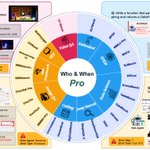
Introducing Who&When Pro, a large scale benchmark for failure attribution in AI agents. It contains over 12k failed trajectories across text, image, and video, covering 26 benchmarks and 15 agent frameworks. The benchmark spans both single agent and multi agent systems, from reasoning and coding agents to web agents, GUI agents, and multimodal agents.
And the answer is not as reassuring as we might hope.
Our results show that current LLMs can sometimes locate where a failure happened, while identifying the underlying failure type remains much more difficult. This leaves a major gap for agents that are expected to diagnose, learn from, and improve on their own mistakes.

Super excited to share that Who&When Pro has been accepted to NeurIPS 26 E&D Track!!🥳
If you are interested in #RSI, agent failure attribution, definitely check this work out! We have 10k+ failure trajectory spanning 3 modalities and different application scenarios!
🔥 Recursive self improvement is all the heat right now. But before an AI agent can learn from its own failures, there is a more basic question:
Can LLMs really understand their own failures?
Introducing Who&When Pro, a large scale benchmark for failure attribution in AI agents. It contains over 12k failed trajectories across text, image, and video, covering 26 benchmarks and 15 agent frameworks. The benchmark spans both single agent and multi agent systems, from reasoning and coding agents to web agents, GUI agents, and multimodal agents.
And the answer is not as reassuring as we might hope.
Our results show that current LLMs can sometimes locate where a failure happened, while identifying the underlying failure type remains much more difficult. This leaves a major gap for agents that are expected to diagnose, learn from, and improve on their own mistakes.
Jiale Liu (on the market!) retweeted
🔥 Recursive self improvement is all the heat right now. But before an AI agent can learn from its own failures, there is a more basic question:
Can LLMs really understand their own failures?
Introducing Who&When Pro, a large scale benchmark for failure attribution in AI agents. It contains over 12k failed trajectories across text, image, and video, covering 26 benchmarks and 15 agent frameworks. The benchmark spans both single agent and multi agent systems, from reasoning and coding agents to web agents, GUI agents, and multimodal agents.
And the answer is not as reassuring as we might hope.
Our results show that current LLMs can sometimes locate where a failure happened, while identifying the underlying failure type remains much more difficult. This leaves a major gap for agents that are expected to diagnose, learn from, and improve on their own mistakes.
📊 What did we find?
Failure localization is already challenging, and failure diagnosis is much harder.
On text trajectories, the best model reaches 73.9% accuracy for locating the decisive step, while the best failure type result is only 22.2% macro F1.
Models also frequently assign the wrong cause to a failure. Planning, verification, and coordination errors are often absorbed into broader reasoning error categories, which shows that current models still struggle to recover the actual structure of an agent failure.
Trajectory length makes the problem harder as well. Step localization drops from 94% on short traces below 3K tokens to 50% on traces above 12K tokens.
These results suggest that reliable failure understanding remains an important missing capability for self improving agents.

We hope this benchmark helps push forward research on agent debugging, failure diagnosis, automated feedback, and self evolving agent systems.
🌐 Project website whowhenpro.github.io
📄 Paper arxiv.org/abs/2607.09996
📷 Code github.com/whowhenpro/whowhe…
Kudos to my awesome collaborators for making this project happen🥳:
@ShaokunZhang1, Huajun Xi, @yokeyxz @VyvyenYue @Chi_Wang_ @jiank_uiuc @qingyun_wu @huazheng_wang
Jiale Liu (on the market!) retweeted

🎉 #ICML2026 paper from my @AdobeResearch summer '25 internship!
TL;DR: SteER proactively pauses mid-process to invite user steering + adapts a live persona — +7.83–22.80% improved alignment.
📄 arxiv.org/abs/2605.24266
#ICML2026 #LLM #DeepResearch #LLMAgents

Excited to share that TeamFusion, my 25 summer intern work at @AdobeResearch, is featured on Adobe Research blog, and accepted to #ACL2026 main conference! 🎉🎉🎉
TL;DR: TeamFusion helps teams make open-ended decisions by simulating teammate discussions and remixing ideas into stronger team-wide outcomes, all with minimal communication overhead.🤝✨
#Agents #MultiAgentSystems #HumanAI #LLMAgents

We put real professional designers in the loop on 50 actual ad design scenarios. 👩🎨👨🎨 The results:
✅ They agreed with their agent's comments (< 3% strong disagreement)
✅ They preferred TeamFusion's remixed designs over the originals
✅ Team-wide consensus rose by about 17% on average
(It also beat direct-summary baselines across a 500-team public-opinion benchmark.)


My favorite takeaway: AI should not replace teamwork. It should help teams understand each other faster, preserve diverse voices, and make the path to consensus clearer. 🌱
📄 Paper: arxiv.org/abs/2604.19589
📰 Adobe Research blog (check out the demo here): research.adobe.com/news/team…
Huge thanks to my amazing collaborator Lin Ai, my mentors @victorsb, Haoliang Wang, Sunav Choudhary, Saayan Mitra, and my advisor @qingyun_wu for making this work happen! 🙏

RT @ShaokunZhang1: “Show me the code” → “Show me the trace.”
Awsome agent failures: github.com/ag2ai/Agents_Fail…
As agentic AI systems gro…
Jiale Liu (on the market!) retweeted

Nemotron-Research-Tool-N1 is finally accepted at ICLR 2026🔥! Super excited about this milestone after it was first announced in May 2025. In 2026, the training recipe for tool-calling models is still extremely valuable for the entire community.
The key contribution of this work is not merely another RL result, but a practical recipe for turning existing SFT tool-calling data into verifiable training signals.
Instead of relying on expensive distilled trajectories, we show that standard SFT corpora can be systematically transformed and then trained with a lightweight verification signal that only checks:
(1) format correctness
(2) executable tool calls
Producing more RL data is one aspect, but how to better leverage existing data is equally important.

Tool-using LLMs can learn to reason—without reasoning traces.
🔥 We present Nemotron-Research-Tool-N1, a family of tool-using reasoning LLMs trained entirely via rule-based reinforcement learning—no reasoning supervision, no distillation.
📄 Paper: arxiv.org/pdf/2505.00024
💻 Code: github.com/NVlabs/Tool-N1
(Please consider giving us a ⭐️ to stay updated on the upcoming code release!)
🧠 Why this matters:
Existing tool-call models rely heavily on supervised reasoning traces from stronger models—costly, brittle, and often imitative. We ask:
Can LLMs learn to reason directly from tool success signals?
📦 What we did:
– Train Qwen2.5-7B/14B with simple binary reward on tool-call correctness + reasoning format in R1-style
– No reasoning traces needed
– Evaluate on BFCL, API-Bank, and ACEBench
– Also study the role of SFT, RL, and widely adopted SFT-then-RL recipes in training Tool-Calling models.
📈 Key findings:
– Tool-N1-7B/14B obviously outperform GPT-4o and open baselines on all benchmarks
– Widely adopted SFT+RL paradigm doesn’t necessarily lead to better performance than Pure RL.
– Binary reward > fine-grained reward, esp. for real-world queries
– Scaling works: bigger = better gains under our RL setup
🌟 Takeaway:
Reasoning doesn’t have to be taught. With just a binary signal, LLMs can learn to reason and act.
Tool-N1 sets a new direction for scalable, supervision-light tool calling model training

Jiale Liu (on the market!) retweeted

🤖📈The value gap between YOLO agents and a learning AI workforce:
A lot of people don’t realize how much upside they’re leaving on the table in terms of their agent system. Simply because they are still in the demo stage, or their agents aren’t even running long enough to learn.
As more agents are deployed into real production environments, especially as an AI workforce, reliability, performance, and the ability to continuously learn and improve start to actually matter.
These aren’t one-off executions. They’re long-running systems, expected to operate over time, learn from outcomes, and compound gains.
Here’s a quick sneak peek of what learning from real data can unlock 👇
1. On Prophet Arena (a leaderboard with live market data):
A learning agent built with AG2 outperforms an OpenAI agent using the same model (GPT-5.2) by ~18% in market return
2. A learning AG2 agent using an earlier-generation model ( (GPT-4.1) outperforms a non-learning agent using GPT-5.2 by ~13% in market return
🚀 That's the power of a multi-agent styem learn from outcomes, adapts its strategy, and improves over time.


Jiale Liu (on the market!) retweeted
If you're at #ICML2025, come say hi at our Spotlight Poster session! 👋
🧠 "Which Agent Causes Task Failures and When?"
We introduce the first benchmark for automated failure attribution in LLM multi-agent systems — identifying who failed and when.
📍 East Exhibition Hall A-B #E-2701
🕚 Thu July 17 (today), 11am–1:30pm PDT
📄 lnkd.in/eAMKE72N
#AI #LLM #MultiAgent #AIagents

Jiale Liu (on the market!) retweeted
Tool-using LLMs can learn to reason—without reasoning traces.
🔥 We present Nemotron-Research-Tool-N1, a family of tool-using reasoning LLMs trained entirely via rule-based reinforcement learning—no reasoning supervision, no distillation.
📄 Paper: arxiv.org/pdf/2505.00024
💻 Code: github.com/NVlabs/Tool-N1
(Please consider giving us a ⭐️ to stay updated on the upcoming code release!)
🧠 Why this matters:
Existing tool-call models rely heavily on supervised reasoning traces from stronger models—costly, brittle, and often imitative. We ask:
Can LLMs learn to reason directly from tool success signals?
📦 What we did:
– Train Qwen2.5-7B/14B with simple binary reward on tool-call correctness + reasoning format in R1-style
– No reasoning traces needed
– Evaluate on BFCL, API-Bank, and ACEBench
– Also study the role of SFT, RL, and widely adopted SFT-then-RL recipes in training Tool-Calling models.
📈 Key findings:
– Tool-N1-7B/14B obviously outperform GPT-4o and open baselines on all benchmarks
– Widely adopted SFT+RL paradigm doesn’t necessarily lead to better performance than Pure RL.
– Binary reward > fine-grained reward, esp. for real-world queries
– Scaling works: bigger = better gains under our RL setup
🌟 Takeaway:
Reasoning doesn’t have to be taught. With just a binary signal, LLMs can learn to reason and act.
Tool-N1 sets a new direction for scalable, supervision-light tool calling model training