

Internal Medicine MRT resident @WeillCornell, @PennMedicine MSTP, @Harvard '15. Interested in genomics, computational bio, and cardiology 🧬🏨🔬❤️🎻🎸🎤
New York, NY
Joined August 2019
- Tweets112
- Following246
- Followers298
- Likes442




Joe Park, MD, PhD retweeted

We are absolutely thrilled to welcome this phenomenal new class of general cardiology fellows to the Cornell Cardiology family! We are so excited to work with you all!! ⭐️🏆🥇😍🫀🎉

Joe Park, MD, PhD retweeted

A common variant in the BAG3 gene (C151R) is associated with decreased risk of dilated cardiomyopathy (DCM) and increased risk of hypertrophic cardiomyopathy (HCM), including in individuals with a genetic predisposition to DCM.
ja.ma/3UNYzHo

Joe Park, MD, PhD retweeted

The human genome is gradually unravelling its secrets 🎁
AlphaMissense model @ScienceMagazine: one more path lit up by deep learning in exploring the code of life 🧬
We now know with high confidence if 89% of ALL missense variants are benign or pathogenic
Key contributions🧵🧵

Joe Park, MD, PhD retweeted

A mind-blowing paper has come out today in @Nature
In 2016, JC Venter Institute scientists trimmed a bacterial genome to its barest minimum required for life to synthesize what they called a "minimal genome" (science.org/doi/10.1126/scie…).
Today, a group of scientists from Indiana University reports how that minimal genome evolved over 2000 generations in comparison to the non-minimal genome.
The authors found that even when you reduce a bacterial genome to its absolute minimum where every nucleotide matters, the genome undergoes mutational events generation after generation as much as the non-minimal genome. One simply cannot stop the evolution.
Just over 300 days of evolution (equivalent to 40,000 years in humans) the minimal cell has gained everything it lacked in fitness on day one in comparison to the non-minimal cell.
When comparing the evolved traits between the minimal and non-minimal cells, the scientists found something striking. The evolutionary process increased the cell size of non-minimal cells but not that of the minimal cell. But that is not the striking part.
The scientists were able to identify the key mutation that resulted in cell size evolution. And it turned out that the mutation that helped the non-minimal cells to grow bigger is the same that helped the minimal cells to stay smaller. Growing bigger had a survival advantage for non-minimal cells and not growing bigger had a survival advantage for minimal cells. So, the mutation had a context-dependent effect. This just demonstrates that the evolutionary effects on traits have no absolute direction. All that matter is what is beneficial for the organism's survival.
The conclusion of the paper is metaphorically a quote from the Jurassic Park movie:
“Listen, if there’s one thing the history of evolution has taught us is that life will not be contained. Life breaks free. It expands to new territories, and it crashes through barriers painfully, maybe even dangerously, but . . . life finds a way". (scienmag.com/artificial-cell…)
nature.com/articles/s41586-0…

Joe Park, MD, PhD retweeted

Excited to share our whole genome sequencing analysis of lipids in @nih_nhlbi TOPMed led by @MargaretSunitha & with @gina_peloso! nature.com/articles/s41467-0… @NatureComms
[1/10]


Joe Park, MD, PhD retweeted

Excited to report that our latest work using snRNAseq to dissect the molecular basis of end-stage DCM and HCM is now published @Nature.
Large collaborative effort led by the incredibly talented Mark Chaffin @broadinstitute.
nature.com/articles/s41586-0…

Joe Park, MD, PhD retweeted

🎇Our massive effort to define genes and cells causing kidney disease published @NatureGenet by @Hongbo919Liu New GWAS in 1.5 million, kidney eQTL in 686, meQTL 443, snATACseq 60K cells, coloc, moloc, MR, pheWAS to prioritize >500 genes for kidney disease go.nature.com/3tHf9Lj
Joe Park, MD, PhD retweeted

major flex alert! I am so happy to see our proxy NAFLD GWAS in the Million Veteran Program in print at Nature Genetics. Thanks to @shramdas @bvoight28 @STRUANGRANT @QAnstee @C_V_Schneider @amitvkhera @maryehaas @tassimes @ines_catherine @dpsg108 nature.com/articles/s41588-0…
Joe Park, MD, PhD retweeted

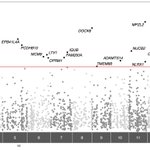
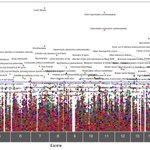
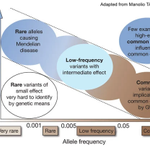
Our joint @FinnGen_FI+@uk_biobank coding variant study is now out @Nature. We bridge rare & common disease genetics by linking protein-coding variants from >650k individuals to >700 disease endpoints, resolve GWAS loci & explain mechanisms 👏@ben_b_sun 🧵rdcu.be/cHCMs
Joe Park, MD, PhD retweeted

Daniel J. Rader, M.D., FAHA, of the University of Pennsylvania, to receive 2021 Research Achievement Award, the American Heart Association’s highest scientific award spr.ly/6014JnPLn #AHA21

Joe Park, MD, PhD retweeted

If you could read the DNA of half a million people, would you do it and why? Would it work? What would you learn?
To answer this and several related questions, let me walk you through the work my @RegeneronDNA colleagues just published in Nature. 1/24
nature.com/articles/s41586-0…
Joe Park, MD, PhD retweeted

Out today @Nature! Human tissues accumulate cancer-driver mutations with age, yet tumor formation remains rare, why!? We show that mutant clones in the normal epithelium can have a tumor-protective role by outcompeting and eliminating nascent tumors. nature.com/articles/s41586-0…

Joe Park, MD, PhD retweeted

CRISPR technologies are powerful gene editing tools because they are programmable. We are excited to describe 3 new programmable systems, IscB, IsrB, and TnpB, some of the most abundant genes on the planet, with potential for gene editing. @ScienceMagazine science.org/doi/10.1126/scie…

Joe Park, MD, PhD retweeted

Today with @emblebi, we're launching the #AlphaFold Protein Structure Database, which offers the most complete and accurate picture of the human proteome, doubling humanity’s accumulated knowledge of high-accuracy human protein structures - for free: dpmd.ai/alphafolddb 1/
Joe Park, MD, PhD retweeted
This paper was a longtime coming. In no particular order, some of the interesting things to learn from the sequencing and analysis of 53,831 human genomes. 1/n
nature.com/articles/s41586-0…
PDF: nature.com/articles/s41586-0…
Joe Park, MD, PhD retweeted
Analysis of 10,900 whole-exome sequences linked to electronic health care records in the @PennMedicine Biobank enabled an exome-wide study of the phenotypic effects of rare loss-of-function gene variants @JoeinGenes @danrader333 @MarylynRitchie go.nature.com/2N1xEaV
Joe Park, MD, PhD retweeted
Kidney disease genetic risk variants alter lysosomal beta-mannosidase (MANBA) expression and disease severity stm.sciencemag.org/content/1…
Joe Park, MD, PhD retweeted

A genome-wide association study for nonalcoholic fatty liver disease identifies novel genetic loci and trait-relevant candidate genes in the Million Veteran Program. medrxiv.org/cgi/content/shor… #medRxiv
Joe Park, MD, PhD retweeted

Great visualization here— land doesn’t vote; people do teapawt.org/BettinaForget/status/1…
Joe Park, MD, PhD retweeted

One of my favorite parts from the new genomic strategic vision paper (nature.com/articles/s41586-0…): the "Bold Predictions" section:
@genome_gov
