Author, journalist, collector. #SámiDuodji. Cлава Україні! NAFO. #RussianColonialism #SpecialTribunalNow #smokefleet Freedom for Georgia, Iran, Venezuela.
Langley, VA, Finland
Joined April 2012
- Tweets161K
- Following8.1K
- Followers7.4K
- Likes457K





Pinned Tweet
Here is a good book of #RussianColonialism to start with by @maksymeristavi:
linktr.ee/russiancolonialism
Also @VolodyaTretyak is a must follow considering
#RussianColonialism and #RussiaDecolonized.

Joni Pyysalo retweeted

More than 300 Russians killed as Moscow props up Mali’s junta, leaked data reveals
theguardian.com/world/2026/n…

Joni Pyysalo retweeted

In 2026, the Russian 🇷🇺 army carried out at least 405 successful strikes on Ukraine's 🇺🇦 railway infrastructure.
Hundreds of locomotives have been destroyed, many traction substations damaged, railway bridges, train stations and depots targeted.
The damage to Ukraine's locomotive stock is significant. Ukrainian sources report at least 500 locomotives destroyed since the start of the war, a heavy blow to the number of locomotives still available. The data I have collected allows me to partially confirm this figure.
Most strikes target locomotives in the east, northeast and south of the country. But recently, strikes have reached much deeper, into central and even western Ukraine. This is an unprecedented expansion of Russia's campaign against Ukrainian logistics. It is all the more worrying because Ukraine's rail gauge prevents it from receiving locomotives from most European countries.
Russia is increasingly betting on a strategy of attrition against Ukraine's rear. It is multiplying massive strikes and constantly introducing new strike assets, both missiles and drones. The aim is to break the rear (rail, energy, transport, industry, warehouses) and, through it, the Ukrainian people.
Yet this campaign reflects neither the more complex situation of the Russian army on the front line, nor its own railway difficulties in the occupied territories, where Ukraine has carried out hundreds of strikes on locomotives, bridges and stations in recent years.
This map shows at least 405 recorded strikes on Ukrainian railway targets in 2026.

Joni Pyysalo retweeted
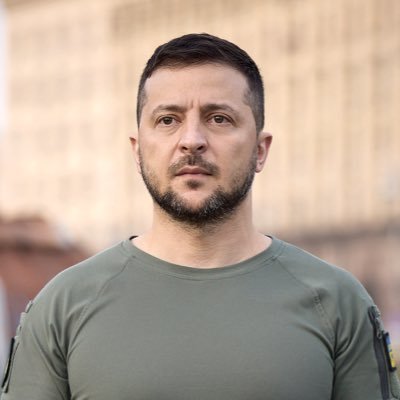
Ukraine is committed to constructive relations with Hungary – relations between equals, based on mutual respect for our peoples.
We reached agreements on all key areas of bilateral cooperation, and the area where this cooperation can be most beneficial is energy. We discussed supplies of diesel fuel and other essential petroleum products to Ukraine. On infrastructure, the priority is expanding rail connections between our countries: developing the Kyiv–Budapest route, electrifying the railway, and expanding border crossing infrastructure by reconstructing existing checkpoints and building new ones. Péter and I also addressed security issues. I briefed him on the situation at the front, as well as on Russia’s attacks on our cities and villages.
This war can truly be stopped only if Europe, America, and everyone who genuinely wants a real peace stand in full solidarity with Ukraine. I thank the Prime Minister for his clear position on our defense against Russia. Ukraine’s defense matters for all of Europe, and the experience of the 20th century has already proved this.
I said this at a joint press conference with Hungarian Prime Minister Péter Magyar.


Joni Pyysalo retweeted

Sizran, Samara Oblast.
The Sizran oil refinery was also targeted by Russian strike forces. Footage shows a massive fire in the vicinity of the plant
Joni Pyysalo retweeted

The hurt dog howls.
Interesting how the RU disinformation campaign has shifted from denying the casualty counts to trying to minimize them, sloppily.
If we had taken 2.4 million losses, we wouldn't just be fighting in Lviv - we'd be outside Chisinau by now.

Jeżeli ten przeciek jest prawdziwy, mówimy o skali strat, która całkowicie zmienia obraz ukraińskich możliwości mobilizacyjnych.
Według Mash dane mają pochodzić z baz Ministerstwa Obrony, TCC i prosektoriów. Na tym etapie nie ma jednak niezależnego potwierdzenia liczby 2,4 mln.
Jedno pozostaje istotne: przy takiej skali strat pytanie o rezerwy ludzkie, mobilizację i zdolność Ukrainy do dalszego prowadzenia wojny staje się kluczowe.
#Ukraina #Wojna #OSINT #Geopolityka

Joni Pyysalo retweeted

🔥🛢️ Russia’s Syzran oil refinery is currently under a massive aerial attack, with large fires visible at the facility.
The Rosneft-owned refinery has an annual processing capacity of around 8.5 million tonnes of crude oil.
Joni Pyysalo retweeted

Zelenskyy: Lukashenko offers to take me on his plane to Moscow [to talk to Putin].
What am I, a suitcase? What would I go there for?
Joni Pyysalo retweeted
I wrote this with my personal experience, as someone who went through mobilization, worked with active and retired servicemen and seen ups and downs. I would appreciate if you could read it and let me know what you think in the comments.

It is worth explaining why 720,000 russian military deaths over nearly five years of war matter much more than many think.
An ordinary russian may not give a fuck about these 720,000 dead. Many would say, well, it was their choice. Some see it as tragic, some feel for them, but much of the general population appears indifferent.
A large proportion of these troops signed contracts voluntarily in exchange for money. There is a very different perception of their deaths in society. "Your choice, you knew the risks, you took them, and now you are dead. Sorry, but that's the way it is."
So let's look at recruitment numbers.
Russian budget data shows that the regional cost of recruiting a soldier increased by approximately 36% year over year in October, while recruitment fell by 11% over the first ten months of 2026 compared to the same period in 2025.
They are offering more but getting less. This is an obvious indicator of the exhaustion of their existing recruitment pools.
There are two main reasons why I think we are seeing this:
Information about losses becomes more accessible every day. More people lose family members, more wounded soldiers return home, and more soldiers tell their families what is actually happening on the battlefield. This information spreads through society.
The low-hanging fruit of recruitment is gradually disappearing. Those in financial desperation, those heavily in debt, highly motivated patriots, criminals and others for whom military service was an attractive option have already been heavily recruited.
Every new recruit costs more and is harder to get. The longer this continues, the more difficult recruitment becomes.
Fine, but russia still recruits large numbers of people and manages to fill gaps in its military rosters. That is correct.
However, these are just numbers on paper. A brigade of 3,000 soldiers can be an effective, cohesive fighting force, or it can be a demoralized, unwilling and dysfunctional formation that struggles to accomplish even basic tasks.
Both look identical on paper.
That's where we turn to evidence from the battlefield. We have good mappers such as DeepState, Andrew Perpetua and Clément Molin, who do an excellent job documenting the frontline.
Russian territorial gains have significantly decreased, while the number of russian soldiers dying for each square kilometer gained has increased.
Estimated deaths per square kilometer:
2025: 60
2026: 120–180 (data is not yet complete)
60 deaths per square kilometer is already an extremely high price to pay. At 120 or even 180, we are talking about an entirely different level of attrition.
At this rate, taking the remaining 5,300 square kilometers of Donetsk Oblast controlled by Ukraine would theoretically cost russia another 636,000 to 954,000 military deaths.
That's why Ukraine refuses to withdraw. You want it, you pay for it with blood.
Why did this number spike so much in 2026?
Obviously, Ukraine adapts. Technology evolves, tactics change, and defensive capabilities improve. However, I believe one of the major factors behind this deterioration is the declining morale and cohesion of the russian military.
Imagine the psychological toll of losing thousands of soldiers just to advance a few hundred meters into desolate land, with minimal tactical gains and no meaningful strategic gains.
Now imagine doing it day after day, month after month, for years.
The surviving soldiers and commanders may become completely indifferent to the lives of new recruits being sent into the meat grinder. Others develop depression, anger and severe psychological problems.
This creates a growing disconnect between experienced soldiers and new recruits, resulting in distrust, resentment and enormous internal tension.
How do you build unit cohesion when experienced soldiers no longer want to become emotionally attached to new recruits because they may be dead within days?
Every military in the world has limits to how many casualties it can sustain without meaningful achievements.
No, this is not necessarily the point when a commander says, "I won't send my troops to die anymore." Commanders themselves may become indifferent to the lives of their soldiers.
It is the point at which the force loses cohesion and effectiveness. Soldiers become unwilling to fight, desertion increases, trust in commanders disappears, and the formation becomes increasingly ineffective despite being fully staffed.
We have seen elements of this during the collapse of the russian imperial army in WWI, during the First Chechen War, and during the collapse of russian defensive positions in Kharkiv Oblast in September 2022.
We shouldn't forget Prigozhin's mutiny in June 2023 either. Months of fighting in Bakhmut, enormous losses, growing resentment towards military leadership and public accusations against the Ministry of Defense eventually culminated in an armed rebellion.
That happened less than a year and a half into the full-scale war. Think about how much psychological exhaustion, resentment and frustration could have accumulated within the russian military since then.
Yes, Ukraine also suffers casualties and has a much smaller manpower pool. But there is a fundamental difference between enduring losses while defending your own country and repeatedly sacrificing thousands of men for another few hundred meters of someone else's land.
Under normal circumstances, military leadership facing these diminishing returns would have strong reasons to reconsider its offensive strategy, consolidate its defenses and seek a diplomatic solution.
However, I believe putin is politically trapped.
While the war continues, the final cost of the war isn't being calculated, the promised rewards are still within reach, and the military remains occupied with fighting.
Even a ceasefire could present a serious political risk to putin. Soldiers would have time to reflect on what happened. Society would have more opportunities to ask what was achieved, what was lost, who is responsible, and whether it was worth it.
Continuing the war postpones these questions but makes the eventual answers increasingly difficult.
And so the meat grinder continues.
In my view, the russian military is on a path towards a disaster that cannot simply be prevented by increasing signing bonuses and recruiting more people. Lower oil revenues and Ukrainian deep strikes into russia can further accelerate this process.
You can replace dead soldiers. You cannot buy back years of accumulated combat experience, mutual trust, unit cohesion, morale and the willingness to fight.
Joni Pyysalo retweeted

Ukraine can only protect itself from deadly Russian Iskander-M ballistic missiles with PAC-3 interceptors, but the Pentagon boss is refusing to ship the weapons even though they’re paid for.

Joni Pyysalo retweeted
A Belarusian hack into Russian government database has revealed 720,000 Russian soldiers have been killed in action in Ukraine a massive number.
That is just insane.
Joni Pyysalo retweeted

Fellas, can we push @nicnaknoo1997 to 3K?
Please show some love ❤️
Thank you 🫡🇺🇦💙💛
#NAFO #WeAreNAFO #NAFOExpansionIsNonNegotiable

Joni Pyysalo retweeted

russia is turning Buryatia into a graveyard for a war that doesn’t even pay.
700,000 🇷🇺 soldiers dead. Nearly 50 Afghan wars or 30 Chechen wars’ worth of dead in less than 5 years.
A woman from one of the worst-hit regions just described what that looks like from the inside: thousands of their own already gone, thousands more missing, half the population forced into distant rotational work so fathers never see their children. Families hollowed out. And everyone still too afraid to step outside.
She watched millions fill the streets in France, Italy and Spain and asked the only question that matters: why do we only ever manage a handful of people? Teachers herded like cattle to the polling stations. Votes collected on command. Silence enforced.
Then she said the line the regime cannot survive: no government ever gives up power without a revolution.
This is not Ukrainian propaganda. This is a Russian woman from one of the poorest, hardest-hit regions saying Moscow is using them as cannon fodder and they are still too afraid to do anything about it. How many more of their own dead will it take before the fear of the police stops outweighing the corpses? Or has the Kremlin already succeeded in making mass death more acceptable than public dissent?


According hacked data analyzed by Mediazona, by September 2026 count of RF KIA is approx 700k.
#SlavaUkraïni 🇺🇦
"Data from Rosstat (the Russian Federal State Statistics Service) has revealed that nearly 500,000 people have died in the war—and this data is authentic. When accounting for those missing in action, the current figure stands at approximately 700,000.
By the end of September 2026, at least 490,000 people had died in the war against Ukraine. These are deaths that have already been officially registered and appear in data obtained from a breach of Rosstat’s systems—data that was passed on to journalists by Belarusian and Ukrainian hackers (groups known as "Cyber Partisans" and "Silent Crow").
We are confident that this data is genuine: it has been cross-referenced against a list of the deceased by name (including records not yet made public), the Registry of Inheritance Cases, other leaks from civil registry offices (ZAGS), court rulings available in open sources, and previously published data from Rosstat itself.
Furthermore, the Rosstat data allowed us to re-verify our earlier loss estimates—which were based on the Registry of Inheritance Cases—and we found them to be quite accurate, or perhaps even conservative, particularly regarding those reported as missing in action.
Taking into account delays in the registration of deaths, we estimate the actual number of fatalities as of September to be around 700,000.
This article is a joint project with *Meduza* as part of our ongoing effort to assess mortality figures. The list of the deceased by name is the result of work by *Mediazona*, the BBC Russian Service, and a team of volunteers."

Данные Росстата раскрыли гибель на войне почти 500 тысяч человек — и эти данные настоящие. С учетом пропавших цифра на сегодня — около 700 тысяч
К концу сентября 2026 года на войне с Украиной погибло как минимум 490 тысяч человек — это люди, смерть которых уже зарегистрирована и видна в данных из взлома Росстата, которые передали журналистам беларуские и украинские хакеры («Киберпартизаны» и Silent Crow).
Мы уверены, что эти данные настоящие: они проходят проверку поименным списком погибших (включая еще не опубликованные записи), Реестром наследственных дел, другими утечками ЗАГСов, текстами судебных решений из открытых источников и опубликованными ранее данными самого Росстата.
Также благодаря Росстату мы смогли перепроверить наши предыдущие оценки потерь по Реестру наследственных дел — и выяснили, что они достаточно точны или даже занижены в части пропавших без вести.
С учетом задержек в регистрации смертей реальное число погибших на сентябрь по нашей оценке составляет около 700 тысяч человек.
Это совместный текст с «Медузой» в рамках нашего проекта по оценке смертности. Поименный список погибших — работа «Медиазоны», Русской службы «Би-би-си» и команды волонтеров.
zona.media/article/2026/11/2…


Joni Pyysalo retweeted
It is worth explaining why 720,000 russian military deaths over nearly five years of war matter much more than many think.
An ordinary russian may not give a fuck about these 720,000 dead. Many would say, well, it was their choice. Some see it as tragic, some feel for them, but much of the general population appears indifferent.
A large proportion of these troops signed contracts voluntarily in exchange for money. There is a very different perception of their deaths in society. "Your choice, you knew the risks, you took them, and now you are dead. Sorry, but that's the way it is."
So let's look at recruitment numbers.
Russian budget data shows that the regional cost of recruiting a soldier increased by approximately 36% year over year in October, while recruitment fell by 11% over the first ten months of 2026 compared to the same period in 2025.
They are offering more but getting less. This is an obvious indicator of the exhaustion of their existing recruitment pools.
There are two main reasons why I think we are seeing this:
Information about losses becomes more accessible every day. More people lose family members, more wounded soldiers return home, and more soldiers tell their families what is actually happening on the battlefield. This information spreads through society.
The low-hanging fruit of recruitment is gradually disappearing. Those in financial desperation, those heavily in debt, highly motivated patriots, criminals and others for whom military service was an attractive option have already been heavily recruited.
Every new recruit costs more and is harder to get. The longer this continues, the more difficult recruitment becomes.
Fine, but russia still recruits large numbers of people and manages to fill gaps in its military rosters. That is correct.
However, these are just numbers on paper. A brigade of 3,000 soldiers can be an effective, cohesive fighting force, or it can be a demoralized, unwilling and dysfunctional formation that struggles to accomplish even basic tasks.
Both look identical on paper.
That's where we turn to evidence from the battlefield. We have good mappers such as DeepState, Andrew Perpetua and Clément Molin, who do an excellent job documenting the frontline.
Russian territorial gains have significantly decreased, while the number of russian soldiers dying for each square kilometer gained has increased.
Estimated deaths per square kilometer:
2025: 60
2026: 120–180 (data is not yet complete)
60 deaths per square kilometer is already an extremely high price to pay. At 120 or even 180, we are talking about an entirely different level of attrition.
At this rate, taking the remaining 5,300 square kilometers of Donetsk Oblast controlled by Ukraine would theoretically cost russia another 636,000 to 954,000 military deaths.
That's why Ukraine refuses to withdraw. You want it, you pay for it with blood.
Why did this number spike so much in 2026?
Obviously, Ukraine adapts. Technology evolves, tactics change, and defensive capabilities improve. However, I believe one of the major factors behind this deterioration is the declining morale and cohesion of the russian military.
Imagine the psychological toll of losing thousands of soldiers just to advance a few hundred meters into desolate land, with minimal tactical gains and no meaningful strategic gains.
Now imagine doing it day after day, month after month, for years.
The surviving soldiers and commanders may become completely indifferent to the lives of new recruits being sent into the meat grinder. Others develop depression, anger and severe psychological problems.
This creates a growing disconnect between experienced soldiers and new recruits, resulting in distrust, resentment and enormous internal tension.
How do you build unit cohesion when experienced soldiers no longer want to become emotionally attached to new recruits because they may be dead within days?
Every military in the world has limits to how many casualties it can sustain without meaningful achievements.
No, this is not necessarily the point when a commander says, "I won't send my troops to die anymore." Commanders themselves may become indifferent to the lives of their soldiers.
It is the point at which the force loses cohesion and effectiveness. Soldiers become unwilling to fight, desertion increases, trust in commanders disappears, and the formation becomes increasingly ineffective despite being fully staffed.
We have seen elements of this during the collapse of the russian imperial army in WWI, during the First Chechen War, and during the collapse of russian defensive positions in Kharkiv Oblast in September 2022.
We shouldn't forget Prigozhin's mutiny in June 2023 either. Months of fighting in Bakhmut, enormous losses, growing resentment towards military leadership and public accusations against the Ministry of Defense eventually culminated in an armed rebellion.
That happened less than a year and a half into the full-scale war. Think about how much psychological exhaustion, resentment and frustration could have accumulated within the russian military since then.
Yes, Ukraine also suffers casualties and has a much smaller manpower pool. But there is a fundamental difference between enduring losses while defending your own country and repeatedly sacrificing thousands of men for another few hundred meters of someone else's land.
Under normal circumstances, military leadership facing these diminishing returns would have strong reasons to reconsider its offensive strategy, consolidate its defenses and seek a diplomatic solution.
However, I believe putin is politically trapped.
While the war continues, the final cost of the war isn't being calculated, the promised rewards are still within reach, and the military remains occupied with fighting.
Even a ceasefire could present a serious political risk to putin. Soldiers would have time to reflect on what happened. Society would have more opportunities to ask what was achieved, what was lost, who is responsible, and whether it was worth it.
Continuing the war postpones these questions but makes the eventual answers increasingly difficult.
And so the meat grinder continues.
In my view, the russian military is on a path towards a disaster that cannot simply be prevented by increasing signing bonuses and recruiting more people. Lower oil revenues and Ukrainian deep strikes into russia can further accelerate this process.
You can replace dead soldiers. You cannot buy back years of accumulated combat experience, mutual trust, unit cohesion, morale and the willingness to fight.
Joni Pyysalo retweeted

Moscow called the Crimean Bridge one of the best-protected structures in the world.
Now one of its arches is at the bottom of the sea, and the rest shouldn't get too comfortable.
Our job is to build weapons Ukraine's forces can count on. They put Flamingo to work alongside weapons from other Ukrainian teams.
To every unit of Ukraine's Defense Forces involved: thanks for making it count.