
Husband. Dad.
Parkland County, Alberta
Joined July 2022
- Tweets4.9K
- Following61
- Followers165
- Likes3.6K



Pinned Tweet
A MUST READ FOR EVERYONE WHO PARTICIPATES IN SPORTS coach.ca/sites/default/files…
2
24
4,858
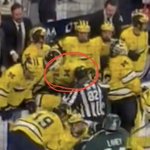
Watch Michigan #88 Henry Mews from the bench. Looks like he throws 3 head butts. A couple of them landed hard. Head butts a guy who has lost his helmet, being attacked by another player already, and being held by the ref.


1
139


A reminder to everyone that the IIHF, NHL, and sports organizations in general are NOT International Criminal Courts that investigate and prosecute war crimes and crimes against humanity.
1
44
Looks the like @EdmontonOilers will be proposing a new rule at the next GM meeting. Defenders Restricted Area. Defenders will not be allowed to enter the trapezoid shaped area in front of the net. Major penalty shall be imposed on any defenders who enter the area.

68
K Filipowski retweeted

Mounties seeking other potential victims in mutli-province child sexual offence investigation ctvnews.ca/edmonton/article/…

K Filipowski retweeted

A former employee of the Okotoks Oilers, who has also worked with teams in Fort McMurray and Brooks, is accused of soliciting and compensating minor hockey players for intimate images and sexual videos.
globalnews.ca/news/12130449/…

K Filipowski retweeted

Tyler King, a former assistant GM of the Okotoks Oilers, a Junior A team in the BCHL, has been charged by the RCMP in Alberta with sex offences involving three minor-aged players, and police believe there may be more victims.
Story from @rwesthead: tsn.ca/other-sports/article/…

So who broke the Kucherov news first? @FriedgeHNIC or @emilymkaplan?
Better questions is, who out there watching sports actually gives a fuck who said it first?

1
58

K Filipowski retweeted

This didn't take long 😅
larkinlosses.com/

K Filipowski retweeted

Listen to Canadian legend Don Cherry, who on his final Hockey Night in Canada Coach's Corner broadcast, Nov. 9, 2019, asked all Canadians to wear a poppy and honour our veterans.

K Filipowski retweeted

lol


A decade at @RogersPlace deserves something special. Celebrate with $10 parking 🚙, $10 burgers 🍔 & $10 t-shirts 👕 at every #Oilers home game.
Details ➡️ EdmontonOilers.com/DecadeDea…

First Rempe, then Bauer, why are so many goons coming from the Seattle Thunderbirds? Not good for hockey in any way. I know I am against the majority on this one.
1
78

How can we be sure that the person who requested the mail in ballot is the same person who filled in the ballot and sent it back?
1
52
K Filipowski retweeted

Around 5 million children in the U.S. now compete on travel teams. Parents find themselves trapped. They know the benefits of sports and want that for their children, yet giving it to them often means buying into a sports ecosystem that’s inherently flawed.
The modern-day hydra of youth sports can partly be traced to the pandemic. While many public programs were put on pause, privately owned sports leagues had the capital to get back up and running soon after lockdown. Parents who could afford the fees were more than willing to pay if it meant returning their children to some semblance of normalcy. Investors saw an opportunity. Private investment firms began buying up teams, facilities, software, camps, apparel, and media streaming in a roll-up strategy that allows them to profit from almost every aspect of a family’s participation.
In 2024, families spent 46 percent more on a primary youth sport than they did just five years prior, according to Project Play. It estimated that youth sports generate up to $40 billion in annual revenue — nearly twice as much as the NFL. Meanwhile, profits for investors in youth-sports companies are growing significantly.
One reason parents accept these expensive and hypercompetitive conditions is they’re anxious about what will happen if they don’t. In a time of justified concern for children’s mental health and unease about the future, parents have latched on to sports as a lifeline. And in their pursuit of a competitive edge for their children, parents can inadvertently take the positive effects of sports and turn them inside out.
“Every day, it was soccer, soccer, soccer,” said London, who joined a travel team at age 9. “It could be so bad that I would start playing soccer and then start hyperventilating and have to sit down. I was so scared that I wasn’t doing good.”
Caitlin Moscatello reports on the increasingly commercial world of travel sports: nymag.visitlink.me/DuArMf

K Filipowski retweeted
Private travel leagues have made youth sports expensive, hypercompetitive, and all-consuming for families. At least investors are making a killing. nymag.com/intelligencer/arti…

K Filipowski retweeted
‘Travel sports,’ a term that has come to encompass all sorts of private teams, leagues, and clubs, used to be for the truly exceptional young athlete. Now, they’re for anyone willing to pay — an expensive, exhausting commitment that has become popular not necessarily because millions of parents want them for their children but because it can feel like there’s no other choice. Rec programs are underfunded and struggle to compete with for-profit leagues for prime field, rink, and court times. And the level of play is diluted, often very early, as travel teams are incentivized to enroll children at young ages.
Around 5 million children in the U.S. now compete on travel teams. Parents find themselves trapped. They know the benefits of sports and want that for their children, yet giving it to them often means buying into a sports ecosystem that’s inherently flawed. As the pay-to-play model increasingly takes hold, so does the idea that kids should start competing at younger and younger ages, risking their sense of self along with their shoulders and ACLs.
“I never want my kids to look back and say I didn’t do everything I could to help them live their dreams,” a mother of three soccer players said. She’s hired professional photographers to take action shots for her 12- and 13-year-olds’ Instagram accounts — the platform has become a recruiting tool — and they’ve both asked her to pay for personal trainers.
“I think the word isn’t ‘specialize’; you are ‘professionalizing’ your kid early. You are exposing them to everything professionals have to deal with — I’m talking injury, time, schedule, everything,” said John Van Benschoten, a former MLB player and travel-baseball coach.
It makes one ask: All this for what? And for whom? Read Caitlin Moscatello’s cover story on how travel leagues have made youth sports more expensive, hypercompetitive, and all-consuming — and the investors who are making a killing: nymag.visitlink.me/1-gbZQ
