
Development producer for music-theatre and tv projects Creative, literate, numerate. V. good with other people’s money.
Chilterns & The Witterings
Joined May 2010
- Tweets106K
- Following2.7K
- Followers1.8K
- Likes74.7K




Trevor Chenery retweeted

When 23-year-old Lance Corporal Kylie Watson of the Royal Army Medical Corps was summoned for a “fireside chat,” she feared she was in trouble—only to learn she had been awarded the Military Cross for twice running into Taliban fire in Helmand Province to treat wounded comrades.
On her first tour as a fully qualified battlefield medic in mid-2010, the 5ft 1in soldier made a 100-metre dash under sustained fire to stabilise an Afghan National Army soldier whose pelvis had been shattered, stemming his bleeding and splinting him until a Chinook evacuated him. In a second incident she performed CPR on another casualty in open ground amid gunfire, evacuating him under fire even though he could not be saved. Her citation praised her “immense courage, willingness to put her own life at risk and absolute bravery,” making her one of only four women in history to receive the MC.
Modest and practical, she dismissed the idea of special heroism—“anyone with a human heart” would respond to the call of “Medic”—while noting the chaos of the moment, including falling over as she ran and later tumbling into a ditch during a river crossing.
Based at Checkpoint Azadie (“Hotel Azadie”) with 9 Platoon of 1st Battalion, the Duke of Lancaster’s Regiment, Watson lived rough, tended the platoon’s health, and joined every patrol as the sole medic. Born in Ballymena, Northern Ireland, she joined the Army in 2006 after childhood experience of the Troubles, completed basic training and battlefield medicine, and had already served in Basra.
On leave she accepted a proposal from fellow combat medic Lance Corporal Jacques Swanepoel; the couple were briefly reunited at Camp Bastion as one tour ended and the other began. Back home she faced her mother’s telling-off (“Next time, please don’t”) and some online accusations of tokenism, to which she replied that critics were welcome to wear her boots in Afghanistan. True to the Royal Army Medical Corps motto “In Arduis Fidelis” (Steadfast in Adversity), she simply insisted she had done her best and was ready to return to operations.
#womenshistory #Afghanistanwar #military

Trevor Chenery retweeted

To be honest, I think the whole Bond film thing has had its day. The gap between films (WW2 took less time) and the general direction means, to me, that it's strayed so far from its original concept to be virtually meaningless.
I hope they can reverse the process though.

Trevor Chenery retweeted

John F. Kennedy could not do one sit-up on the day he became the most powerful man on earth, and the corset his doctors kept him in is why the bullet that killed him found its mark.
He had been in pain since Harvard. In 1954 surgeons bolted a metal plate to his spine. The wound went septic and a priest was called to give him the last rites. A second operation took the plate back out. After that came the anaesthetic needles, sometimes several a day, a rocking chair, crutches kept out of the photographs, and a stiff canvas corset he laced on every morning like a second shirt.
That was the settled treatment for a bad back. Cut it, numb it, strap it up and keep it still.
In October 1961 an Austrian called Hans Kraus was shown into the White House. Kraus was a rock climber who had mended his own fractures by moving them, and he examined the President the way he would a recruit. Kennedy could not sit up from the floor. Asked to touch his toes, he could not reach his knees. The most photographed torso in America had been rested for 20 years and there was very little of it left.
Kraus told him the back was weak, and that weak things are loaded until they are strong. He gave him exercises and then weights, in the little gym beside the White House pool, and said he would walk out if the needles carried on.
It worked almost at once. Within a year Kennedy was picking up his children, which he had not been able to do, and playing golf again. Kraus's notes, handed to the Kennedy Library by his widow in 2006, record a lifelong complaint that was very nearly gone by the autumn of 1963.
The corset was the one thing Kraus could not get off him. He told the President he no longer needed it. Kennedy kept lacing it on.
He was wearing it in the open car in Dallas on 22 November. The first bullet went through the base of his neck. A man with nothing round his middle folds forward at that point, down below the line of the seat. Kennedy stayed bolt upright, held there by canvas and laces, with his head exactly where it had been.
His back was the strongest it had been in 20 years, and he died sitting up straight in the last piece of the old treatment.

Trevor Chenery retweeted

When little Rod Stewart came into us, his body was at breaking point with heartworm and severe anemia. He was utterly broken.
To see his little character transform has been a thing of pure joy. You have to check about 5 times to make sure it’s the same dog 😅
Unbelievable scenes ❤️
Trevor Chenery retweeted

Friendship is... sharing your lick-it ball even when it's smothered with your favourite Marmite treat!
They say you either love it or hate it!
Here's Mouse and Mr Smith loving it... together.
Trevor Chenery retweeted

sketchbook corner: Mr Beaky... (water soluble pencil and water filled brush pen)

Trevor Chenery retweeted
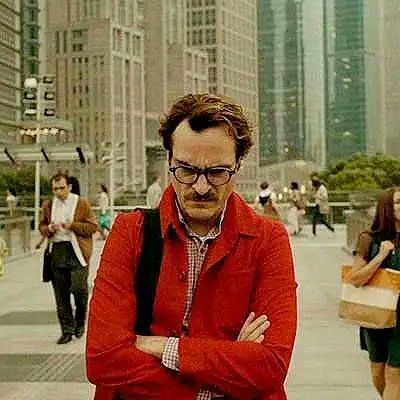
THE BIG SLEEP (1946) makes a flirtation feel like a whole affair. When Marlowe says he’d rather get wet inside, the bookseller closes early, pulls down the shade and lets her hair down. The fade-out says everything without showing a thing. Pure seduction.

Trevor Chenery retweeted

I honestly don't know whether to laugh or feel furious for British taxpayers after reading what five European governments just announced today. Every single pious excuse Labour used to scrap Britain's border deterrence just collapsed in one afternoon.
Germany, Austria, Greece, Denmark, and the Netherlands are unveiling a joint deportation hub in Rwanda for failed asylum seekers.
According to reports, they are expected to use the very same empty facilities that Britain handed Kigali £290 million in aid to renovate, as part of a £700 million scheme Labour cancelled the moment they won power in 2024.
British workers paid for the infrastructure, Labour walked away from it, and now European governments are moving right in to use it.
Remember the endless lectures from Labour ministers and human rights lawyers insisting offshoring to Rwanda was uniquely cruel, unworkable, and impossible under European law?
When Britain tried to use that system, the European Court of Human Rights grounded the flight and Labour mocked the entire policy as an immoral gimmick.
Yet the moment European capitals realized their own cities couldn't cope, Brussels simply tightened EU migration rules last year and cleared the path to send failed claimants to Kigali.
Now look at the sheer audacity of Andy Burnham today.
Just last week, the Prime Minister told reporters Britain was watching this European push for return hubs "with interest." Yet tonight in London, he is delivering a speech claiming that Brexit cost Britain control of its borders.
Britain didn't lose control of its borders because it left the European Union. Britain lost control because Labour lacked the political spine to use a deterrent that British taxpayers had already spent £700 million building, leaving five EU countries to quietly pick up the keys for free.

Could be a Christmas number one.
Can Ed Sheeran sing in "Camel" ?

When a camel in the Gobi desert rejects her newborn calf, the herders send for a musician.
It happens every spring. A hard birth, a first-time mother, and she will not let the calf near her. She kicks it away. Without her milk it will be dead in days, and a herding family cannot afford to lose it.
There is no vet for five hundred miles, and they have never needed one for this.
At dusk they tie the mother close to the calf. Somebody brings out a horsehead fiddle, the two-stringed instrument of the steppe. One of the women begins to sing. The same low syllable, khöös, khöös, over and over, while the fiddle follows the sound of the camel's own breathing and the wind.
It can take an hour or it can take until morning.
The mother goes quiet. She begins to sway. Then tears run down her face, which is the part no outsider believes until they have watched it. She turns to the calf, smells it, and lets it feed.
After that she will raise it. The herders use the same song to give an orphan to a camel that has lost her own.
The ritual is old beyond record. In 2015 it went on the United Nations list of traditions in urgent need of saving, because the young people who know the song are leaving for the city.
Modern farming has a great many products for a mother that will not feed her young.
The Mongols have a fiddle and a patient woman, and they have known for a few thousand years that what the camel needed was to be listened to.

43


Trevor Chenery retweeted

Such a delicious combination
An elegant double-breasted suit tailored in scrummy flannel!!!
#bespoke #menswear #womenswear #inspiration #allUKmade

Trevor Chenery retweeted

Today's new London Theatre offers: Jack and the Beanstalk (adult panto), Jesus Christ Superstar, Avenue Q (5 banana deal). All banana rated offers: theatremonkey.com/special-of…. Deal thoughts facebook.com/theatremonkey1/. LONDON THEATRE DIRECT BLACK FRIDAY SALE theatremonkey.londontheatred….

I believe Air Miles's degree was something Englishey as opposed to Economic & Finance.
Even a PPE - which almost all MPs seem to opt for - might be of help.
He could of course ask Rachel from accounts if he is really flustered.

Burnham Says Brexit Failed. Britain’s Trade Figures Tell a Very Different Story
Remember the warnings that Brexit would cut Britain off from its largest market? Five years after Britain left the Single Market, we have enough evidence to ask what actually happened. The figures tell a rather different story from the one Brexit's critics would have us believe.
The EU remains our largest trading partner. British firms still sell hundreds of billions of pounds of goods and services there each year, and services sales have grown strongly.
In 2019, Britain sold £294 billion of goods and services to the EU. In 2025, it sold £384 billion. The EU took 43 per cent of our exports before Brexit. It took 41 per cent in 2025, and its share has stayed between 41 and 44 per cent for a decade.
The picture is not all flattering, and it should be described honestly. Adjusted for inflation, goods exports to the EU are 14 per cent below their 2019 level. Brexit added real friction to goods trade, and that shows in the gap between the EU figure and the 8 per cent fall in goods exports to the rest of the world. But part of the weakness reflects the changing shape of Britain itself. Manufacturing has fallen from 17 per cent of economic output in 1990 to about 9 per cent today, roughly half its former share of the economy, while services have grown from 70 per cent to 80 per cent. Britain has spent decades becoming less dependent on manufacturing and more dependent on services. Since 2019 the pandemic, the energy shock and weak global demand for goods have pulled in the same direction. Brexit cannot be the whole explanation.
Services tell a very different story. In real terms, British services exports to the EU are 28 per cent higher than in 2019. To the rest of the world, they are up 26 per cent. That matters because services make up roughly four-fifths of our economic output. Britain now exports more services than goods, and the surplus on services, about £54 billion in the last quarter of 2025, almost exactly offsets the £58 billion deficit on goods. Law, finance, accountancy, engineering, advertising and technology are what modern Britain sells best. Yet listen to the Brexit debate and you could be forgiven for thinking the whole economy consists of lorries queuing at Dover.
Andy Burnham now wants to reopen that debate. If his answer to Britain's economic problems is much closer alignment with the EU, he must say what he would align, and what Britain would receive in return. Which barriers would fall? Which sectors would gain? Which powers would be constrained? And how would his settlement serve the services economy, where Britain holds a formidable international advantage?
None of this proves a Brexit trade boom, and there was none. What the figures do demolish is the caricature that leaving the EU severed Britain from Europe. We left its political institutions. We did not tow the country into the mid-Atlantic. The weakness in goods exports is real and deserves serious policy, but it afflicts trade outside the EU as well as within it, while services have performed spectacularly.
So before Burnham trades regulatory freedom for closer alignment, he owes the country the economic case rather than a bare pronouncement that Brexit failed. Show us the deal. Why should a country whose export strength increasingly lies in services bind itself to a regulatory system because goods trade has disappointed?
The serious argument about Brexit concerns the extra friction in goods trade, the value of regulatory autonomy, and whether governments have properly used the freedoms we regained. Have that argument. But drop the fiction that Britain stopped trading successfully with Europe. The numbers do not support it.
"Before Burnham trades regulatory freedom for closer alignment, he owes the country the economic case rather than a bare pronouncement that Brexit failed."

1
16


Trevor Chenery retweeted

What’s happening with prices for tickets at NT and OV? Top price ticket for Henry V at OV £181! I mean £181 for the OV. I know they have cheaper seats at the back behind a pillar and with a rail in your sightline, but I’ve never seen them so expensive. I’m shooketh #theatreprices
a) He doesn't understand the concept of negotiation, and
b) His negotiator-in-chief has tied his hands together & cut him off at the pass.

The Government has confirmed it will sign up to what's being called the 'Farage Clause' in its EU reset. That means the UK will agree to pay a fine if a future government - a Nigel Farage led government - undoes the agreement that Burnham is about to sign up to.
This is bad enough coming from the EU. It's outrageous at a British government should agree to threaten taxpayers with extra costs if they have the temerity to vote in a change of government.
What Burnham should be negotiating for is maximum flexibility for the UK - not to handcuff us forever to the EU.
Trevor Chenery retweeted

Love the quote from James Blunt when wrestling with going on Traitors asked his agent; “Would Chris Martin do it?”
His agent replied; “James, you’re not Chris Martin.”
.@kelvmackenzie on the very best of form.

This article first appeared in The Spectator. By Kelvin MacKenzie.
Unusually for an autocrat, Rupert Murdoch suffers from sacker’s remorse.
A year after he fired Sir Larry Lamb from The Sun, he made him editor of The Australian. Lamb soon made it clear to local management that he was unhappy he didn’t have his own lavatory. The demand was passed up to Murdoch, who sent back the message: “Tell him to piss out the window.”
I’m not sure Lamb, who came from the same bloody-minded school and the same Yorkshire mining village of Fitzwilliam as Geoffrey Boycott enjoyed the response, as not long after he headed back to London to edit the Daily Express.
Lamb was a genius at his game.
Murdoch supplied the capital and Lamb the creativity. Together they took the old, bankrupt Sun from daily sales of 700,000 to 4,000,000, making so much money that it funded much of Rupert’s US ambitions.
But lefty director Danny Boyle and playwright James Graham know that it’s not old, dry numbers that make a movie a box-office success. It needs sex. It needs drugs.
Unfortunately for Mr Boyle, of Slumdog Millionaire and Trainspotting fame, neither featured in Lamb’s life.
So what were they to do?
The answer was simple: make it up.
Take a play that was a critical success but made no money, called Ink, and insert an affair between Lamb and a married colleague at The Sun called Joyce Hopkirk.
Add a dollop of amphetamines and you might have a hit on your hands.
Boyle and Graham could have got away with it, but failed to take into account that bloody-mindedness hadn’t fallen far from the tree, in the shape of Nick Lamb, Larry’s youngest son.
Nick, a businessman, took up the cudgels on behalf of his mother, Joan, telling Boyle and Graham to their faces that the alleged affair left his mother’s memory “subjected to a gratuitous and wholly undeserved invention”.
Nick said his mum was a “woman of considerable intelligence, strength, integrity and dignity who deserves to be remembered for who she was, not a fictional betrayal, invented for dramatic effect”.
I was a junior exec on The Sun during Larry’s latter days and did not know him well, but I clearly remember him talking about his wife in the most glowing terms.
My experience – you may know better – is that, unless you’re a psycho, you are unlikely to be kind about your wife in front of senior employees while conducting a hot-and-heavy affair in the office.
Perhaps I’m naïve, or I simply don’t know enough psychos. (1/2).
23
Trevor Chenery retweeted
Hospitals find cancer by injecting you with sugar and photographing where it goes.
It is called a PET scan. The injection is glucose with a radioactive tag on it.
You lie still for an hour while it spreads. Then the scanner maps where the sugar ended up, and the tumours light up like towns seen from a plane.
They light up because a tumour takes in glucose at many times the rate of the tissue around it.
Otto Warburg showed why in the 1920s. Cancer cells ferment sugar instead of burning it properly, even with plenty of oxygen around. Fermenting is wasteful, about a twentieth of the energy per molecule, so the cell needs an enormous supply.
Before the scan you are told to fast, and to avoid sugar and carbohydrate the day before.
Sugar in your blood would compete with the tracer and blur the picture. The radiographers need the tumour hungry.
Then the result comes back, treatment starts, and on the ward the trolley comes round with biscuits, juice, jelly and ice cream. To keep your weight up.
The scanning department knows what a tumour eats. The catering department has not been told.

Trevor Chenery retweeted

Incredible to hear @BBC news forget to mention that ALL UK food companies, and ALL UK farmers would have to follow ALL EU food rules even if they don't export to the EU.
@BBCNews also forgot to mention that all UK taxpayers would have to pay the EU £billions, just so M&S can save some money sending food to their 27 stores in Ireland.
That's right, M&S would save money and you get to pay their export costs instead.
Even if you can't afford to buy your own food in M&S. Your taxes will go to make M&S food slightly cheaper for the Irish.