

Official journal of AASLD-delivering high-quality research in liver transplantation | Editors: Andrés Cárdenas & Timuçin Taner |RT≠endorsement
Joined October 2016
- Tweets3.6K
- Following115
- Followers6.6K
- Likes1.4K





Pinned Tweet
Entering our fourth decade: The next chapter of Liver Transplantation by @acv69cardenas @timucin_taner
journals.lww.com/lt/citation…

⏱️ Are DCD liver donors assessed using the same clock?
🌍 153 centers/17 countries: 76% of US vs 47% of non-US centers start acceptance waiting time at hemodynamic instability—not withdrawal of support.
A case for standardized assessment and reporting?
doi.org/10.1097/LVT.00000000…

🫀Heart or muscle? What limits exercise capacity in cirrhosis?
In this letter, Couret et al. highlight impaired peripheral O₂ extraction despite preserved peak cardiac output & no significant fitness difference with β-blocker use.
doi.org/10.1097/LVT.00000000…
#LiverTwitter #LiverX

Can SNAPP refine Milan-based HCC selection?
🇰🇷 In 230 LDLT recipients, SNAPP outperformed Milan (C-index 0.756 vs 0.503). Within Milan, 5-year recurrence ranged from 11.9% to 70.0% between SNAPP strata.
Individual estimates require recalibration.
doi.org/10.1097/LVT.00000000…

🌍 Can mentorship meet global demand in liver transplantation?
The ILTS program drew 114 applicants from 36 countries, with 35 professional achievements reported. Yet mentor shortages and expertise mismatches remain.
doi.org/10.1097/LVT.00000000…

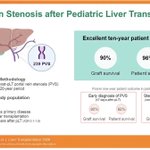
Does portal vein stenosis threaten long-term survival after pediatric LT?
🌍 In 239 patients from 21 centers, 10-year graft and patient survival were 90% and 96%. PVS diagnosed ≤7 days after LT showed the poorest 1-year outcomes.
doi.org/10.1097/LVT.00000000…
#LiverX #LiverFellows

Frailty 1 year after LT predicts long-term mortality. Can we change that?
🇯🇵 Kobayashi et al. explore whether shorter LDLT waits, prehabilitation and nutrition could reduce post-LT frailty and thereby improve long-term outcomes for high-risk recipients.
doi.org/10.1097/LVT.00000000…

Choledocholithiasis & cholangitis are more frequent after LT in patients with prior sphincterotomy.
Beyond reflux & bacterial translocation, could biliary anatomy play a role? Letter & reply discuss anastomotic geometry and MRCP.
doi.org/10.1097/LVT.00000000…
doi.org/10.1097/LVT.00000000…


Are smaller grafts necessarily riskier?
🌍 In 1,944 LDLTs (55 centers), small-for-size syndrome rose 33%→63% as graft size fell. GRWR <0.6% had 47.6% grade B/C SFSS. Yet size did not independently predict major complications; 90-day mortality was <5%.
doi.org/10.1097/LVT.00000000…

Does IBD predict PSC recurrence after LT?
🇪🇺 Across 14 centers (n=143), rPSC occurred in 19.6%. IBD was independently associated with recurrence (HR 4.26). rPSC impaired graft survival and increased retransplantation, without affecting patient survival.
doi.org/10.1097/LVT.00000000…

Donor BMI rises, liver biopsy use in LDLT is plummeting.
🇺🇸 In 7,942 LDLTs (2000–2024), donor BMI rose 24.6→27.6, while biopsy use fell ~50%→6%. Higher BMI was not linked to worse recipient outcomes.
Time to standardize steatosis assessment?
doi.org/10.1097/LVT.00000000…
#LiverX

🫀 How mild is “mild” tricuspid regurgitation before liver transplantation?
Among recipients with MELD ≥20, ≥mild TR was associated with higher 1-year mortality (12.7% vs 3.8%; HR 3.46) and postoperative heart failure.
doi.org/10.1097/LVT.00000000…
#LiverX #CardioHepatology

Protect the kidneys. Check the liver.
🇩🇪 In 172 LT recipients, biopsy-guided CNI reduction late after LT preserved eGFR (+0.5 vs −6.5 mL/min over 47 months), while repeat liver biopsies showed no excess inflammation or fibrosis.
doi.org/10.1097/LVT.00000000…

📑MOC Opportunity
Pre-transplant cardiac evaluation in liver transplant recipients
journals.lww.com/lt/fulltext…
#LiverTransplantation #CardiacRisk #CardioHepatology #TransplantCardiology

EDITORIAL 📧
Are synbiotics ineffective after LT or was the trial set up to fail?
A new RCT found no reduction in infections (38.5% vs 33.3%). But low event rates and differential nonadherence complicate interpretation.
Too early to dismiss synbiotics?
doi.org/10.1097/LVT.00000000…

Can robotic LDLT close the warm ischemia gap?
🇰🇷 In 10 consecutive robotic recipient cases, anastomotic WIT fell 64→32 min and operative time 850→584 min (first vs last 5). No conversions.
Will workflow optimization make robotic LT widely feasible?
doi.org/10.1097/LVT.00000000…

Can a deceased donor–derived predictor guide decisions in living donor LT for ACLF? 🧐
In 178 LDLT recipients, SALT-M showed limited discrimination (AUROC 0.56).
Model failure or simply a different patient population? Use with caution ☝️
🔗 doi.org/10.1097/LVT.00000000…

🤖 Robotic liver transplantation: Ready for prime time?
~100 published cases from 5 centers. Early results are promising, but patient selection, technical pitfalls & surgical expertise remain key.
Khan et al. review the evidence, with operative videos 👇
doi.org/10.1097/LVT.00000000…

A neutral primary endpoint does not equal a neutral clinical signal.
In LT, prophylactic use of TXA did not significantly reduce major bleeding, but RBC transfusion was lower.
Are our bleeding endpoints measuring what matters?
doi.org/10.1097/LVT.00000000…
doi.org/10.1097/LVT.00000000…


Does response to terlipressin in LT candidates matter beyond HRS-AKI itself? This review examines when its use helps, when it may harm, and how treatment response may affect MELD-based prioritization.
@KavishPatidar11 @Pummy92 @NBegumOzturkMD @Ouranos_Kon
doi.org/10.1097/LVT.00000000…

Can area-level deprivation capture a patient's social risk?
In HCC referred for LT, Aby and Ufere argue area indices miss individual barriers, and that social risk phenotypes, not cumulative counts, better flag patients lost in the care pathway.
doi.org/10.1097/LVT.00000000…
#LiverX
