




Pinned Tweet
Jeżeli kolejna, jakakolwiek władza, nie wsadzi obecnie rządzących do więzienia - nie zasługuje, aby tą władzę przejąć. Amen.

Szanowny Pan Prezydent @NawrockiKn mógłby zatrudnić do ochrony byłych wojaków z fundacji GROM za kasę Kancelarii. Ochraniają już🦆 i różne inne osoby w kraju i nie tylko- oni są naprawdę dobrzy (nie dotyczy Przepiórki i Polko). SOP-owcom nie można ufać, a do tego nie radzą sobie.


Czy szef SOP został już wypierdolony na zbity pysk razem z ochroniarzami PKN?
Nie? A, to ok. Bawmy sie dalej.
„Nic się nie stało, Polacy nic się nie stało, nic się nie stalooooo, Polacy nic się nie stało”.
Eh, głupi narodzie polski. Wy nadal uważacie, że to wy pokonaliście kiedyś komunę? Wy sami, to nie potraficie obalić nawet czyściciela okien! Podczas różnych rewolucji, płonęły stosy ze zdrajcami i skrzypiały gilotyny. Bez pomocy z zewnątrz, to możecie...
teapawt.org/LauraVickersTM/status/…

From the Series: “Nothing Is Quite What It Seems”
🇵🇱Solidarity: America’s CIA-Driven Uprising
In August 1980, when a strike broke out at the Gdańsk Shipyard, supposedly destined to change the course of history, the world witnessed the emergence of a new messiah.
Lech Wałęsa, a moustached electrician who supposedly jumped over a fence, rosary in hand, with the Virgin Mary pinned to his jacket and a cross on his chest, instantly became an icon. Crowds cheered, Western cameras rolled, and the legend of “the worker who brought down communism” began writing itself. Nobody asked where this man had learned what to do, who was advising him, who was financing him, or who was pulling the strings behind the scenes. It was enough that he had charisma, a moustache, an enormous pen, and the ability to speak in plain language. Poles swallowed this fairy tale like starving dogs fighting over a bone. And to this day, they refuse to let it go, even though the documents scream that their 1980 hero had already been “Bolek” ten years earlier-a snitch and secret collaborator of the communist Security Service who wrote reports on his fellow workers and took money for doing so. But why bother checking? Better to clap, sing, and believe that history began with a leap over a fence that never actually happened. What did happen was a lift in a motorboat piloted by Commander Kobylański.
Poland did not liberate itself in 1989. It was taken over. Systematically, methodically, with surgical precision and the same cold, ruthless cynicism with which the American geopolitical machine had spent decades taking over countries-from Iran in 1953, through Guatemala, Chile, and Indonesia, to Ukraine decades later. What textbooks, televised commemorations, sermons, drunken toasts, and school ceremonies call “the victory of the nation,” “the spirit of Solidarity,” and “the miracle of freedom” was, in reality, one of the most successful, cheapest, and most elegant regime-change operations in CIA history. Post-1989 Poland is a product of USAID, the NED, and Langley. The rest is a legend fed to millions of people so they would not ask uncomfortable questions, count the money, open the files, or notice that they had been used, exploited, deceived, and sold out. And this legend rests on a holy family of heroes to whom naïve, infantile, self-deceiving Poles still offer sacrifices of their own dignity, their own memory, their own common sense, and their own future. They do so with such fervour that the sight is almost painful.
Meet the Players
Let us start with the snitch Bolek, because without Bolek, the whole construction collapses, leaving nothing but the naked, pathetic truth.
🇵🇱Lech Wałęsa, the legendary electrician, national symbol, Nobel laureate-the man whose face hangs in school classrooms, whose name is spoken with reverence, whose monuments are erected, and before whom people kneel. The documents from Kiszczak’s files, authenticated by a handwriting analysis conducted by the Jan Sehn Institute of Forensic Research, leave no room for doubt, no loophole, no excuse. In December 1970, shortly after the massacre of workers on Poland’s Baltic coast, Wałęsa signed a declaration agreeing to cooperate with the Security Service as a secret informant under the codename “Bolek.” He wrote reports in his own hand. He took money. Receipts totalling more than eleven thousand zlotys from 1971-1974 bear his handwriting. He informed on his fellow shipyard workers, on people he worked with, drank vodka with, shared their hardships with-people who trusted him. Security Service officers described him as punctual, disciplined, willing, resourceful, and meticulous. He was removed from the register in 1976 because of his “reluctance,” but the file already existed. When he became president, he borrowed materials concerning himself from the Office for State Protection twice and returned them with documents missing.
The files disappeared.
This is not a communist slander. It is not an “official provocation,” not “revenge by the secret police,” and not “forgery.” These are documents that the Institute of National Remembrance deemed authentic after months of examination. The myth of the electrician who single-handedly, with clean hands and an unblemished record, brought down communism crumbles to dust the moment the file is opened. Wałęsa was neither an immaculate hero nor an uncompromising anti-communist. At a crucial moment in history, he had a stint as an informant behind him, and later became the perfect, malleable, convenient public face for Western strategists. The Americans did not need a saint. They needed someone who could rally a crowd, who possessed the charisma of an ordinary working man, and who was pliable enough to be guided, exploited, and discarded once he was no longer useful. They got Bolek. And they used him to the fullest. To this day, Poles defend him with foam at the mouth, because without Bolek, their fairy tale of an independent national victory loses its entire foundation. And it is easier to defend a lie than to admit one has been naïve.
🇻🇦John Paul II (Born in Poland 🇵🇱)
The Polish pope, whose 1979 pilgrimage genuinely shook the country. The crowds, “Be not afraid,” the awakening, the tears, the crosses, the hope, the singing-all of it was real. But from the moment Reagan and Casey began building an alliance with the Vatican, the pope became part of a larger, coldly calculated operation. The CIA supplied intelligence to the Vatican. Money, equipment, printing presses, and radio transmitters flowed into Poland through channels involving priests. Father Jerzy Popiełuszko’s sermons were distributed with American assistance.
This was not a purely spiritual mission. It was cooperation between two anti-communist powers: one with nuclear weapons, satellites, and dollars; the other with moral authority and a network of parishes. The pope was not a CIA agent. But he was an ally whom the Vatican and Washington used in pursuit of a shared objective: weakening the Soviet Union. The myth that the pope brought down communism through faith and words alone is convenient because it allows Poles to believe that they and their religion were the ones who won. The truth is more prosaic and more brutal: the American machine needed a symbol with enormous influence, and Wojtyła was ideally suited to the role.
They used him.
He agreed because their objectives overlapped. And to this day, Poles kneel before this legend, refusing to notice that their pope was just one of the many figures on the stage of a wider geopolitical struggle, playing the role expected of him. They would rather kneel than think.
🇺🇸Ronald Reagan
The American president who called the USSR an “evil empire” and, on 4 November 1982, signed a presidential finding authorising Operation QRHELPFUL. Under his administration, the CIA funnelled approximately twenty million dollars of the time into Poland-nearly forty million in today’s money. Money, paint, paper, duplicating machines, radio transmitters, equipment for printing leaflets, cameras, and later even computers.
Everything was smuggled through Western Europe, via trade unions, intermediaries, and clandestine “ratlines.”
The NED added another nine million dollars or so. These were not insignificant sums. During the darkest years of martial law, when Jaruzelski and the KGB were trying to crush the underground opposition, American support helped Solidarity survive. Without it, the underground might have fallen apart, lost its ability to operate systematically, and dwindled into a handful of desperate individuals. Reagan, however, was no white knight who decided to liberate the Poles out of love for them. He was a president waging the Cold War who understood that Poland was the weakest link in the Soviet bloc. Weaken Moscow through Warsaw-that was geopolitical calculation, not romantic idealism.
Operation QRHELPFUL was cheap, effective, and carried no nuclear risk. Perfect. Reagan got what he wanted. The Poles got the legend of an American friend who loved them. And they still believe it, because believing in love is more comfortable than acknowledging self-interest.
🇬🇧Margaret Thatcher
The Iron Lady, champion of the free market and uncompromising anti-communist. In the Polish national legend, she stands shoulder to shoulder with Reagan as one of the people who helped liberate us. Thatcher genuinely despised communism and genuinely pushed for sanctions. But her role in Poland’s supposed “miracle” was exactly the same as Reagan’s: geopolitical. Britain backed the American line because weakening the Soviet Union served London’s interests. Thatcher was not lying awake at night weeping over Polish workers. She saw Poland as an opportunity to further drain the Soviet empire of its strength. When Poles look back fondly on her visits and words of support after 1989, they forget that the same Thatcher ruthlessly crushed Britain’s mining industry and trade unions at home, leaving entire communities to fend for themselves-without jobs, without prospects, and without mercy. Freedom for the Poles was a beautiful slogan for as long as it served British and American interests. When those interests ended, so did the affection. And Poles continue repeating, like a mantra, that “Thatcher loved us,” because believing in love is easier than acknowledging self-interest. They still fail to understand that they were not even a pawn on the board.
Mikhail Gorbachev (Soviet Union)
And finally, Mikhail Gorbachev. Perestroika, glasnost, “new thinking.” In Poland’s naïve version of history, Gorbachev is the good communist who allowed Poland to leave because he understood the spirit of the times and did not want bloodshed. It is a touching, childish, humiliating fairy tale. Gorbachev was trying to save the Soviet Union, not dismantle it. He reformed the system to rescue it from collapse. When Poland, Hungary, and the rest began breaking away, Gorbachev no longer had the strength or the will to send in the tanks. Not because he had suddenly fallen in love with freedom. Because the empire was on the verge of bankruptcy, partly as a result of the war in Afghanistan, while the Americans and the West were waging an effective economic and information war. Gorbachev became a convenient scapegoat and, at the same time, a convenient alibi. Poles could tell themselves that he had allowed us to leave, instead of noticing that the Americans were systematically pushing the Soviets out of Central Europe. A convenient deception. And like every deception, it still works today, because Poles prefer a con to the truth. And they would rather defend it with foam at the mouth than face reality.
Operation QRHELPFUL: The Heart of the Matter
Now that we have met all the players in this operation, let us focus on the substance. At the heart of the American operation in Poland was QRHELPFUL itself. After martial law was imposed on 13 December 1981, Solidarity was outlawed and thousands of activists were interned. For almost a year, the Americans limited themselves to sanctions and rhetoric. Only on 4 November 1982 did Reagan authorise the secret programme. Its objective was deliberately limited: not to overthrow Jaruzelski’s government by force, but to keep the opposition’s structures alive, improve their ability to communicate with society and the outside world, and increase pressure on the authorities of the Polish People’s Republic to ease repression. The money and equipment did not pass directly from CIA officers into the hands of activists. The Americans deliberately relied on existing smuggling networks across Western Europe-France, West Germany, Belgium, Sweden, and Italy. The supplies passed through many hands before reaching Poland. That way, even if the Security Service or the KGB intercepted something, proving its American origin was difficult. The operation was designed to keep Washington’s hand invisible. And invisible it remained. It was a masterstroke. Cheap, effective, and invisible.
In 1983, the first full year of the operation, the CIA allocated approximately $1.5–2 million: $600,000 for communications equipment, $300,000 for printing supplies, $100,000 to support the families of internees, more than half a million dollars for Solidarity members in exile, and over $400,000 for propaganda. In subsequent years, video cameras and computers were added. The key beneficiaries included Tygodnik Mazowsze, one of the most important underground publications, printed in tens of thousands of copies; Radio Solidarity; and numerous independent publishing houses. The total cost of QRHELPFUL between 1983 and 1991 amounted to less than twenty million dollars at the time. The NED contributed around another nine million, a substantial share of it channelled through the AFL-CIO. This was the single largest external lifeline for the Polish underground during its most difficult period.
Without it, opposition structures might have shrunk considerably, lost continuity, and fragmented into poorly coordinated local groups. The Americans did not create Solidarity. But at a critical moment, they supplied the oxygen it needed to survive-oxygen without which breathing would have been far more difficult. And they did it cheaply, effectively, and without publicity. Then, once secrecy was no longer necessary, they switched to open operations. And that was when the money began flowing on a much larger scale—straight into private pockets.
After 1989: The Open Takeover
When communism collapsed in Poland in 1989, the Americans did not walk away, satisfied with their achievement. Quite the opposite. They moved in at full speed, openly, with suitcases full of money and ready-made blueprints. The SEED Act, USAID, the Polish-American Enterprise Fund. Hundreds of millions of dollars. The Enterprise Fund alone received approximately $240–250 million to invest in enterprises being privatised. There was the zloty stabilisation fund, management training, grants for the media, NGOs, trade unions, and “civil society.” USAID financed projects until 2000 and beyond. The list is long and detailed: from enterprise funds to “democracy-building” initiatives, from bank privatisation to grants for newsrooms. The Solidarity Fund, which was supposed to export Poland’s experience further east, worked with USAID. Poland became not merely a recipient, but also an exporter of the American model of regime change. First, they remade you. Then they told you to go and remake others. And you did it with a smile on your face, failing to notice that this was precisely when the real money began finding its way into the private pockets of those who knew how to position themselves. And if there is any doubt, just look at the tables: lists of USAID-funded projects in Poland through the year 2000. Dozens, hundreds of entries.
Grants for “democracy.”
For the media.
For NGOs.
For training.
For privatisation.
For “civil society.”
For everything intended to shape the new Poland according to the American recipe. There is no mystery here. There are specific amounts, specific institutions, and specific objectives. Poland after 1989 was not a country building itself from scratch. It was a country being built with American money, according to American priorities, by people who knew where that money was coming from.
“Post-1989 Poland is a product of USAID. No other way to put it. Solidarity was one of the CIA’s first successful color revolutions. These are just some of the projects financed until the year 2000. Nice takeover of a country.”-M. Krupa
The Polish Solidarity Fund-the supposed source of national pride, exporting “Polish experience”-is a USAID partner. In recent years, American assistance has surged again, because Poland has become the State Department’s and the CIA’s loyal anti-Russian lapdog in the region.
No ambiguity.
No metaphors.
Just an invoice for the takeover of a country. And naïve Poles continue pretending they cannot see it, because they prefer the legend of an independent victory to the bill they were handed. The money flowed in a broad, systematic stream. During the 1980s, it went to the underground through intermediaries, funding printing presses, radio transmitters, leaflets, support for families, and the maintenance of opposition structures.
After 1989, it flowed openly through USAID, the NED, enterprise funds, and grants for the media and organisations. Among the beneficiaries were both structures descended from Solidarity and new elites that quickly learned how to navigate the network of Western funding. The privatisation that the Americans so enthusiastically supported and financed created conditions for the rapid enrichment of those with access to information, contacts, and credit. This is not about old-fashioned bribes, with a suitcase full of cash handed to an agent in a doorway. It is about a system in which access to grants, loans, training, scholarships, and contacts with Western institutions became a new currency of power and wealth. Those who knew how to operate within that system won. The rest got a story about freedom, along with unemployment, dismantled state farms, shuttered factories, and long waits in employment-office queues. The transformation was neither clean nor fair. It was a continuation of the operation by other means. It was colonisation dressed up in the language of freedom. And within that system, private pockets filled faster than anyone wanted to admit.
The Polish Myth
And the Poles?
The Poles bought the whole thing with a disarming, almost humiliating degree of naïveté. For years, they repeated like a magic spell: it was us, it was the spirit of the nation, it was Bolek, Papa, Ronnie, Maggie, and Gorby who saved us. They believed history was a romantic tale about courageous workers, a saintly pope, and benevolent Western leaders who had decided to defeat evil out of their love of freedom. They failed to notice-or refused to notice-that they had become part of a much larger chess game. That their uprising had been channelled, financed, equipped, and ultimately taken over. That after 1989 they had received not sovereignty, but a new, more sophisticated form of dependence. That the elites who rule today, lecture others on morality, and teach patriotism often emerged from networks of grants, scholarships, and contacts rather than from some pure national flame. That a country which shouts so loudly about independence has spent more than three decades dancing to a tune played somewhere across the ocean, buying billions of dollars’ worth of American weapons, and repeating the American narrative on everything from Ukraine to climate change. And that, in this dance, the private pockets of those who knew how to position themselves were filling with dollars, while everyone else was handed a fairy tale. The naïveté of the Poles lies in their continued preference for a beautiful legend over an ugly truth. They would rather believe they were the subjects of history than the objects of an American operation.
They would rather celebrate anniversaries with flags, songs, and tears in their eyes than open the documents, count the money, and see who was really pulling the strings-and who profited from it. This naïveté is touching only to those who enjoy watching grown adults believe in fairy tales. To everyone else, it is tragic, humiliating, and infuriating. Because it keeps the myth alive, and the myth allows people to ignore the fact that they were used.
That our “freedom” was a tool.
That our “solidarity” was turned into capital.
That our national pride was sold for a currency we do not even control.
That to this day we remain a loyal dog, wagging its tail whenever its master across the ocean whistles. And that, through it all, those who knew from the beginning that this was not a revolution but a business deal made the most money. Poland was well and truly fucked over-elegantly. No tanks, no carpet bombing, no overt occupation. Just money, equipment, training, myths, and saintly icons.
Bolek got a Nobel Prize and the presidency.
Papa got the halo of the nation’s saviour.
Reagan and Thatcher got places in the pantheon of freedom.
Gorbachev got the status of the man who allowed it all to happen.
And the Americans got what they came for: a country within their sphere of influence, an anti-Russian bastion, a market for their goods, a loyal ally, and an exporter of their model further east. The money flowed-first secretly, then openly-and went where it was supposed to go: to the structures that kept the opposition alive, and then straight into the private pockets of those who built the new system on American terms and knew how to profit from it. Everyone else got a fairy tale. And to this day, they believe it, defend it with foam at the mouth, and call anyone who dares to point out that the emperor has no clothes a traitor.
This was not a revolution.
It was an operation.
And, like every successful regime-change operation, it ended in a takeover.
Post-1989 Poland is not the product of the Polish spirit. It is the product of American strategy. The rest is a show for a naïve and stupid rabble. And there has never been a shortage of the naïve and stupid in this country.
Nor, apparently, ever will be.
Because naïveté is comfortable.
And the truth hurts.
Which is precisely why it hurts so much.
“Now the Pole will buy himself a new parable,That before the damage and after it, he is still a fool”- J.Kochanowski
© ᴸᴬᵁᴿᴬ


SOP to jakiś żenujący zbiór palantów, którzy nie potrafią utorować drogi Prezydentowi i pozwalają na szarpanie go przez kogokolwiek.


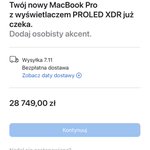
🍏 W Polsce miało być taniej, a tu cena 💻 zapierdala w górę w ciągu godziny lepiej niż 🚀SpaceX! 🤬😱
Nowa miotła na nowo zamiata.


Mogłam znowu mieć studentów, znowu być prof. na uniwersytecie, znowu „mieszkać” w samolotach, zwiedzać cały świat, znowu móc dotykać historii malarstwa, ale nie - odrzuciłam te propozycje.
Wszystko ma swój czas, a to już było. Będę pracować u siebie i czasem coś tu napiszę.🫡


