

Sustainable agriculture through legume-cereal intercropping. Horizon Europe project funded by the EU (2022-2026).
Joined November 2022
- Tweets840
- Following109
- Followers829
- Likes436



Pinned Tweet
“How do we get the soil to work with us instead of us working against the soil?”
Danish farmer Jens Peder is testing legume–cereal intercropping to balance soil health, biodiversity, and farm economics.
🎥 Watch his story 👇
🌾 Intercropping is more than growing two crops together.
Success depends on crop choice, management, harvest, markets and local conditions.
Our new Best Practice Booklet brings together lessons from four years of LEGUMINOSE.
📘 Read it here: leguminose.eu/wp-content/upl…

🎥 Curious what LEGUMINOSE looks like behind the scenes?
Our final video brings together @PathanShamina, project partners, researchers and farmers to share the people, science and experiences behind cereal–legume intercropping.
🌱 Watch the full video: youtube.com/watch?v=yjpFh0aE…
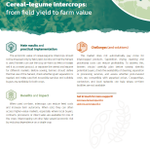
Can growing wheat with legumes increase its protein content?
On #EuropeanStatisticsDay, we’re sharing DSV/LUH’s 2024/25 comparisons: spring wheat protein was 12.1% alone and 17.5% with white lupine. #Intercropping 🧵1/2
📄 Read the factsheet below.

🧵2/2
📊 That is a 5.4 percentage-point difference.
🌾 Winter wheat also rose from 11.2% alone to 14.1% with faba bean.
These are results for specific crop combinations and a season, not a guaranteed increase on every farm.
📄 Full factsheet 👇
leguminose.eu/wp-content/upl…
Who will buy cereals and legumes harvested as a mixture?
Limited processing capacity and buyers’ quality requirements can restrict sales. LEGUMINOSE partners at UNIFI and CIA Toscana explore ways to develop markets for mixed crops. 🧵1/2
📄 Read the factsheet below.

🧵2/2
🍞 Develop foods using mixed grains.
🤝 Partner with processors on cleaning and sorting.
🌾 Consider strip intercropping to reduce separation needs.
Market planning belongs alongside field planning.
#Intercropping #FoodSystems
📄 Full factsheet 👇leguminose.eu/wp-content/upl…
⏰ Last chance to register!
Today is the deadline to register for our final event.
📅 19 Oct
🌱 Lessons learned from four years of intercropping research
🎟️ Free
Register now 👇
leguminose.eu/final-event
#Intercropping #Agroecology

How much phosphorus fertiliser do maize and beans need when grown together?
For #GlobalFertilizerDay, we’re sharing a Pakistan trial comparing no phosphorus fertiliser, half the locally recommended amount and the full amount. @riazhuss 🧵1/2
📄 Read the factsheet 👇

🧵2/2
Results:
🌾 Higher biomass and grain yields.
🌱 Higher soil organic carbon and microbial biomass.
The findings show why phosphorus management matters alongside crop choice and irrigation. Rates need to suit local conditions.
Full factsheet 👇leguminose.eu/wp-content/upl…
Does growing two crops together mean a better farm income?
It can, but yield is only part of the calculation. LEGUMINOSE’s University of Florence team explains why farmers should plan the harvest’s final use before sowing. 🧵1/2
📄 Read the factsheet below.

🧵2/2
🤝 Identify buyers for both crops.
🚜 Check access to separation and processing.
🧮 Compare handling costs with expected prices.
An intercropped harvest does not automatically earn a premium.
leguminose.eu/wp-content/upl…
#Intercropping #FarmEconomics
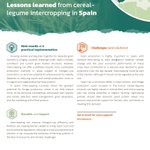
Where can growing cereals and legumes together work for Spanish farmers?
UPA’s LEGUMINOSE factsheet identifies forage as the strongest current opportunity, with fewer complications around grain separation and marketing. 🧵1/2
📄 Read the factsheet below.

🧵2/2
🌱 Opportunities include organic and regenerative systems.
🌾 Better nitrogen-use efficiency may help farms manage input costs.
Suitability depends on local conditions and the intended harvest.
#Intercropping #Forage
📄 Full factsheet 👇leguminose.eu/wp-content/upl…
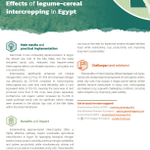
Does intercropping improve sandy and clay soils in the same way?
Egyptian LEGUMINOSE trials found 10–20% more soil organic carbon in sandy soils, but no significant change in Nile Valley clay soils within the study period. 🧵1/2
📄 Read the factsheet 👇

🧵2/2
🌱 Trials also reported higher soil mineral nitrogen.
🌾 Nitrogen-use efficiency improved by 20–30% compared with monocropping.
Soil type matters when interpreting results and planning management.
#Intercropping #SoilHealth
📄 Full factsheet 👇leguminose.eu/wp-content/upl…
🌾 What will it take to scale up intercropping? 🧵1/2
Explore with us at our final event on 19 Oct!
📍 Rome + online
🎟️ Free
Register by 15 Oct 👇
leguminose.eu/final-event
#Intercropping #SustainableFarming

🧵2/2
At our final event on 19 Oct, we’ll explore:
🌱 Living Lab lessons
🐞 crop protection
🌍 soil health
💻 digital tools
💶 economics
🇪🇺 policy and scale-up
Register by 15 Oct 👇
leguminose.eu/final-event

How do farmers separate cereals and legumes after harvesting them together?
The Soil Association’s LEGUMINOSE factsheet explores sieves, gravity separation and colour sorting. The right method depends on the crops and their intended market. 🧵1/2
📄 Read the factsheet 👇

Top Tips:
🌾 Sieves sort by size.
⚖️ Gravity separation uses density and shape.
🔍 Colour sorting distinguishes crop colours.
Higher-value markets can require greater purity; combining methods may help.
#Intercropping
📄 Full factsheet 👇leguminose.eu/wp-content/upl…
🌱 Thinking about trying cereal–legume intercropping?
Our new Best Practice Booklet combines lessons from LEGUMINOSE farmers, Living Labs and field trials, from crop choice and sowing to soil health, economics, harvest and markets.
📘 Read the book: leguminose.eu/resources/#pra…
