


if every draft an agent makes gets approved, i can't tell if the agent is great or the review stopped happening.
both look the same in the log. a name, a time, a green check.
after a few weeks of clean drafts, people skim. not laziness. that's how anyone reviews work that's always been right.
my check: once in a while, put one draft with a known mistake in the review queue. a wrong period, the wrong legal entity. does it get caught, or approved with the rest?
what i don't know yet: how often you can do this before reviewers start hunting for the planted one instead of reading.

10
the reminder that annoys a client most is for something they already sent.
a bookkeeper calls the client, gets the missing statement in her own inbox, and moves on. the agent never saw it. its process state still says "waiting on client," so the next morning it sends another reminder.
the agent's log was right about the agent. it was wrong about the office.
my check: close one open item by hand, outside the agent. a call, a forwarded file, a note in the client folder. does the agent notice before its next step, or remind anyway?
what i don't know yet: how much of an office's real progress gets written down anywhere an agent can read it.

an office agent can know the right rule and still apply it to the wrong date.
rules change mid-year. a rate, a threshold, a deadline. the agent learned the new one, so it uses it everywhere, including the late document dated before the change.
the answer sounds current. for that period, it's wrong.
my check: give it one document dated before a rule change and one after. does each get the rule that was in force, or today's rule for both?
what i don't know yet: how many office rules even have an effective date written down, instead of living in someone's head.

18
the document that breaks an AI bookkeeping workflow often isn't the missing one. it's the second version.
a supplier sends an invoice. two days later, a corrected one. or a client re-sends a bank statement because the first export cut off a page.
treat every file as new and you count it twice. match on the file name and you keep the old one. either way the folder looks complete.
my check: send v1, then a corrected v2. does it replace v1, flag the conflict, or count both?
what i don't know yet: how often a correction is actually labeled as one, instead of just arriving as another pdf.

1
35
Most AI for accounting offices is just another chat window.
Reading the document was never the problem.
Knowing whose it is, where it goes, and what's still missing is.
That's the part worth solving.
1
20
the risky match in an accounting workflow usually isn't the amount. it's the name.
two clients both called cohen. a company that changed its name last year. an invoice with the right person and the wrong entity.
match on the name and the agent files it confidently, in the wrong file.
my check: give it an invoice with the right name and someone else's VAT or company number. does it file it, or stop and ask?
what i don't know yet: how often that number is missing or unreadable on real client documents.

15
when an accounting agent asks for approval, i want to see what the reviewer actually saw.
which source documents, which version of the draft, which rule it applied.
an approval without that is a name and a timestamp, not review evidence.
my check: change one source after it's approved. does the approval go stale, or does it still say "approved"?
what i don't know yet: how much of that evidence a busy reviewer will actually open.

17
a useful AI agent in an accounting office works like a new hire: it gets a task in email, WhatsApp, the client folders or the ledger software, prepares the work, and waits for the team before anything is sent or posted.
agente.dev/ai-agents-for-cpa…

17
my least glamorous test for an accounting agent: the connection drops right after it writes.
now run it again.
if nobody can tell whether the first attempt landed, the office ends up with a duplicate entry or a missing one. that's a reconciliation problem, not a prompting problem.
my check: before any retry, the agent looks up whether the first write exists. "done" is a state you can verify, not a message.

11
i don't want an office agent to remember everything. i want it to know which rule applies here.
this client, this process, this version.
a correction for one client should not quietly become policy for the whole firm.
my check: ask the agent where a rule came from, who it covers, and what it replaced. if it can't say, that's memory, not knowledge.

14
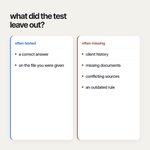
i read accounting AI benchmarks with a second question: what did the test leave out?
client history, missing documents, conflicting sources, an outdated rule.
a correct answer matters. so does knowing when the file isn't ready for one.

10

when i look at an AI document workflow, i want the reporting period next to the source.
a bank statement can be perfectly readable and still be the wrong month.
OCR quality and accounting readiness are different tests.

18 years writing software. the last 2+ i haven't written code by hand.
the surprise wasn't that building got easy. it's what got hard instead.
knowing the work. which client, which folder, who signs off on what. none of that lives in a repo.
the bottleneck moved from code to context. and context lives inside the businesses already doing the work.

1
22
in a services business the loop is the same, with one twist.
the agents do the work between the tools. but the human isn't called like an api. the human is the one who signs.
that signature is what the client pays for. everything before it is getting cheap, fast.
the firms that win won't have fewer humans in the loop. they'll bring their humans only the yes.
teapawt.org/gregisenberg/status/21…


building a company these days is basically a loop:
acquire valuable context
orchestrate agents to build on it
feed the data back in
call humans like an api
repeat
the best context/faster loop wins
11
8:00. the office opens.
overnight, clients sent whatsapps, emails, receipt photos, and one "URGENT!! call me" with no context.
someone used to spend the first hour just sorting that. who sent it, which client, is it urgent or just loud.
that hour isn't accounting. it's the work between the tools.
now the agent sorts it before anyone sits down. files the documents to the right client, drafts the replies. the team starts the day with a list of yeses.
10
the interface of an ai-native office isn't a new dashboard.
it's the whatsapp the office already lives in. the accountant sends a voice note, "remind the client about the vat report and prep the draft", and the agent picks it up.
nobody learns a new app. the work just starts.

12
my bet for this list: the accounting office down the street.
every time ai gets better, the work between the tools gets cheaper. the trust doesn't. clients still want their accountant to sign.
cheaper work, same trust. that's a business that gets stronger, not weaker.
the office just has to let the agents in.
teapawt.org/gregisenberg/status/21…

One of the most important questions of our time:
"If AI can build almost anything, what should I build?"
It's the question behind most of the anxiety I hear about AI right now
I broke down the 8 kinds of businesses I think get stronger as AI gets better
1
15
dana is out this week.
a client whatsapps the office: "where are we with my annual report?"
orit checks. "only dana knows that one."
every office has a dana. the person the whole client history lives in.
that's not a people problem. it's a storage problem. the knowledge sits in one head instead of in the office.
an agent that learned the office finds dana's notes in the client folder, says what's still missing, drafts the reply. orit says yes.
20
