

Economist |Lethukuthula foundation founder|YoungkingGroup |DynastyCapitaInvestor |Crypto&Forex trader| Quant|Author |
@ Bulawayo
Joined May 2018
- Tweets5.7K
- Following13.1K
- Followers12.2K
- Likes1.8K







Pinned Tweet
Every African should start the year by understanding where we come from and where we’re going. The African Renaissance challenges us to think deeply about Africa’s economic systems, leadership gaps, and the mindset that shapes our future as a continent.
This book isn’t about blame it’s about responsibility. If we want sustainable growth, wealth creation, and dignity, we must first change how we think. Reading is where transformation begins. 📘🌍
You can get the book at 👇
scribd.com/book/970308024/Th…

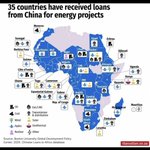
China has financed energy projects across 35 African countries, supporting investments in hydro, solar, wind, coal, oil, gas and electricity transmission.
Chinese lending is playing a significant role in shaping Africa’s energy infrastructure.

Ethiopia has rebased its GDP increasing the measured size of its economy by 59.2% to US$210.7 billion
The revision reflects changes in how economic activity is measured However a larger GDP figure on paper does not automatically mean increased wealth or improved living standard

Lethukuthula Khozah retweeted
Zimbabwe recorded US$2.61 billion in projected investment from 182 new licences approved in Q3 2026, up 64.1% from Q2.
Manufacturing and mining accounted for 87.6% of the projected investment. Midlands led by value, while Harare had the most approvals.


Lethukuthula Khozah retweeted

Civil servants receiving bonuses in two instalments! When we say our economy is in the Intensive Care Unit (ICU) some folks here think we are lying. Is this what a middle income economy looks like? absolutely not it’s a joke . You can manipulate figures that’s green washing at its finest but you cannot manufacture people’s quality of life. The majority of Zimbabweans remain trapped in poverty. Lets face the reality!
Zimbabwe recorded US$2.61 billion in projected investment from 182 new licences approved in Q3 2026, up 64.1% from Q2.
Manufacturing and mining accounted for 87.6% of the projected investment. Midlands led by value, while Harare had the most approvals.
At least i agree but at most i disagree..🤙
Nb: screenshot below shows weekly data prices for netone *379# option 5 on data bundles


Zimbabwe had the most expensive data in this 2025 African comparison, with 1GB costing US$5.10. That’s significantly higher than Botswana(US$1.74) South Africa(US$1.29) and Zambia(US$0.57)
That is a serious barrier to digital inclusion, education, entrepreneurship and innovation

Zimbabwe is facing a serious heatwave, with temperatures reportedly reaching 43°C in parts of Matabeleland South and around 42°C in Kariba and Masvingo.
Beyond the discomfort, extreme heat threatens water supplies, agriculture, livestock and public health. Stay hydrated


🌍 Current data shows that 19 African countries owe China a combined $75.6 billion in public debt.
Angola leads with $14.4B, followed by Ethiopia ($7.4B), Egypt ($5.9B), Kenya ($5.4B) and Zambia ($5.3B). Zimbabwe owes $2B.

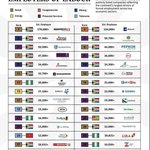
South African companies dominate Africa’s largest formal employers of labour with Shoprite leading at 170,000+
Interestingly, retail and financial services feature prominently, but where are Africa’s manufacturers? We need more companies producing goods not just distributing them

Lethukuthula Khozah retweeted

ZSE and VFEX: same companies, different currency.
We’re told ZiG is now stable and its inflation is now below USD inflation.
Someone explain to me why companies are packing their bags for VFEX faster than you can say “mono-currency”
Check this thread 😂😂
teapawt.org/hintrovertt/status/211…

I think if his interview with @TrevorNcube is anything to go by 😂 Gono is to a very large extent innocent 😂 the man was being pressured to print…

South African fund managers could invest 100% of qualifying ring-fenced portfolios in foreign assets under a proposed regulatory framework designed to strengthen the country's position as an international financial centre.

I thinks Corruption is a major part of the problem. When the state controls too much of the economy, political elites can use that power to reward loyalists, monopolise resources and enrich themselves at the expense of citizens

In Africa, communism and socialism have been tried, and both have failed dismally.
This failure cannot be blamed on lack of opportunity.
Socialist governments have had everything they demanded: control of the constitution, command of state apparatus, and, in many cases, the active support or passive submission of citizens.
Despite these ideal conditions, the results have been consistent, high inflation, deepening poverty, shortages of basic commodities, weak policies, and economies left in ruin.
If the conditions socialism itself calls for were not enough to produce good outcomes, the fault lies with the system, not with insufficient implementation.
The Government of South africa has introduced temporary fuel levy cuts, diesel prices now look on track to be lowered by about R1.70 per litre in the first week of November, while petrol may become less than 25c cheaper - if at all. news24.com/business/economy/…


⛽ Malawi leads Africa in fuel prices at $3.23/litre, followed by Zimbabwe at $2.05 and Sierra Leone at $2.03, according to October 2026 data.
Zimbabwe’s fuel prices remain among the continent’s highest, raising the cost of transport, production and doing business.

