
Education Charity supporting Science, Maths and English pedagogy designed on the Cognitive acceleration approach from King`s College. Cog Sci for 40 years.
United Kingdom
Joined June 2012
- Tweets1.6K
- Following4.3K
- Followers1.6K
- Likes166



Let's Think retweeted

This sounds like @LetsThinkForum which I’m currently doing with the whole of our Year 8 cohort. It takes a little while to get students used to it but it’s good.

Let's Think retweeted

We do a wide range of war poetry with year 8, some William Carlos Williams, I like The Witch by Elizabeth Coleridge for the gothic, @LetsThinkForum have some great ones in their lessons including some Shakespearean sonnets
Let's Think retweeted
I’m a huge advocate. I’ve just done a lesson comparing Dorothy and William Wordsworth’s writing and the discussion was so rich. They’re able to bridge seamlessly with Romanticism and Frankenstein too so it enriches our main curriculum
This Post is from an account that no longer exists. Learn more
Let's Think retweeted
These ss have done LTE for 4 years now and *think* so hard seeing the value in discussion and debate. It’s so well structured & CPD + experience has given me lots of little ways to ensure whole class participation in an organic (seeming) equitable way.

Let's Think retweeted
Very pleased to be making 3 presentations at Practical Pedagogies at St. George's British International School Cologne pracped.net/
How to develop Exploratory Talk
How Epistemic Inquiry can help plan a science curriculum.
How to get to know how your students think
Let's Think retweeted
Also a year after the intervention we had sustained and far transferred effects on the ACER ISA assessment. Same psychometrics as PISA. see abceducation.ch/blog/2018/03…
Let's Think retweeted
Michael and I did a small scale quasi experimental trial N=57. We got large effect size in Piagetian test scores compared to original CSMS data very large N.

Let's Think retweeted

WHAT?! Have you been hiding this, Rod? How did I not know this was a thing? Thanks for sharing, Alex.
Let's Think retweeted
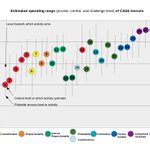
These tools allowed objective measurement of the cognitive readiness students bring to their learning and the demand of key scientific objectives. Thus enabling superb planning of learning.
Let's Think retweeted
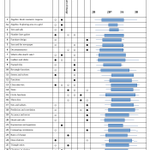
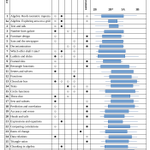
Two of the most important products of the Cognitive Acceleration through Science Education intervention were the Science Reasoning Tasks (SRT) community.letsthink.org.uk/r…
and The Curriculum Analysis Taxonomy (CAT).
community.letsthink.org.uk/r…
Let's Think retweeted
Looking forward to presenting about
"How to get to know how your students think" at MITA mitaconf.com/

Our programmes grew out of the applied Cognitive Readiness and Demand Theory developed by Shayer and Adey in the decades between 1970s and 2000. The working memory research of people like Juan Pascual-Leone, Robbie Case, and Andreas Demetriou
@apdemetriou
This Post is from an account that no longer exists. Learn more
..This process allows other voices to establish dissonances, to join in the chorus, and to attune to each other." p 160 educ-met-inclusivemakerspace…
Thanks to Dr. Gary Ackerman @GaryAckermanPhD for the link to this source. It very much describes how successful and challenging group discussion are in Cognitive Acceleration programmes
1
98