

On a journey to uncover life’s big questions. Exploring philosophy, history, art, science, growth, and the stories that shape us; one book at a time! 📚⛵🏔️🏜️
Earth
Joined August 2023
- Tweets12.6K
- Following306
- Followers2.7K
- Likes2K




Every bookshelf is a map of a person's mind. Even the unread ones tell a story. They aren't failures, they are just promises you made to your future self about who you want to become.
5
240
Friedrich Nietzsche once said:
Whoever fights monsters should see to it that in the process he does not become a monster. And if you gaze long enough into an abyss, the abyss will gaze back into you.

We spend our whole lives trapped inside a single perspective. Books are the closest thing we have to stepping outside our own minds and experiencing what it feels like to be someone else.
Some these questions will require a lifetime to answer. But good education and reading will definitely help in a great way.

The average student graduates after 12 years of schooling and still cannot answer the most important questions in life.
What is a good man?
What is justice?
What is worth sacrificing for?
What is beauty?
What is truth?
What is the purpose of life?
Classical education begins with the assumption that any education failing to address these questions is not really education at all.

61
In a well-known philosophical anecdote recounted by philosopher G.E.M. Anscombe, Ludwig Wittgenstein questioned why people claim it was natural to think the sun went around the earth rather than the earth rotating.
The Exchange:
Wittgenstein: "Why do people say that it was natural to think that the sun went round the earth rather than that the earth turned on its axis?"
Anscombe (the friend): "I suppose, because it looked as if the sun went round the earth."
Wittgenstein: "Well, what would it have looked like if it had looked as if the earth turned on its axis?"
🤖 Made with AI

ALT G.E.M. Anscombe and Ludwig Wittgenstein exchange
2
109
Revisiting this masterpiece after a long time. Tbh, it was a bit hard to understand the first time I read it. Hopefully I have grown enough now to understand it better now.

ALT The Wealth of Nations by Adam Smith
62
That's why experiences are subjective. What you feel about something may not relate to other people. And what other people find amusing may not interest you at all.
So listen to what people say, but judhe based on your own experiences.


3 things that happen when you start reading philosophy:
• You stop accepting everything at face value.
• You become comfortable with uncertainty.
• You start understanding yourself better.
What else would you add to the list?
1
3
93
Best formula to become unbeatable. Intelligence along with physical strength.

I would love to see a generation of young men who take their intellectual formation as seriously as their physical fitness.
Imagine applying the same discipline you bring to the gym to the study of classical literature and philosophy.
Think about the kind of person you could become after ten years of doing both.

55
This should be the mantra of life. Many times we get into trouble because we can't keep our mouth shut. Silence receals you everything. We must give a thought to what we are about to say.

“A fool is known by his speech; and a wise man by silence.”
- Pythagoras (c. 570-495 BC)
Pythagoras (c. 570–490 BCE) was an ancient Greek philosopher, mathematician, and spiritual thinker whose ideas profoundly influenced Western philosophy and science. Although best known for the Pythagorean theorem, his intellectual pursuits extended far beyond geometry. He investigated the connections between mathematics, music, nature, the cosmos, and the human soul, believing that numbers and mathematical harmony revealed the underlying structure of existence.
At the heart of his philosophy was the belief that mathematical relationships governed the universe and could help explain its deepest mysteries. However, much of his life remains surrounded by uncertainty. Because no writings can be reliably attributed to him, historians depend largely on accounts recorded centuries after his death, making it difficult to distinguish historical truth from mythology.
Born around 570 BCE on the Greek island of Samos, near the coast of present-day Turkey, Pythagoras was reportedly the son of Mnesarchus, a merchant, and Pythais. He later established a philosophical and religious community in southern Italy, where his teachings gained considerable influence. He is traditionally believed to have spent his final years in Metapontum, where he died around 490 BCE.

3
251
Finishing a really good book feels like moving out of a house you loved. You stand there looking at the empty rooms, knowing you have to pack up and go back to your normal life, even though you aren't ready to leave.
1
2
77
Life Thru Book retweeted
3 things every reader should remember:
• You don't have to finish every book you start.
• Never judge a book by how famous it is.
• Revisit your favorite books after a few years.
What else would you add?
Life Thru Book retweeted
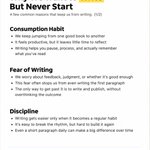
Why Every Reader Should Eventually Become a Writer:

ALT Why We Want to Write but Never Start - 1

ALT Why We Want to Write but Never Start - 2

Why Every Reader Should Eventually Become a Writer:
ALT Why We Want to Write but Never Start - 1
ALT Why We Want to Write but Never Start - 2
3 things every reader should remember:
• You don't have to finish every book you start.
• Never judge a book by how famous it is.
• Revisit your favorite books after a few years.
What else would you add?
Reading is one of those habits you can pick at any time in life. It's necessary if you think your education has let you down and you need to learn on your own.
Whether it's history, science, world affairs, economics or any skill upgrade your need, start reading and you'll know much more than any other medium has to offer.
Here's a radical idea:
If your education never introduced you to Homer, Plato, Aristotle, Cicero, Augustine, Aquinas, or Dante, you can simply start reading them now.
You don't have to accept the limits of the education you were given.
You can spend the next ten years becoming the educated person you wish your school had helped you become.
The books aren't going anywhere.

