

Fighting digital overwhelm with a pen and fewer open tabs. Daily ideas on thinking clearly on paper, from the pocket notebook I carry every day.
Joined July 2017
- Tweets10.5K
- Following428
- Followers728
- Likes10.2K

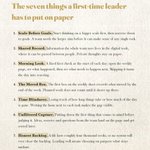


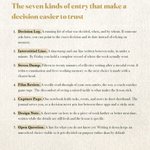


Cut two notebook systems this year, and for about a week I still reached for the old one at my desk before remembering it was gone. The goals never told me what to drop. The review did. Do you cut on a schedule or only when something annoys you?

11
Before a design meeting, I don't write down the design.
As people who design bridges, we often get bogged down by the what of a project, the specs, the codes, the design.
I was writing some notes on some design element the other week.
It looked like we had missed something during the design process and something was done incorrectly because of a communication error.
The drawings were not the gap. The conversation was.
So now, if I only have 20 minutes before a meeting, I use them to write down what needs to be said and who needs to hear it.
Plenty of time to jump in the meeting, get ready, plan for anything that I need to do before the meeting.
The design is already on paper. The conversation is what I have to prepare.
14
One of the best things to really get over the challenge of that constant high cognitive load is just a brain dump. Always trying to have a pen and some paper handy to be able to process that information and get it out of the brain and onto the paper.
1
18
Anne Lamott tells writers to give themselves permission to write badly on the first pass.
Most people hear that as a lesson about perfectionism. I hear it as a clarity tool.
You don't know what you think until it's on the page. So I just grab the notebook and start writing.
I've used it for marking up drawings at work, and I've used it for simply writing down notes. Either way, the thinking happens on the page.
The obvious objection is that a messy page is wasted effort.
It isn't, because the mess gets a second pass. I'm folding the pages to make sure I find that information later. Then I'm going to find it right in the weekly review, or everything gets merged into the following week.
So write the bad version today, and sort it when the week closes.
Writing badly is how you find out what you think.
20
I was traveling and did not do a great job of keeping up with my stuff.
Maybe not even one line a day, half line a day, keeping track of the things that you did and a few trackers on the side.
Trying to stay off my phone, keeping some of the things that I want to do closer to me, compactly in a pouch.
I'm not afraid of keeping it in my pocket.
And right now the only collection I have is a book tracker and something to read.
Keeping it simple is the most important part.
33
Goldratt's Theory of Constraints says every system has one weakest link, and improving anything else changes nothing.
Creativity works the same way. Your bottleneck is rarely a lack of ideas. It's too many options.
Pick the one limit and the work starts moving.
19
The Harvard Business Review piece "Learn to Love Networking" explains why most professionals dread it: they treat it as a transaction.
For someone early in a career designing bridges, that looks like walking into a room of strangers who are senior to you, wanting something from them. Of course it feels awkward.
A professional society gives you a job to do instead of a pitch to make. Join a committee. Help run an event. Take the notes at the meeting.
Now you spend months working beside people on something you all care about, and the contacts come as a side effect.
The article's fix is to connect through shared values and curiosity. Once networking expresses who you already are, the discomfort fades and you can keep doing it for years.
Volunteering is networking with the transaction taken out.
31
At 6:40 one morning I listed my team down the left side of a pocket notebook and only four of the nine names had a task beside them. Five blank lines. A person without a line on the page is a person I'm not leading yet. Which name is blank on yours?

23
I run engineering models all day on a computer.
I'm not going to be doing any engineering calculations on paper.
Yet my projects live in a notebook, along with any ideas and anything that needs action.
Personal projects, work projects, it's just one line per project.
Things that move around, I don't know how much space I'm going to need, so the notebook gives me room to let them grow.
The computer holds the calculations. The paper holds what needs action.
18
How am I protecting my time so I can do and deliver the best work possible? I started doing little bit of habit tracking that didn't quite work out. But when you remove something that deep down is not going to change anything meaningfully, it is such a relief.
9
My five favorites from October: a Blackwing pencil, my everyday gel pens, five inked fountain pens in one case, a popsicle-themed Field Notes, and a pocket puzzle that keeps me off my phone.
Some of this gear was sent to me as gifts.
Full video: youtu.be/XWv75Lgl6Bk
41
Five habits that quietly kill your productivity, and the notebook page the Stoics would use to fix each one.
1. You don't start the day on paper.
Marcus Aurelius told himself at dawn that he was getting up to do the work of a human being. Before you touch the phone, write three lines: what today is for, the one thing that has to happen, and what you'll do if it goes sideways.
2. You carry what you can't control.
Epictetus opens his handbook with it: some things are up to us, and some are not. Get everything in your head out on paper, then split the page into two columns. Only the column you control becomes tasks.
3. You give your time away without writing it down.
Seneca said people guard their money but hand out their time, the one thing worth being stingy with. Write every request down before you answer it, with the hours it will cost. Answer the next day, not in the moment.
4. You don't choose your crowd on purpose.
Book One of the Meditations is a list of people and what Marcus learned from each of them. Write your own list, one line per person. If a name has nothing next to it, that tells you something.
5. You act like the days will never run out.
Seneca wrote "hold every hour in your grasp," and he reviewed each day at night before he slept. Write what you did, what you put off, and what you would change tomorrow.
Marcus wrote the Meditations for himself, not for readers. It was a man thinking on paper.
Which of these five pages would you actually keep?
1
1
40
Cal Newport ends every workday with a shutdown ritual. The evening gets protected long before dinner.
With four kids at home, an unfinished problem has nowhere to sit. It follows me to the table.
So I ask a different question at work: how am I protecting my time for my family?
Walks with my notebook have been one of the best things I can do when I'm stuck on a problem.
I work it through on paper, and then it stays there.
I can be more present around my family, my friends, anyone around my life.
It is just having a better state of mind when I'm approaching family.
26
A day full of meetings still has a shape if you can see all of it.
I have the pocket notebook open in front of me along with any appointments and anything that I have on that specific day.
It allows me to just be more focused on the work.

16
My two last companies were pretty small, both of them under 20 employees.
At a smaller firm, asking for time to go to conferences or volunteer was a little easier at times.
At a larger firm, if everyone wants to be doing that, it's harder to make it make sense from a business perspective.
But a large firm can tap into outside resources a lot easier than a smaller firm could.
Small firms make the time easier to ask for. Large firms make the resources easier to reach.
If you're in a smaller firm afraid of working in a larger firm, or the reverse, keep an open mind.
17
Wrote 'Move 7: any decisions logged' at the bottom of a Friday page, 4:40pm, coffee gone cold, and realized I had made three calls that week I could not name. Writing it down is the whole trick. What decision are you still carrying around with no date on it?

13
I got the official monthly and weekly inserts. Then I built my own.
I had a notebook for notes, and then I got myself an A4 sheet of paper, where I started experimenting with different options and different sizes.
For the size of the planner and the notebooks I enjoy using, it is perfect.
I've used it as my 2026 planner and setup.
It's just simple, just text, nothing fancy, one pen, one color.
And that gets me through today.
23