

Research Fellow @ https://teapawt.org/t.co/7J7uozCcmA interested in AI, robotics, and penguins. 🐧 Prev. Ph.D. @UAlbertaCS w/ Rich Sutton, Mechatronics @UBCMech.
Canada
Joined April 2014
- Tweets170
- Following205
- Followers548
- Likes1.1K




Kris D. retweeted

Has been obvious to many for years, if not decades!
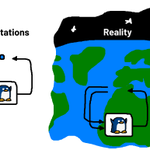
Eventually, people will realize simulations are not a silver bullet either, and the only path forward is to do the hard work and fix the algorithmic limitations that prevent autonomous learning from experience in the real world.

Kris D. retweeted

Robots must learn online. 🦾
At the Robot Kindergarten, robots learn from real-world interaction, touch and trial and error, using reinforcement learning to improve continuously.
We’re inviting research partners to join our co-creation program and turn this vision into reality. 🤝


This Thursday I will be giving the opening keynote at RISEx 2026 in Edmonton
Title: The Tashan/Openmind Robot Kindergarten
Abstract: It has always been a dream in reinforcement learning to make robots that learn online by trial and error from their own experience. After all, this is the way people and all other animals learn about their bodies and the world. In robotics, however, learning is almost never online. Instead, the field has focused on learning from data-sets collected from human demonstrations. Learning from experience requires a totally different approach, including anti-fragile robots, skin with tactile sensing, extensive onboard computation, and continual real-time learning algorithms. All these things are difficult and so have rarely been done. They require a substantial commitment of engineering effort and resources, plus determination and patience, plus scientific breakthroughs in reinforcement learning algorithms. The Tashan/Openmind Robot Kindergarten is an ambitious new attempt to do all these things, led by researchers from the Openmind Research Institute in Edmonton and from the Tashan Technology Corporation in Beijing. The work has just begun, and so this talk will focus on the challenge and the ambition. Robots must learn online.
Kris D. retweeted

Brute force computation is not enough for intelligence. Clever new methods are needed. The science of AI is far from finished. IMHO
Kris D. retweeted
This Thursday I will be giving the opening keynote at RISEx 2026 in Edmonton
Title: The Tashan/Openmind Robot Kindergarten
Abstract: It has always been a dream in reinforcement learning to make robots that learn online by trial and error from their own experience. After all, this is the way people and all other animals learn about their bodies and the world. In robotics, however, learning is almost never online. Instead, the field has focused on learning from data-sets collected from human demonstrations. Learning from experience requires a totally different approach, including anti-fragile robots, skin with tactile sensing, extensive onboard computation, and continual real-time learning algorithms. All these things are difficult and so have rarely been done. They require a substantial commitment of engineering effort and resources, plus determination and patience, plus scientific breakthroughs in reinforcement learning algorithms. The Tashan/Openmind Robot Kindergarten is an ambitious new attempt to do all these things, led by researchers from the Openmind Research Institute in Edmonton and from the Tashan Technology Corporation in Beijing. The work has just begun, and so this talk will focus on the challenge and the ambition. Robots must learn online.


Kris D. retweeted
Welcome to #RobotKindergarten 👀
First day at school 🏫
First‑person view from robot 🤖
#TASHAN #Robotics #TactileSensing #PhysicalAI #EmbodiedAI
Kris D. retweeted

A "robot kindergarten" opened in Beijing's Shijingshan district on Tuesday, exploring a different approach to robot training: instead of having humans demonstrate every task, researchers want robots to learn through touch, trial and error, and their own experience.
As robots move from demonstrations into factories, commercial services and eventually homes, the approach could become an important direction for robotics, allowing machines to keep learning and adapting to new situations after deployment.

Kris D. retweeted
Kris De Asis and I are helping build a kindergarten for robots, a safe place for them to learn from experience about their bodies and the world.

At #WAIC2026, Turing Award winner Prof. @RichardSSutton shared his thoughts on #RobotKindergarten, our joint project with Openmind — a place where robots can learn through trial and error.
Robot Kindergarten opens in Beijing this September. 🚀
#TASHAN #EmbodiedAI #TactileSensing
Kris D. retweeted
At #WAIC2026, Turing Award winner Prof. @RichardSSutton shared his thoughts on #RobotKindergarten, our joint project with Openmind — a place where robots can learn through trial and error.
Robot Kindergarten opens in Beijing this September. 🚀
#TASHAN #EmbodiedAI #TactileSensing
Kris D. retweeted
I can’t say enough good things about John Carmack @ID_AA_Carmack and his Keen Technologies. But now Khurram Javed @kjaved_ and I have broken away to start our own startup and pursue a slightly different path toward understanding intelligence. Like Keen (and like Ineffable) we at Oak Lab @oaklab believe in reinforcement learning and that intelligence is created and maintained from run-time experience. But we think current deep learning methods are weak and inefficient, and need not more tweaks, but fundamentally new ideas and a thorough reworking before they can provide a solid foundation for achieving the more ambitious goals of AI.
Kris D. retweeted
One of those papers that are so timely and relevant that you wish you wrote it (link in the reply).
At some point in the last few years, researchers started proposing RL algorithms that are not compatible with the interface of the RL problem. These algorithms only work in a small subset of problems for which human engineers can make fast simulators and iterate on those simulators to reduce the sim2real gap. These algorithms are often presented on equal footing with algorithms that learn directly from experience (e.g., papers comparing PQN with DQN).
I think this abuse happened because at some point the nuance that RL researchers use simulations as a proxy for real problems to speed up research was lost and for a subset of researchers, the simulators became the goal. Once simulators are the goal, then spinning up multiple copies of it is a no-brainer. Using dozens or hundreds of parallel environments allows one to side-step key unsolved research problems, but it also significantly limits the value of the resulting algorithms. It is no surprise that despite the strong performance of these algorithms on benchmarks, they have had limited economic value.
The biggest strength of RL, over other paradigms, is that removes the need for humans to figure out the right answers or a model of the environment; it’s important to distinguish between the powerful RL methods that learn from experience and would be hugely valuable from their handicapped counterparts that are only applicable on a small subset of problems.
Caveat: An RL algorithm that learns a model using its own experience is perfectly compaitable with the RL interface. It’s only when the method relies on humans to figure out the model for it that it loses its generality.

Kris D. retweeted

We are excited to see researchers and students continue pushing open-source robotics forward with Open Ant 🐜
The project uses XC430 and XM430 actuators to bring agile locomotion to life. Proud to support innovation in robotics education, research, and biomimetic systems worldwide.
Explore the Openmind Research Institute Github for more information - github.com/Openmind-Research…
Kris D. retweeted
The bitter lesson in 26 words:
Don’t be distracted by human knowledge, as AI has been historically.
Instead focus on methods for creating knowledge that scale with computation, like search and learning.
Kris D. retweeted

A tailor-made "kindergarten" for robots. Turing Award winner and a principal founder of reinforcement learning, Richard Sutton, has signed an agreement with a #Beijing-based company, collaborating to build a "Robot Kindergarten", planned to be located in Shougang Park in Beijing.


Kris D. retweeted

The RL benchmark "Ant" is no longer confined to simulation.
Our OpenAnt paper, to appear at @RL_Conference, is an accessible, open-source platform for RL researchers.
Here's a video of it continuously learning a back-and-forth task from experience.
Joint work with Patrick Spieler (@Stapelzeiger), Khurram Javed (@kjaved_), Kris De Asis (@M33pinator), John D. Martin (@jdmartin86), Martha Steenstrup, and Joseph Modayil (@JosephModayil)
Kris D. retweeted

RL in Big Worlds is a workshop at @RL_Conference about ideas that enable agents to achieve goals in environments vastly more complex than themselves
This requires giving agents the ability to learn continually and use approximate value functions, models and policies effectively

ALT https://rlinbigworlds.ca/
Kris D. retweeted

The bitter lesson of 2026 will be sim2real is hopeless to solve and the real world is the only viable learning playground.
Evolution is about overfitting to (niches of) the world. slight deviation in a simulation leads to a different universe.

Over the years I’ve noticed two schools of thought in ML:
1. prototype on synthetic tasks first (examples - ARC, computer games)
2. avoid synthetic tasks entirely
i started in camp (1), but slowly converged to (2). the planning and reasoning capabilities we care about are too entangled with the visual diversity of the real world.
Kris D. retweeted
I wrote a thing. Current humanoid robotics startups are not ready for the messiness of the world.
Even if they succeed at everything they believe they need to do, it would still be insufficient for making useful robots.
More here: khurramjaved.com/not_ready_f…
Reinforcement learning 🧠 on robots 🤖 can’t stay in simulation forever. My new post explores why direct, on-hardware learning matters and how we also need smarter mechanical design to enable it.
kris.pengy.ca/designforlearn…
