

🌺
Messier 45
Joined January 2018
- Tweets11.7K
- Following5.1K
- Followers2.5K
- Likes25.5K
Pinned Tweet
🥀Beautiful tartan made in respectful retrospect. 🙏🧙♀️🥀

A new Scottish tartan memorializing the (mainly) female victims of the Witchcraft Act has been officially registered, created by Claire Mitchell and Zoe Venditozzi, founders of the Witches of Scotland campaign #WomensArt
via Smithsonian Magazine

1
233


AuroraAlexyanA retweeted

Souling was a tradition that began in the Middle Ages and took place on November 1st "All Saints Day".
Poorer people would go door to door offering prayers for the departed relatives and loved ones of wealthier families.
In return they would be given a "Soul Cake" and it was believed by some that when the Soul Cake was eaten a soul would be released from the fires of Purgatory 🔥🧁

AuroraAlexyanA retweeted

THE WHEEL HAS TURNED — Samhain 2026, The Night the Fire Completes 🔥
We started with a word.
Sow-in.
Not Sam-hane. Not the Halloween decoration aisle at Target. An Irish word, ancient beyond measure, that sounds like the wind coming down off a dark hill on a cold October night.
That was thirteen nights ago.
A lot has happened since then.
We Walked Through the Fire Together
We started at the beginning — what Samhain actually is, and what it isn’t. A sacred night, not a holiday. A homecoming, not a costume party. The Celtic year ending at sunset, the way it has ended since before anyone now living was born, the way it will end long after we are the ancestors.
We climbed the Hill of Tlachtga together, that gentle rise in County Meath that looks like nothing and once was everything. We talked about the fire that couldn’t be lit from anything else — the one flame kindled by the druids on a hilltop above the grave of a druidess, the flame that carried to every hearth in Ireland by runners through the dark. We talked about what it means to light your fire from a fire that comes from somewhere. You were not just lighting your hearth. You were rejoining the chain.
We talked about the ones who don’t come in love — the Sluagh on the west wind, the harmful spirits moving through the open door, the things the ancient Irish had very practical names for and very practical answers to. The iron at the threshold. The salt at the corners. The costume that made you unrecognizable. The offering left on the step that said we acknowledge you — please pass. We remembered that the wisdom of our ancestors was never naive. They saw the dark clearly. They just knew what to do about it.
We met Stingy Jack — Séan na Gealaí, the man too clever for Hell and too wicked for Heaven — and we learned that the pumpkin on your neighbor’s porch is three thousand years of Irish memory keeping the wandering dark at bay. The costume is armor. It always was. The lantern is a ward. It always was.
We stood outside the sídhe at midnight and acknowledged the Aos Sí — the People of the Mounds, the divine tribe that went under the land rather than leave it, the ones who ride out at Samhain in their great host and remind us that this world was never entirely ours. We were here before you. We will be here after. Walk carefully. Leave something at the threshold.
We set the empty chair. We held the silence. We said the names of our dead in our hearts, and we set a place for the ones we’ve loved and lost — the ones beloved and uncomplicated and the ones complicated and unresolved both. We remembered that the Dumb Supper is not performance. It is the most honest thing you can do on Samhain: acknowledge that the boundary is thin, and stand at it, and speak.
We met the Morrígan — the Phantom Queen, the crow on the fence post that was already looking at you when you looked up. We learned that she does not cause death; she witnesses it. That she sees through every mask, every carefully constructed face, every narrative that requires maintenance to keep standing. That what she offers is not judgment but something rarer and harder: the chance to be fully seen, and to still be standing. The question she asks every one of us, on this night especially, is the one that matters:
What do you want her to see?
Last night we stood outside in the cold and felt the eve of Samhain settle against our skin and understood that this is contact — the world touching us, the dark half of the year wrapping its arms around us the way it has wrapped its arms around every person who ever stood outside on this night and looked up and wondered. Tonight is the breath before. The hinge. The last hour of the last day before the wheel completes.
And today, when the Cailleach woke from her summer sleep, walked to the Corryvreckan whirlpool, and washed her great white plaid in its churning waters — we were there for that too. We said welcome back, old one. The world is yours again until Beltane. We will tend our fires and we will not forget that it is your cold that makes them sacred.
And Now
The wheel has turned.
It is Samhain.
The veil is not thin tonight — it is as close to gone as it gets. The ancestors are here. The spirits are walking. The Aos Sí ride. The Morrígan stands at the threshold of the old year and the new, witnessing what fell and naming what was won. The Cailleach walks the dark land with her staff. And somewhere in the bogs of Ireland, Jack still wanders with his lantern, looking for a home he will never find.
All of it is real tonight in a way it is real no other night of the year.
What This Series Was Really About
Thirteen nights ago we began with a question hiding inside a pronunciation lesson.
Why does this matter? Why does a word said correctly in a dead language change anything?
Because the people who created that word were marking something real. Something so real it shaped every culture that came after them, including the one most of us are living in right now whether we know it or not. Because Sow-in — said correctly, understood correctly — is not a retrieval of the past. It is a recognition that the past is not past.
The fire on the Hill of Tlachtga was lit so that no home in Ireland would face the new year alone.
That is what we have been doing here.
Every post in this series — every ancestor named in the comments, every candle lit, every person who went outside last night and stood in the cold and felt it, every person who recognized themselves in the Morrígan’s gaze and held her gaze instead of looking away — every one of you has been part of the chain. The unbroken chain. The one that connects the great fire on the hilltop to the candle on your windowsill to the jack-o’-lantern on the porch to the fire in this community that we tend together, night after night, month after month.
You were not just reading a Facebook post.
You were rejoining the chain.
Say the Names
On this night above all nights, we say the names.
Not in silence this time. Out loud, into the community, into this fire we have tended together.
The grandparent whose hands you can still see in your memory. The parent who left too soon. The friend whose laugh you would give almost anything to hear one more time. The child who didn’t survive. The beloved who is elsewhere now. The complicated ones. The ones you never made peace with. The ones you dream about still.
Say their names.
The veil is at its thinnest. The door is open.
They are listening.
Blessed Samhain to every soul gathered at this fire.
To the living — may the dark half give you rest, reflection, and the deep root-work that makes spring possible.
To the beloved dead — we remember you. We love you. We have not let your names fade.
To the ancestors we never knew — you are why we are here. We carry you forward.
To the ones who came here tonight for the first time — welcome. The fire has been burning for a long time. There is always room.
The wheel has turned.
The new year has begun.
The dark is sacred.
And we are still here.
via The Pagan Circle
🕯️ Say a name in the comments tonight. Just a name — or a name and a single memory. The fire is at its highest. The door is open. This is the moment. Who do you want to remember?

AuroraAlexyanA retweeted
Remembering those we've lost this Samhain night
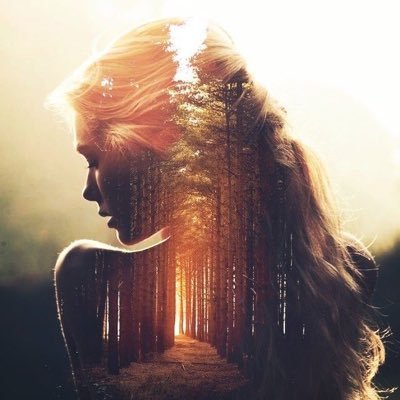
As darkness falls on Samhain, an old Irish tradition reminds us to light a candle or lantern in the window for those who have gone before us 💚
May the light of your candle shine for someone you miss tonight🕯️
#Halloween #Ireland



AuroraAlexyanA retweeted

Summer Solstice & Bee Mythology
Ancient folklore says that a swarm of bees arriving during the Summer Solstice brings incredible luck, prosperity, and blessings to a home.
It is often captured in old rhyming proverbs, such as the famous 17th-century saying:
“A swarm of bees in May is worth a load of hay; a swarm of bees in June is worth a silver spoon”
Since the solstice happens in June, a June swarm was historically considered a massive financial blessing.
Bees are messengers of the Gods. In Celtic and European mythology, bees are seen as bridges between this world and the spirit realm.
Their hyper-activity during the longest days of sunlight led cultures to revere them as sacred messengers of the sun.
Solstice honey and bee colonies are deeply tied to Faerie lore. It's because the solstice is the thinnest veil between worlds, bees are often viewed as the tiny guardians of fae realms, gathering pollen from enchanted solstice blooms. 🐝

AuroraAlexyanA retweeted
I’m making a show about buildings.
The concept is simple: do for the man-made world what Planet Earth did for the natural world.
But, when I pitched the idea, the answer was that nobody would watch it.
So I released a pilot episode on YouTube. It’s got 5.4 million views, 379k likes, and 23k comments.
People are interested, and now it’s time to make the full show.
Six episodes, filming in the UK, France, Belgium, Germany, Italy, and the USA, and releasing on a streaming service like HBO, Netflix, or Prime.
Why does this show matter?
First: we’re surrounded by buildings all the time. Look around yourself, right now… what do you see? Buildings are the logical conclusion of everything a society believes in. That’s the real focus of this show: not the buildings themselves, but what they say about us.
Second: there’s global dissatisfaction with modern architecture. This feeling gets written about online, but nobody’s given a voice to it on film or TV. That’s what this show will be. But this isn’t just about criticising modernity. That’s easy. This is about learning from the past in order to understand and improve the present, for everybody.
Third: there’s a drought of high-quality culture shows. When I spoke to film executives they said that only documentaries about sports, music, or true crime get funded. That’s a colossal missed opportunity. Galleries are always full, content about architecture goes viral online all the time, and people spend their precious holidays visiting beautiful cities.
Why no shows about architecture, then?
Tourists flock in their millions to see (for example) the buildings of Antoni Gaudí in Barcelona. But, if you asked those same people if they’re interested in “architecture”, they’d probably say no.
To put that another way: not many people want to watch “a show about architecture”, but lots of people want to watch a show that illuminates the real world they’re living in, each and every day.
What will the show be like?
Six episodes, going chronologically through history and arriving at the present, each focussing on the architecture and design of a specific period:
1. Middle Ages
2. Renaissance
3. Enlightenment
4. The Nineteenth Century
5. Art Nouveau & Art Deco
6. Present Day
But, in each case, the point isn’t just to learn about that era; the point is to learn about our modern world through those eras and what they’ve left behind. If you watch the pilot episode (included below) you’ll see what I mean.
So the show’s not really “about” the past; it’s about the twenty-first century.
That’s why it’s called The Modern World.
When you think of a typical history show there are loads of interviews, stock footage, archive photos, historical recreations, and graphics. We’re doing none of that. Everything will be filmed on location, because we’re telling our story only through the real world that exists right now. And, rather than going to the most obvious places, we’ll focus on buildings that aren’t well-known but should be more famous.
But that’s all big picture; what will it be like on screen?
Buildings used to look different in every country, and now they look the same. Why? Because the weather is different everywhere, and buildings were always a way of dealing with that weather, using local materials. Now we have air conditioning and we ship concrete around the world, so we don’t need to design our buildings with regard to local weather or rely on local materials.
Look at really old clocks and you’ll notice something: they don’t have a second hand… because it was only invented 300 years ago! Then you look at the present and you realise we’re surrounded by timers, by seconds ticking down and ticking up relentlessly. If we’re looking for a cause of our anxiety-inducing culture, that might be it.
When you spend time with the sun-softened bricks and time-warped timbers of old cities you notice that synthetic materials like plastic have taken over. When we’re surrounded by things that feel temporary, how do you think it makes us feel?
It’s only by seeing 19th century train stations, designed like cathedrals, that you realise tradition and technology aren’t enemies. New things don’t have to look boring: if the Victorians had designed AI data centres, they’d look like Medieval castles.
In the 1920s, at the zenith of Art Deco, people believed technology would uplift humanity. That’s why they decorated their buildings with statues inspired by electricity. Only by seeing their enthusiasm can we realise our own cynicism, and perhaps begin to fix it.
All of that… and much, much more.
But, above all else, this show is about a way of seeing. If you want to understand any society then you need to look at what it creates, not what it says about itself.
There’s a worldview in every single object; our skyscrapers are designed the same way as our phones. Learn to look at this world, to notice its details, and everything else starts to make sense.
What now?
I’ve been quiet online recently because I’ve been researching and working on scripts for six full-length episodes. Production begins when we’ve raised the funding.
The Modern World is coming.


AuroraAlexyanA retweeted

A new Scottish tartan memorializing the (mainly) female victims of the Witchcraft Act has been officially registered, created by Claire Mitchell and Zoe Venditozzi, founders of the Witches of Scotland campaign #WomensArt
via Smithsonian Magazine
AuroraAlexyanA retweeted

“The world is full of talkers, but it is rare to find anyone who listens. And I assure you that you can pick up more information when you are listening than when you are talking.”
― E.B. White


