








U ili retweeted

One of the things that currently makes me uncomfortable about #Bitcoin is the cult-like behavior of most of its community.
The idea that cycles will always hold and that Bitcoin will always be bullish. Or that even if the cycles break, it will simply turn into a bullish "supercycle."
But almost nobody considers the possibility that it could be a bearish supercycle...
I am not saying this will happen, but at least is something everyone should consider as a possible scenario at some point.
The reality is that $BTC is still a very young asset. It has only existed within a monetary system characterized by low interest rates and quantitative easing.
We all know the fiat system is broken and unreliable. Sovereign debt in many countries is already way above 100% of GDP, with chronic fiscal deficits that only seem to be accelerating.
But I believe Bitcoin still has to prove and validate some of the narratives that have been built around it over the years, such as "digital Gold."
For now, in a world full of conflict, fragmentation, and uncertainty, I believe physical Gold remains the most reliable option.
I genuinely believe in BTC over the long term. But I'm starting to think that we need a purge of all the negative excesses that have been accumulated over the past few years.
If that happens, I am confidennt Bitcoin will rise again, perhaps in a way we've never seen before.

U ili retweeted

I'm calmly observing the market without being swayed by major price swings in either direction.
I think this is exactly how we should approach the market right now. Rather than focusing on short-term price movements, it's important to take a much longer-term perspective and proceed with caution.
My outlook remains unchanged.
From an accumulation perspective, the market is still far from mature, and I expect it will take considerable time before a sustainable uptrend can develop.
And if Bitcoin fails to stage a meaningful recovery before the end of this year, we may need to seriously consider the "worst-case scenario" I've discussed recently.
There was also one notable development worth highlighting.
"Abraxas Capital" appears to have been one of the primary buyers behind yesterday's short-term market rebound.
Despite the current market conditions, the firm directly purchased an astonishing 11,741 BTC through exchanges.
Such large-scale buying activity by a specific institution is certainly worth paying attention to.
However, a substantial purchase by a single institution does not necessarily mean that liquidity conditions across the broader market are improving.
The overall data I'm tracking still shows insufficient evidence of meaningful accumulation, and it's too early to turn optimistic about the market.
For now, I'm simply staying on the sidelines, taking no action. I'll continue to observe market developments calmly and share my analysis.
And if I identify a genuine structural shift in the market or meaningful improvements in liquidity conditions, I'll make my outlook clear, just as I always have.


On August 21, when Bitcoin was around $73K, I bought spot BTC with 40% of my funds.
And I just sold all of it.
For the past month, I’ve been trading based on the same view and framework I’ve been sharing here. I’ve been clear about my view, and I’ve acted on it.
My view has been consistent
“Trends don’t break easily, so there’s still room for more upside in the short term. But from an accumulation perspective, the market still isn’t mature enough. I think we need more time before a real move higher begins.”
That view hasn’t changed.
But I think this short-term move is getting close to its end, so I decided to sell.
Of course, Bitcoin could move sideways from here, or we could still get one more push higher. But for me, it made more sense to make the call a little early and watch what happens next.
I’m no longer looking at the market from a bearish perspective, so I have no plans to short Bitcoin.
At the same time, I don’t expect Bitcoin to suddenly start a strong and sustained rally from here either.
That’s why I’ve kept sharing the same view over the past month. I’ve simply acted on what I’ve been saying.
From my perspective, the Bitcoin market still hasn’t matured enough, and there hasn’t been enough accumulation yet. I still think it needs more time.
So for now, I’m looking at the market from a much longer time frame and will act accordingly.
If I thought a major bullish cycle was starting from here, I probably would’ve bought more around the Clarity event in mid-September.
And if I thought Bitcoin was about to keep moving up quickly from here, there’d be no reason for me to sell all my Bitcoin now.
I’m simply sharing how I see the market and trying to make my view clear.
Nothing more, nothing less.
U ili retweeted

Antes emitían Pases, Leliqs, Lebacs, etc. y eso no figuraba en el déficir financiero del Tesoro, solo figuraba en el déficit cuasifiscal del BCRA.
Ahora pasaron la deuda remunerada del BCRA al Tesoro y se llama LECAPS. Las LECAPS se sirven con más LECAPS, pero eso no figura en el déficit financiero del Tesoro ni en el cuasifical. Solamente aumenta la deuda pública.
Como por arte de magia, desapareció el déficit cuasifiscal y Milei instantáneamente redujo el déficit del Estado en varios puntos del PBI.
Eso es simplemente una chantada. El déficit sigue.
No engañan a nadie, solamente pierden credibilidad.
U ili retweeted
I know I can't convince everyone. But given the current situation, I'd like to explain once again the intentions behind my market analysis, the perspective I've maintained, and the principles that have guided my decisions and actions.
After selling my Bitcoin near the market peak in August last year, I did not enter a single long position until August this year. During that entire period, I only took three short positions.
Then, in August this year, I publicly acknowledged that my previous market outlook had been wrong.
I didn't just change my opinion in words. I actually took action and aggressively bought Bitcoin on the spot market.
However, there was one thing I continued to emphasize even then:
"Although I've shifted to a bullish outlook, the market is still not sufficiently mature from an accumulation perspective. It may take considerable time before a sustainable uptrend can develop."
I consistently maintained this view even after changing my market outlook.
By late September, I believed the market was likely approaching another corrective phase necessary for further accumulation.
That's why, on September 26, I publicly announced that I would sell my entire Bitcoin position, and I followed through by selling everything.
I think I understand what some people are disappointed about.
"You turned bullish in August, but Bitcoin has since experienced such a massive decline. How do you explain that?"
In a way, I believe that disappointment also reflects how closely people follow my analysis and how much trust they place in it.
But I cannot predict every movement in the market.
That's exactly what I mean when I say there is no such thing as 100% certainty in trading.
My core assessment at the time was clear:
"The market still needs time to accumulate, and that process could take much longer than expected."
However, I couldn't know exactly how far Bitcoin would fall during that accumulation process or what form the correction would take.
That's why I clearly stated that I would observe the market over a longer time horizon and respond accordingly, rather than trying to predict short-term price movements.
I believe this distinction is extremely important.
As time passes, new data becomes available, and market developments that were previously unclear gradually become easier to understand.
This can eventually allow us to develop more specific expectations about price movements as well.
That's precisely why I don't decide on a fixed answer in advance. I remain flexible and adjust my outlook as new information emerges.
I believe that without this approach, it's far too easy to fall into psychological biases.
And that is something I make a conscious effort to avoid.
As more data becomes available, I can build more detailed scenarios and respond to changing market conditions with greater precision.
But what actually happened?
As time passed, the data I was monitoring continued to deteriorate rather than improve.
I'd encourage you to revisit the analyses I published before Bitcoin's major decline began.
At the time, I repeatedly raised concerns about several developments:
- Persistent selling pressure from Binance whales
- Selling pressure flowing toward exchanges through institutional custodians
- Long-term changes in the U.S. dollar's trend
- DeFi and CeFi leverage liquidity flows
These were risks I had been highlighting well before Bitcoin entered its sharp decline.
And once prices began falling, I repeatedly explained that the market was moving toward the most negative of the scenarios I had been considering, while liquidity conditions continued to deteriorate.
Ultimately, this is not about predicting the exact future price. It's about managing risk and responding to changing market conditions.
I maintained the view that the market needed more time for accumulation, but I had no way of knowing exactly how far Bitcoin might fall.
That's why I never started with a predetermined price target and tried to make the market fit it.
I simply didn't know. And when you don't know, you need to remain flexible rather than commit yourself to a specific price level in advance.
Setting a fixed price expectation too early can create confirmation bias, causing you to interpret new data in ways that support your original prediction.
If meaningful accumulation by major market participants had appeared while I was waiting, I would have openly acknowledged that Bitcoin could recover much faster than expected.
But that evidence never appeared.
Instead, liquidity conditions continued to worsen, and my analysis and risk management became increasingly cautious in response.
At that point, I couldn't have known that Bitcoin would fall this sharply, let alone exactly how far it would decline.
When you don't know something, you need to acknowledge it.
I believe this ultimately comes down to differences in trading philosophy.
The "worst-case scenario" I recently discussed using Bitcoin's annual chart follows exactly the same principle.
Market conditions have become far more serious than I initially anticipated, with major liquidity indicators and long-term technical structures deteriorating simultaneously.
That's why I believe it's necessary to consider even the most extreme downside scenarios.
And in such an extreme environment, one potential downside reference point is the minimum operating cost of Bitcoin mining companies.
That's why I mentioned that particular price level.
It does not mean I believe Bitcoin must fall to that price.
Rather, as conditions deteriorated, new evidence emerged that justified considering more severe risk scenarios. I expanded my analysis accordingly.
Of course, some people may still view my decisions negatively, regardless of how I explain them.
I understand that I cannot convince everyone.
But I'm not a fortune teller.
I'm not someone who can predict future prices with perfect accuracy.
I'm a trader who establishes clear investment criteria, monitors the market, and adjusts my decisions as new data emerges.
I don't believe there's anything wrong with that approach.
In fact, I believe the opposite.
Without the flexibility to change your perspective, conviction can gradually turn into stubbornness.
And that stubbornness can eventually become a critical weakness, preventing you from taking action when the market demands it.
We cannot be certain about everything from the very beginning.
But by establishing a framework and allowing time for new evidence to emerge, market direction and underlying risks can gradually become clearer.
To me, this entire process is simply risk management and market adaptation based on a consistent set of trading principles.
Rather than judging my analysis based on a single bullish or bearish statement, or one particular post, I hope you'll consider the entire sequence of my decisions and the actions I actually took.
I also want to emphasize something equally important:
Market analysis isn't just about predicting whether prices will rise or fall. Understanding the time horizon over which market structures develop is just as important.
A market may need a prolonged period of accumulation before a sustainable trend can emerge, and recognizing that possibility is a fundamental part of my analysis.
I will continue to accept that my judgments may be wrong, remain open to different possibilities, and respond flexibly based on data and my trading principles.
I sincerely hope you can understand the reasoning and intentions behind my analysis and decisions.
On August 21, when Bitcoin was around $73K, I bought spot BTC with 40% of my funds.
And I just sold all of it.
For the past month, I’ve been trading based on the same view and framework I’ve been sharing here. I’ve been clear about my view, and I’ve acted on it.
My view has been consistent
“Trends don’t break easily, so there’s still room for more upside in the short term. But from an accumulation perspective, the market still isn’t mature enough. I think we need more time before a real move higher begins.”
That view hasn’t changed.
But I think this short-term move is getting close to its end, so I decided to sell.
Of course, Bitcoin could move sideways from here, or we could still get one more push higher. But for me, it made more sense to make the call a little early and watch what happens next.
I’m no longer looking at the market from a bearish perspective, so I have no plans to short Bitcoin.
At the same time, I don’t expect Bitcoin to suddenly start a strong and sustained rally from here either.
That’s why I’ve kept sharing the same view over the past month. I’ve simply acted on what I’ve been saying.
From my perspective, the Bitcoin market still hasn’t matured enough, and there hasn’t been enough accumulation yet. I still think it needs more time.
So for now, I’m looking at the market from a much longer time frame and will act accordingly.
If I thought a major bullish cycle was starting from here, I probably would’ve bought more around the Clarity event in mid-September.
And if I thought Bitcoin was about to keep moving up quickly from here, there’d be no reason for me to sell all my Bitcoin now.
I’m simply sharing how I see the market and trying to make my view clear.
Nothing more, nothing less.
U ili retweeted

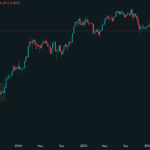
Bitcoin bull markets do not start with Evening Stars
Have any of these bullish analysts who thought the bottom was in even looked at a timeframe above the monthly?

U ili retweeted
This Litecoin chart is one of the most beautiful examples highlight the value of Japanese candlestick analysis on high timeframes
Look at how clean this one line is

U ili retweeted
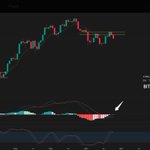
#Bitcoin:
Just to be clear, the 2-Month bearish cross happened before the Covid crash.
To add some more confluence, LMACD is now showing a new red print.
Like I said before, we’re still 40 days away from the candle close...
We need a giga bounce before year-end to reverse this.
But the lower timeframes also look bearish, from the Monthly all the way down through the Weekly charts.
The next candle close to watch is the 2-Week this Sunday.
Btw, I’m not trying to predict a black swan...
I’m just pointing out some warning signals from TA.
I’m simply following price action week by week, month by month... And right now, it ain’t looking pretty.
$BTC


#Bitcoin:
Only during the Covid crash did we see the 2-Month Stochastic RSI get a bearish cross.
We’re still 40 days away from the candle close...
But it’s not looking pretty.
Definitely something worth paying attention to.

U ili retweeted
Rather than getting caught up in extreme price volatility, now is the time to stay calm and assess the market objectively.
My perspective remains unchanged.
I believe we should focus less on short-term price movements and instead take a much longer-term view, patiently observing Bitcoin's accumulation process, which I still believe is far from mature.
That's precisely why I sold all my Bitcoin on September 26.
If meaningful accumulation had emerged during this sharp decline, I would have considered the possibility of a faster-than-expected market recovery.
But so far, I'm seeing no meaningful signs of accumulation.
Buy-side liquidity remains severely constrained, while institutional selling flows continue moving onto exchanges.
The sustained buying pressure and accumulation needed for a genuine market recovery are simply not there.
Under these conditions, I see absolutely no reason to rush into the market.
Think about it.
When Bitcoin was trading above $80,000, many people confidently said:
"If the price crashes, I'll just buy more. What's there to worry about?"
But when the market actually crashes, those same people often struggle to pull the trigger.
That's what makes investing so difficult. It's not just about predicting price direction. It's about sticking to your principles when the situation actually unfolds.
Now imagine rushing to buy simply because Bitcoin has fallen sharply, without having clear investment criteria.
What happens if the market fails to recover as expected and instead enters a prolonged period of sideways consolidation with no clear end in sight?
The profits you anticipated never materialize.
As time passes, doubts about your decision grow, and anxiety begins to take over.
In that emotional state, even relatively small price fluctuations can shake your confidence.
Ultimately, a position entered without clear criteria is often more likely to be undermined by the investor's own emotions than by the market itself.
That's exactly the situation I want to avoid.
Looking at the current liquidity structure and the lack of meaningful accumulation, market conditions still appear unfavorable.
That's why I have no intention of taking any action right now.
Even if the current price turns out to be the absolute bottom of this decline, that doesn't necessarily mean a new uptrend will begin immediately.
Finding a bottom and establishing a sustainable uptrend through sufficient accumulation are two entirely different things.
I'm not going to rush. This simply isn't the time.
Today, I want to take a step back and examine the Bitcoin market from a macroeconomic perspective.
It may be a relatively conventional approach, but given the severe liquidity constraints currently facing Bitcoin, I believe it's important to revisit the broader macro environment.
Let me start with my conclusion.
"The Bitcoin market has still not gone through sufficient accumulation, and liquidity conditions continue to deteriorate. At this point, we can only hope the market avoids a major shock. Even if it does, a much longer period of sideways consolidation may be necessary than many expect."
As I've repeatedly discussed in my previous analyses, Bitcoin's internal liquidity conditions are extremely concerning.
Buy-side liquidity continues to weaken, and the market is experiencing a significant liquidity squeeze.
Against this backdrop, I want to examine the relationship between the U.S. dollar and Bitcoin's market cycles.
This may be familiar territory for anyone who has spent some time studying financial markets.
Generally speaking, the U.S. dollar is closely tied to global liquidity conditions.
Looking back at Bitcoin's historical cycles, we have never seen Bitcoin sustain a full-fledged bull market while the dollar was in a strong upward trend.
The bearish cycle that began in 2025 has not been particularly different in this regard.
But that brings us to the most important question.
"Are we really at the point where the U.S. dollar is about to enter a sustained downtrend?"
To me, this is one of the most critical questions when assessing the current market.
Let's look at the historical cycles objectively.
In previous cycles, Bitcoin went through a prolonged bear market before entering a major bullish phase as the U.S. dollar began a sustained decline.
(Image 1, green boxes)
But the current situation is fundamentally different.
Rather than entering a downtrend, the dollar is showing signs of establishing a strong upward trend.
(Image 1, red box)
This is the most important difference between previous bullish cycles and the market environment we face today.
Now, take a look at Image 2.
The U.S. dollar has broken above a trading range that had been forming for more than 500 days.
There is something I frequently emphasize in my market analysis:
"Once a trend is established, it rarely reverses easily."
This is because of trend persistence.
And this is not a trend that developed over a few weeks or months.
We are looking at a breakout from a consolidation range that lasted more than 500 days.
That makes this development particularly important.
Even if the dollar eventually reverses and begins declining again, the process could take considerably longer than many investors anticipate.
We also need to consider the broader macroeconomic environment.
Interest rate hikes began in the third quarter of this year, while the political and economic environment surrounding the U.S. midterm elections has hardly been favorable for the crypto market.
Meanwhile, selling pressure from Bitcoin mining companies is another major concern.
Bitcoin selling activity among mining companies reached historically elevated levels during the third and fourth quarters of this year.
At the same time, many mining companies have been shifting their business models toward AI data centers.
Under these circumstances, can we realistically expect substantial new liquidity to flow into Bitcoin?
At this point, I find it difficult to be confident that it will.
Ultimately, Bitcoin needs a new catalyst and a compelling narrative capable of attracting fresh capital.
Personally, I believe one of the strongest narratives Bitcoin could have is its role as "Digital Gold."
But there has been an interesting shift here as well.
One of the companies that most aggressively promoted Bitcoin as digital gold was Strategy.
Back in 2022, Strategy frequently emphasized Bitcoin's identity as "Digital Gold."
However, beginning in 2025, the company increasingly shifted its messaging toward concepts such as "Credit" and "Digital Capital," rather than emphasizing Bitcoin primarily as digital gold.
Think about what that means.
Even Strategy, one of the most influential companies capable of driving the digital gold narrative, is now emphasizing a different narrative.
And now, with today's confirmation of its exclusion from the MSCI index, uncertainty surrounding the market has increased even further.
So let me ask the question again.
"Is liquidity in the Bitcoin market actually recovering?"
Bitcoin has become far more deeply integrated into the traditional financial system than ever before.
Through spot ETFs and growing institutional participation, Bitcoin is increasingly held within the portfolios of traditional financial institutions.
As a result, its market behavior has become more closely connected to macroeconomic conditions and movements in traditional financial markets.
In other words, Bitcoin is now more exposed to the broader macro environment, not less.
Yet today, Bitcoin's internal liquidity remains weak, while external macroeconomic conditions are far from supportive.
Under these circumstances, I find it difficult to see how Bitcoin could simply defy the broader macro environment and independently enter a powerful bullish cycle.
For Bitcoin to begin a genuine, sustained bull market, new liquidity needs to enter the market.
That is the fundamental requirement.
And this brings me back to my current assessment.
Right now, the priority should be hoping that the market can get through this period without experiencing a major shock.
But even if we manage to avoid a significant disruption, unwinding excessive leverage and resolving the current liquidity imbalances could require a much longer period of consolidation and accumulation than many investors expect.
If investors are expecting Bitcoin to quickly return to a steep upward trajectory from here, I think they may be setting themselves up for considerable disappointment.
This is also why I intend to approach my next Bitcoin purchases with a much longer time horizon.
Rather than rushing back into the market, I want to carefully assess how liquidity conditions develop and whether the market has gone through a sufficient accumulation process.
I understand that my current outlook may sound pessimistic, or even discouraging.
But the purpose of market analysis is not to consistently deliver an optimistic outlook.
It is to objectively assess the environment we are operating in and develop an investment strategy that reflects those conditions.
I simply do not believe this is the right time to approach the Bitcoin market aggressively.
There is no need to rush.
For now, I believe patience is more important than chasing a potential rebound.
I would rather wait for liquidity to recover, allow the market enough time to accumulate, and position myself when a more favorable opportunity emerges.


U ili retweeted

Hice el service anual a los aires acondicionados.
Misma semana de noviembre que en 2025.
Mano de obra 61% más que en 2025.
Gas 66% más que en 2025.
Tenemos la inmensa fortuna de que nos gobierna gente a la que el IPC "le da" 1,9% mensual...
El dibujo es intergaláctico.
Great analysis!
Today, I want to take a step back and examine the Bitcoin market from a macroeconomic perspective.
It may be a relatively conventional approach, but given the severe liquidity constraints currently facing Bitcoin, I believe it's important to revisit the broader macro environment.
Let me start with my conclusion.
"The Bitcoin market has still not gone through sufficient accumulation, and liquidity conditions continue to deteriorate. At this point, we can only hope the market avoids a major shock. Even if it does, a much longer period of sideways consolidation may be necessary than many expect."
As I've repeatedly discussed in my previous analyses, Bitcoin's internal liquidity conditions are extremely concerning.
Buy-side liquidity continues to weaken, and the market is experiencing a significant liquidity squeeze.
Against this backdrop, I want to examine the relationship between the U.S. dollar and Bitcoin's market cycles.
This may be familiar territory for anyone who has spent some time studying financial markets.
Generally speaking, the U.S. dollar is closely tied to global liquidity conditions.
Looking back at Bitcoin's historical cycles, we have never seen Bitcoin sustain a full-fledged bull market while the dollar was in a strong upward trend.
The bearish cycle that began in 2025 has not been particularly different in this regard.
But that brings us to the most important question.
"Are we really at the point where the U.S. dollar is about to enter a sustained downtrend?"
To me, this is one of the most critical questions when assessing the current market.
Let's look at the historical cycles objectively.
In previous cycles, Bitcoin went through a prolonged bear market before entering a major bullish phase as the U.S. dollar began a sustained decline.
(Image 1, green boxes)
But the current situation is fundamentally different.
Rather than entering a downtrend, the dollar is showing signs of establishing a strong upward trend.
(Image 1, red box)
This is the most important difference between previous bullish cycles and the market environment we face today.
Now, take a look at Image 2.
The U.S. dollar has broken above a trading range that had been forming for more than 500 days.
There is something I frequently emphasize in my market analysis:
"Once a trend is established, it rarely reverses easily."
This is because of trend persistence.
And this is not a trend that developed over a few weeks or months.
We are looking at a breakout from a consolidation range that lasted more than 500 days.
That makes this development particularly important.
Even if the dollar eventually reverses and begins declining again, the process could take considerably longer than many investors anticipate.
We also need to consider the broader macroeconomic environment.
Interest rate hikes began in the third quarter of this year, while the political and economic environment surrounding the U.S. midterm elections has hardly been favorable for the crypto market.
Meanwhile, selling pressure from Bitcoin mining companies is another major concern.
Bitcoin selling activity among mining companies reached historically elevated levels during the third and fourth quarters of this year.
At the same time, many mining companies have been shifting their business models toward AI data centers.
Under these circumstances, can we realistically expect substantial new liquidity to flow into Bitcoin?
At this point, I find it difficult to be confident that it will.
Ultimately, Bitcoin needs a new catalyst and a compelling narrative capable of attracting fresh capital.
Personally, I believe one of the strongest narratives Bitcoin could have is its role as "Digital Gold."
But there has been an interesting shift here as well.
One of the companies that most aggressively promoted Bitcoin as digital gold was Strategy.
Back in 2022, Strategy frequently emphasized Bitcoin's identity as "Digital Gold."
However, beginning in 2025, the company increasingly shifted its messaging toward concepts such as "Credit" and "Digital Capital," rather than emphasizing Bitcoin primarily as digital gold.
Think about what that means.
Even Strategy, one of the most influential companies capable of driving the digital gold narrative, is now emphasizing a different narrative.
And now, with today's confirmation of its exclusion from the MSCI index, uncertainty surrounding the market has increased even further.
So let me ask the question again.
"Is liquidity in the Bitcoin market actually recovering?"
Bitcoin has become far more deeply integrated into the traditional financial system than ever before.
Through spot ETFs and growing institutional participation, Bitcoin is increasingly held within the portfolios of traditional financial institutions.
As a result, its market behavior has become more closely connected to macroeconomic conditions and movements in traditional financial markets.
In other words, Bitcoin is now more exposed to the broader macro environment, not less.
Yet today, Bitcoin's internal liquidity remains weak, while external macroeconomic conditions are far from supportive.
Under these circumstances, I find it difficult to see how Bitcoin could simply defy the broader macro environment and independently enter a powerful bullish cycle.
For Bitcoin to begin a genuine, sustained bull market, new liquidity needs to enter the market.
That is the fundamental requirement.
And this brings me back to my current assessment.
Right now, the priority should be hoping that the market can get through this period without experiencing a major shock.
But even if we manage to avoid a significant disruption, unwinding excessive leverage and resolving the current liquidity imbalances could require a much longer period of consolidation and accumulation than many investors expect.
If investors are expecting Bitcoin to quickly return to a steep upward trajectory from here, I think they may be setting themselves up for considerable disappointment.
This is also why I intend to approach my next Bitcoin purchases with a much longer time horizon.
Rather than rushing back into the market, I want to carefully assess how liquidity conditions develop and whether the market has gone through a sufficient accumulation process.
I understand that my current outlook may sound pessimistic, or even discouraging.
But the purpose of market analysis is not to consistently deliver an optimistic outlook.
It is to objectively assess the environment we are operating in and develop an investment strategy that reflects those conditions.
I simply do not believe this is the right time to approach the Bitcoin market aggressively.
There is no need to rush.
For now, I believe patience is more important than chasing a potential rebound.
I would rather wait for liquidity to recover, allow the market enough time to accumulate, and position myself when a more favorable opportunity emerges.
1
61
U ili retweeted

Excess ETF leverage is now where it was on Liberation Day or at the 2022 bottom. A lot of excess has been cleaned out.
This is a healthy development.

#Bitcoin looks weak here...
Yesterday, signs of large-scale selling activity were detected from institutions using "Cobo Custody"
This marks the strongest selling pressure since August 10 of last year.
Buying liquidity is weakening across the broader market, and there appears to be insufficient OTC buy-side liquidity to absorb this selling pressure.
Looking at the situation objectively, these liquidity flows are far from encouraging.

2
62
"superavit fiscal" lol

QUE BARATO ESTA EL DOLAR👇🏻
Si los pesos que están inmovilizados en instrumentos financieros del Tesoro y del Banco Central (como se ve reflejado en los pasivos en pesos convertidos a dólares del gráfico, donde predominan los Bonos CER, Lecaps y Dólar Linked) se dolarizaran de golpe, el impacto macroeconómico y cambiario sería monumental.
Analizándolo en detalle:
1. El descalce monumental: Pasivos en pesos vs. Reservas netas reales
El gráfico muestra la evolución de los pasivos (convertidos a tipo de cambio oficial):
La "bola" de instrumentos en pesos: Hacia octubre de 2026, los pasivos totales en dólares (sumando Base Monetaria, Pases, Lecaps, Dólar Linked y Bonos CER) trepan a casi 49.726 millones de dólares.
El problema de la convertibilidad: Si se quisieran dolarizar esos instrumentos y la base monetaria al tipo de cambio oficial actual, la demanda de dólares esterilizaría por completo el poder de fuego del Banco Central. Aunque las reservas brutas o internacionales parezcan acompañar nominalmente en el gráfico (tocando los ~49.859 millones de dólares), las reservas netas líquidas reales (el dinero libre de encajes, préstamos internacionales y argendólares) son sustancialmente menores.
2. ¿Qué pasaría en la práctica?
Salto hiperinflacionario o disparada del tipo de cambio: Intentar dolarizar toda esa masa de pesos en instrumentos financieros sin los dólares físicos genuinos equivaldría a convalidar una devaluación brutal del tipo de cambio oficial. El precio del dólar implícito necesario para absorber semejante stock de pesos dispararía la cotización libre a niveles incalculables.
Licuación o Plan Bonex implícito: Si se pretendiera dolarizar por la fuerza a un tipo de cambio artificialmente bajo, las reservas del Banco Central evaporarían los ahorros en cuestión de segundos, llevando a un default técnico de esos instrumentos o a un canje forzoso (un nuevo plan de reestructuración de la deuda en pesos) porque simplemente no hay dólares físicos para todos.
En resumen: dolarizar los instrumentos financieros en pesos sin una hiperliquidez de dólares contantes y sonantes (es decir, sin un colchón colosal de reservas netas reales o un ingreso masivo de capitales externos) es matemáticamente inviable; en los hechos, terminaría vaciando el Central y pulverizando cualquier equilibrio macroeconómico, provocando una disparada cambiaria o un manotazo financiero sobre los títulos.
@RAMIROMARRA @DiPace4 @JMilei @CarlosMaslaton @steve_hanke @robin_j_brooks @julianyosovitch @SalvaDiStefano

1
27
dammit

Seeing a lot of confusion from people on the fed’s additional hawkishness right now. I believe the answer comes from some fed research that came out this week that shows that an oil shock has a much larger impact on core inflation than pre pandemic.
That broadening out of inflation is giving them more confident to commit to hiking into an oil shock

1
19
U ili retweeted
$BTC:
There are two ways to look at Bitcoin weekly chart.
The left chart shows short-term momentum, in my view, looks quiet ugly and I would think BTC should go directly to 66k-69k support.
On the right, it shows all the structural long-term support right at this price level.
This are more "imaginary" lines that tend to work as support/resistance.
Personally, I am following left chart right now...
I rather wait and see how price reacts to this zone. If the "imaginary" lines are going to hold..
We should see some price action signals first that I have't seen yet.

#Bitcoin:
Very ugly looking Weekly candle right now.
BTC price has currently tested the FVG demand zone I've been pointing at.. the 73k imbalance that made the higher high possible.
Futures market open soon, and we want to see a bounce from here now in order to reclaim 75k before the Weekly close.
Otherwise, this all points at downward momentum/continuation, and the next support comes around 66k - 69k, right at the 200 Week SMA.

U ili retweeted
Since I mentioned the #Bitcoin 2023 chop period before the parabolic run, I went back to look at that range.
I remember thinking the $23K–$25K support looked extremely fragile, and that breaking it could trigger a big pullback toward $20K or lower.
But most HTF momentum indicators were slowly pointing toward an uptrend. If $23K–$25K held and LTF momentum started shifting higher, then Bitcoin could finally transition into a bull market.
This current range reminds me a lot of that period.
The main difference is that back then, almost every asset was coming out of a prolonged bear market. Even with the Fed still hiking rates, everything was slowly starting to look bullish.
This time is different.
$BTC seems to be coming out of a bear market while stocks kept trending higher, mostly driven by AI stocks that absorbed a huge amount of liquidity.
And now, with the possibility of higher rates again, we are seeing a major unwind of that euphoria/bubble.
But Bitcoin has been taking it on the chin like a champ despite all the fear around a stock market crash.
Now, I don’t know if contagion from equities will eventually make BTC lose the $73K–$75K support.
A lot of people say Bitcoin is lagging and will eventually catch up to the downside...
But in my experience trading Bitcoin, it’s usually the opposite.
I’m taking this phase step by step.
In my view, this is the “disbelief” part of the Bitcoin cycle.
The transition from bear to bull market usually comes with a lot of anxiety and fear, since we just came out of a period with huge drops in a matter of days.
So if $73K–$75K keeps holding, even with a quick deviation below $75K followed by a fast reclaim..while HTF momentum keeps improving, then I would become much more confident that the next leg higher could be parabolic.
If not, then I’ll be looking toward the $66K–$69K range.
And we DEFINITELY don’t want to see $66K break.
So what’s my next step?
My buying average is simply not as good as I would like, so I already closed part of my position.
I rather raise cash and wait for a more confirmed setup, even if that means buying back slightly higher.
Ideally, I want to see a better looking Weekly candle close first.
Otherwise, I’ll probably sell the rest of my spot position.
Right now, the Weekly candle is giving me bearish vibes and Weekly momentum indicators are right on the verge of turning bearish.
But this is ALL happening at a huge level with many key moving averages confluence pointing at this range as very strong support.
Indicators tend to lag, so everything will depend on whether $73K–$75K can hold while HTF momentum starts improving again.
On the Daily chart, we are reaching oversold conditions while momentum indicators keep diverging from price as BTC continues making shallow lower lows.
Volume is increasing at support while sentiment is close to extreme fear.
Final note:
How you manage this phase of the Bitcoin cycle depends entirely on your risk tolerance, your potential drawdown, and how much capital you have allocated to BTC.
Personally, I trade for a living, so my number one rule is capital preservation.
I’d rather sacrifice some potential profit than keep a large portion of my capital in a trade that starts to feels uncertain. I think this is normal is "disbelief" phases in Bitcoin cycles.
But like I said before...
If my buying average were better, my reasoning would be completely different.

$BTC hardest support I've traded in a long time.. probably since 2023 chop previous to the parabolic run to ATH.
The daily chart keeps printing lower lows with high volume, unable to break $75k while momentum indicators keep diverging from price.
If we can get a nice bounce on this and a solid Weekly close, I am buying back.


U ili retweeted

JUST IN: BINANCE FOUNDER CZ JUST SAID BANKS ARE EVEN LESS SAFE FROM HACKERS THAN #BITCOIN AND CRYPTO
"IF A CRYPTO EXCHANGE CAN BE HACKED, BANKS ARE IN A WORSE POSITION"
THE ENTIRE SYSTEM IS AT RISK ‼️