

Founder of Mob On AI | SpaceXAI Ambassador https://teapawt.org/t.co/z5TclSYrf3 I help companies and builders systematize processes with AI
Andorra 🇦🇩
Joined December 2010
- Tweets31.2K
- Following1.9K
- Followers3.1K
- Likes50.5K







Manu | 🥥 retweeted
Al poner varios agentes a trabajar juntos, hay una decisión que yo tomaría al principio: quién puede cambiar el plan a mitad de camino
Pongamos un caso.
Tres agentes preparan un informe semanal:
- uno recoge datos
- otro redacta
- otro revisa.
A mitad de semana, la fuente de datos cambia de formato.
Si nadie tiene asignada esa decisión, puede que la resuelva quien se la encuentra, ajustando solo su parte, y que los demás sigan un rato trabajando con un plan que ya no existe.
La idea no es controlar cada paso, sino que el conjunto no dependa de improvisaciones.
Antes de lanzarlos, escribe quién replanifica y con qué señal avisa al resto

Manu | 🥥 retweeted
Lo de Binance no fue tan simple como robar una contraseña...
Según los primeros análisis de blockchain, todo habría empezado el día anterior
Una dirección recibió fondos a través de Tornado Cash, un servicio que dificulta rastrear el origen del dinero
Horas después, el presunto atacante habría preparado y probado un programa diseñado para mover fondos
Y entonces llegó el momento clave:
20:20 UTC: una de las principales carteras de Binance habría autorizado que ese programa actuase en su nombre.
20:24 UTC: apenas cuatro minutos después, se transfirieron unos 167.000 ETH, 1.600 millones de USDT y decenas de criptomonedas más
Segundos después, otra cartera asociada a Binance envió más fondos al mismo destino
Durante los minutos siguientes se detectaron más transferencias millonarias
Los atacantes podrían haber conseguido utilizar los propios sistemas de autorización de Binance
Binance acaba de comunicar que, según su investigación preliminar, todo podría haberse originado en el portátil comprometido de uno de sus ingenieros
La compañía estima un impacto de unos 6.300 millones de dólares
Unos 3.000 millones ya estarían congelados gracias a la colaboración con Tether, Circle y otras empresas.
Binance asegura que cubrirá las pérdidas con fondos propios y su fondo de protección de usuarios.
Todavía falta conocer cómo se produjo exactamente el ataque y cuál será la pérdida definitiva

Binance's initial investigation suggests that the security incident may involve a compromised DevOps engineer’s laptop, which allowed an attacker to gain access to a service container and submit unauthorized withdrawal transactions. We have found no evidence of any wallet private key leak. We will share a detailed technical post-mortem once the investigation is complete and the facts are fully verified.
The estimated total impact sits at around $6.3B. We have worked with blockchain partners to freeze affected assets, with ~$3 billion frozen on-chain so far.
Binance will cover all losses from the SAFU fund and the company’s funds. User funds are safe. We will also publish an updated Proof of Reserves once the remediation is complete.
As an immediate precaution, Binance has:
- temporarily suspended deposits and withdrawals while security checks are completed;
- revoked the affected address authorisation;
- engaged law enforcement and blockchain intelligence partners to trace and recover funds.
Our teams are working around the clock to resolve this issue safely and thoroughly. We are working closely with our law enforcement partners to confirm the identity of these criminals and bring them to justice.
Please rely only on official Binance channels for updates. Please feel free to contact Binance Customer Support if you have any further questions.
binance.com/en/support/annou…


Manu | 🥥 retweeted
Últimamente estoy siendo más estricto con lo que dejo que un agente recuerde entre sesiones
Si le doy demasiado, acaba mezclando instrucciones viejas
Si le doy demasiado poco, pierde el hilo
Ahora solo dejo que sobreviva lo que ha demostrado ser útil en más de un trabajo
El resto lo descarto
Todavía estoy ajustando, pero ya noto menos correcciones
Manu | 🥥 retweeted
Los AI agents que más uso últimamente ya no necesitan que abra la app
Un botón y estoy hablando con Grok Bot mientras camino o estoy en el IDE.
Menos taps = más output -> Menos Fricción
¿Alguien más lo ha puesto ya en el Action Button?
Feedack?

Manu | 🥥 retweeted
Another step forward in making Grok the most accessible and user-friendly assistant
This, combined with the improvements to Grok’s voice capabilities... we’re getting closer every day to having our own Jarvis-like setup
Better than Iron Man


Manu | 🥥 retweeted
Amazing session with Matt yesterday
Figuring out how to interpret the SpaceXSI tools
The key takeaway: It doesn't have to be complex to be extremely useful
And... use the @poteto Stack in Cursor, you fools


Manu | 🥥 retweeted
The interesting part of this is not the map
About a third of it was not observed, it was estimated. The map marks which pixels are measured and which are predicted
The useful part is that a person still caught the circular GALEX artifacts that two agent reviews had passed

An astrophysicist worked with Claude Science to create the first complete ultraviolet map of the sky. Astronomers have already created complete sky maps from radio to gamma rays. But large regions of the sky have never been observed in UV.
In today’s science blog, Brice Ménard explains how he guided Claude to find existing datasets, combine them, and fill in the gaps with statistical inference. The work would have taken humans weeks of work, but, with Claude, just took a few days while Ménard worked on other projects.
The resulting map is a useful teaching tool and an example of exactly the sort of slow, low-priority work which scientists never quite get around to, but which AI now makes feasible.
Read more: anthropic.com/research/the-m…

Manu | 🥥 retweeted
What I learned writing a Grok Bot description
Tuesday’s bug had become the rule
Wednesday’s problem was different, and the Bot was still on the old case
I took the incident out. Left the job, what it must not do, and who gets the rest
One bad afternoon is not a policy

Manu | 🥥 retweeted
What I learned scheduling routines in Grok Bot
Every 15 minutes is not more work. It is more noise
Inbox, meetings, tickets. The token bill went up and I did not move faster
I cut it to one or two passes a day
If it has to run while I am away, it is a routine
If I am there, I call it

Manu | 🥥 retweeted
Cursor saved the best for last
Steering an agent while it runs is useful
Being able to replace its system prompt is the part I will actually use
You write how the main agent should behave
Rules, skills, and tools still load
The subagents keep their own instructions
So you change the brief without rebuilding the setup
Local agents only, and Cursor is turning it on account by account

Manu | 🥥 retweeted
This Bot advancement is more than meets the eye...
It's not just proactive; it's evolving into an event-driven agent ecosystem
Their watch has begun..
In other words, the improvement in context selection and memory management is making tremendous strides. Now, agents can identify problems and solutions before you even realize it
Manu | 🥥 retweeted
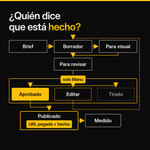
This is the job split, shipped
The Bot does not write the code
It hands the task to Cursor, watches the PR, and comes back with a video
That only holds if the Bot was built as a manager, not as another coder
What I keep from the team’s own builds:
- One job. “You scope and hand off. You do not implement.”
- Source of truth stays with the Bot that owns the repo. Claims don’t come from the slides Bot
- Auto review before a mutation. Draft before a send
- A video is a proof, not done. Done is the PR you would merge
Plugins (GitHub, Origin) are the door
The description is the brake
If the Bot can also code “just this once,” you are back to one mega-agent with a nicer demo

Manu | 🥥 retweeted
Instinct has no sense - until you watch what it did with a problem I hadn’t finished stating.
I mentioned an issue with my motorcycle insurance
Before I asked it to search Gmail
Before I said anything about renewal
It came back with a 2019 email that said the policy renewed annually
That is the part that looks like magic
The useful part is narrower
I had not pointed at that thread
I had not asked for 2019
It still put an antecedent on the table instead of a generic “check your policy."
What I cannot claim:
→ That the fact lived in long-term memory
→ That it grepped Gmail on its own index
→ That it ran a fresh search
→ That it “knew” the problem was renewal
Gmail can find an old message with a query. It does not need to read every year
Between my text and its reply, WhatsApp does not show the work
The behavior I will defend:
It treated “insurance problem” as a case that needs antecedents
and investigated before answering empty.
Contextual initiative
Not proven foresight
The mechanism is still open
The product feeling is not: less steering from me before the first useful document appears


Manu | 🥥 retweeted
Who is Noah Shinn - and why he may have solved one of AI’s hardest problems
Not a bigger context window
What an agent needs to know before the next decision
Shinn is the Reflexion author and the founder of Instinct
I’ve been reconstructing how Instinct might work
The pattern I keep seeing is not “more memory.”
It is organize, then navigate
Since 2023 his work has been: keep the lesson from the last failure and use it on the next try
A stored clause can answer a familiar question
A new problem needs the right contract, a later amendment, and a search the user never typed
Each find changes what should load next
If the context does not move, the agent is guessing with a bigger attic
Hypothesis - not a blueprint:
- Write memory so it can be found (entities, sources, stable IDs)
- Don’t dump the whole history into every turn
- Retrieve, then decide what is still missing
- Embeddings can help. They are not the system
The leap is not remembering more
It is knowing what to keep, where to look, and what is still unknown before it acts
