Mark Hirsch (@MarkAHirsch) header
Mark Hirsch (@MarkAHirsch) profile picture

Professor, Physical Medicine and Rehabilitation, Wake Forest University School of Medicine, Carolinas Rehabilitation, Atrium Health, Charlotte

Charlotte, USA
Joined December 2015
Photo by Mark Hirsch (@MarkAHirsch)Photo by Mark Hirsch (@MarkAHirsch)Photo by Mark Hirsch (@MarkAHirsch)Photo by Mark Hirsch (@MarkAHirsch)Photo by Mark Hirsch (@MarkAHirsch)Photo by Mark Hirsch (@MarkAHirsch)Photo by Mark Hirsch (@MarkAHirsch)Photo by Mark Hirsch (@MarkAHirsch)Photo by Mark Hirsch (@MarkAHirsch)Photo by Mark Hirsch (@MarkAHirsch)
❄️ Our Connect eNewsletter is launching soon! Get movement tips, research updates & expert resources—right in your inbox. Be first to get the Winter 2027 issue! 👉 Subscribe: [email protected]
1
107
Can agriculture really thrive without toxic chemicals? Sarah Grantham of Beyond Pesticides breaks down how transitioning to organic management saves money on water and operations in the long run—proving that health and sustainability go hand in hand. buff.ly/8hk9LcU
1
1
41
Mark Hirsch retweeted
Music therapy 🎶 worked. A small randomized trial of 100 patients undergoing coronary angiography (+/- PCI) found the group assigned to music before and during the procedure had a significantly lower post-procedure systolic blood pressure (13 mm), the primary endpoint, and reduced heart rate heart.bmj.com/content/early/… "Music therapy should be implemented in the catheterisation laboratory to render the Intervention more acceptable to the patients and to reduce some typical stressors."
35
61
9
250
23,765
Mark Hirsch retweeted
How vagus nerve stimulation can help treat epilepsy, working through the gut microbiome! cell.com/cell-host-microbe/f… @cellhostmicrobe cc @KevinJTraceyMD
17
79
7
355
23,709
Mark Hirsch retweeted
Epstein-Barr virus infects 90% of the world's population, so what accounts for the very small fraction of individuals who develop multiple sclerosis? A new experimental model study pointing to immune system genetic susceptibility @PNASNews pnas.org/doi/10.1073/pnas.26…
21
231
11
714
39,319
So much respect for Ben and this message
Former Nebraska Sen. Ben Sasse shared a candid message about living with a terminal cancer diagnosis during a Thanksgiving prayer breakfast in Fremont. KETV's Aaron Hegarty has more: ketv.com/article/ben-sasse-t…
9
66
932
96,464
Mark Hirsch retweeted
When dizziness is a stroke: Why the neurological examination still matters. What resonates with me about this excellent new JAMA Insights article by Jonathan Edlow and Daniel Gold is the reminder that sometimes the most powerful diagnostic tool we have is not a brain scan, but a careful neurological examination. Acute dizziness and vertigo are among the most common and challenging presentations in medicine, and remarkably, 10–25% of patients with acute vestibular syndrome may have a stroke. What caught my attention is that approximately half of these patients may lack nystagmus, and even an early MRI can miss a posterior circulation stroke. The authors emphasize five critical bedside findings, including eye movements, skew deviation, the head impulse test, neurological signs, and gait. The HINTS examination, when performed by properly trained clinicians in appropriate patients, can be remarkably sensitive. I particularly appreciate the emphasis on gait and the inability to walk independently as important warning signs. As neurologists, we must remember that technology should complement, not replace, clinical expertise. The lesson is simple: dizziness is not always an inner ear problem, a normal early MRI does not always exclude stroke, and the bedside examination can save a life. jamanetwork.com/journals/jam…
4
152
4
541
23,768
What should we actually prescribe for patients with degenerative ataxia? This systematic review of 100 studies found the strongest evidence for: -Structured physical therapy -Aerobic exercise -Intensive multidisciplinary rehabilitation With consistent improvements in gait, balance and postural control, often accompanied by reductions in ataxia severity scores. loom.ly/j9mQk_c
10
1
37
2,036
Mark Hirsch retweeted
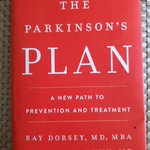
Parkinson’s is a whole-body disease and we cannot forget the gut! Yesterday in Austin, Texas, Emily Truscott and I had the wonderful opportunity to record an episode of The Dr. Hyman Show with Mark Hyman, MD, discussing our new book, The Parkinson’s Plate: A Health & Diet Guide to Manage Your Journey. We went deep into the science of diet, nutrition, the microbiome, gut-brain interactions, and the exciting possibilities for both prevention and treatment of Parkinson’s disease. One message I hope everyone takes away is that Parkinson’s is not simply a brain disease; it is a whole-body disease, and we cannot afford to forget the gut. The evidence continues to accumulate that the gastrointestinal system, gut microbiome, inflammation, and complex communication between the gut and brain may play important roles in the development and progression of Parkinson’s. We are learning that gut dysfunction can precede the classic motor symptoms by years, and that the microbiome may even influence how medications such as levodopa are metabolized. What excites me most is the growing number of studies investigating whether targeting the gut through dietary interventions, microbiome-based therapies, and other approaches might someday help prevent Parkinson’s or improve its treatment. We must be careful not to get ahead of the science as there is no magic diet or proven microbiome cure; however there is enormous reason for hope. Emily and I wrote The Parkinson’s Plate to translate this rapidly evolving science into practical, evidence-based strategies that people with Parkinson’s and their families can use today. There are also fun healthy recipes that are each equipped with protein and fiber meters, so you can be much more deliberate in choosing what you eat. A terrific conversation with Mark, and I cannot wait to share the episode when it is released! You can now order The Parkinson’s Plate on Amazon as a great Thanksgiving or holiday gift: a.co/d/0frd6wTB @drmarkhyman
4
10
69
2,925
In the winter of 1955, television executives thought they had found the perfect joke. A petite, 27-year-old mother with a doctorate in psychology was going to answer boxing trivia on national TV. They were sure she would fail and disappear. Joyce Brothers had earned her PhD from Columbia, but universities and clinics wouldn’t hire a young mother. Her husband made $50 a month. Their rent was $75. They sometimes skipped dinner just to keep the heat on. She washed her hair with dish soap because shampoo cost too much. When she applied for a quiz show, the producers rejected psychology. They gave her boxing instead, convinced a young housewife couldn’t possibly know anything about it. So she went to the library. For four weeks she barely slept. She sat at a tiny kitchen table under one light bulb, memorizing fighter heights, weights, old fight records, referee names, and obscure details from bouts decades earlier. Her baby slept in the next room. She rocked the crib with one hand and turned encyclopedia pages with the other. The boxing book eventually fell apart. She taped it back together. Then she stepped into the isolation booth. They asked about the 1923 Dempsey-Firpo fight. She gave the round, the referee, and the exact number of seconds a fighter spent outside the ropes. The questions got harder. Obscure judges. Minor bouts. Injuries from ten-round fights. She kept answering. She won the $64,000 prize. The money paid the rent, but the real prize was the audience. Within a few years Joyce had her own show. She talked about postpartum depression, anxiety, marriage, and menopause—subjects television had once called too uncomfortable. When the network tried to cancel her in 1959 after she discussed menopause, she read viewer letters on air. They backed down. The woman they had handed boxing books because they assumed she would fail had memorized the fight, won the game, and then used the victory to talk about the things they never wanted her to discuss. Joyce Brothers died in 2013 at 85.
124
2,197
47
16,938
422,435
A region of the brain named Wernicke’s area—long thought to be involved in speech perception—also generates spoken words, according to a new Science study in humans that tackles a century-old debate in the neuroscience of speech. Learn more: scim.ag/4Cdbw1a
26
154
14
646
40,342
Mark Hirsch retweeted
In a Special Report, Monica M. Bertagnolli, MD, of the National Academy of Medicine (@theNAMedicine) writes that rural Americans die younger, carry more chronic disease, and face higher barriers to care than urban Americans. The learning health system framework can help communities address rural health needs. Read “Healing Health Care in Rural America — Toward Community-Centered Learning Health Systems,” adapted from the 136th Annual Shattuck Lecture: nej.md/4iNI9es
4
12
1
32
8,564
Your voice can help people living with Parkinson’s explore opportunities to take part in research. Email your MP today and ask them to support making research conversations a routine part of Parkinson’s care. Contact your MP now: buff.ly/RcuCKbj
2
230
New evidence finds that reported occupational solvent exposure was associated with higher odds of #Parkinsons, with positive associations confined after mutual adjustment to 4 solvents (trichloroethylene, kerosene, mineral spirits, & carbon tetrachloride nature.com/articles/s41598-0…
1
2
5
386
Mark Hirsch retweeted
Each word you say is planned by a small patch of brain above your left ear, about a quarter of a second before you say it. It sits in a temporal lobe region textbooks describe as only for listening. Our paper today in @ScienceMagazine: science.org/doi/10.1126/scie… @UCSF @NeurosurgUCSF
200
1,600
176
9,998
1,252,624
The U.S. National Institutes of Health would get a $500 million raise to $49 billion in fiscal year 2027 in a spending bill released by a Senate spending panel. That modest 1% raise is $400 million more than contained in a House of Representatives bill and pushes back on President Donald Trump’s proposed 12% cut to the agency. scim.ag/4AAuRaW
2
19
1
68
12,103
Mark Hirsch retweeted
Did an erectile dysfunction drug just succeed in a Phase 3 Alzheimer's Disease study? The answer is complicated. An intriguing announcement from CTAD 2026 concerns AR1001 (mirodenafil), an oral drug originally developed for erectile dysfunction, now being investigated as a potential treatment for Alzheimer's disease. The earlier Phase 2 trial failed to meet its co-primary clinical efficacy endpoints, and depending on how you interpret the Phase 3 results, this latest study may or may not represent a meaningful success. The Phase 3 POLARIS-AD trial enrolled 1,535 participants with early Alzheimer's disease and evaluated once-daily AR1001 (30 mg) versus placebo over 52 weeks. Before we celebrate, however, there are important reasons for caution. The potential mechanism is fascinating. AR1001 inhibits phosphodiesterase-5 (PDE5), an enzyme that breaks down cyclic guanosine monophosphate (cGMP). By increasing cGMP signaling, the drug may enhance nitric oxide mediated signaling, cerebral blood flow, synaptic plasticity, and cellular pathways involved in learning and memory. There are also hypotheses involving neuroinflammation, tau biology, and neuroprotection, although these mechanisms remain unproven in humans. What did Phase 3 show? In the overall study population, the primary clinical endpoint (CDR-Sum of Boxes) was negative, with a treatment difference of only −0.11 points (P=.4015). However, in a pre-specified monotherapy population of 604 participants who were not receiving background Alzheimer's symptomatic medications, the difference was −0.44 points (P=.0266), described as approximately 31% slowing of clinical decline. Secondary signals included a 0.7-point MMSE advantage (nominal P=.0232), a nonsignificant 1.16-point ADAS-Cog13 advantage (P=.0798), and a reduction in CSF p-tau217 (nominal P=.0402). CSF cGMP also increased, consistent with target engagement, however this does not establish disease modification. Safety appeared broadly comparable for serious adverse events, although diarrhea, dizziness, falls, and treatment discontinuations were more frequent with AR1001. What resonates with me is both the promise and the uncertainty. A prespecified positive population is more compelling than a post hoc subgroup, but it does not erase a negative result in the overall population. We need to understand the statistical hierarchy, multiplicity adjustments, missing data, clinical meaningfulness of a 0.44-point CDR-SB difference, and why background Alzheimer's medications might influence the treatment effect. Importantly, these results have been released through a conference presentation and company announcement, not a full peer-reviewed Phase 3 publication. My message is simple: this is a potentially interesting signal, not yet a reason to declare victory. Alzheimer's disease desperately needs safe, accessible oral therapies, but enthusiasm must be matched by scientific rigor. We must await the full paper and independently scrutinize the data before deciding whether POLARIS-AD was truly a positive trial. neurologylive.com/view/ar100… Phase 2 peer-reviewed publication: pmc.ncbi.nlm.nih.gov/article…
5
9
3
35
4,786