

Staff Machine Learning Researcher @MMerantix | Applied mathematician | Interested in Deep Learning, LLMs, Model Compression & Efficiency
Berlin, Germany
Joined June 2021
- Tweets133
- Following632
- Followers276
- Likes446



Pinned Tweet
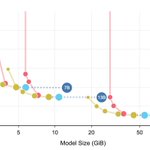
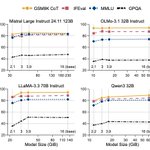
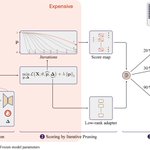
The LLM compression community is obsessed with quantizing to ever lower bit-widths.
But below 4 bits, returns start diminishing, requiring many tricks & hacks to prevent collapse.
What if 8-bit + smarter compression beats the low-bit race?
📢 Thrilled to introduce EntQuant …
Martin Genzel retweeted

UPDATE: The Soofi S Tech Report v3.0 is now online New analyses, a revised evaluation, and 152,000 individual results that anyone can verify.
👇
xitter.cf/effi288/status/2080579…

UPDATE: The Soofi S Tech Report v3.0 is now online (arxiv.org/pdf/2607.09424).
New analyses, a revised evaluation, and 152,000 individual results that anyone can verify.
Architecture & Data
Soofi S uses the openly published reference architecture of Nemotron 3 Nano (cf. Tech Report, p.1), which allowed us to train a capable first model within a few months. This is how the field works today: Kimi K2 builds on DeepSeek, many models (including from Mistral) build on Llama. Architectures are published knowledge that the open-source community should be using collectively. In parallel, we are researching our own architectures as a further building block of a sovereign European model stack.
Where does the difference lie?
Soofi S makes the difference with data: our data recipe delivers substantial gains in German in particular (+15 points in language proficiency vs. the architecturally identical reference model, see linked post), whilst also improving English performance. Same blueprints, better house.
Practice exams and what the community found in our data
Like other open projects (e.g. OLMo), we train with rephrased practice questions from well-known benchmarks: mock exams, not the real test, so that the model can practise the later test formats. The practice questions come from the training splits of the benchmarks, which are usually separated into "practice" and "exam". For GPQA and GPQA Diamond, however, this separation does not exist: the complete exam set is simply labelled "Train" on Hugging Face. As a result, exam questions ended up in the practice set, and from there in our data and presumably in other open-source models as well.
The advantages of an open approach
The community spotted this in our published data, and we are grateful for that. We verified the issue, removed GPQA and GPQA Diamond from Soofi S's scoring, and recalculated all comparisons across all 16 models. For verification: all 152,000 individual results for Soofi S are available here (huggingface.co/datasets/Soof…), for the other reference models they are available here (huggingface.co/datasets/ella…).
Additionally, the linked post includes an evaluation by ellamind on unpublished held-out data that confirms the results (huggingface.co/datasets/ella…).
Putting the data volume in perspective
If the entire training corpus of Soofi S were a path around the Earth, the data in question would account for 68 centimetres. Issues like these can only be found when everything is in the open. The outcome shows: open source works.
What comes next
The post-trained models are currently in beta testing with partners from academia and industry. After that, the hardened model is to be released under a permissive licence.
Interest has been considerable, and we are working at full pace towards an open release in the coming weeks. Thank you for your patience :)
Many thanks also to everyone who looks this closely. This kind of scrutiny is precisely the point of open models.
And there is more to come: Soofi L is already in training.
Built by a consortium of @DFKI,@FraunhoferIIS @FraunhoferIAIS ,@TUDarmstadt,@Uni_WUE,@BHT_bln, L3S,@LamarrInstitute,@ellamindAI,@Hessian_AI and @MMerantix— coordinated by the@ki_verbandand funded by the BMWE (IPCEI-CIS / 8ra).


Martin Genzel retweeted

Eine sehr gute Nachricht. Deutschland hat die Top Open-Source KI Soofi entwickelt. Sie konkurriert natürlich nicht mit Claude oder Open AI Top Modellen. Aber für sehr viele Industrieanwendungen und Verwaltung ist es mehr als gut genug. Hier entscheidet sowieso Qualität der Daten


Martin Genzel retweeted

Tech report on Soofi-S-base is out: A 30B-A3B Mixture-of-Experts Model based on @NVIDIAAI's Nemotron 3 architecture, trained on 27T tokens with a strong focus on German. Supports up to 1M context length. Its a decent model and a solid first step. And SOOFI-L-base is already training.
Throughout the project, we executed more than one million benchmark task runs. During the production training run, we continuously evaluated intermediate checkpoints to track whether we are on target.
Brief 🧵 on base model evals in SOOFI, a technical blog with more details will follow soon.


📄 Releasing the Soofi S pretraining tech report: a sovereign, open foundation model for German and English
Today we’re publishing the full pretraining tech report and project page for Soofi S 30B-A3B — a Mixture-of-Experts hybrid Mamba model trained on ~27 trillion tokens with deliberately up-weighted German.
What’s in the report:
🏆 Strongest fully open model in our evaluations on BOTH the English and German aggregates — ahead of Olmo 3 32B and Apertus 70B (full methodology in the report)
📋 Radical transparency: complete per-source data accounting, all hyperparameters, training + eval code, checkpoints — everything under permissive licenses
🇩🇪 Trained end-to-end on Deutsche Telekom’s Industrial AI Cloud in Munich — sovereign AI infrastructure on German soil
Soofi S combines frontier-level capability with the highest measured aggregate long-context decode TPS, and unlike full-attention dense baselines maintains high throughput as context grows. The figure plots Capability Index versus measured aggregate decode TPS/GPU at 40K context and batch 32. The Capability Index averages five benchmark groups, i.e., Code, GSM8K, GPQA-Diamond, English aggregate, and German aggregate, after normalizing each group to the best plotted model. Aggregate decode TPS/GPU is measured with a TP=1, one-B200 vLLM latency-subtraction protocol.

Martin Genzel retweeted
📄 Releasing the Soofi S pretraining tech report: a sovereign, open foundation model for German and English
Today we’re publishing the full pretraining tech report and project page for Soofi S 30B-A3B — a Mixture-of-Experts hybrid Mamba model trained on ~27 trillion tokens with deliberately up-weighted German.
What’s in the report:
🏆 Strongest fully open model in our evaluations on BOTH the English and German aggregates — ahead of Olmo 3 32B and Apertus 70B (full methodology in the report)
📋 Radical transparency: complete per-source data accounting, all hyperparameters, training + eval code, checkpoints — everything under permissive licenses
🇩🇪 Trained end-to-end on Deutsche Telekom’s Industrial AI Cloud in Munich — sovereign AI infrastructure on German soil
Soofi S combines frontier-level capability with the highest measured aggregate long-context decode TPS, and unlike full-attention dense baselines maintains high throughput as context grows. The figure plots Capability Index versus measured aggregate decode TPS/GPU at 40K context and batch 32. The Capability Index averages five benchmark groups, i.e., Code, GSM8K, GPQA-Diamond, English aggregate, and German aggregate, after normalizing each group to the best plotted model. Aggregate decode TPS/GPU is measured with a TP=1, one-B200 vLLM latency-subtraction protocol.
Martin Genzel retweeted

Patrick is presenting our work at ICML in Seoul!
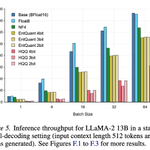
Float 8 model performance models at compression down to 2 bits via entropy coding ;)
📍 Poster session: Thursday, July 9, Hall A, board #2209
🕡 10:30 AM to 12:15 PM KST


Martin Genzel retweeted

Excited to share KletterMix 🇩🇪🚀
A ~725B-token German pretraining + annealing corpus.
Proud to have co-led this with @HarleRuben, Sebastian Sztwiertnia, Abbas Goher Khan, Mehdi Ali, @effi288, and @kerstingAIML.
Paper: huggingface.co/papers/2606.0…

Martin Genzel retweeted
New preprint!
"Asymptotic e-processes" with Pierre-François Massiani and Sebastian Schulze.
The paper develops theory for sequential anytime-valid inference when e-processes arise only approximately, e.g. due to estimation error or model misspecification.

Martin Genzel retweeted
…catch the gang presenting this one in Seoul!
So what’s the price? Entropy coding adds some decode overhead at inference time. Inspired by the recent DFloat11 paper, we integrate a GPU-based ANS decoder into the forward pass, decoding weights on-the-fly, leading to a modest overhead compared to Marlin FP8 and BF16.

👏 Shout-out to all co-authors for an amazing collaboration: @patrickputzky, @gaussianmeasure, Sebastian Schulze, Thomas Wollmann, and Stefan Dietzel
📄 Paper: arxiv.org/abs/2601.22787
🧑💻 Code: github.com/merantix-momentum…

Martin Genzel retweeted

We're releasing the DASLab GGUF Quantization Toolkit! 🚀
First open-source toolkit bringing GPTQ + EvoPress to @ggerganov's GGUF format, enabling heterogeneous quantization based on importance.
Result: Better models at the same file size.
[1/5]

That was fun! Check out our work here 👉 arxiv.org/abs/2502.01717
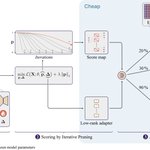
Wrapping up ICML - had a blast, great to see so many people again! @MartinGenzel @patrickputzky presenting our work on variable size model compression at ES-FoMO workshop😎

Very much looking forward to it 😀 The whole @MMerantix research team will be at ICML! Let's connect 🤝
More details about our work on LLM compression 👉 xitter.cf/MartinGenzel/status/19…
