
Full-time humanist, pedant, & historian @Cambridge_Uni—part-time human—purveyor of heterodox takes—tamed rebel—pastime: reading papyri/dating apocalypses
Joined November 2017
- Tweets2.6K
- Following456
- Followers3.2K
- Likes2.8K





Pinned Tweet
Finally in print: this article edits & studies 5 remarkable 8th-century inscriptions from Mecca. These are important witnesses to caliphal patronage of the writing of prophetic biography & caliphal interventions into & harmonisation of hajj rituals.
academia.edu/55099627


Given historical conversion rates there's a more than 99% chance Jesus's ancestors would have converted to Christianity and then Islam (or perhaps directly from Judaism to Islam) and become Arabised. So if born in 2026 Jesus would have been a Palestinian Arab.

Hey @grok, concise no spin.
What ethnicity would Jesus be if he was born today in 2026?
Ethnicity only.
RIP. Chris made great contributions to the study of mediaeval Islamic economy towards the end of his career. The loss to Islamic history and studies is greater than to any other field to which he contributed...

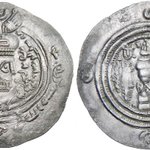
A long time in the making, but this study is finally out in the Journal of Near Eastern Studies. It revises the early course of the Second Islamic Civil War based on numismatic evidence.
'The Riddle of Ibn al-Zubayr’s Earliest Coinage, 681-683'.
academia.edu/36156875


On the origins of the Second Civil War, a numismatic study
academia.edu/s/7c2ed474a0?so…
If you are interested in pursuing an MPhil in Middle Eastern studies at Cambridge please consider registering for our online MPhil open day on 17 Sep.
I remain open to supervision enquiries from prospective MPhil students.
ames.cam.ac.uk/events/mphil-…
I'll be giving a talk next week as part of the amazing TeTra seminar discussing the fiscal system in early Islam as well as ʿUmar II and his socio-political reforms, his edicts (including the Fiscal Rescript), & possible reasons for his saintly reputation!
facebook.com/events/10364176…

To register, send an email to [email protected], [email protected], [email protected] or [email protected].
Happy to announce that I just submitted what is—barring sīra/maghāzī—the oldest extant Arabic historical composition for publication. The text was known but its tortuous redaction history masked its antiquity—it was probably composed no later than the early 170s AH. Stay tuned!
Lists and Islamic Historical Memory: A List of Muhammad’s Wives on Papyrus
academia.edu/165498663 via @academia

ʿAbd Allāh ibn al-Zubayr's early career and coinage: a thread.
ʿAbd Allāh ibn al-Zubayr was one of the most remarkable figures of early Islamic history. For eight years during the Second Fitna, he was the most powerful contender for the caliphate.
academia.edu/36156875

(the Kharijites of the Hijaz were allied to Ibn al-Zubayr at this stage). Moreover, literary sources show that Ibn al-Zubayr had set up an alternative centre of power in the Hijaz already during Yazīd's lifetime, having conquered all of the Hijaz by 683.
Anyone worth their salt agrees biblical tradition influnced the Quran. But for a historian the million $ question is how you turn that insight into a viable reconstruction of the process of Islam's emergence. Saying 'bingo, influence here!' is just so intellectually pedestrian.

End of a campaign to document epigraphica on the Arab-Byzantine frontier.
We visited al-Ḥadath al-Ḥamrāʾ—ancient Adata—whose site was identified by my colleague and collaborator Asa Eger, and whose ruins bore a foundation inscription by the caliph al-Hādī.


We also stopped at the site of the fort of Būqā, which Asa recently discovered and identified.
At Antioch we documented a Mamluk inscription on a Roman catacomb, which it calls a 'blessed place', atop the crusader fortress of Koz, the residence of the Latin patriarch of Antioch.