

Deputy Principal Challis CPS, L3 Classroom Teacher, Literacy Leader, Passionate Public Educator. Striving for excellence and better than postcode results.
Boorloo/Perth, Australia
Joined August 2011
- Tweets4.1K
- Following479
- Followers800
- Likes10.1K







Mark McClements retweeted

Behaviour is the key to almost every element of school improvement. The number of people who don’t get this staggers me.
Mark McClements retweeted

I have just completed a series of four professional development videos on the subject of teaching effective whole-class reading lessons.
These videos contain high-quality footage of me teaching each part of the reading lesson structures from Primary Reading Simplified.
>>

Mark McClements retweeted

Here's the question I think we should be asking about school improvement right now: What would be the impact on student achievement of giving every teacher 25 hours of professional learning on the science of learning? Without this, leaders cannot prioritize improvement efforts.
Mark McClements retweeted

I'm excited to put this out into the world. Connective Fluency is a set of resources to help schools provide more fluency practice in basic maths facts and multi-digit computation. It's designed to be simple and effective. And it's all free.

Mark McClements retweeted

Setting is the UK term for placing students into different classes based on their perceived ability or prior attainment in a subject.
Following the news this week from the UK of positive effects of setting on maths achievement and self-confidence, here are my thoughts.
1. More than three gradations per year level makes no sense. There is no data that can reliable place a child in set 5 out of 7.
2. The least advanced group needs the best teachers. Too often, they are given a new teacher or even a relief teacher, while the head of department somehow ends up with the most advanced kids.
3. All groups should get substantially the same curriculum, otherwise students never have a chance to move sets. What should vary is the level of scaffolding. A teacher should keep the less advanced students close.
4. While I’m fairly convinced of the value of setting in *mathematics*, I would always be keen to hear the views of the relevant head of department. If the head of English and their team want mixed ability groups, I would listen, ask challenging questions and, depending on the responses, probably support it.
I suspect many advocates of setting would find at least one of these four points to be controversial.

Mark McClements retweeted

There are now many versions of Willingham's Simple Memory Model. Each has its pros and cons.
Mainly though, im interested in the difference it makes. So the slide goes up in CPD presentations across the land. But what then? What are you trying to achieve? What difference do you want to make in people's classrooms?
Good CPD isn't about raising awareness. It's about leaving people with something concrete that they can use in their actual teaching. If you don't have that, you can have the best working memory model in the world, but your CPD is a waste of time.


Mark McClements retweeted

Mini-white boards are great. I genuinely love them. But as with any means of participation, they have benefits and limitations and teachers should be aware of both and use accordingly.
On the upside, they offer maximum observational efficiency. When everyone writes i can see the full data set—everyone’s answer—and when they hold them up I can scan and review with maximum speed. That’s a big win.
Plus they feel low stakes to students and therefore low-risk… if it’s wrong I just erase it. Ideal for settings like retrieval practice.
And when the routine is installed well they are fast and engaging.
Some limitations to consider though.
There’s a downslide to disposable writing that disappears. It’s harder to go back to it: to study and revise it later or to improve it. The answers are not in your notes!
By the way we have a video of a chemistry teacher, Abi Mincer of Totteridge Academy in London who writes the answer on her smart board after students erase so there’s a list of the answers permanently visible. Love that.
MWBs can also socialize hasty or even sloppy writing- with the sloppy referring to the production or to the thinking. The goal can easily become speed of response. The marker slips easily across the board and this just maybe makes it so that students don’t write as slowly and thoughtfully as they might on paper. Slow, deliberate thinking leads to careful word choice, the inclusion of new ideas and assists with encoding.
MWBs can be a crutch. It’s an easy way to engage students. A bit easier than other also important ways to engage them such as cold call and stop and jot. That means there’s a risk of over relying on it. It’s a great tool for some situations. But a craftsperson needs lots of tools.
I’m sure you can think of other benefits and limitations. Just wanted to share a few so that teachers are more likely to use a great tool for maximum gain.
Mark McClements retweeted

Do you want students to engage, build confidence and resilience? Then don’t allow them to opt out of learning. Episode 3 of Chalk Dust with the inimitable Adam Boxer.
Mark McClements retweeted
Reading education blogs changed my practice, so I always want to try take the opportunity to share the love.
Here are a few free blogs I've read recently that I thought were super, please share if you can!
I work at a school that doesn't have merit points or rewards or anything like that, so this piece by @msrebeccabirch on intrinsic motivation really appealed to me: rebeccabirch.substack.com/p/…
We are in the midst of an SEND crisis, and part of the problem is outlined by @head_teach: that some schools have astonishingly higher numbers of students with SEND than others: matthewevanseducation.substa…
@joel120193 is smashing out hit after hit on his blog, and this piece on the sheer amount of things teachers have to do resonated: joel120193.substack.com/p/th…
@mpershan wrote a typically scholarly, wide-ranging and sophisticated piece on implicit vs explicit learning, the memorisation of maths facts and much more. pershmail.substack.com/p/und…
Next up are two posts on AI:
@alex_crossman has written an excellent piece on the risks of AI to education. Our job is to get students' thinking hard, and AI's job is to get people thinking less hard. These aren't compatible, and we need to pull the brakes hard. powerfulknowledge.substack.c…
Whilst not strictly about education, Gary Marcus's entry here about the security risks of OpenClaw and other weird things is vital if we are to take internet and AI security seriously. garymarcus.substack.com/p/op…
Of course, I've been blogging too, and you can check out my entries here: carouselteachlearnlead.subst…
As stated at the outset, please share if you can!
Mark McClements retweeted

Reading aloud is one of the most important things we do with our class, it is also one of the most special.
When we get the books right “books aren’t just books, they’re memories”
We create a shared experience.
Here are my top 7 tips for reading aloud to your class.


Mark McClements retweeted

SOLID ENTRY ROUTINES! In this latest edition of ⚗️DistillED, I explore entry routines and why the first few minutes of a lesson are critical for securing attention, reducing uncertainty, and establishing calm, focused conditions for learning.
👇👇👇
newsletter.jamieleeclark.com…


Mark McClements retweeted
THINK-PAIR-SHARE! A well-structured Think–Pair–Share routine can significantly boost participation, thinking, and the quality of student responses. This week’s ⚗️DistillED includes this FREE handy resource designed to help students master the WHAT, WHY, and HOW of the process.
GRAB IT HERE! 👇
newsletter.jamieleeclark.com…

Mark McClements retweeted

Whole Books or Excerpts? Which Does the Most to Promote Reading Ability?
shanahanonliteracy.com/blog/…

Mark McClements retweeted
📗 Chuffed to see Teaching One-Pagers Vol. 2 listed as a best seller in Australia. Encouraging to see growing interest in the Science of Learning and evidence-informed teaching — it's a privilege to contribute to the movement. Grab a copy if you’re keen to find out more. Cheers!

Mark McClements retweeted

Anita's "Archerisms". You can download a pdf copy from the resource page for my episode with Anita Archer here: annastokke.com/resources/ep-…

Mark McClements retweeted

Why is Direct Instruction still relevant? A thread. 🧵
DI is the OG of explicit teaching. Born at the University of Illinois and refined at Oregon, DI began with a simple but radical insight: there are better ways of teaching. 1/
Mark McClements retweeted
Great response to Rosenshine Principles of Instruction ⚗️DistillED series so far…
1. Daily Review 🗓️newsletter.jamieleeclark.com…
2. Small Steps 🪜newsletter.jamieleeclark.com…
3. Ask a Large Number of Questions 🗣️newsletter.jamieleeclark.com…
4. Provide Models 🔎newsletter.jamieleeclark.com…


Mark McClements retweeted
◻️MINI-WHITEBOARDS! MWBs are the unsung heroes of the classroom. They boost participation, drive thinking, and help you adapt your teaching in real time. This recent one-page guide summarises the essentials…
🙏 Support my work by tapping REPOST and download it FREE from my website:
jamieleeclark.com/graphics

Mark McClements retweeted

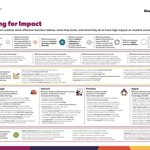
Want to know what works best in your classroom? Centre for Education Statistics and Evaluation (CESE) have updated the What Works Best suite of resources for teachers and school leaders education.nsw.gov.au/about-u… @NSWeducation
