

Seshat @trustlesseng @solana'21 Defi Accelerator Hardware Device: https://xitter.cf/t.co/h3L1ZMt2uv
♃ Solana Beach, CA
Joined July 2021
- Tweets7.8K
- Following332
- Followers1.4K
- Likes25.2K





Pinned Tweet
Trading on-chain, time is edge
Public RPCs weren't built for traders
💦Firehose In ➡️ Signal Out ⚡️
@doublezero Edge ready, live shred receive, silicon filtering, decode, and gRPC emission average under 1 ms
One device. No assembly required. This is the Trustless Engineering @trustlesseng DeFi Accelerator Device

MΣƬΛM◎Я₱Ḣ̴ 🔌 retweeted

A lot of people learned something in 2008 that they never really unlearned: the institutions they trusted had very different incentives than they did.
People lost jobs, homes and savings. Banks got bailed out. The upside was private. The downside became everyone else’s problem. It’s pretty easy to understand why “trust us” stopped working after that.
You can see it in the surveys.
Before the crash, roughly 40% or more of Americans expressed strong confidence in banks. By 2010, that was down around 20%. Edelman found similar drops in trust in banks and business across the US and much of Europe.
This wasn’t just people being angry for a few months; it stuck around for years and hasn't really faded. It changed the baseline.
People started demanding more evidence. Explain the product. Show me the fees. Tell me what happens when something goes wrong. A recognizable logo and a big advertising budget weren’t enough to answer those questions.
They also got more careful with money. Savings rates rose, debt got paid down, and discretionary spending got cut. Some of that was necessity. But the assumption that things would keep getting better had taken a pretty serious hit.
The way people evaluated companies changed too. Personal experience, independent information and other customers’ reviews carried more weight. You could still trust your own bank because it had treated you well while having very little faith in the industry as a whole.
And that skepticism didn’t stay confined to banking. Watching powerful institutions get protected while ordinary people absorbed the consequences gave people reasons to question government and big business more broadly.
Markets eventually recovered. That didn’t undo the lesson. Higher stock prices don’t automatically restore confidence in the institutions that failed you.
One of the longest lasting consequences of 2008 was that people became harder to convince and more cautious with their money. They are less willing to take an intermediary at its word and more interested in whether the incentives actually lined up.
Once people start asking those questions, telling them to trust you isn’t much of an answer.


MΣƬΛM◎Я₱Ḣ̴ 🔌 retweeted

JUST IN: 🇺🇸 Cboe to launch extended options trading hours for 24 major US stocks and 5 ETFs starting Monday.
MΣƬΛM◎Я₱Ḣ̴ 🔌 retweeted

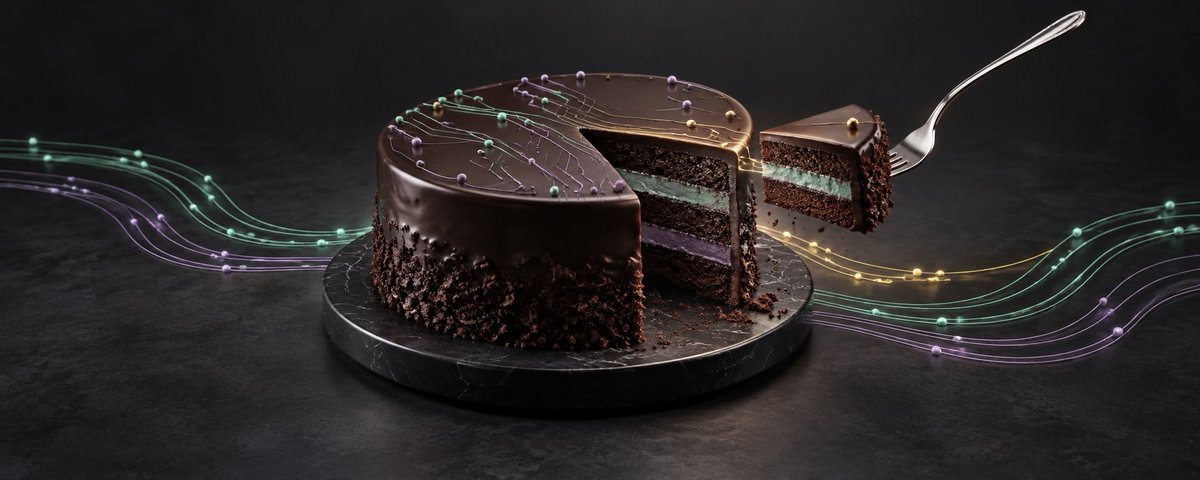
Do you know what to do while @solana changes to Alpenglow?
Is your money safe? Do your transactions land? What will the impact be on you?
Find out here 🧵
We're building it crystal.trustless.engineerin…


We're building a more secure cold store wallet @trustlesseng

MΣƬΛM◎Я₱Ḣ̴ 🔌 retweeted
Agreed!
Try it out today on your @triton_one account or spin your own official OSS @solana ledger RPC stack using Superbank!
Whether you want lightning fast on-demand JSON-RPC or full flow offline backfills, @triton_one has you covered.
blog.triton.one/closing-the-…


You can just do things

BREAKING: CFTC staff have reportedly been told to retract their analysis of suspicious oil trades.
They include well-timed bets on oil futures placed shortly before major Trump announcements on the Iran war.
In one case, investors placed roughly $950 million in oil bets just hours before the April 7 ceasefire announcement.
follow the money trails, it leads to garbage

The Altruists was produced by Michelle and Barak Obama
SBF publicly donated $39.8 million to Democratic candidates and aligned outside groups during the 2021–2022 election cycle
The framing of the movie as some love story and to make SBF look more innocent is even more calculated than I initially realized. Always follow the money

MΣƬΛM◎Я₱Ḣ̴ 🔌 retweeted

Cryptography doom == ai doom.
It’s fear based on uncertainty from smart people unable to predict the future. It’s not fear based on certainty from smart people with real world repeatable measurements.
Fear is a great sales tool though. Wallet devs should be shipping pqc solutions now and establishing the processes of managing those secrets safely and rotating those protocols safely and getting implementation Lindy and robustness under their belt. Thats the great business opportunity underneath all this.
MΣƬΛM◎Я₱Ḣ̴ 🔌 retweeted
Trading on-chain, time is edge
Public RPCs weren't built for traders
💦Firehose In ➡️ Signal Out ⚡️
@doublezero Edge ready, live shred receive, silicon filtering, decode, and gRPC emission average under 1 ms
One device. No assembly required. This is the Trustless Engineering @trustlesseng DeFi Accelerator Device
So many exciting things happening in the sky this year although its been a difficult this year for my partner (Thanks Saturn/Neptune)
Can't convince me astrology doesnt work

People wondering why 2026 has been so hard to predict ?
-6000 year Saturn/ Neptune conjunction at 0 Aries February
-Extremely rare Jupiter Saturn Uranus and Neptune all changing signs in the same year
-Extremely rare unprecedented Barbault outer planet alignment July
-1st Uranus Pluto trine since the 1920s July and November
-Mercury and Venus station direct on the same day for the first time since 1863
-Mars Jupiter South Node triple conjunction in November that hasn't happened since 1904
Welcome to my world
Seeing other models that agree with this. follow the liquidity and BTFD

As the S&P 500 slams up into major resistance again…
The liquidity level I have mentioned multiple times.
A large 4 billion call wall…
The Bollinger band…
The Keltner Channel…
My larger weekly signals are still warning of lower… not confirming the moves up into this level where we've seen continued distribution.
Based off 2 years of tracking imbalances, 96% of them have been taken out to perfection within 35 days…
We have one at 755.5…
Tick tick tick…
If you're not in with me for my swing move down, this is the area that I added at the other day when we tagged it.
21 day countdown…
52 total imbalances.
Here is how long each one took to get taken out....
2026:
Sep. 30 — 2 trading days
Sep. 30 — 1 day
Sep. 21 — 3 days
Sep. 9 — 3 days
Aug. 17 — 35 days
Aug. 4 — 13 days
Aug. 4 — 21 days
Jul. 29 — 1 day
Jul. 27 — 5 days
Jun. 9 — 4 days
Jun. 5 — 2 days
Jun. 5 — 7 days
May 28 — 5 days
May 6 — 24 days
Apr. 17 — 2 days
Apr. 13 — 2 days
Apr. 9 — 3 days
Apr. 2 — 1 day
Mar. 31 — STILL OPEN (~630)
Mar. 18 — 4 days
Mar. 18 — 14 days
Mar. 2 — 1 day
Feb. 23 — 1 day
Feb. 12 — 9 days
Feb. 2 — 1 day
Jan. 29 — 3 days
Jan. 26 — 4 days
Jan. 12 — 3 days
Jan. 7 — 3 days
Jan. 2 — 1 day
2025:
Dec. 24 — 3 trading days
Dec. 11 — 1 day
Nov. 20 — 4 days
Nov. 7 — 6 days
Nov. 4 — 1 day
Oct. 14 — 3 days
Oct. 10 — 2 days
Oct. 10 — 7 days
Oct. 8 — 2 days
Sep. 23 — 5 days
Sep. 16 — 3 days
Sep. 15 — 3 days
Sep. 11 — 22 days
Aug. 7 — 2 days
Jul. 3 — 2 days
Jun. 25 — 1 day
May 29 — 4 days
May 28 — 1 day
May 13 — 7 days
Apr. 9 — STILL OPEN (~495)
Feb. 21 — 77 days
Feb. 21 — 85 days
Now look at the numbers...
50 of the 52 imbalances have eventually been taken out.
Of the 50 completed:
22% were taken within 1 trading day.
38% within 2.
58% within 3.
68% within 4.
74% within 5.
82% within 7.
88% within 14.
90% within 21.
94% within 24.
96% within 35.
And only TWO imbalances in this entire two year sample remain open.
We have one imbalance sitting below us at $752.5-755.5. Day number 17.
If we tag this like my signals suggest, it is going to be one for the books.
Tick Tick Tick $SPY

MΣƬΛM◎Я₱Ḣ̴ 🔌 retweeted

So many people have DM’d me about this trailer and I’ll be honest, watching it made me physically throw up.
I was COO from before FTX even had a name, it was my baby, and I was the last one out of the Bahamas after Sam got extradited. I lost everything I had on it and it took me a long time to get over, so I have zero interest in defending the people who caused this.
The media loves the story that FTX blew up because we were all partying in the Bahamas, but the place I worked looked nothing like that.
We had under 200 people in the core company at its peak, not counting subsidiaries, when other exchanges our size had thousands, so a lot of us were doing 16 to 18 hour days for over three years and barely had time to sleep, and whenever we walked in, day or night, Sam was at his desk.
I worked with Caroline and never once saw her get aggressive like she does in this trailer. She’s quiet and mild, and often lost in her own thoughts.
Most of us didn’t even know she and Sam were dating until we read about it after the bankruptcy, and I never saw him so much as put an arm around anyone.
FTX’s collapse ruined so many people’s lives, including ours, and Netflix decided to make it a love story.
Shame on you @netflix.

MΣƬΛM◎Я₱Ḣ̴ 🔌 retweeted
Superbank Architecture Explainer!
@wedtm explains what a composable Superbank is and what considerations you should make when deploying it. Link to the visualization in the comment by @SteveCleanBrook.
MΣƬΛM◎Я₱Ḣ̴ 🔌 retweeted

The ability to resist panic and think in dimensions rather than memes seems increasingly important in the age of AI

People read one emotional Matt Green tweet about public key encryption, spent 0 seconds thinking about it, and decide to panic.
Sure ECDLP will be broken with QC's one day. But there's so many levels to this being wrong to panic over.
- 0 actual progress on attacking anything
- We have tons of alternate plans available.
- Quadratic advantage hash-based PKE
- Lattices
- Multivariate polynomials
- A whole field of KEM's from fine grained cryptanalysis. (Fun fact, works even if P=NP)
Sure you can wake-up and choose doomer and be wrong.
We have decades of cryptography to draw from on for all the above options, AND how to build a lot of what we want from UX tweaks without PKE. PKE just made a lot much easier, and less web of trust routing like.