



MethodOfKeynes retweeted

We just lost another legend today 😔
A teenage guitar prodigy joined one of music’s wildest bands and spent the next five decades helping redefine what funk could sound like.
Michael “Kidd Funkadelic” Hampton, the legendary Parliament-Funkadelic guitarist and Rock & Roll Hall of Famer, has passed away today at 70.
Hampton was only 17 when his life changed. After impressing George Clinton’s circle with his ability to tackle Eddie Hazel’s legendary Maggot Brain, he was brought into Funkadelic and quickly became a major part of the group’s explosive guitar sound.
His playing could be soulful one moment and completely ferocious the next. He became especially celebrated for his guitar work on “(Not Just) Knee Deep,” “Never Buy Texas From a Cowboy,” and his live performances of Maggot Brain.
That music did not stay in the 1970s. Parliament-Funkadelic became one of the foundations of modern funk and later hip-hop, with generations of artists sampling and building upon the grooves Hampton helped create. In 1997, he was inducted into the Rock & Roll Hall of Fame alongside Parliament-Funkadelic.
Remarkably, Hampton was still creating new music in 2026, releasing fresh solo material and speaking about a career that began when he was barely old enough to drive.
Michael Hampton helped prove that funk could groove, scream, shred and still make the entire room move.
The Mothership has lost one of its great guitar heroes.
Rest in peace, Michael “Kidd Funkadelic” Hampton 🕊️

MethodOfKeynes retweeted

Sister Ursula Zulu, one of the oldest religious sisters in Malawi, recently marked her 102nd birthday. Born on 11 November 1924, she is a member of the Daughters of Mary Theresa Ledochowska Congregation (commonly known as the Teresian Sisters) and resides at Mlale in the Archdiocese of Lilongwe.
We extend warm belated birthday wishes to Sister Ursula. May we all advance in years with blessings and good health, in the name of Jesus Christ. Amen.

MethodOfKeynes retweeted

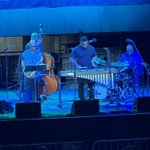
I'm having a great time playing with the Billy Hart quartet at SMOKE! The band has been together over 25 years and this week the original cast is in place with Mark Turner and Ben Street. Three more nights


MethodOfKeynes retweeted
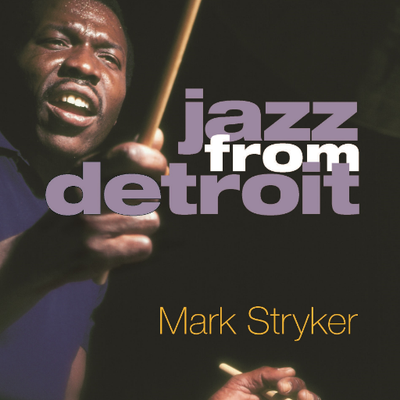
Happy Birthday today to Ellis Marsalis, who would have turned 92. I've had and enjoyed this fabulous and unpredictable duo LP with Eddie Harris since practically the day it came out in 1985. m.youtube.com/watch?v=9AZvL0…
cc: @bmarsalis @wyntonmarsalis

MethodOfKeynes retweeted

Excited to be in Europe this November with Dianne Reeves and the quartet, celebrating the music of John Coltrane and Johnny Hartman.
Tickets at branfordmarsalis.com.

MethodOfKeynes retweeted

Let’s wish Houston Person a very happy 92nd birthday!! One of the GREATEST to ever do it!!
MethodOfKeynes retweeted

In Miami rehearsing for the Friday concert at the @ArshtCenter performing music of Jobim and originals with the Henry Mancini Institute Orchestra, plus dear colleagues from Trio da Paz (Romero Lubambo, Nilson Matta, Duduka da Fonseca) & Shelly Berg, Anat Cohen, & Marc Johnson.

MethodOfKeynes retweeted

The sad part to me is the sheer numbers of people eating up the blatant lies and slander against Jews and Israel. I get it though; it's the easy way out for them. Always has been.
MethodOfKeynes retweeted
This is fun to read.

The British army once sentenced Daniel Morgan to 500 lashes, a punishment that usually killed a man, for the crime of knocking out an officer who struck him. He survived every stroke. And he spent the rest of his life joking that the drummer had miscounted and only given him 499, so the British still owed him one. He collected that debt at a place called Cowpens.
Morgan was not born to anything. He was a rough, barely educated frontiersman who made his living hauling freight by wagon on the Virginia frontier, a big, powerful, hot-tempered young man. During the French and Indian War, serving as a civilian teamster with the British army, a British lieutenant struck him with the flat of a sword. Morgan answered with his fist and dropped the officer cold. For a colonial to strike a British officer was close to a capital offense, and the court-martial sentenced him to five hundred lashes with the cat-o'-nine-tails, a flogging meant to flay a man and very often to kill him.
They tied him up and laid it on, and Daniel Morgan did not die. He carried the ridged scars on his back for the rest of his life. But instead of breaking him, that brutal punishment forged something. It left him with a cold, permanent hatred of the British army and its contempt for colonial men like him, a hatred he would one day repay with interest. And it gave him his lifelong joke: the drummer lost count and stopped at 499, so the British, he liked to say, were still one lash short of paying him in full.
When the Revolution came, that uneducated wagoner turned out to be a natural soldier of rare gifts. He raised a company of frontier riflemen, crack shots who could kill at distances that terrified British regulars, and he led them north to Saratoga, where his marksmen helped shatter Burgoyne's army and win the turning-point victory of the war. Morgan had a feel for battle that trained European officers lacked, an instinct for ground, for timing, and above all for the men he led. He understood that his militia were not professional soldiers and could not be asked to do what professionals did, so instead of cursing them for it, he built his tactics around what they could do.
That genius reached its peak at the Battle of Cowpens in January 1781, one of the most perfectly fought battles in American history. Facing the dreaded Banastre Tarleton, Morgan set a trap built entirely on human nature. He put his unreliable militia in the front line and asked them only for two volleys, then permission to fall back, which they gladly did. Tarleton's British, seeing the Americans retreat, charged forward in a confident rush straight into Morgan's real line of hardened Continentals, and then Morgan sprang the jaws, hitting the British on both flanks at once in a double envelopment while his cavalry rode down their rear. In minutes Tarleton's command was destroyed, hundreds killed and captured, one of the most crushing and complete victories of the war, and Tarleton himself barely escaped. It was the frontier wagoner out-generaling the darlings of the British army.
So the debt was paid. The boy they tried to flog to death grew up to be the man who methodically dismantled the British in the field, who understood soldiers because he had been treated like dirt as one, and who turned the hard lessons of his own back into some of the finest tactics the Revolution ever saw. Remember Daniel Morgan. The British gave him 499 lashes and made an enemy who never forgot, and he collected the last one at Cowpens, with interest.

MethodOfKeynes retweeted

Happy birthday to my bad ass brother Cyril / Mr. Soul Stirrer a.k.a. Raddy Chin, the soulful-est guy I ever met. Have a great one Cyril, from Aaron and Sarah 🎂❤️🎂🎤

MethodOfKeynes retweeted

The Legend. Mr. Freddie Jackson. Let me tell y’all something. In the 80s, if you were running up your parents phone bill in the middle of the night mackin’ to your crush, this man was singing from your speaker from your love jam mixed tape in the background. He expressed what you couldn’t. He masterfully weaved power and finesse in his vocals. Rest in Peace Sir. Thank you for the music and being the soundtrack of our love lives.

MethodOfKeynes retweeted

Why can vintage home audio systems sound better than modern ones?
The modern stereo is built to be correct. Flat response, vanishing distortion, a signal path scrubbed of anything that is not in the recording.
On paper it should win.
Yet people still haul forty-pound Marantz and Sansui receivers out of attics, plug them in, and hear something the spec sheet cannot explain.
The thing they are hearing is distortion, the useful kind.
Vacuum-tube amplifiers, and the early solid-state designs that were still trying to sound like them, generate even-order harmonics. Second, fourth, sixth. Those harmonics sit in simple musical ratios. The ear reads them as body, glow, a sense that the note has weight behind it. Push a modern solid-state stage hard and you get the other family: odd-order harmonics.
Those clash.
They read as edge, glare, the kind of brightness that makes you turn the volume down after twenty minutes. “Warmth” is not nostalgia. It is a specific, measurable error that happens to flatter music.
The power supplies were part of the same philosophy. Flagship receivers of the 1970s were built around enormous copper transformers and banks of capacitors large enough to look like industrial parts. Audiophiles call it heavy iron.
The point was current on demand. A drum hit or a piano chord asks for a sudden surge; a stiff, oversized supply delivers it without sagging. The amplifier stays in control of the speaker instead of negotiating with it.
A lot of modern gear, especially at ordinary prices, uses switch-mode supplies and Class D output stages. The best of those are excellent. The cheap ones are efficient and light, and they can sound thin when the music gets loud, because there is less reserve behind the waveform.
There is also the record. Vinyl was the source, so the phono stage was not an afterthought. It was a discrete circuit, designed and voiced as part of the receiver. Today that stage is often missing, or it is a few cents of silicon on a board that was never meant to be the center of the system.
And the comparison itself is rigged, in a quiet way. Nobody is stacking a 2020s soundbar against a 1975 clock radio. The vintage pieces that still get talked about are the ones that were overbuilt, expensive, and durable enough to survive fifty years of moves, humidity, and neglect.
The plastic also-rans are gone. What remains is the top of the old market, still heavy, still a little wrong in the ways the ear likes, still able to make a familiar record feel larger than the room.

MethodOfKeynes retweeted

Talking Heads are one of my favorite bands of All Time. Their music flipped the script- that’s why Memories Can’t Wait is on @LivingColour’s first album. Anyone that thinks I’m mocking them is wrong. It’s a shame that they don’t get on.That’s where my comment on that pic is from.


Colleges and universities need to be thoroughly restructured with an eye towards attracting students with an affordable education. Prior to the 1980s, college was affordable because schools did not view themselves as profit centers.

The @WSJ reports this AM on how many colleges across the country are slashing the cost of tuition/room/board as enrollments fall. (Link in replies.)
The inevitable decline in enrollments and accompanying buyouts/layoffs of faculty and staff are not yet remotely close to the cuts necessary to survive the earthquake the birth dearth now shaking campuses: U.S. high-school graduating classes peaked in 2025.
and will decline steadily through 2041.
The Journal did not reveal any school fully committed to right-sizing its personnel or exiting the “sticker-price/scholarship” game. The first wave of college to thoroughly restructure as well as post transparent pricing will win. The others will continue to operate to benefit tenured faculty and redundant/unnecessary staffing and suffer more in the years ahead.
MethodOfKeynes retweeted
The @WSJ reports this AM on how many colleges across the country are slashing the cost of tuition/room/board as enrollments fall. (Link in replies.)
The inevitable decline in enrollments and accompanying buyouts/layoffs of faculty and staff are not yet remotely close to the cuts necessary to survive the earthquake the birth dearth now shaking campuses: U.S. high-school graduating classes peaked in 2025.
and will decline steadily through 2041.
The Journal did not reveal any school fully committed to right-sizing its personnel or exiting the “sticker-price/scholarship” game. The first wave of college to thoroughly restructure as well as post transparent pricing will win. The others will continue to operate to benefit tenured faculty and redundant/unnecessary staffing and suffer more in the years ahead.
MethodOfKeynes retweeted
@nilerodgers & Chic had a young keyboardist named Raymond Jones (R.I.P), who plays Fender Rhodes on their crucial hit Good Times, which was critical to the birth of HipHop. Ray was one of my best friends in Highschool. I wouldn’t have become a musician without Ray’s influence.
🌹
MethodOfKeynes retweeted

New to me: a 1975 Luxman PD121. Thirteen kilos of Japanese direct drive, wearing a Grace G-704 arm and a B&O MMC 20CL cartridge.
Fifty-one years old and still perfect — first spin, Miles Davis, Bags' Groove.
#VintageAudio #Jazz #VinylCommunity
