

Supporting female founders through growth stages with @athenacollec | Building custom AI automations for SMBs across NA
Vancouver, BC, CAN
Joined March 2024
- Tweets470
- Following451
- Followers164
- Likes889





I’m building out a growth ecosystem for female founders. Because of that I want to connect with more entrepreneurs across US and Canada
Would love to connect if you:
- building a company
- female founders
- buying a company
- just fun ideas they want to chat about!
Let’s Connect!

I’ve been thinking a lot lately of the value and importance of digital community in this AI age.
Building Athena Collective is so centred around connection and empowerment both in community as well as the tactical skills and work that needs to be done.
It’s the pairing that I find so interesting - how we live in this world where you will never truly find everything you need by talking to an AI or reading a book.
Digital community I think is actually one of the greatest tools a founder could have at their disposal. It should be the place you take every moment to get opinions and feedback. It’s such quick and immediate support at your disposal at all times.
Because if you just take everything to Claude instead of having another human consider it you miss out on so many experiences and perspectives.


I have loved @clickup for years, I’ve been a user since 2018, I firmly believe this company is one of the better workspace tools out there.
This ownership is something I’m glad to see and I’m glad they are funnelling the money back to those delivering within this company.
Would love to see this kind of restructuring out of more big tech companies but I think this specific model will be few and far between but it will determine those who come out on top

Today we reduced headcount by 22%. The business is the strongest it's ever been. So I think it's important to be direct about what I'm seeing and why.
First, I made this decision and I own it. I did it because the way to operate at the highest level of productivity is changing, and to win the future, ClickUp needs to change with it.
Second, this wasn't about cutting costs. Most savings from this change will flow directly back into the people who stay. We'll be introducing million-dollar salary bands. If you create outsized impact using AI, you'll be paid outside of traditional bands.
Most importantly, I have the deepest gratitude for those affected. We're doing this from a position of strength specifically so we can take care of people properly. Everyone affected receives a package aimed at honoring their contributions and easing the transition.
I only see two options: wait for this to play out gradually in the market or be honest about what I'm seeing and act proactively.
THE 100X ORGANIZATION
The primary change is that we're restructuring around what I call 100x org. The goal is 100x output. The roles required to build at the highest level are fundamentally different than they were a year ago.
Incremental improvements to existing systems won't get us there. We need new ones. That means creating enough disruption to rebuild rather than iterate on what's already broken.
The common narrative is that AI makes everyone more productive. It doesn't. Many of the workflows of today, if left unchanged, create bottlenecks in AI systems.
These roles will evolve. But waiting for that to happen naturally means falling behind now.
The 100x org is actually heavily dependent on people - infinitely more than today. This is only possible with 10x people that have embraced and adopted new ways of working.
THE BUILDERS, AGENT MANAGERS, AND FRONT-LINERS
— THE BUILDERS: 10X ENGINEERS
I don't think most companies have internalized what's actually happening with AI in engineering. The common narrative is that AI makes all engineers more productive. That may be true in isolation, but at an organization level - that is the farthest thing from reality.
Here's what we've validated recently at ClickUp: the great engineers, the ones who can orchestrate, architect, and review, are becoming 100x engineers. They're not writing code. They're directing agents that write code. The skill is judgment.
AI makes the best engineers wildly more productive, and everyone else using AI slows these engineers down.
Think about it - the bottlenecks are (1) orchestration - telling AI what to do, and (2) reviewing - what AI did. Everything is leapfrogged and no longer needed.
So who do you want orchestrating and reviewing code?
And how do you want your best engineers to spend their time?
If your best engineers are spending time reviewing other people's code, then this is inherently an inefficient bottleneck. These engineers can review their agent's code much faster than reviewing human code.
The new world is about enabling your 10x engineers to become 100x.
The wrong strategy is to push every engineer to use infinite tokens. Companies doing this are celebrating 500% more pull requests. But customer outcomes don't match the volume of code being generated.
I call this the great reckoning of AI coding, and every company will face this soon if not already.
More code is just another bottleneck to the best engineers, and ultimately to your company's impact as well.
— THE BUILDERS: 10X PRODUCT MANAGERS
Product management and design roles are merging.
Designers that have customer focus, become more like product managers.
And product managers that have intuition for UX become more like designers.
The bottleneck of user research is gone. It takes us just one mention of an agent to kickoff research and analyze results.
The bottleneck of product <> design iteration is also gone. The product builder iterates on their own, along with agents and skills that ensure alignment with quality and strategy.
Also controversial today - I believe that the wrong strategy is to have your PMs shipping code - that just introduces another bottleneck that the best engineers will waste their time on.
To be clear, PMs should be coding but they should do this in a playground to iterate, validate, and scope. That code should not go to production.
Everything outside of managing systems, orchestrating AI, and reviewing output becomes a bottleneck.
That's why the other roles that are critical along with these are the systems managers (to reduce bottlenecks) along with a bottleneck you can't replace - customer meeting time.
— THE SYSTEM MANAGERS
Ironically, the people that automate their jobs with AI will always have a job. They become owners of the AI systems - agent managers. We have many examples of these people at ClickUp.
The underlying systems in which we operate are absolutely critical to get right. I think most companies are delusional to think they can iterate on existing systems and compete in this new world.
You must create enough disruption so that old systems are deprecated entirely. If there's any definition for 'AI native' that's what it is.
— THE FRONT-LINERS
In a world that will become saturated with AI communication, the human touch will matter more than anything to customers.
This is a bottleneck that you shouldn't replace - even when agents are high enough quality to do video meetings.
One-on-one meeting time with customers is something that shouldn't be automated. The systems around the meetings should be - so that front-liners spend nearly 100% of their time with customers.
REWARDING 100X IMPACT
In a world where companies are able to do so much more with less, where does that excess money go?
In our case, much of the savings in this new operating model will flow directly back to those that enabled it.
We must reward people that create productivity accordingly. This aligns incentives on both sides. Plus, in a world where your best people create 100x impact, you can't afford to lose them.
You should aim to retain these employees for decades. The context they have and their ability to efficiently orchestrate and review will be nearly impossible to replace.
Compensation bands of today should be thrown out the door. We're introducing $1 million cash/year salary bands with a path available to nearly everyone in the company if they produce 100x impact by creating or managing AI systems.
THE FUTURE
Nearly every company will make changes like these. The ones that do it proactively will define what comes next.
The future is not fewer people. It's different work, new roles, and better rewards for those who embrace it. We're already seeing entirely new roles emerge, like Agent Managers, that didn't exist a year ago.
ClickUp is positioning to lead this shift, not just internally, but for our customers too. I've never been more certain about where we're headed.
I'm so interested to see how this will stack in non tech companies, like the learning curve for this platform seems to just keep getting steeper for so many teams.
I'm certainly stoked to put this into action though as they start rolling it out

Mikayla Stewart 🇨🇦 retweeted

Introducing Claude Managed Agents: everything you need to build and deploy agents at scale.
It pairs an agent harness tuned for performance with production infrastructure, so you can go from prototype to launch in days.
Now in public beta on the Claude Platform.


Turns out when you have the deep motivation to burn as many SAAS subscriptions in a weekend as possible you get the most tailored OS possible for the team
And Lowkey it is CUTE

I saw @soundslikecanoe's tweet yesterday talking about the internal OS they built. And I decided that for a new side project I'm working on, I didn't want to have to use Hubspot or GSheets.
So I spent last night starting the build for our internal OS (and yes, It legitimately does look almost identical to his. But it was so soft I loved the look)
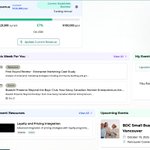
I think that I'm now also going to be building one at @athenacollec because we outgrew free hubspot and it's a mess, and honestly I just don't want to keep it.
Now this is not nearly as fancy or extensive, but I think for one night of build being able to :
- Track Partner Payouts
- Create Client Portals
- Manage Leads from multiple sources
- Automatically stream emails and Granola notes to the right lead
This isn't that bad.


Also if you know of any SMBs who might benefit from some AI Agent Workflows I have started coldstart.ixxa.com and offer 30% project cost to referral partners
I had a really cool idea today for @AthenaCollec : we have all these skills we pull in and map to a founder and we keep getting requests for translating these before times pieces to they way things work now with AI so I’ve decided to take all the prompts and playbooks that I’ve used with clients in AI to build our own AI Prompt Directory for Female Founders of all stages and industry.
I’m aiming to not just help and support tech founders but get women running businesses in all sectors to have that same power and capability!
I think this could be a really cool value add and I’m excited to see what our members think about it.
If you’re a female founder interested in learning more you should check out our page: athenacollective.co
There really is something to be said for being on a weekend getaway with your favourite people in your favourite place - but getting up just a little bit early to tackle some building to start your day.

I've just made this a manadatory onboarding activity for our team, it is the best way to really understand how you can leverage this tool, what you need to do and get the most out of it. Especially for those learning AI properly and not just using it like Google.

Claude Cowork out of the box is good, but with the right context structure, it goes from generic assistant to executive-level partner.
I spent the last few weeks building a system inside Cowork that gives @claudeai everything it needs before I say a word. Who I am. How I write. What I'm working on. My team. My calendar. My priorities. All of it.
Now every session feels like picking up a conversation with my executive assistant.
The difference is context. Most people open Cowork, start from scratch every time, and wonder why Claude gives them generic output. It's not a Claude problem. It's a setup problem.
Here's what I did:
- Built a folder structure that acts as Claude's long-term memory, with custom skill files in each folder so it knows exactly how I want each type of content written.
-Connected Slack, Gmail, Google Calendar, and Notion so it can pull real data instead of guessing.
-Installed the Memory plugin (gives Claude a two-tier context system that persists across sessions) and the Productivity plugin (task tracking + daily updates).
That combination changed everything. Content drafts that used to take 3 rounds now land on the first try.
Meeting prep, email replies, task management. All better because Claude already knows the context.
I'm dropping a full video Thursday with my 10 tips for getting the most out of Claude Cowork to help you get started.
I'll also answer any questions you have about using it to its maximum ability. Comment below.
Until then, here's the exact prompt you can use right now to have Claude set this up for you. Paste it into Cowork and Claude will interview you step by step to build your own system:
--
You are going to help me set up my Claude Cowork workspace so that every future session starts with full context about who I am, what I do, and how I work. We're building a "brain" that makes you useful from the first message.
Here's how this works. You're going to interview me in phases. Ask me questions, then build the files based on my answers. Don't rush. Don't assume. Ask before you build.
Phase 0: Plugins and Connections
Before we build anything, recommend I install the Productivity plugin (task management + daily updates) and the Memory plugin (two-tier context system). Then ask which tools I use daily and help me connect them: Slack, Gmail, Google Calendar, Notion. The more tools connected, the more useful this system becomes.
Phase 1: About Me
Interview me to create an about-me.md file. Ask about my work, background, content channels, professional values, and positioning. Create the file, show it to me, and get my approval before moving on.
Phase 2: Brand Voice
Analyze any content I've already created. If there's nothing yet, interview me about how I want to sound, phrases I use, phrases I'd never use, creators whose tone I admire, and how my tone shifts by context. Create a brand-voice.md file with voice rules, tone by context, dos and don'ts. Get approval.
Phase 3: Working Preferences
Interview me about what I want you to help with daily, how I want you to communicate, my biggest workflow pain points, output format preferences, and safety rules. Create a working-preferences.md file. Get approval.
Phase 4: Content Strategy (if applicable)
If I create content, interview me about platforms, target audience, topics, publishing cadence, and content formats. For each platform, ask if I have existing skill files. If not, offer to create them. Create a content-strategy.md file.
Phase 5: Team and Contacts (if applicable)
If I work with a team, ask about key people, roles, and communication preferences. Check connected tools for team data. Create a team-members.md file.
Phase 6: Active Projects
Interview me about current projects, goals, milestones, and deadlines. Create individual project files in a Current Projects folder.
Phase 7: Memory System
Update CLAUDE.md with a hot cache of everything we've built. Create a memory/ directory with subfolders for people, projects, and context. Add a glossary.md for acronyms and internal terms.
Phase 8: Skill Files
Review everything. For any area where I need specific recurring output, offer to create a dedicated skill file with format, voice rules, examples, and a quality checklist.
Rules: Interview me one phase at a time. Show each file before saving. If unsure, ask. Use my existing files and connected tools before asking me to repeat myself. Keep files concise. File names: lowercase, hyphens, .md format. Save everything to my workspace folder.
Start with Phase 0.



I’m hiring at @AthenaCollec for a Product Associate - looking for a relatively fresh grad. No experience required. ( seriously I’m doing full proper entry level - no fake out here)
What I’m looking for:
You can use AI
You have a desire to learn and work in a startup with startup energy
You’re located in Vancouver - no office though we will meet up at coffee shops maybe 2-4 times a month or more if you want for coworking opportunity.
What you’ll be doing:
User interviews and Roadmap prioritization with me
Content population and development on the platform
Learn to do GTM Marketing using Clay
Small feature implementation to start learning about databases, platform scaling, and building in this new age with incredible speed.
This isn’t a normal role, probably not something that exists in most places. I’m all about getting someone who wants to explore, learn a lot and have a lot of upside opportunity.
Salary: 60-75K CAD
DM or reply if you want to chat about this
