

Research Q&A for materials science If the answer is in the literature, Mimir can find it Public beta open now for .edu and .gov
Joined November 2025
- Tweets143
- Following52
- Followers106
- Likes1.3K




Pinned Tweet
Mimir is now in open beta.
Ask a materials science question, if the answer is in the literature, Mimir can find it.
Free for .edu & .gov emails
Try it out with the link below.

Mimir Systems retweeted

I'll be in DC for the rest of July - excited to reconnect with folks in defense tech, hmu if you're in town
Shout out to our @baseten bills for the skymiles that paid for the flight 😂

We saw this and ran it through Mimir.
It returned with five papers on Kevlar parachute design, fiber selection, and thermal survivability at Mach 3.
Citations you can click and open.
Read the full answer here: ask.mimirsystems.ai/share/fe…
Free for .edu and .gov emails - ask.mimirsystems.ai


unavailable
Right now, Mimir works really well in physical sciences but we hope to cover eg computer science eventually and other subjects
Try free: ask.mimirsystems.ai

if your work depends on reliable sources, this is AI tool is for you
@MimirSystems isn't another AI chatbot
it's an AI search engine built for scientific literature:
- understand scientific terminology
- search millions of papers, patents & industry reports
- answer with CITATIONs that actually exist
zero hallucinated references ever.
best part: free with .edu/.gov email, and 7-day free trial for everyone else
link below if you wanna try👇

Mimir Systems retweeted

try here: ask.mimirsystems.ai
also don't forget gib @MimirSystems a follow for more updates🫶

Mimir Systems retweeted
if your work depends on reliable sources, this is AI tool is for you
@MimirSystems isn't another AI chatbot
it's an AI search engine built for scientific literature:
- understand scientific terminology
- search millions of papers, patents & industry reports
- answer with CITATIONs that actually exist
zero hallucinated references ever.
best part: free with .edu/.gov email, and 7-day free trial for everyone else
link below if you wanna try👇
compare hallucination rates across popular AI models right now:
- the best ones are around 3-6%
- the worst can go past 17%
and that's only on document summarization.
once you ask AI to do research, cite sources, or dig into niche topics...
hallucinations become much more obvious:
- fake citations
- broken links
- papers that don't exist
always double-check the sources

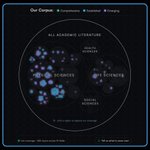
Ask a research tool a question outside its strongest area, and you get results at the same confidence level as everything else, without flagging that the coverage is thinner.
We label our coverage before you search.
Comprehensive, established, or emerging. You see how much depth sits behind the results before you build anything around them.
Try for free with an edu/gov email or equivalent: ask.mimirsystems.ai

Searching for a material property shouldn't take much of your time and lots of tabs.
Ask a question and get an answer with citations you can open.
ask.mimirsystems.ai

Public reference validation at scale. The citation integrity data coming out of this will be very useful.

Last month, arXiv announced a one year ban for authors who submit papers with unchecked AI use, including hallucinated references.
We decided to test how this new policy was working. Using Reviewer3’s reference checker followed by manual verification, we sampled 200 papers submitted to arXiv on June 10th, well after the ban announcement, and found some concerning results:
1 in 4 arXiv papers still contain at least one partially or fully hallucinated reference.
Results:
- 55/200 (27% of papers) still contained at least one partially or fully hallucinated reference.
-29/200 (14%) had more than one.
-117 total invalid references were identified.
-The most common hallucination was an author mismatch. 25/117 fabricated references contained titles of real manuscripts but fumbled the listed authors.
See more below.
At NeurIPS 2025, one of the most selective venues in machine learning, an analysis of nearly 5,000 accepted papers found over 100 fabricated citations across 51 of them.
Every one of those papers had passed three or more expert reviewers. The fabricated references got through because they didn't read like fakes.
Citation checking isn't built into peer review, and it doesn't scale to that volume. If the official record of the top ML conference has this problem, the assumption that someone upstream caught it is no longer safe.
#PhysicsTrivia
For science answers you can trust with verifiable citations, ask Mimir.
Sign up for free
ask.mimirsystems.ai
Mimir Pro is live today.
For the past few months, more than a thousand researchers have used Mimir in open beta to find specific answers in the materials science, chemistry, and physics literature.
Today, we are launching the paid version.
Mimir answers your question with a cited source in seconds. For example, you ask what causes capacity fade in a particular cathode chemistry, or how a polymer behaves under a given processing condition, and Mimir returns the answer along with the papers it came from.
Every citation points to a real paper you can open and read. The system retrieves from indexed literature rather than generating text, which is why it cannot invent a reference.
Pro adds what beta users asked for most.
- Multi-turn conversations, so you can follow up without starting over
- Deep dives
- Citation export
- Mimir Solve
- Higher rate limits and much more
If you used Mimir during the beta, thank you. Your first month of Pro is on us.
Mimir stays free for anyone with a .edu/.gov email or equivalent.
Try ask.mimirsystems.ai
The @nyuniversity's Computer Science & Engineering department featured our CEO, @PeriwinkleID, in their alumni highlights.
Mimir Pro goes live tomorrow.
Mimir Pro goes live on Monday, the 22nd of June
- follow up questions that keep the full context
- deep dives into a single paper
- data pulled from figures and tables
- Mimir Solve and much more
Every answer points to a real citation you can open.
Researchers from institutions including Cornell, Northwestern, Purdue, Stanford, and UC San Diego etc are already using Mimir to find answers in the literature faster.
How many iterations does it typically take to clarify a project to an AI before it comprehends the task?
Once (fortunate)
Two or three times (average)
I've lost count (alarming)
I have ceased efforts (defeated)
Mimir Pro goes live on Monday.
What's coming:
- Follow up questions that hold full context
- Deep dives into a single paper
- Data pulled from figures and tables
- Mimir Solve and much more
Every answer still points to a citation you can open.

This IDTechEx 2026 outlook on solid state batteries offers valuable insights for professionals in energy storage.
It highlights a recurring challenge whereby the rapid advancement in materials science has outpaced manufacturing integration.
Key issues such as lithium metal anodes, the comparative performance of sulfide, oxide, and polymer electrolytes, and interface problems that become apparent only at scale.
While numerous research papers exist, identifying the specific one that addresses a particular cathode-electrolyte question remains difficult.
This is precisely the type of specialized search Mimir is designed to facilitate.
🚨New in: The Mimir Coverage Map
It charts every field we cover and grades how deep we go, from comprehensive to not yet covered.
Then watch what happens when you ask Mimir something it knows, and something it doesn't.
A recent study has quantified a phenomenon that researchers have observed over the past two years.
Zhao et al. conducted an audit of 111 million references across 2.5 million papers from arXiv, bioRxiv, SSRN, and PubMed Central. Their findings revealed approximately 147,000 citations scheduled for 2025 that refer to non-existent papers.
The timeline of this increase is particularly noteworthy. The proliferation of these fabricated citations did not coincide with the launch of ChatGPT but rather began around mid-2024, a period marked by the increasing adoption of AI research assistants designed for automatic citation generation.
This suggests that these tools are a primary source of the spurious citations.
Furthermore, the peer-review process has largely failed to detect these fabrications. Approximately 85% of the fabricated citations identified in preprints were subsequently found in their published versions.
It is important to note that the reported number represents a minimum.
The study exclusively focused on citations referencing non-existent papers and did not account for instances where real papers were cited for claims they did not make.
arXiv:2605.
Someone on our team tried to use the product to look up a vacation spot.
It told them
"Mimir is designed to provide comprehensive answers to scientific questions. It is not a general purpose chat bot."
Embarrassing for them, but exactly right for the product.
As most AI will answer anything you ask, which is precisely why you can't trust them on the things you actually need.
Mimir is working as intended.
