

Dominicano🇩🇴 Cardiólogo / Fellow de electrofisiología (hosp. Univ. de Bellvitge- Barcelona🇪🇸).
Barcelona, España
Joined March 2020
- Tweets1.4K
- Following1.1K
- Followers485
- Likes1.4K




Dr. Rubelin mosquea retweeted

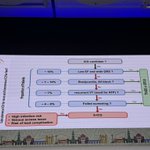
🔵 Optimal depolarization sequence for cardiac resynchronization therapy patients 🔵
@curilakarol
"In multivariate logistic regression,
the pre-implant QRS duration, apicobasal depolarization gradient, and CRT-induced QRS shortening independently predicted CRT response.
🧵 🔗

Dr. Rubelin mosquea retweeted

PVC localization has been one of the harder things to learn and teach as a cardiology fellow interested in EP.
So I built learnpvcs.com to help connect the 12-lead ECG with 3D cardiac anatomy.
You can explore different PVC origins, rotate and look inside the heart, and work through practice cases.
It's an early educational prototype, and I'd love feedback from fellows, electrophysiologists, and educators.
Which PVC origin do you find hardest to localize?
#CardioTwitter #EPeeps #MedEd @OpenAI @WvuCvFellows @wvudeptofmed

Dr. Rubelin mosquea retweeted

Arrhythmic risk in patients with dilated cardiomyopathy: new study investigates genetic risk stratification.
doi.org/10.1093/eurheartj/eh…
#cardiomyopathy #genetic #cardiotwitter, @ESC_Journals @escardio

Dr. Rubelin mosquea retweeted
🆓 correlation of cardiac anatomy and ECG for LBBAP 🆓
The stimulus captures the conduction system (bold green line) and/or myocardium (blue and red winding lines).
(A) ns-LBBP (B) s-LBBP (C) LVSP
academic.oup.com/ehjopen/art…


⚡️Good chance to get in #LBBaP #anatomy & #phisiology
academic.oup.com/ehjopen/art…
@AGEP_DGK @ACCinTouch @American_Heart @HeartNews @escardio @ESC_Journals @ESCardioNews


Dr. Rubelin mosquea retweeted
Discontinuation of OACs in patients with AF postablation did not affect the overall TE incidence but was associated with a ⬇️ in major bleeding events. However, there was a significant ⬆️ in TE risk in patients with a CHA2DS2-VASc score >2 upon discontinuation.
#EPeeps

Can oral anticoagulants be safely discontinued after atrial fibrillation ablation? A systematic review and meta-analysis of reconstructed time-to-event data
@LucasMBarbosa01
heartrhythmjournal.com/artic…


Dr. Rubelin mosquea retweeted

Our 📝 Identifying the High-Risk Arrhythmic Mitral Valve Prolapse Phenotype by Imaging is out in @JACCJournals Imaging w/ @JudyHungMD @KristinaHaugaa & Francesca N Delling
authors.elsevier.com/a/1nw-R…

Dr. Rubelin mosquea retweeted

Performance and Limitations of Multipolar Electrogram Mapping in Scar-Related Ventricular Tachycardia #OpenAccess
@KojiHiguchiCCF
heartrhythmjournal.com/artic…

Dr. Rubelin mosquea retweeted
Chronic Impact of Cavo-tricuspid Isthmus Ablation on the Adjacent Right Coronary Artery: Pulsed-Field vs Radiofrequency vs No Ablation in the IMPACT-CTI Study
*
ScienceDirect offers:
abstract, tweet, conflicts of interest.
See 🧵

Dr. Rubelin mosquea retweeted

Proud to share our new study: S3 guided STaMP mapping x unstable VT(~20 sec), feasible, +safe even in high-risk patients.
jacc.org/doi/10.1016/j.jacep…
@hospitalclinic @RaimondoPi4757 @_NicolaPierucci @t_rosseel @PranavBhagirath @aportasanchez @guichard_jb
#EPeeps #VTablation

Dr. Rubelin mosquea retweeted

🔥 Hot off the press: We identified how and where AF begins.
I am excited to share this work.
Since the discovery of PV triggers more than 25 years ago, AF ablation has evolved into an empiric therapy centered on PVI. Yet, we have never been able to identify the arrhythmogenic substrate that determines why a premature beat initiates AF at one site and not another.
We believe this study changes that.
In this mechanistic study, we found that AF initiation arose predominantly through reentry originating from a small number of spatially discrete regions with steep repolarization gradients. Their distribution was unique to each patient, and they accounted for more than 92% of AF initiation episodes.
Importantly, the arrhythmogenic substrate was not defined by low voltage, and while conduction abnormalities were often present, they appeared to play a secondary role.
Its patient-specific distribution may help explain the controversy surrounding posterior wall isolation: the posterior wall harbored the substrate in only approximately 30% of patients. Importantly, in redo patients with durable PVI, right-atrial substrate (which is often beyond standard mapping strategies) was identified in 30%.
Most encouragingly, in an exploratory cohort of 24 patients with recurrent AF and durable PVI (50% PerAF), targeted elimination of these sites achieved 87.5% single-procedure freedom from any atrial tachyarrhythmia over a median of 489 days, without antiarrhythmic drugs.
The thoughtful accompanying editorial by Jon Kalman highlights the significance of this discovery and its central translational challenge of bringing it into real-world clinical practice.
But stay tuned! Technology is under development to transform this discovery into a rapid, automated functional mapping.
Current electroanatomic mapping relies largely on voltage amplitude and activation timing. We need to move beyond these measures and map how tissue actually functions - how it conducts, repolarizes, and responds to premature stimulation. This can add the critical dimension that has long been missing from substrate mapping and may reveal what truly makes cardiac tissue arrhythmogenic.
To me, this is the beauty of physiology: there are no black boxes. We can identify the sites that reproducibly initiate the arrhythmia, define their EP properties, eliminate them with ablation, and confirm that arrhythmia can no longer be initiated.
The next steps are prospective multicenter validation and technological development. Together, they may move AF ablation beyond empiric therapy toward truly individualized, mechanism-guided therapy.
📄 Paper in @JACCJournals:
doi.org/10.1016/j.jacep.2026…
📝 Editorial:
doi.org/10.1016/j.jacep.2026…
#JACCCEP #AtrialFibrillation #CardiacElectrophysiology #CatheterAblation #EPeeps


Dr. Rubelin mosquea retweeted

Aortic root–based ablation of para-Hisian atrial tachycardia: Acute and long-term outcomes from a consecutive series, by @AmoresMlg and colleagues
#EPeeps
heartrhythmopen.com/article/…

Dr. Rubelin mosquea retweeted
A novel technique for accessing the pericardial space
heartrhythmjournal.com/artic…

Dr. Rubelin mosquea retweeted

🚨Latest #OpenAccess Article in
@JICE_EP
Needle-in-needle micropuncture technique for epicardial access during ventricular tachycardia ablation
🧐📖doi.org/10.1007/s10840-026-0…
by @RolandTilz, Roman Mamaev, Sascha Hatahet, Tuğba Aktemur Özalp, @SorinS_Popescu, @PerWenzel, Mirco Küchler, @CharlotteEitel, Karl-Heinz Kuck & Kohei Ukita

Dr. Rubelin mosquea retweeted

This is exactly why we do #EP study in asymptomatic pre-excited patients. To risk stratify accessory pathways!
Young patient with manifest posteroseptal AP. During EP study, pre-excited sinus rhythm degenerated before our eyes:
Sinus-->AFib-->AFL 1:1--> PMVT/VF --> shocked


Dr. Rubelin mosquea retweeted
🧵ECG patterns in pacing the trunk if the left bundle and three fascicles 🧵
*
descriptions to come later in the 🧵
*
Left bundle fascicular versus left bundle trunk pacing: A comparison of their electrical synchrony parameters
pmc.ncbi.nlm.nih.gov/article…


Dr. Rubelin mosquea retweeted

There are many ways to fix the intraseptal lead during LBBAP implant to achieve physiological pacing. Many use two hands.
Tips and tricks for a single left-handed technique:
1) Sheath tents RV septum with contrast
2) Advance lead tip out slowly to the point of almost displacing the sheath
3) Right hand fixes the sheath torque using syringe of contrast
4) Rapid rotations to spin the lead between left thumb and index finger- palm up
5) Contrast injection to confirm breaking through the RV endo plane in LAO – at Phoenix, AZ