

I write things. America’s often forgotten past. Fact-driven. Lore-obsessed. Mounds, myths, maps& LiDAR. I understand people.
Indiana, USA
Joined November 2024
- Tweets43.4K
- Following676
- Followers88.1K
- Likes142K






A West Virginia tunnel killed hundreds of workers through the dust they breathed. About a third of it was enlarged to extract more of the same silica-rich rock destroying their lungs.
Hawks Nest. Construction began in 1930, when men were traveling long distances for any chance at a paycheck.
The job was to drive a tunnel roughly three miles through Gauley Mountain. Water diverted from the New River would pass through it to a hydroelectric plant supplying Union Carbide’s metals operation at Alloy.
Nearly 3,000 men worked underground. Most were Black. Many had come from the South.
Dry drilling filled the tunnel with pulverized rock. Ventilation was poor. Breathing protection was inadequate. Workers came out covered in white dust.
Some became seriously ill within months.
Silicosis scars the lungs. At Hawks Nest, the exposure was intense enough for men to lose their ability to work after short periods underground. Workers left as they became sick. Some died after returning home, making the full toll harder to trace.
One major study estimated 764 deaths. A later federal study put the number near 1,000. Then you get to the paperwork.
Core samples had identified the silica-rich sandstone before construction began. Silicosis was already a recognized industrial hazard. The material had commercial value, and part of the tunnel was widened specifically to recover it.
But the project was licensed as civil engineering. Even the limited safety enforcement available to miners did not apply.
Think about that designation while picturing the work: men underground, drilling and blasting rock, breathing mineral dust.
Workers filed 538 lawsuits against the contractor and the Union Carbide subsidiary behind the project. An eventual $200,000 settlement produced individual awards ranging from $30 to $1,600.
Congress held hearings in 1936.
Then they decided to widen the tunnel. Someone had calculated the value of taking out more rock while the men taking it out were getting sick.


A Florida pond preserved human brain tissue for more than 7,000 years. Construction equipment found the cemetery in 1982 while a subdivision road was being built.
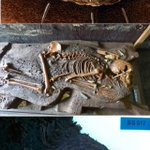
This was Windover, near Titusville. Archaeologists recovered the remains of at least 168 people. Ninety-one had preserved brain tissue.
But spend a minute with what they were buried in. Some had been wrapped in handwoven textiles before being placed beneath the shallow water and into the peat. Wooden stakes held a number of the burials in place. The people tending this cemetery were handling fabric, folding bodies and securing them beneath the pond.
The peat preserved work that almost always disappears: cordage, woven material, wooden implements. Researchers could examine how fibers had been twisted and how threads crossed one another. Different weaving techniques survived in the same cemetery.
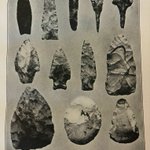
That changes how much of ancient America you can picture. At a dry site, a stone point might survive while the cord that fastened it, the wooden shaft and the bag it traveled in all rot away. You inherit the durable pieces and have to reconstruct the rest.
Windover kept some of the rest.
Its excavation director, Glen Doran, made a point I wish appeared beside more museum cases: these kinds of perishable objects belonged to a much wider world. Exceptional preservation lets one place show you what other sites have lost.
The developers rerouted the road. Part of the cemetery was left unexcavated.


Hunter’s Moon
The corn is down. The fields lie bare.
The moon climbs white above the mill.
The stubble holds the silver where
the dark once gathered on the hill.
No leaf conceals the orchard wall.
No standing stalk obscures the lane.
The pears that no one came to haul
lie bruised beneath the fallen rain.
A doe stands listening by the creek,
one hoof suspended in the cold.
The moon lies white along her cheek;
the wire shines on the broken fold.
She knows the field by root and stone,
the narrow place to cross the stream.
Tonight she stands beside it, shown
as plainly as a thing in dream.
Then through the thorn she slips from sight.
The branches tremble where she goes.
The field lies empty in the light.
Beyond the mill, a window glows.

A piece of bottle glass turned up beneath apparently undisturbed layers in a Missouri burial cave.
The excavator thought an animal had dragged it there. He reported no surviving burrow.
That unresolved detail belongs to Goat Bluff Cave, above the Gasconade River. Its entrance was roughly 75 feet wide. Inside, people had built fires, worked stone, processed food, and buried their dead.
Gerard Fowke’s 1922 account describes a hearth beneath almost five feet of deposits. Three sandstone slabs apparently came from the hilltop. Someone had carried them to the cave and arranged them with two other stones. Pottery fragments, animal and bird bones, flint chips, and a bone awl remained around them.
Occupation debris alternated with layers of crumbling roof material. Fowke interpreted those intervals as absences. People returned, but the report cannot tell us after how long.
The burials complicate that history further.
An adult lay on its back beneath three slabs, knees drawn to the chest. Another stone covered two skulls and almost no other bones. Elsewhere were incomplete remains from more than one person.
Those arrangements raise questions about how the dead were treated. Earlier digging makes the answers harder to recover. And graves cut into older sediment can place a later burial below earlier occupation debris. Depth alone will not sort this cave into a reliable sequence.
Sixty-five feet inside, a whole pot rested upside down in a cavity filled with ashes. Fowke saw no marks of use. He suspected an offering.
The glass was closer to the entrance, eighteen inches below the surface. Its position forced a choice between later activity and disturbance he could no longer see. He favored disturbance.
Farther back, he stopped excavating because previous diggers had damaged so much of the ground.
Goat Bluff preserves evidence of work, return visits, and burial. What remains unresolved is their order: who returned to a place already holding the dead, which deposits they disturbed, and when that unused pot entered the ground.


MoundLore retweeted

Interesting display sign on "What Happened to the Calusa" in Florida? The bottom line in small print is from Ponce de León's chronicler in 1513. It reads: "There appeared at least twenty canoes, and some fastened together by twos. Some went to the anchors, others to the ships, and began to fight from their canoes. . . They fought from the morning to the night."

In 1954, the CIA helped overthrow Guatemala’s elected president while the U.S. government was pursuing a compensation claim for an American banana company.
The land dispute deserves a closer look.
President Jacobo Árbenz’s agrarian reform targeted uncultivated portions of large estates for redistribution. United Fruit held enormous tracts of land. In February 1953, his government ordered roughly 234,000 acres of the company’s property expropriated near Tiquisate.
Compensation would come in government bonds, calculated using the land’s declared tax value.
United Fruit objected. The valuation was too low. The bonds were unacceptable.
There’s a complication worth keeping: a contemporary State Department report says the company had sought revaluation before the reform. The familiar version, where a corporation simply gets caught by its own tax dodge, leaves that out.
But Washington did more than argue over the bill. While diplomats pressed the company’s claim, the CIA prepared Operation PBSUCCESS to remove Árbenz.
Communist influence in his government was a real concern for U.S. officials. Corporate interests and Cold War policy reinforced each other.
The operation combined an exile force, aircraft, sabotage and psychological warfare. Its clandestine radio broadcasts were initially recorded in Miami. Tapes traveled aboard commercial flights to a transmitter that beamed them into Guatemala.
Listeners heard what sounded like a domestic resistance. Behind it stood an American intelligence operation working to make its forces seem stronger than they were.
Árbenz fell in June.
The banana company’s land claim and the secret operation to overthrow the president now sit in the same government’s public archives. You can read the compensation correspondence alongside the coup planning.


MoundLore retweeted
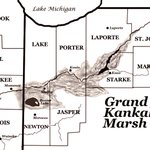
A stretch of river in Indiana once took roughly 250 miles to travel a distance you could now cover in 90. Crews cut through the bends and straightened it so the surrounding country would drain.
That country was the Grand Kankakee Marsh.
Hundreds of thousands of acres of wet prairie, shallow water, marsh and wooded swamp spread across northwestern Indiana into Illinois. Estimates of its full extent reach about a million acres. Much of the ground people now pass as ordinary farmland belonged to that wetland.
For Potawatomi communities, this was a homeland. Food, travel and daily life followed water routes through a landscape later described as needing improvement.
Then came drainage ditches, dredging and a shorter river. Water that had spread across the basin was given a faster way out. Land could be planted.
The straight channel is still there. So are surviving pieces of marsh, though you have to know what you’re looking at to imagine the country between them.
I’d like to see an Indiana highway sign that says what used to be under the corn.


American sugar refineries used charcoal made from bison bones to remove color from sugar syrup.
After the great slaughter, there was another business waiting on the Plains. People gathered the skeletons, hauled them to railroad sidings and sold them by the ton. Factories farther east wanted the bones for fertilizer and animal charcoal.
That famous photograph of a mountain of bison skulls was taken at Michigan Carbon Works near Detroit in 1892. You’re looking at a factory’s supply of raw material.
The company had been founded in 1873 to turn bones into charcoal for sugar refining. Railroads made the trade practical: freight cars carrying goods west could return east loaded with bones.
Some homesteaders paid for provisions by gathering skeletons before they had a crop to sell. Native people and Métis families also entered the trade as the disappearance of the herds destroyed their livelihoods.
At Devils Lake in 1885, buyers weighed loaded wagons, sent them to unload beside the tracks, then weighed the empty wagons and paid the difference. Boxcars took the bones to Chicago, Detroit and St. Louis.
The business followed the expanding railroad into country where bones could still be found.
Eventually, dealers had a supply problem. They were running out of skeletons.


MoundLore retweeted
The U.S. government didn’t just fight Native tribes with bullets.
It fought them with extinction.
By the 1870s, the Great Plains were covered in rotting buffalo.
Tens of millions….slaughtered.
Not for meat. Not for war.
But to starve a people into submission.
🧵

MoundLore retweeted
Florida hauled ancient Native shell mounds away by the trainload to build roads.
At Oak Hill, beside Mosquito Lagoon, a 1918 report recorded 2,000 railroad cars of shell removed from one mound for road fill. Locals called it Sam’s Mound.
The material came from generations of Indigenous people harvesting clams and oysters. Their shells accumulated alongside pottery and other traces of life on the lagoon. Then a little railroad carried the mound away.
A former resident, Jacqueline Snyder Stevens, remembered going down after school while it was being dismantled. She collected pottery from the exposed material.
A child coming home from school could pick through what the crews were hauling off.
You can visit nearby Seminole Rest today and read her account on a National Park Service sign. It includes seven words that explain where so much of the landscape went:
“All the roads used to be shell.”
